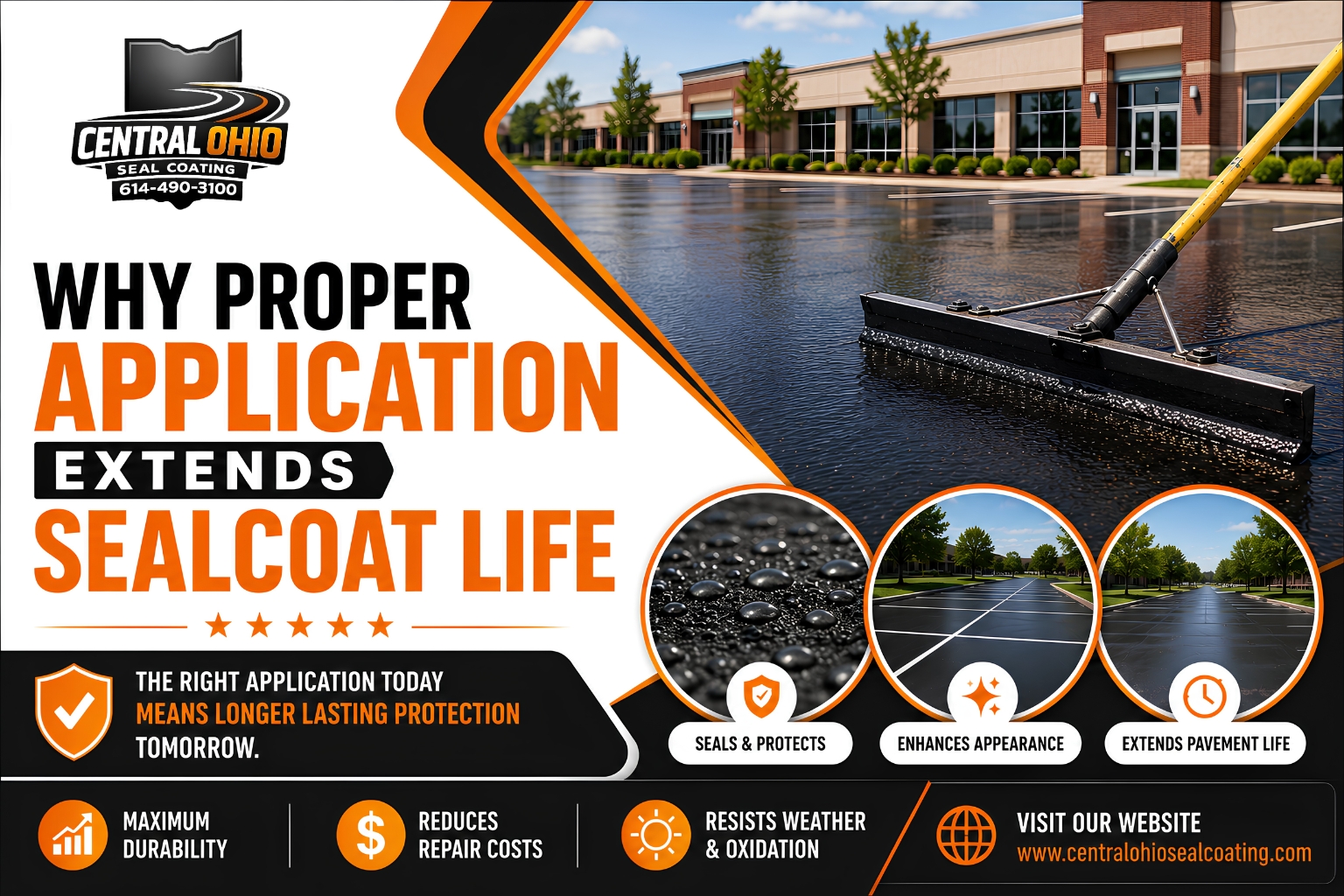

Why does even sealcoat coverage matter? Have you ever seen an asphalt surface where some areas look dark and smooth while others appear thin, streaky, or faded? Uneven application can affect both the appearance and protective performance of a sealcoat. Sealcoating coverage Ohio properties need should be consistent across the pavement so the protective coating forms a uniform surface rather than leaving thin spots or heavy buildup.
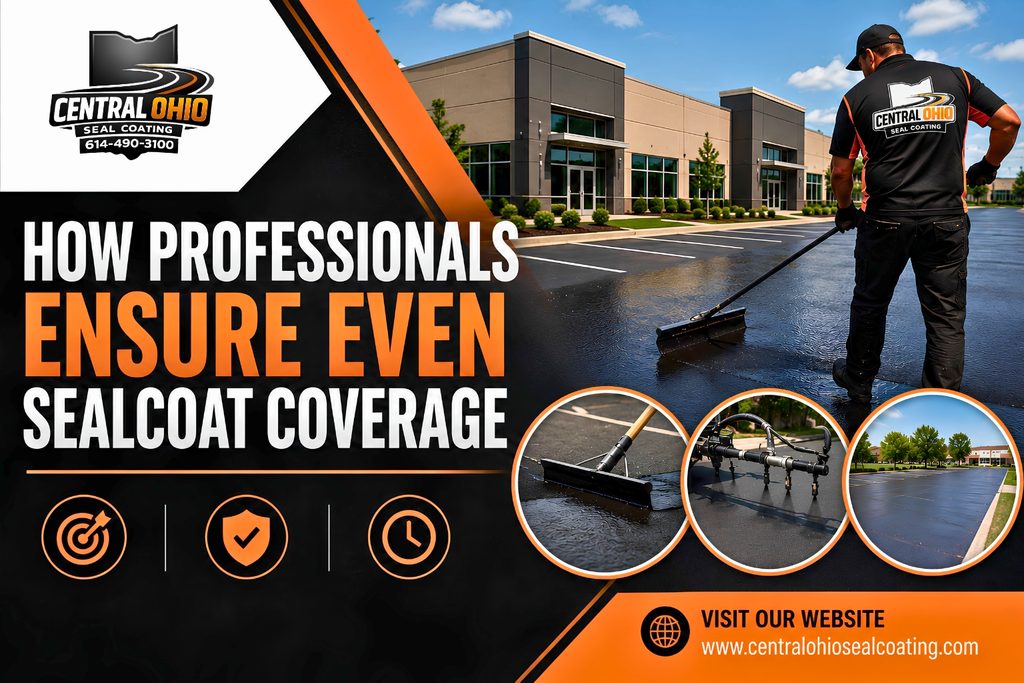
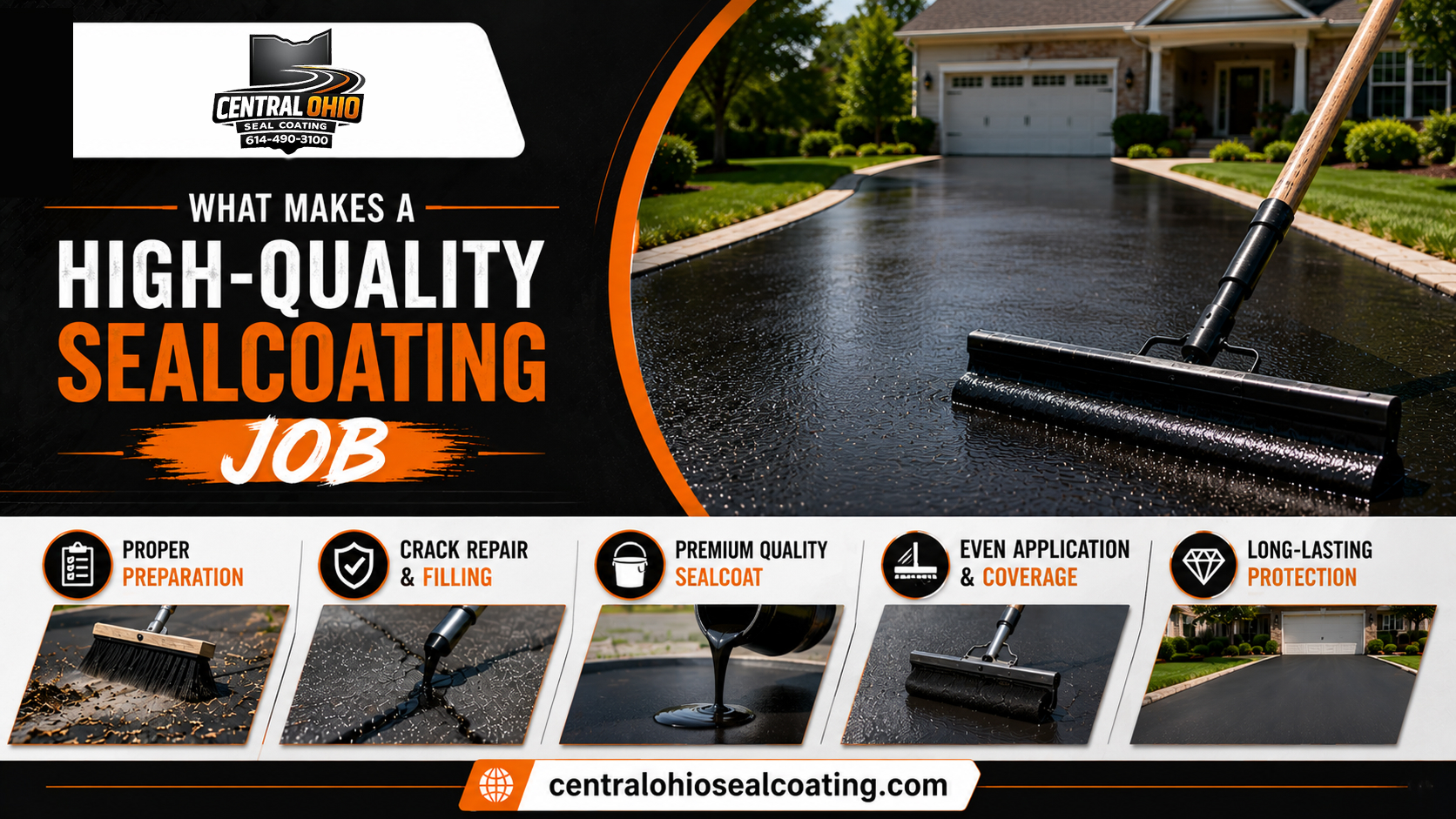
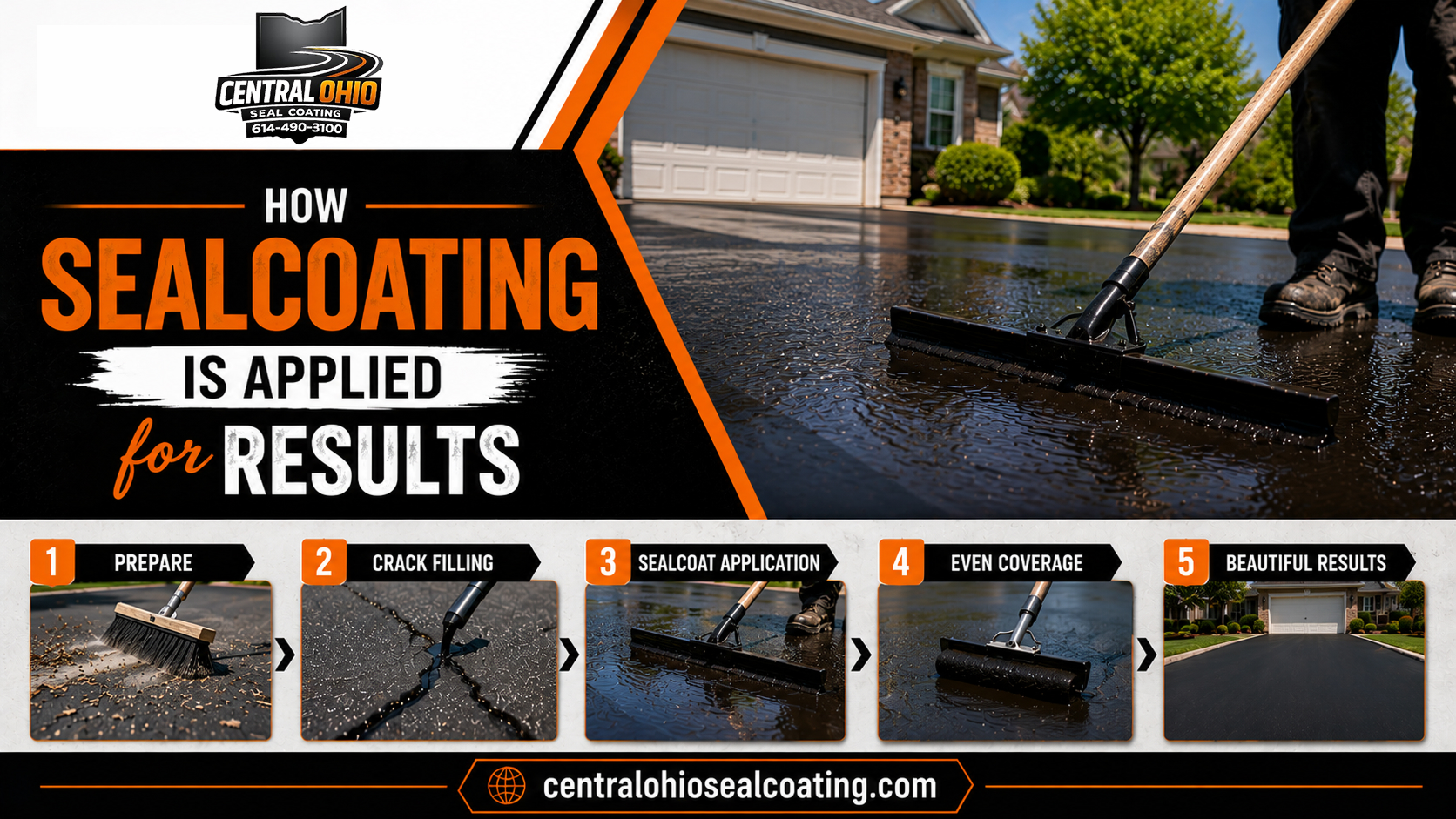
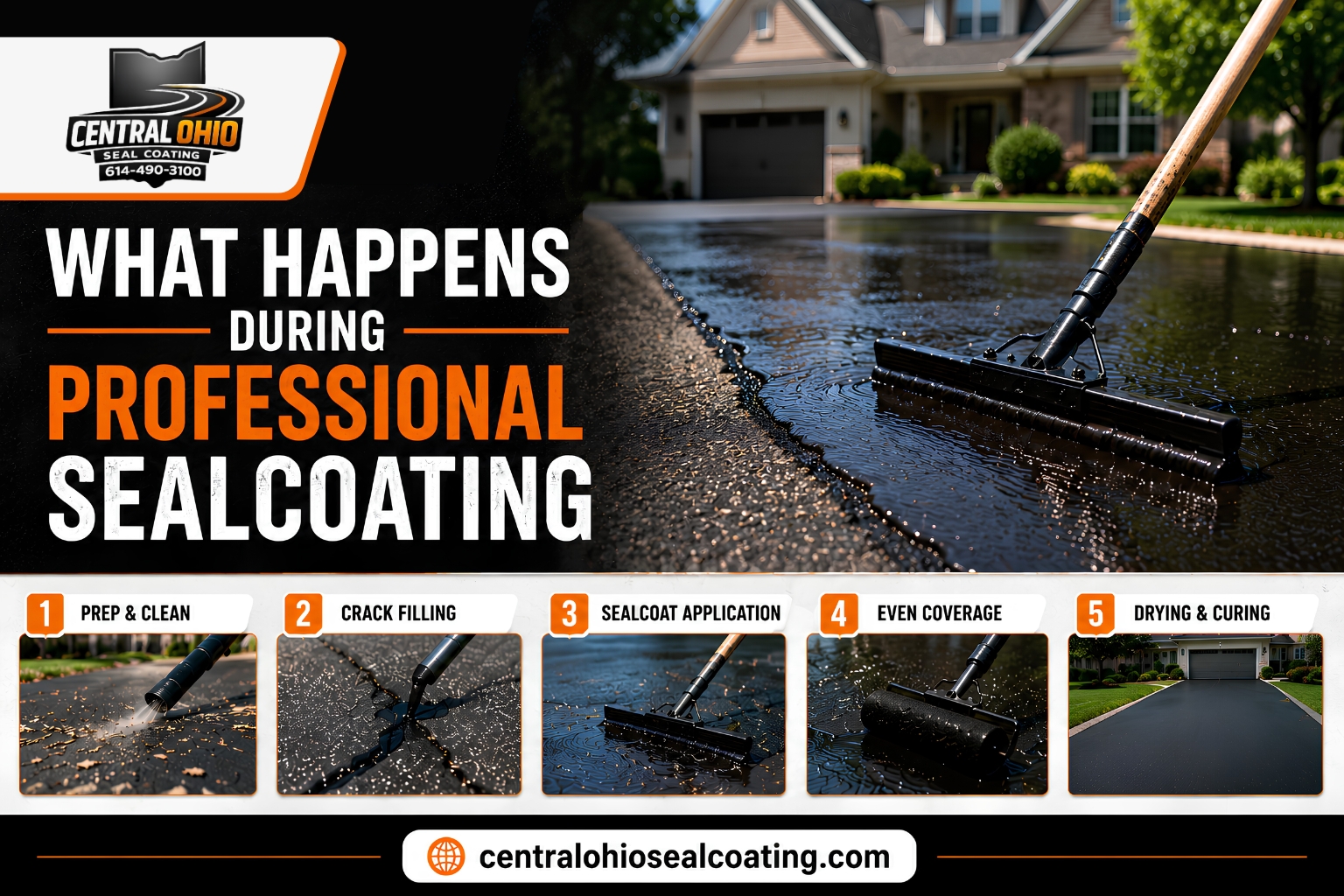
Professional sealcoating involves considerably more than spreading coating over asphalt. Central Ohio Seal Coating emphasizes thorough surface preparation, quality materials, professional equipment, and consistent application methods. Its process includes cleaning the pavement, addressing cracks and minor damage, applying sealcoat evenly, and completing a final inspection.
Ohio’s changing weather makes consistency especially important. Asphalt is exposed to moisture, sunlight, temperature changes, freeze-thaw cycles, and vehicle traffic. A properly prepared and evenly coated surface can provide more uniform protection while also improving the overall appearance of the pavement.
What Does Even Sealcoat Coverage Mean?
Even sealcoat coverage means the protective material is distributed consistently across the prepared asphalt surface.
Professionals work to avoid:
- Thin areas
- Missed sections
- Excessive buildup
- Streaks
- Uneven edges
- Puddled material
- Inconsistent texture
The goal is not necessarily to make every square inch visually identical under every lighting condition. Instead, the objective is to create a uniform, properly bonded protective layer across the pavement.
Central Ohio Seal Coating identifies smooth, even application as an important part of its sealcoating process and highlights professional equipment and application techniques as factors that contribute to consistent results.
1. Professionals Begin With a Pavement Inspection
Before applying sealcoat, professionals evaluate the condition of the asphalt.
This is important because sealcoating is intended primarily for pavement that remains suitable for surface protection. Applying coating without understanding the existing condition can result in problems later.
During an inspection, professionals may look for:
- Existing cracks
- Potholes
- Oil contamination
- Faded asphalt
- Loose material
- Drainage concerns
- Weak areas
- Surface deterioration
Central Ohio Seal Coating states that its projects begin with pavement evaluation so necessary repairs and preparation can be identified before sealcoating begins.
Why this supports even coverage
A surface with unrepaired defects can make application inconsistent. Cracks, loose aggregate, debris, or damaged sections can prevent the coating from forming a uniform layer.
Inspection therefore establishes the foundation for the rest of the project.
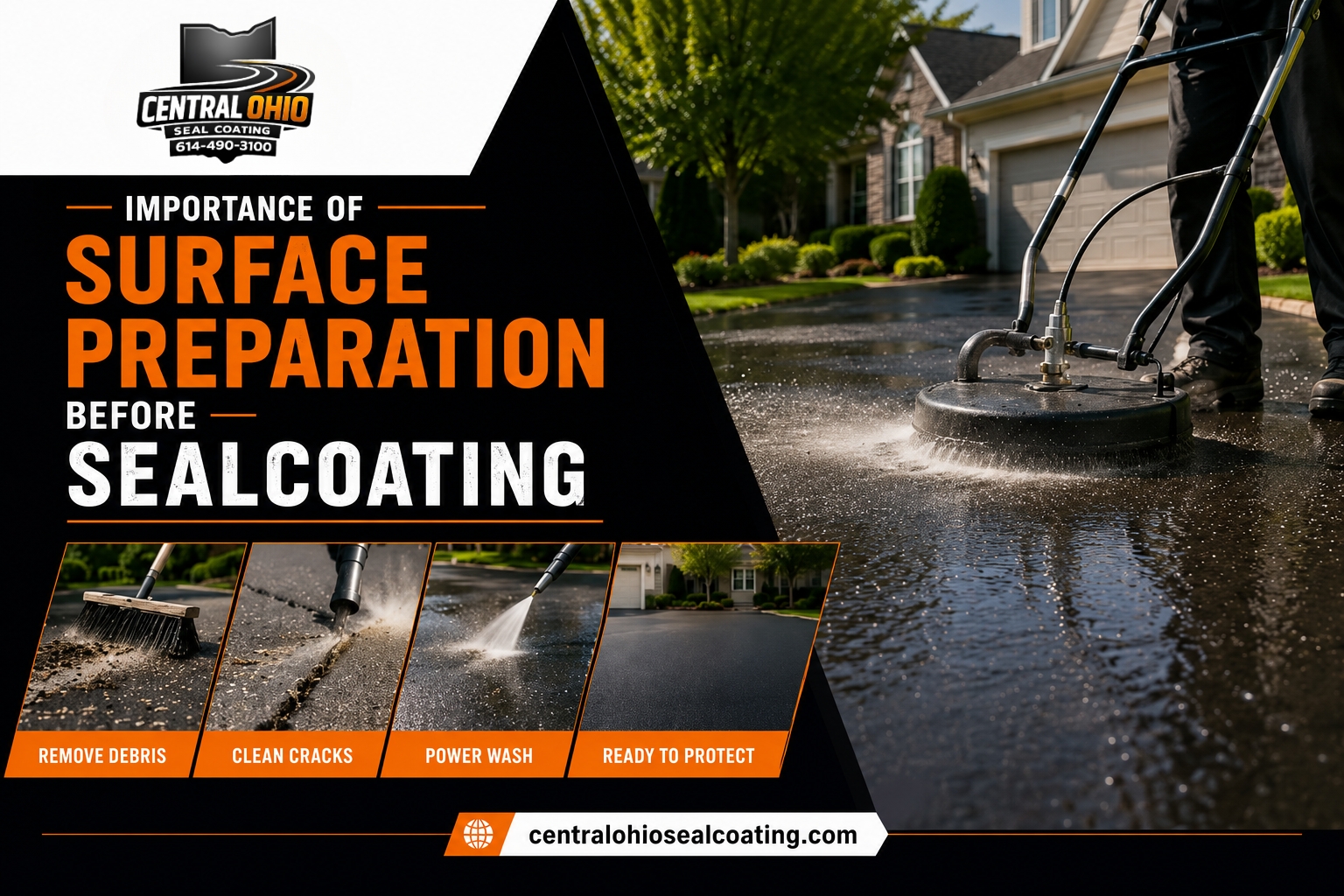
2. Thorough Cleaning Comes Before Application
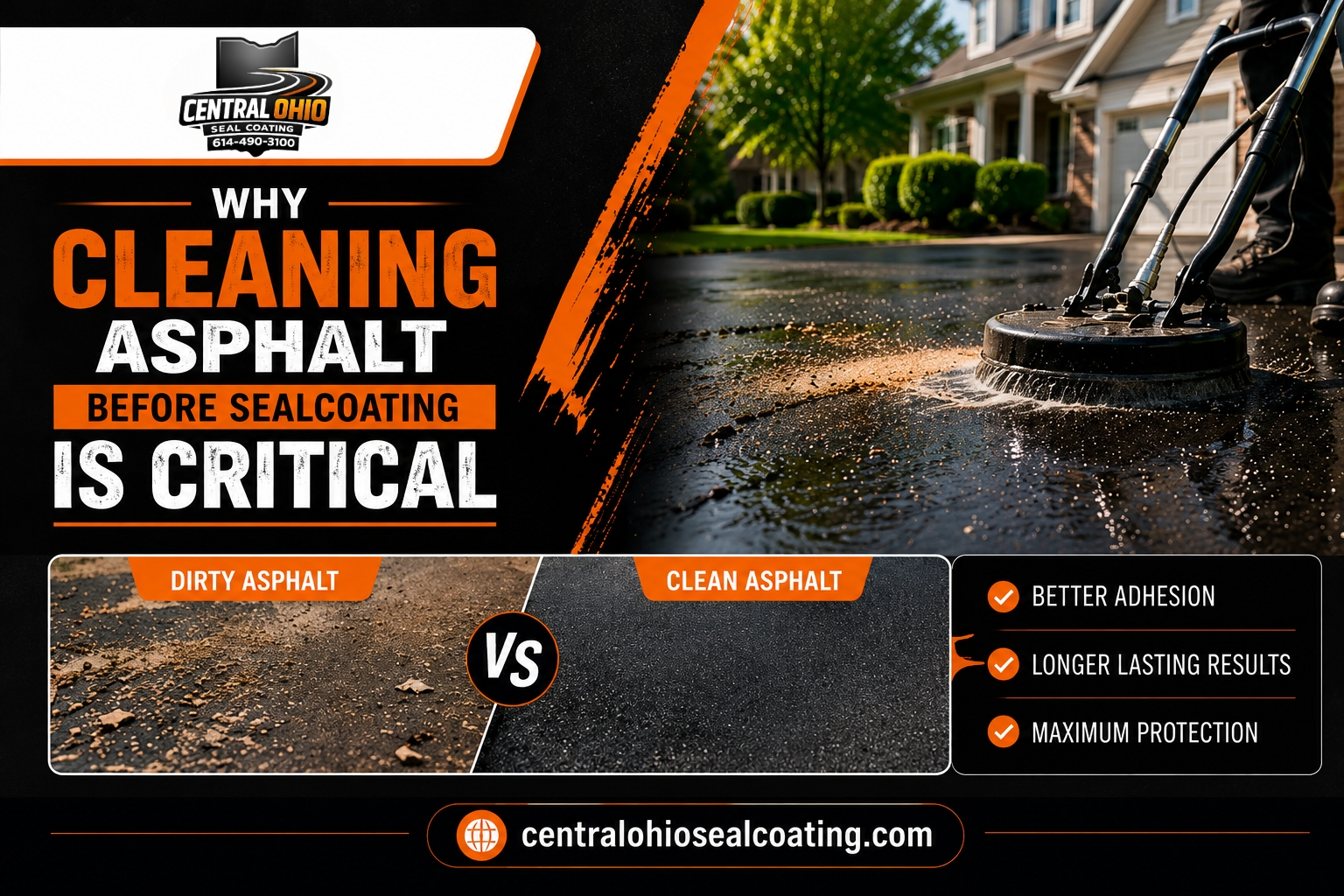
One of the biggest factors affecting sealcoat consistency is surface cleanliness.
Dirt and loose debris can prevent sealcoat material from bonding directly with asphalt. Central Ohio Seal Coating emphasizes removing dirt, debris, and loose materials before application.
Cleaning may address:
- Dirt
- Dust
- Leaves
- Loose gravel
- Mud
- Grass
- Sand
- Other surface debris
Oil contamination also deserves special attention because petroleum products can interfere with adhesion.
Why cleaning affects coverage
Imagine painting a wall covered with dust. The paint may appear to cover the surface initially, but it cannot properly bond to the underlying material.
Sealcoating works similarly.
A clean asphalt surface gives the coating a better opportunity to contact and bond with the pavement consistently.
3. Cracks Are Addressed Before Sealcoating
Professionals don’t simply cover every existing crack with sealcoat.
Crack repair is an important preparation step when the pavement condition calls for it.
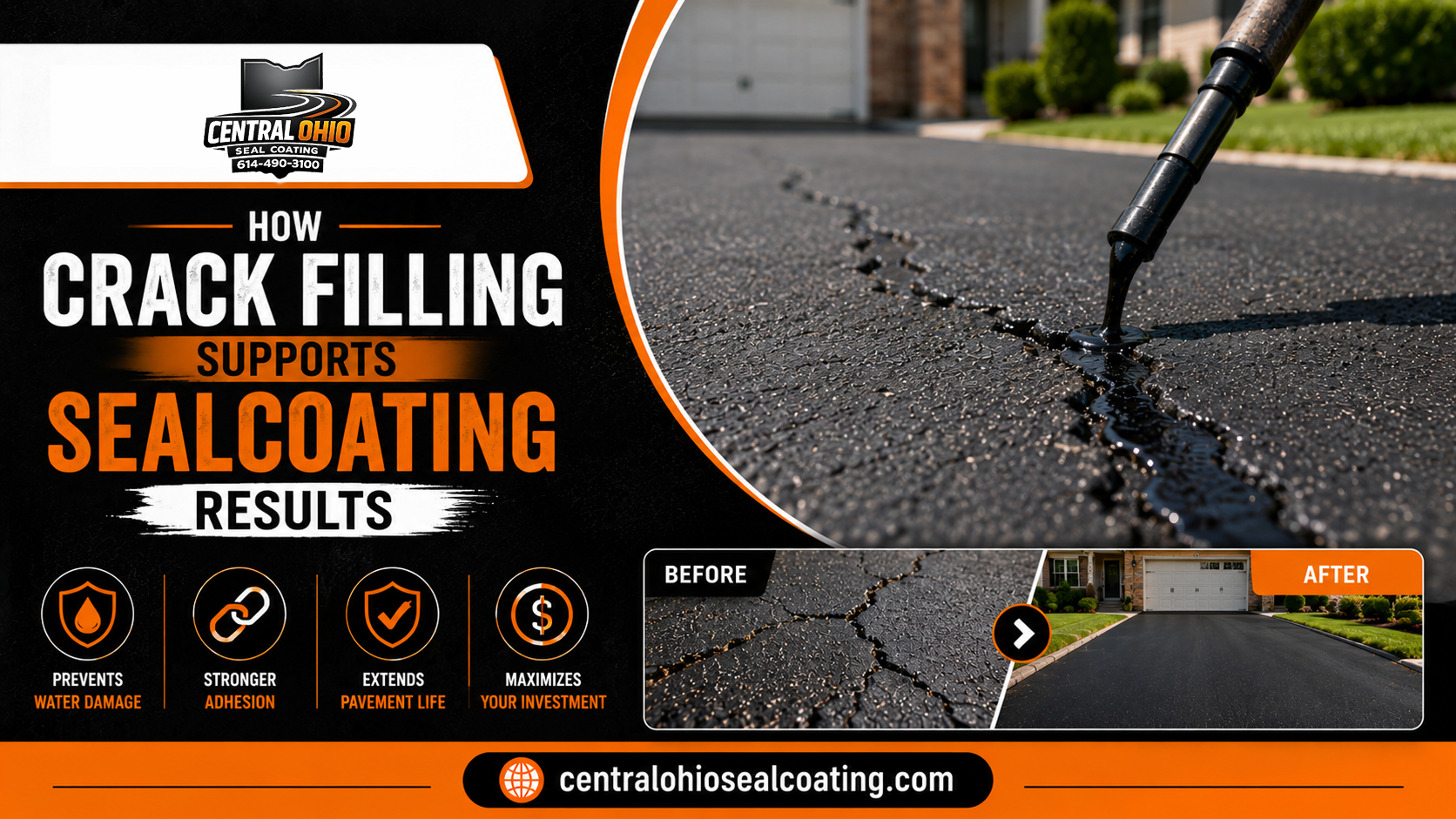
Central Ohio Seal Coating explains that cracks and minor damaged areas should be addressed before sealcoating so the protective coating can perform properly.
Crack preparation helps:
- Reduce open pathways for moisture
- Improve the finished appearance
- Create a more uniform surface
- Prevent obvious gaps in the finished treatment
- Support long-term pavement maintenance
Why this matters for coverage
Large or untreated cracks interrupt the surface. If the sealcoat simply bridges these openings, the finished appearance can remain inconsistent and the underlying crack can continue causing problems.
Preparing the pavement first allows the sealcoating application to focus on creating a consistent protective layer.
4. Oil-Stained Areas Receive Special Attention
Oil and automotive fluids can create difficult conditions for sealcoating.
If contaminated areas are not properly addressed, sealcoat may not bond as effectively.
Central Ohio Seal Coating’s published guidance identifies oil stains as a preparation concern and explains that contaminated areas need attention before coating application.
Professionals may:
- Identify contaminated areas
- Clean the affected pavement
- Treat difficult stains
- Allow the surface to dry
- Confirm that the pavement is suitable for coating
This step helps prevent isolated areas from looking different from the rest of the pavement.
5. Proper Material Preparation Helps Maintain Consistency
The sealcoating material needs to be properly prepared before it reaches the pavement.
A consistent mixture helps the coating spread predictably across the surface.
Depending on the product and project, sealcoat materials may include asphalt emulsion and other components designed to provide durability and application performance.
Proper material preparation supports:
- Consistent texture
- Predictable application
- Uniform appearance
- Proper bonding
- Reliable surface protection
Using unsuitable or poorly prepared material can contribute to uneven results.
Central Ohio Seal Coating emphasizes high-quality materials and professional preparation as part of its approach to reliable sealcoating.
6. Professionals Choose the Right Application Method
The application method can vary depending on the pavement.
Professional crews may use spray equipment, squeegees, or a combination of techniques depending on the size, layout, condition, and requirements of the surface.
Spray application
Spray equipment can provide efficient coverage across large pavement areas.
Squeegee application
Squeegees provide controlled application and can be useful for certain residential or smaller pavement surfaces.
Combination application
Professionals may combine techniques to address different areas of the same project.
The important factor is not simply which tool is used. It is how consistently the material is distributed across the prepared pavement.
7. Professionals Control Application Thickness
More sealcoat isn’t automatically better.
If too little material is applied, portions of the asphalt may receive inadequate coverage. If too much is applied, the surface can develop excessive buildup or take longer to cure properly.
Professionals therefore work toward an appropriate and consistent application rather than simply trying to make the coating as thick as possible.
Controlled application helps prevent:
- Thin spots
- Heavy buildup
- Streaking
- Uneven texture
- Inconsistent drying
Central Ohio Seal Coating highlights careful application and consistent coverage as important aspects of professional workmanship.
8. Edges and Difficult Areas Receive Extra Attention
Large open pavement areas are generally easier to coat consistently than edges, corners, joints, and areas around obstacles.
Professional crews pay attention to these locations rather than treating them as an afterthought.
Difficult areas can include:
- Driveway edges
- Curved sections
- Around drains
- Near curbs
- Around structures
- Narrow pavement sections
- Joints between surfaces
Central Ohio Seal Coating specifically identifies attention to pavement edges, joints, and high-traffic areas as part of its professional standards.
Careful edge work helps create a finished appearance that looks complete rather than leaving obvious untreated sections.
9. Professionals Work Systematically Across the Pavement
Even application requires organization.
A professional crew generally works according to a planned sequence rather than randomly moving across the pavement.
This helps control:
- Coverage
- Application rate
- Work direction
- Transitions
- Edges
- Access points
A systematic approach also reduces the likelihood of accidentally missing sections.
Why organization matters
On a large parking lot, for example, it can be difficult to visually identify a small untreated area once the coating has been applied around it.
Following an organized application pattern helps crews maintain better control over the entire project.
10. High-Traffic Areas Receive Careful Attention
Some portions of pavement experience considerably more wear than others.
Examples include:
- Parking-space entrances
- Driveway entrances
- Turning areas
- Loading areas
- Traffic lanes
- Areas near commercial entrances
Central Ohio Seal Coating specifically notes attention to high-traffic areas as part of its professional sealcoating standards.
These areas deserve careful evaluation because frequent vehicle movement can place additional stress on pavement and its protective coating.
11. Weather Conditions Are Considered
Ohio weather can change quickly, and sealcoating requires suitable conditions for proper drying and curing.
Central Ohio Seal Coating explains that unsuitable weather, damp pavement, excessive humidity, or rain can interfere with proper sealcoating performance.
Professionals monitor conditions such as:
- Temperature
- Rain forecasts
- Pavement moisture
- Humidity
- Drying conditions
- Expected curing time
Why weather affects coverage
A coating that does not dry consistently may produce an inconsistent appearance.
Rain can also interfere with fresh sealcoat before it has properly cured.
Choosing an appropriate application window is therefore part of producing consistent results.
12. Proper Curing Protects the Finished Coverage
Application isn’t the final step.
Once sealcoat has been applied, it needs adequate time to cure before normal traffic resumes.
Central Ohio Seal Coating’s FAQ states that sealcoating commonly requires around 24 to 48 hours to fully cure, although conditions such as temperature and humidity can affect drying time.
Premature traffic can cause:
- Tire marks
- Surface damage
- Uneven wear
- Scuffing
- Reduced finish quality
Keeping vehicles off the pavement for the required curing period helps protect the uniformity established during application.
13. Final Inspection Helps Catch Missed Areas
A professional sealcoating project should not end immediately after the final pass.
The finished pavement should be reviewed to identify potential inconsistencies.
A final inspection can check for:
- Missed areas
- Thin sections
- Uneven appearance
- Edge problems
- Surface contamination
- Proper curing
- Overall coverage
Central Ohio Seal Coating lists final inspection as a key stage of its process.
This provides an additional quality-control opportunity before the project is considered complete.
Sealcoating Coverage: What Professionals Check
| Project Stage | What Professionals Focus On | Why It Matters |
|---|---|---|
| Inspection | Pavement condition | Identifies preparation and repair needs |
| Cleaning | Dirt and debris removal | Supports proper bonding |
| Crack repair | Open cracks and minor damage | Creates a more uniform surface |
| Oil treatment | Contaminated areas | Helps improve adhesion |
| Material preparation | Consistency of coating | Supports predictable application |
| Application | Even distribution | Creates consistent coverage |
| Edge work | Borders, joints, obstacles | Prevents missed sections |
| Curing | Drying conditions | Protects the finished surface |
| Final inspection | Coverage and appearance | Helps identify inconsistencies |
Why DIY Sealcoating Can Produce Uneven Results
Sealcoating may look like a straightforward project, but consistent coverage requires preparation, equipment, technique, and timing.
Central Ohio Seal Coating identifies several common DIY challenges, including poor preparation, uneven application, inadequate equipment, improper crack repair, and weak sealcoat bonding.
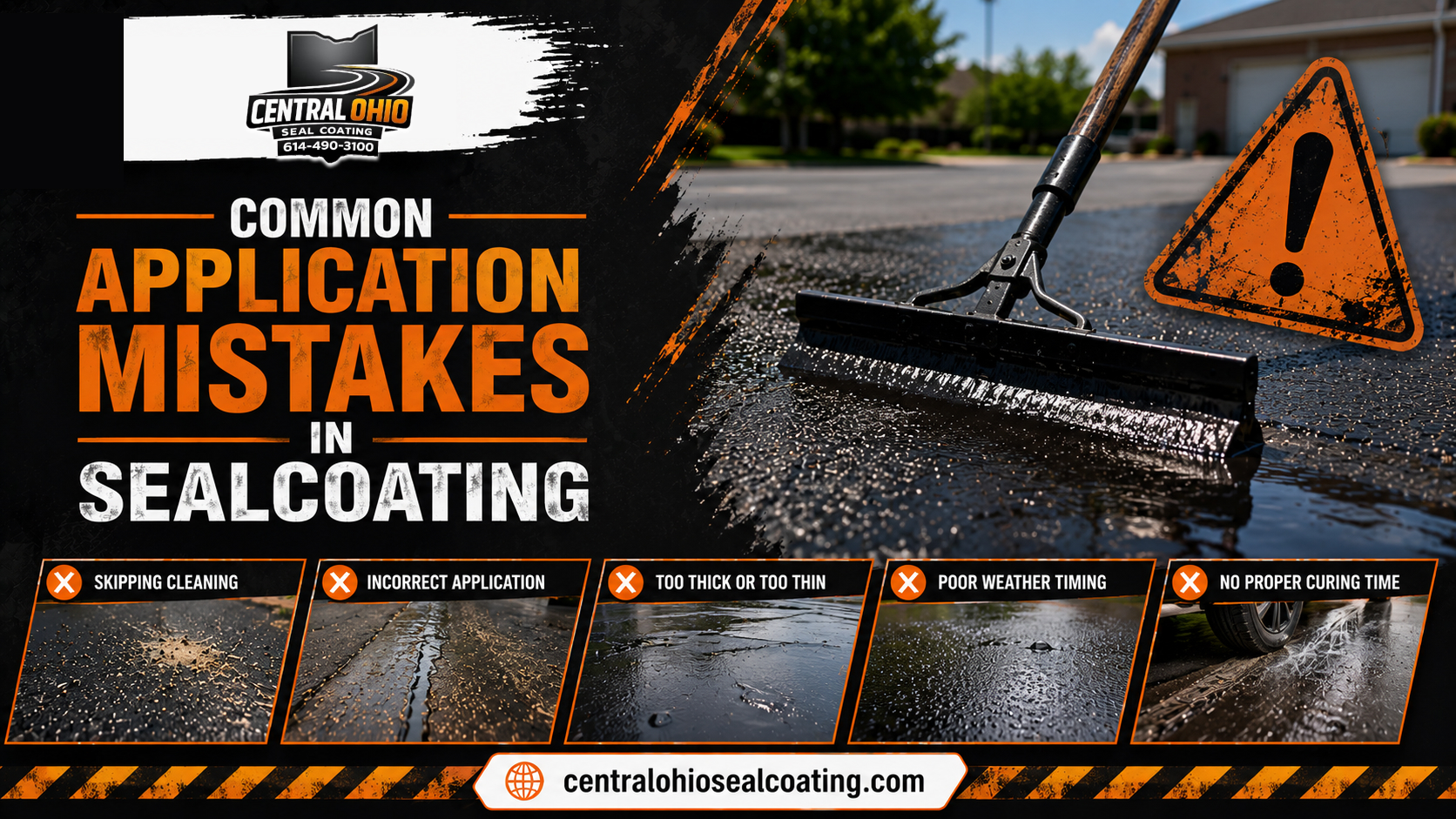
Common DIY problems include:
- Applying too much material in one area
- Leaving thin areas elsewhere
- Missing edges
- Failing to clean the pavement properly
- Applying over untreated cracks
- Working in unsuitable weather
- Using inadequate equipment
- Allowing traffic onto the surface too soon
The result may look acceptable from a distance but lack the consistency of a professionally prepared and applied coating.
Professional vs. Uneven Sealcoat Application
| Professional Application | Poor Application |
|---|---|
| Thorough surface cleaning | Debris left on pavement |
| Cracks addressed first | Cracks simply covered |
| Proper material preparation | Inconsistent mixture |
| Controlled application | Heavy and thin spots |
| Careful edge work | Missed edges |
| Weather considered | Application during poor conditions |
| Appropriate curing | Traffic allowed too soon |
| Final inspection | No quality check |
The difference is often found in the preparation and attention to detail rather than simply the coating itself.
How Ohio Weather Makes Proper Coverage Important
Ohio asphalt is exposed to several seasonal stresses.
During winter, water can enter existing cracks and freeze. During warmer months, sunlight and temperature changes contribute to oxidation and surface aging.
Central Ohio Seal Coating explains that freeze-thaw cycles, moisture, UV exposure, and vehicle traffic can all contribute to asphalt deterioration.
A consistent protective coating can be part of a broader maintenance strategy for suitable pavement.
However, sealcoating should not be viewed as a replacement for proper drainage, crack repair, pothole repair, or structural pavement work.
How Often Should Asphalt Be Sealcoated?
The appropriate schedule depends on the pavement’s condition, traffic, exposure, and previous maintenance.
Central Ohio Seal Coating’s FAQ recommends that many asphalt surfaces be sealcoated approximately every two to three years, with the exact interval depending on factors such as traffic and weather.
Property owners should consider:
- Pavement age
- Current surface condition
- Traffic volume
- Previous sealcoating
- Weather exposure
- Existing cracks
- Overall maintenance history
Instead of automatically applying sealcoat according to a fixed calendar, it is better to evaluate whether the pavement is ready for another protective treatment.
When Sealcoating May Not Be Appropriate
Even perfect coverage cannot solve severe pavement failure.
Sealcoating is not intended to repair:
- Major potholes
- Severe structural cracking
- Failed foundations
- Significant settlement
- Extensive pavement deformation
Central Ohio Seal Coating explains that sealcoating protects suitable asphalt but does not correct serious structural damage.
If the pavement has major underlying problems, repairs or reconstruction may need to happen before protective maintenance is considered.
The Importance of Professional Equipment
Professional equipment allows crews to control the application more effectively.
Central Ohio Seal Coating highlights professional equipment and proven techniques as important factors in delivering smooth, consistent sealcoating results.
Equipment can help professionals:
- Distribute material consistently
- Cover larger areas efficiently
- Maintain controlled application
- Reach difficult pavement sections
- Produce a more uniform finish
Equipment alone doesn’t guarantee quality, but when combined with proper preparation and trained application, it can make consistency easier to achieve.
Why Central Ohio Seal Coating Focuses on Consistent Coverage
Central Ohio Seal Coating emphasizes careful preparation, quality materials, professional equipment, and consistent application as core elements of its sealcoating services.
Its published process includes:
- Consultation and evaluation
- Detailed pavement inspection
- Surface cleaning
- Crack repair
- Sealcoating application
- Proper curing
- Final inspection
This structured process helps ensure the protective coating is not treated as a quick cosmetic application but as part of a complete asphalt maintenance project.
Final Thoughts
Achieving reliable sealcoating coverage Ohio properties can depend on much more than the material used. Consistency begins before the first drop of sealcoat reaches the pavement. A professional crew must inspect the asphalt, remove dirt and debris, address cracks and contamination, prepare the material correctly, choose an appropriate application method, control coverage, pay attention to edges and high-traffic areas, and allow the coating to cure properly.
Central Ohio Seal Coating emphasizes these preparation and application practices because they help produce smooth, consistent coverage and dependable pavement protection.
For Ohio property owners, the goal should not simply be to make asphalt look darker. Properly applied sealcoating can help protect suitable pavement from moisture, oxidation, sunlight, traffic, and everyday wear while improving its overall appearance.
Central Ohio Seal Coating provides professional sealcoating services for residential and commercial properties throughout Columbus and Central Ohio, with a focus on thorough preparation, consistent application, and long-lasting pavement maintenance.