

How Do Oil and Chemicals Damage Asphalt Driveways in Ohio? Oil, fuel, and certain petroleum-based chemicals can damage asphalt because asphalt binder itself is petroleum-based. When automotive fluids remain on the pavement, they can soften the binder and weaken the affected area. The Asphalt Institute explains that gasoline and car oil can dissolve asphalt cement and cause localized softening and surface degradation.
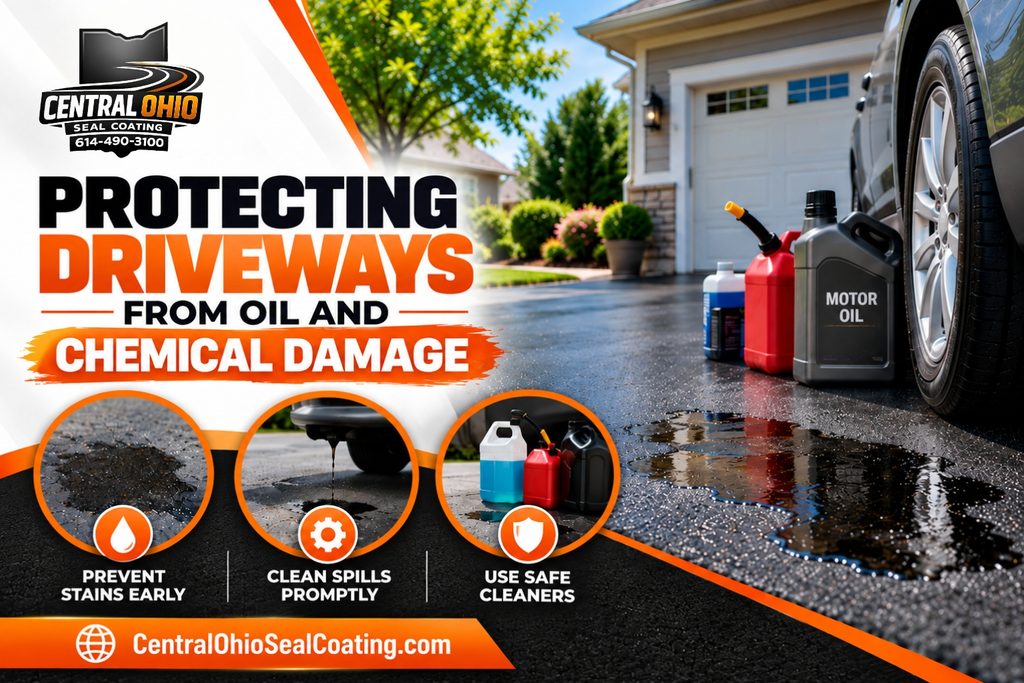
For homeowners, preventing asphalt oil damage Ohio properties requires more than simply removing visible stains. Spills should be addressed promptly, damaged areas should be evaluated, and structurally sound pavement can benefit from regular sealcoating.
Central Ohio Seal Coating provides residential sealcoating designed to create a protective barrier against vehicle fluids, moisture, weather exposure, and everyday wear.
1. Why Oil Is Harmful to Asphalt
Asphalt contains a binder that holds aggregate particles together.
Petroleum-based products can interact with that binder. According to the Asphalt Institute, gasoline and automotive oil can dissolve asphalt cement, potentially softening the pavement in areas exposed to significant spills.
This means a small vehicle leak should not automatically be treated as harmless.
Repeated exposure can leave the affected section:
- Softer than surrounding pavement
- Darker or stained
- More susceptible to surface wear
- More vulnerable to deformation
- More difficult to sealcoat properly
2. Common Sources of Oil Damage
Residential driveways can be exposed to automotive fluids from several sources.
Common examples include:
- Engine oil
- Transmission fluid
- Gasoline
- Diesel fuel
- Hydraulic fluids
- Grease
- Other automotive fluids
A vehicle that regularly leaks fluids can repeatedly expose the same section of pavement.
Over time, repeated contamination may create a visibly different area from the surrounding asphalt.
3. Small Oil Leaks Should Not Be Ignored
A small spot may seem like nothing more than a cosmetic stain.
However, repeated leakage in the same location can gradually affect the asphalt surface.
If a vehicle consistently leaves a stain on the driveway, homeowners should investigate the source and address the leak rather than repeatedly cleaning the pavement without fixing the cause.
Stopping the source is an important first step in preventing recurring asphalt oil damage Ohio homeowners may otherwise continue seeing.
4. Oil Damage Can Make Sealcoating More Difficult
Oil-contaminated pavement requires careful preparation before sealcoating.
Central Ohio Seal Coating specifically identifies oil contamination as a condition that can interfere with sealcoat adhesion. Oil stains may need to be cleaned and treated before the coating is applied.
If oil remains on the surface, the sealcoat may:
- Fail to bond properly
- Peel
- Wear unevenly
- Leave inconsistent coverage
This is why preparation is an important part of protecting an asphalt driveway.
5. Clean Spills as Soon as Possible
Prompt attention can help reduce the time that oil or other fluids remain in contact with the pavement.
When a spill occurs, the priority should be to address it safely and according to the requirements of the cleaning material being used.
Homeowners should avoid experimenting with harsh chemicals that could create additional pavement or environmental problems.
For significant contamination, professional evaluation can help determine the appropriate treatment.
6. Don’t Simply Paint Over Oil Stains
One common mistake is applying sealcoat directly over an untreated oil spot.
That does not address the contamination.
Central Ohio Seal Coating explains that oil-contaminated areas should be properly cleaned and treated before sealcoating because contamination can prevent the coating from bonding correctly.
The correct approach is generally:
Identify → clean → treat → inspect → sealcoat when appropriate.
7. Sealcoating Adds a Protective Barrier
For structurally sound asphalt, sealcoating can provide an additional protective layer.
Central Ohio Seal Coating explains that sealcoating helps protect pavement from oil spills, vehicle fluids, moisture, UV exposure, and everyday wear.
This does not make asphalt completely immune to chemical damage.
Instead, the sealcoat provides a barrier between the pavement and many of the substances that come into contact with the surface.
8. Sealcoating Can Make Spills Easier to Manage
A properly maintained and sealed surface can make certain spills easier to identify and clean before they remain on the pavement for an extended period.
Central Ohio Seal Coating notes that sealcoating helps create a protective surface layer that limits chemical penetration and makes cleanup easier.
That makes routine sealcoating useful as part of a broader driveway-maintenance plan.
9. Chemical Damage Is Not Limited to Oil
Oil is not the only substance homeowners should consider.
Driveways may also encounter:
- Fuel
- Automotive fluids
- Grease
- Certain cleaning products
- Other chemical contaminants
Different substances can affect asphalt differently.
Therefore, homeowners should avoid assuming that every chemical spill can be treated in exactly the same way.
10. De-Icing Materials Are a Different Concern
Winter maintenance products deserve some context.
The Asphalt Institute states that well-designed and properly constructed asphalt pavements are not generally damaged by sodium chloride or calcium chloride used for snow and ice control.
That means homeowners should not automatically assume that ordinary de-icing salt is equivalent to an oil spill.
Oil and petroleum-based fluids interact with asphalt binder differently.
11. Oil Damage Can Affect Pavement Appearance
Even when a spill does not cause immediate structural deterioration, it can leave visible stains.
A driveway with multiple dark oil spots can appear:
- Uneven
- Dirty
- Aged
- Poorly maintained
Central Ohio Seal Coating notes that oil and chemical stains can affect the appearance of asphalt even when the damage is not immediately severe.
For homeowners concerned about curb appeal, keeping the driveway clean and properly maintained can make a noticeable difference.
12. Watch for Soft or Deformed Asphalt
One warning sign of significant oil contamination is a localized area that appears softer or behaves differently from surrounding pavement.
Possible signs include:
- Surface deformation
- Tire impressions
- Soft texture
- Loose aggregate
- Persistent dark staining
- Localized deterioration
The Asphalt Institute explains that petroleum products can soften asphalt binder in areas exposed to significant fuel or oil contamination.
If the pavement has become structurally compromised, sealcoating alone will not correct the problem.
13. Repair Damaged Areas Before Sealcoating
Sealcoating is primarily preventive.
It is appropriate for pavement that remains sufficiently sound.
If oil contamination has caused substantial deterioration, the affected area may require repair before sealcoating.
Central Ohio Seal Coating’s maintenance approach begins with evaluating pavement condition and addressing cracks, oil stains, potholes, and other issues before applying the protective coating.
14. Keep Vehicles Properly Maintained
One of the easiest ways to reduce recurring oil damage is to prevent leaks.
Homeowners should pay attention to:
- Oil spots appearing repeatedly
- Fluid underneath parked vehicles
- Unusual fluid loss
- New stains after vehicle maintenance
If the same vehicle repeatedly leaves oil on the driveway, cleaning the pavement without addressing the leak only treats the symptom.
15. Protect the Most Frequently Used Areas
Vehicle parking areas receive repeated exposure to automotive fluids.
If a particular portion of the driveway is routinely used for:
- Vehicle parking
- Maintenance work
- Equipment storage
- Loading
- Automotive repairs
it may experience greater contamination risk.
Keeping repair and maintenance work away from the driveway when possible can reduce unnecessary chemical exposure.
16. Don’t Perform Major Vehicle Repairs on the Driveway
Routine vehicle use is one thing.
Performing oil changes, fluid replacement, or mechanical repairs directly on asphalt creates a greater chance of spills.
Whenever possible, vehicle maintenance should be performed in an appropriate location where spills can be properly contained and managed.
This simple habit can help reduce preventable asphalt oil damage Ohio homeowners encounter.
17. Inspect the Driveway After Winter
Ohio driveways experience seasonal temperature changes and winter weather.
After winter, inspect the pavement for:
- New cracks
- Potholes
- Oil stains
- Surface wear
- Soft areas
- Drainage problems
Central Ohio Seal Coating explains that seasonal freeze-thaw cycles and moisture can contribute to asphalt deterioration, making regular inspection particularly useful.
18. Combine Oil Protection With Crack Prevention
Oil protection should not be considered separately from general asphalt maintenance.
A driveway with cracks provides more opportunities for water and other contaminants to reach the pavement.
A broader maintenance program can therefore include:
- Crack filling
- Sealcoating
- Oil-stain treatment
- Drainage maintenance
- Pothole repair
- Regular inspections
Central Ohio Seal Coating offers these types of pavement-maintenance solutions for residential surfaces.
19. Why Preparation Matters Before Sealcoating
A successful sealcoating project begins with preparation.
Central Ohio Seal Coating’s process includes inspecting the surface, cleaning contaminants, treating cracks and problem areas, and then applying the sealcoat.
This is particularly important when oil stains are present.
A clean, properly prepared surface provides a better foundation for the protective coating.
20. How Central Ohio Seal Coating Can Help
Central Ohio Seal Coating can help homeowners evaluate driveway surfaces affected by oil stains, vehicle fluids, weather, and everyday wear.
Its residential sealcoating service is designed to provide a protective layer over suitable asphalt while helping defend the surface against moisture, UV exposure, automotive fluids, and normal traffic.
Depending on the driveway’s condition, the maintenance process may involve:
- Inspecting the pavement
- Identifying oil-contaminated areas
- Cleaning the surface
- Addressing cracks or minor damage
- Preparing the pavement
- Applying sealcoat
- Allowing sufficient curing time
This approach helps ensure that oil contamination is not simply covered without being addressed.
21. When Sealcoating May Not Be Enough
There are situations where a driveway needs more than a protective coating.
For example, extensive oil contamination may have softened the asphalt substantially.
Other warning signs include:
- Deep pavement failure
- Severe deformation
- Large potholes
- Extensive alligator cracking
- Significant settlement
In these situations, the affected pavement should be evaluated before deciding on sealcoating.
A protective coating is most useful when the underlying asphalt remains structurally suitable.
22. A Simple Oil-Damage Prevention Checklist
Homeowners can use this checklist to protect their asphalt driveway:
- Inspect the driveway regularly.
- Look for new oil or fuel stains.
- Address vehicle leaks promptly.
- Avoid performing fluid changes on the pavement.
- Clean spills as soon as practical.
- Do not apply sealcoat over untreated oil contamination.
- Treat cracks before sealcoating when appropriate.
- Maintain proper drainage.
- Schedule regular pavement inspections.
- Consider sealcoating when the asphalt is structurally sound.
- Repair seriously damaged areas instead of covering them.
Final Thoughts
Oil and petroleum-based chemicals deserve attention because asphalt binder itself is petroleum-based. The Asphalt Institute explains that gasoline and automotive oil can dissolve asphalt cement and soften the pavement in areas exposed to significant spills.
For homeowners, protecting against asphalt oil damage Ohio properties starts with prevention. Keep vehicles maintained, address leaks, clean spills promptly, and avoid performing major fluid-related repairs directly on the driveway. Regular pavement inspections can also help identify soft spots, stains, cracks, and other changes before they become more serious.
Sealcoating can add another layer of protection for structurally sound asphalt. Central Ohio Seal Coating services help create a barrier against oil spills, vehicle fluids, moisture, UV exposure, and everyday wear.
Most importantly, oil-contaminated areas should be properly prepared before sealcoating. Applying a coating over untreated oil stains can interfere with adhesion and lead to peeling or uneven coverage.
With proper cleaning, timely repairs, regular inspections, and professional sealcoating when appropriate, Ohio homeowners can give their asphalt driveways better protection against oil, chemical exposure, and the seasonal conditions that contribute to pavement deterioration.