

How Can Homeowners Prevent Cracks in an Ohio Asphalt Driveway? Cracks are among the earliest warning signs that an asphalt driveway needs attention. In Ohio, moisture and repeated temperature changes can make small cracks more important because water can enter the pavement and contribute to further deterioration. Ohio’s pavement guidance identifies crack sealing as a maintenance treatment used to reduce water infiltration into structurally sound asphalt.

Effective driveway crack prevention Ohio homeowners can use starts before cracks become widespread. Regular inspections, good drainage, timely crack treatment, appropriate sealcoating, and proper pavement maintenance can all help protect a residential asphalt surface.
Central Ohio Seal Coating can help homeowners evaluate their driveway’s condition and determine whether preventive sealcoating, crack treatment, or other maintenance is appropriate.
1. Inspect Your Driveway Regularly
The easiest way to prevent a small pavement problem from becoming a larger one is to find it early.
Homeowners should periodically look for:
- Fine surface cracks
- Long horizontal or vertical cracks
- Cracks near driveway edges
- Cracking around previous repairs
- Potholes
- Areas where water collects
- Loose or deteriorating asphalt
- Uneven or settled sections
The Asphalt Institute recommends addressing appropriate surface deterioration before it progresses, and identifies crack sealing as an important pavement-preservation treatment.
2. Keep Water Away From the Driveway
Water is one of the most important factors to control when trying to prevent asphalt deterioration.
Poor drainage can allow water to remain on the pavement or reach the supporting layers beneath it.
Homeowners should watch for:
- Standing water after rain
- Water flowing across the driveway
- Erosion along pavement edges
- Blocked drainage paths
- Low spots
- Soil washing away beside the asphalt
Ohio pavement guidance specifically describes surface treatments as a way to reduce water infiltration through structurally sound pavement.
3. Seal Cracks Before They Become Larger
Once a suitable crack appears, timely treatment can help prevent water and debris from entering it.
Crack sealing is designed to reduce water infiltration through cracks. The Asphalt Institute explains that properly treated cracks can help protect the pavement structure from moisture intrusion.
This is particularly relevant to Ohio driveways because moisture that enters pavement openings can be exposed to repeated temperature changes.
However, not every crack should simply be filled. The appropriate treatment depends on its size, movement, location, and underlying cause.
4. Understand Ohio’s Freeze-Thaw Conditions
Ohio pavement experiences repeated seasonal temperature changes.
When water is present in pavement openings, freezing and thawing can contribute to deterioration.
That makes timely maintenance especially important.
A small crack may appear insignificant during warmer weather, but continued moisture exposure can gradually make the surrounding asphalt more vulnerable.
This is why driveway crack prevention Ohio should include both crack treatment and moisture management rather than waiting until cracks become large.
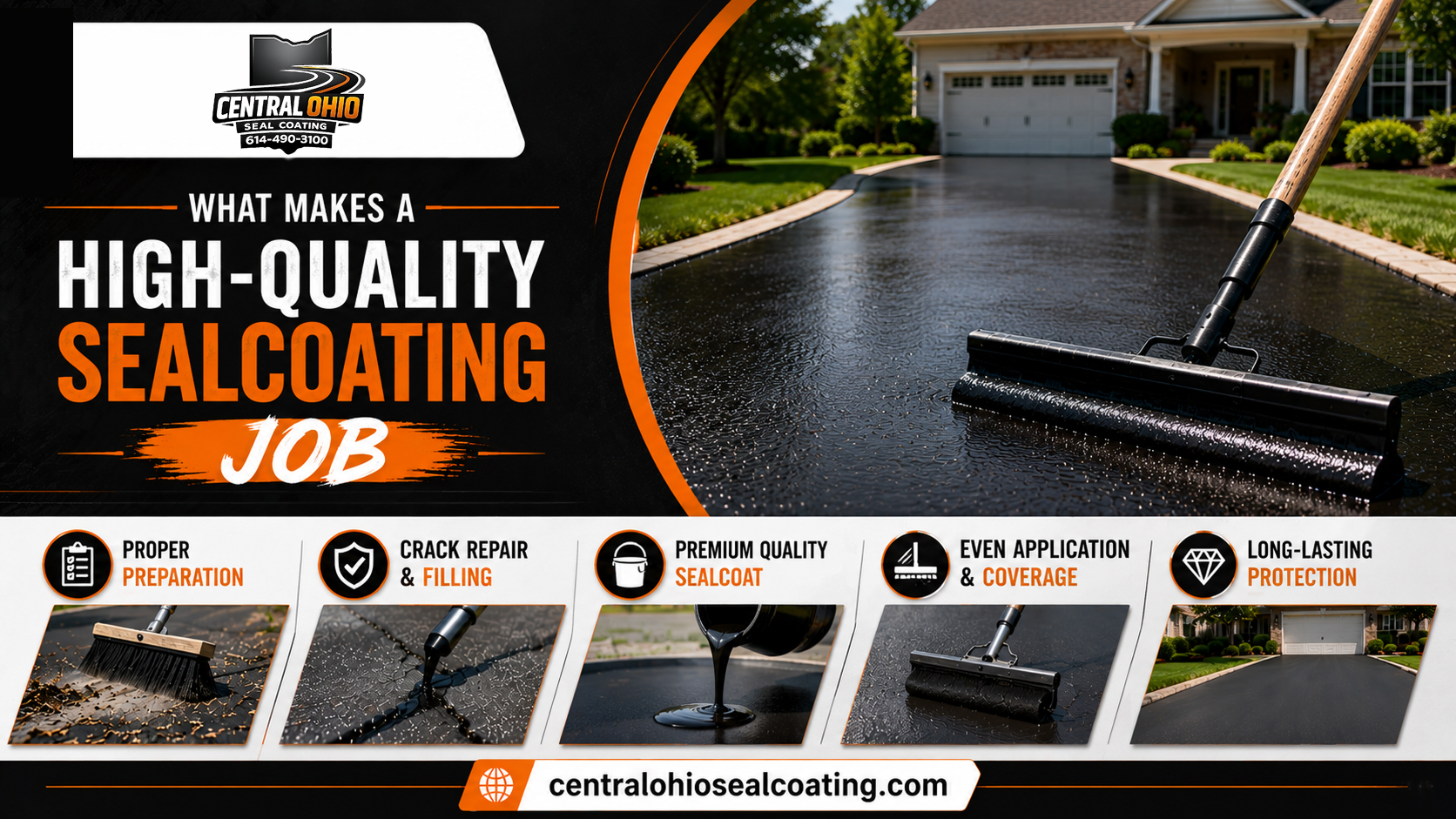
5. Maintain a Protective Sealcoat
Sealcoating is another preventive maintenance measure for suitable asphalt.
It can help protect the surface from:
- Moisture
- UV exposure
- Oxidation
- Surface wear
- Certain chemical exposure
Pave OH describes sealcoating as a preventive treatment that helps protect asphalt from moisture, UV rays, oil, chemicals, and surface wear.
Central Ohio Seal Coating can evaluate whether an existing driveway is suitable for sealcoating and whether cracks or other surface problems should be addressed first.
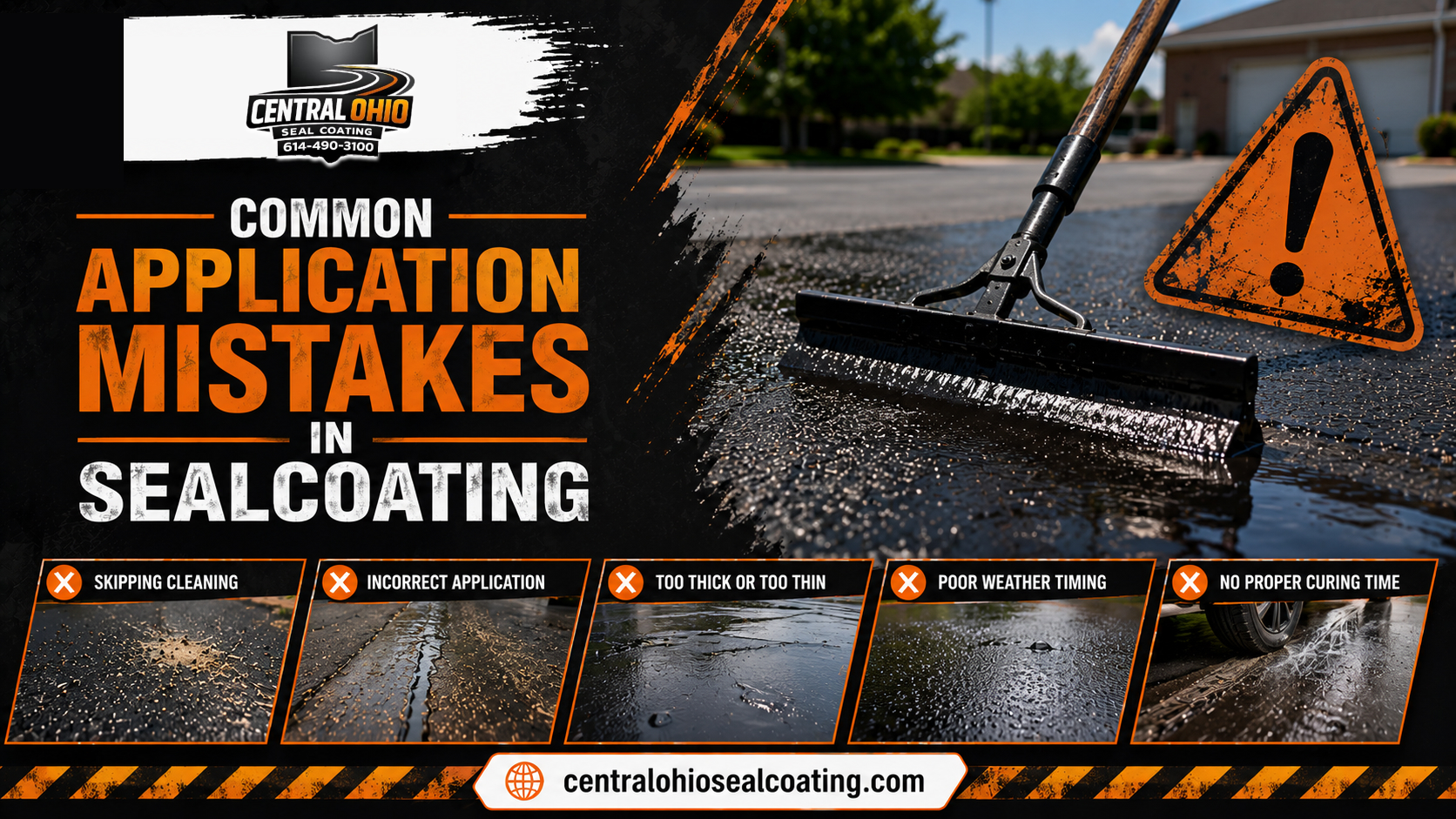
6. Don’t Sealcoat Over Serious Cracks
Sealcoating is not a substitute for crack repair.
If a driveway already contains significant cracking, simply covering the surface may not address the underlying problem.
The Asphalt Institute distinguishes between preventive surface treatments and treatments needed for more serious pavement deterioration.
A better process is generally:
Inspect → identify cracks → repair appropriate cracks → prepare surface → sealcoat when suitable.
This allows the protective treatment to be applied to pavement that is in an appropriate condition.
7. Keep the Driveway Edges Supported
Cracks frequently develop near poorly supported pavement edges.
Potential causes can include:
- Poor drainage
- Soil erosion
- Vegetation
- Lack of edge support
- Heavy traffic near the edge
Ohio asphalt guidance identifies poor drainage and insufficient edge support as potential causes of edge cracking.
Therefore, preventing edge cracking may require more than filling the crack itself.
The surrounding drainage and support should also be considered.
8. Avoid Allowing Water to Pool Along Edges
Pay particular attention to the area where asphalt meets grass, soil, landscaping, or other surfaces.
If rainwater repeatedly flows along the driveway edge, it can contribute to erosion or weaken support around the pavement.
A simple inspection after rainfall can reveal whether water is moving properly away from the driveway.
If the same location repeatedly becomes wet or eroded, the underlying drainage issue should be investigated.
9. Address Potholes Quickly
A pothole is not simply a cosmetic problem.
It indicates that the pavement has already experienced localized deterioration.
If left untreated, water and traffic can contribute to further damage.
Homeowners should address potholes rather than relying on sealcoating to cover them.
Sealcoating protects suitable pavement; it does not reconstruct a failed area.
10. Watch for Alligator Cracking
Alligator cracking is a pattern of interconnected cracks that resembles the scales of an alligator.
This type of cracking can indicate a deeper pavement problem rather than ordinary surface aging.
When cracking becomes extensive, homeowners should not assume that additional sealcoat will solve it.
The pavement should be evaluated to determine whether the issue is surface-level or structural.
11. Avoid Heavy Loads on Weak Areas
Residential driveways are normally designed around expected household traffic.
Repeated loading from unusually heavy vehicles or equipment can place additional stress on aging or weakened pavement.
Pay particular attention to areas that already have:
- Cracks
- Settlement
- Rutting
- Patching
- Soft spots
Keeping heavy loads away from compromised areas can help reduce additional stress while repairs are being considered.
12. Maintain the Driveway Throughout the Year
Crack prevention works best as an ongoing process.
Spring
Look for damage that became visible after winter.
Summer
Monitor cracking, surface dryness, and general pavement condition.
Fall
Address appropriate cracks and maintenance needs before colder weather.
Winter
Monitor drainage and avoid allowing water to remain around damaged pavement.
Regular seasonal inspections make it easier to catch deterioration early.
13. Keep the Surface Clean
Leaves, dirt, and other debris can accumulate on residential driveways.
Keeping the pavement reasonably clean makes it easier to identify new cracks and other changes.
It also helps homeowners notice:
- Water stains
- Loose aggregate
- Surface deterioration
- New potholes
- Areas where previous repairs are failing
A clean surface makes routine inspections much more effective.
14. Don’t Ignore Small Cracks
One of the biggest mistakes homeowners can make is assuming that a small crack does not matter.
A single minor crack may not indicate serious deterioration.
But multiple cracks, expanding cracks, or cracks accompanied by water problems deserve attention.
The Asphalt Institute recommends sealing appropriate cracks to limit moisture intrusion, while Ohio’s pavement guidance likewise identifies crack sealing as a method of reducing water infiltration.
15. Make Sure New Asphalt Has a Proper Foundation
Crack prevention starts before the asphalt is installed.
A driveway constructed over an unstable or poorly prepared base may develop problems regardless of how well the surface is maintained.
Proper preparation can include:
- Removing unsuitable material
- Preparing the base
- Achieving appropriate compaction
- Addressing drainage
- Establishing proper grades
- Installing suitable asphalt thickness
Good surface maintenance cannot completely compensate for a fundamentally inadequate pavement structure.
16. Give New Asphalt Time to Develop
A new driveway does not necessarily need immediate sealcoating.
The Asphalt Institute states that a well-designed and properly constructed low-traffic pavement such as a residential driveway may not require sealing for approximately two to five years, depending on climate and original construction quality.
Homeowners should therefore follow an appropriate maintenance schedule rather than automatically applying treatments immediately after installation.
17. Use Sealcoating as Preventive Maintenance
When the asphalt is structurally sound and has reached the appropriate stage for maintenance, sealcoating can be part of a broader crack-prevention strategy.
Its role is primarily protective.
It can help slow surface aging and reduce exposure to environmental conditions.
Central Ohio Seal Coating’s residential information describes sealcoating as a way to protect suitable asphalt from moisture, weather exposure, and surface wear.
18. Don’t Use Sealcoating to Hide Structural Problems
If a driveway has:
- Extensive alligator cracking
- Major potholes
- Significant settlement
- Severe rutting
- Base failure
it may need more substantial work.
The Asphalt Institute notes that surface treatments are intended for structurally sound pavements and are not appropriate for pavement showing structural failure.
An honest pavement evaluation is therefore important before selecting a maintenance treatment.
19. Keep Trees and Vegetation Under Control
Vegetation growing directly beside or through pavement can contribute to problems.
Roots may affect pavement edges, while vegetation can interfere with drainage and retain moisture.
Keep an eye on:
- Large roots near the driveway
- Grass growing through cracks
- Weeds in pavement openings
- Heavy vegetation along edges
Ohio asphalt guidance identifies vegetation and drainage conditions among factors associated with edge cracking.
20. Avoid Delaying Necessary Repairs
Preventive maintenance works best when problems are still manageable.
For example:
Small crack → timely treatment
can be considerably easier to manage than:
Large interconnected cracks → water intrusion → weakened pavement → potholes or structural deterioration.
This is why routine inspection is so valuable.
21. How Central Ohio Seal Coating Can Help
Central Ohio Seal Coating can help homeowners maintain suitable residential asphalt by evaluating the surface and providing appropriate sealcoating services.
Depending on the driveway’s condition, maintenance may involve:
- Surface preparation
- Crack treatment
- Sealcoating
- Preventive maintenance
- Condition evaluation
The objective is to protect pavement that is still suitable for preservation rather than waiting until deterioration becomes extensive.
22. A Simple Crack-Prevention Checklist
Homeowners can use this checklist throughout the year:
- Inspect the driveway regularly
- Look for new cracks
- Treat appropriate cracks early
- Check for standing water
- Maintain drainage
- Watch driveway edges
- Control vegetation
- Repair potholes promptly
- Consider sealcoating when appropriate
- Avoid sealing over structural damage
- Monitor pavement after winter
- Address recurring problems instead of repeatedly covering them
Final Thoughts
Preventing every asphalt crack is not realistic, particularly in a climate where pavement experiences repeated moisture and temperature changes. But homeowners can significantly improve their approach to driveway crack prevention Ohio by monitoring the pavement regularly and addressing problems while they are still manageable.
The most important principles are simple: control water, inspect the driveway, treat suitable cracks early, maintain the pavement surface, and address drainage or structural problems rather than covering them up. Ohio’s pavement guidance specifically identifies crack sealing as a treatment that reduces water infiltration, while the Asphalt Institute recommends timely maintenance for suitable surface cracking and deterioration.
Central Ohio Seal Coating can help homeowners determine whether a driveway is ready for preventive sealcoating or whether cracks and other surface problems should be addressed first. Proper preparation and timely maintenance can help protect a residential asphalt driveway and reduce the opportunity for small surface problems to develop into larger pavement concerns.