

What Should You Do After Sealcoating Your Driveway? Have you recently had your driveway sealcoated and want to make sure the new surface lasts? Post sealcoating care Ohio homeowners follow can make an important difference in protecting the freshly treated pavement. Sealcoating creates a protective layer against moisture, UV exposure, oil, and everyday wear, but the surface still needs proper care after application.
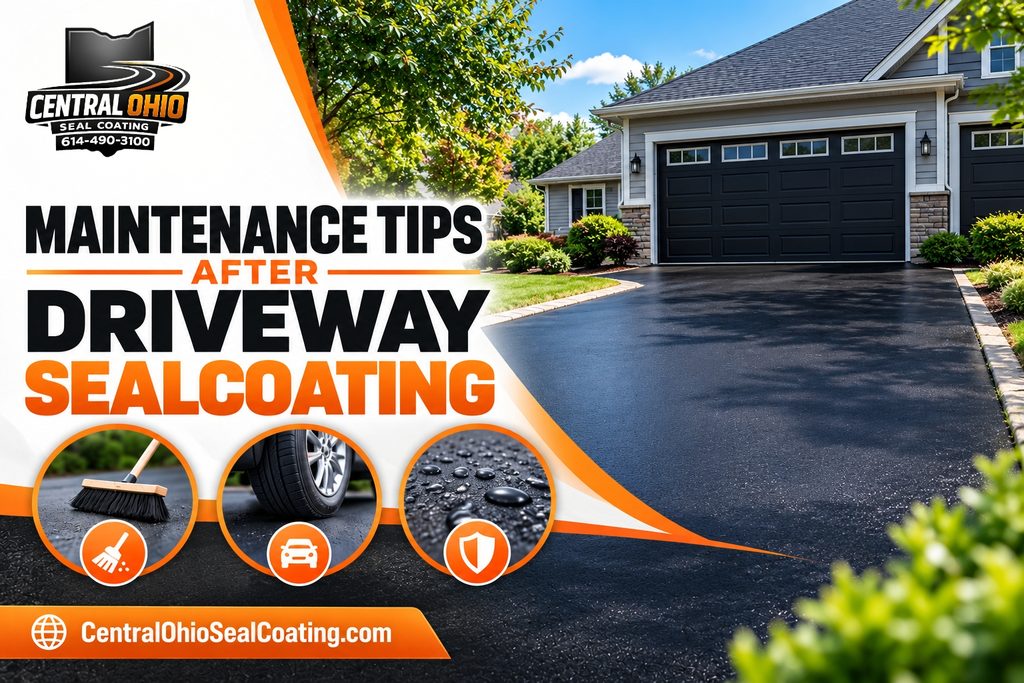
Central Ohio weather can be especially demanding on asphalt because driveways experience seasonal temperature changes, moisture, sunlight, and freeze-thaw cycles. Giving the sealcoat adequate time to cure and avoiding unnecessary stress immediately afterward helps preserve the finished surface.
1. Keep Vehicles Off the Freshly Sealcoated Driveway
One of the most important steps after sealcoating is keeping vehicles away from the surface until the coating has adequately cured.
Driving onto the driveway too soon can interfere with the newly applied coating and affect its final appearance.
Before scheduling the work, homeowners should consider where vehicles can be parked temporarily. Once the project is complete, follow the contractor’s specific instructions regarding when vehicle traffic can resume.
2. Avoid Heavy Traffic During the Initial Curing Period
A freshly sealcoated driveway needs time to settle and cure properly.
Avoid unnecessary vehicle movements, heavy equipment, or other activities that place additional stress on the surface during the recommended curing period.
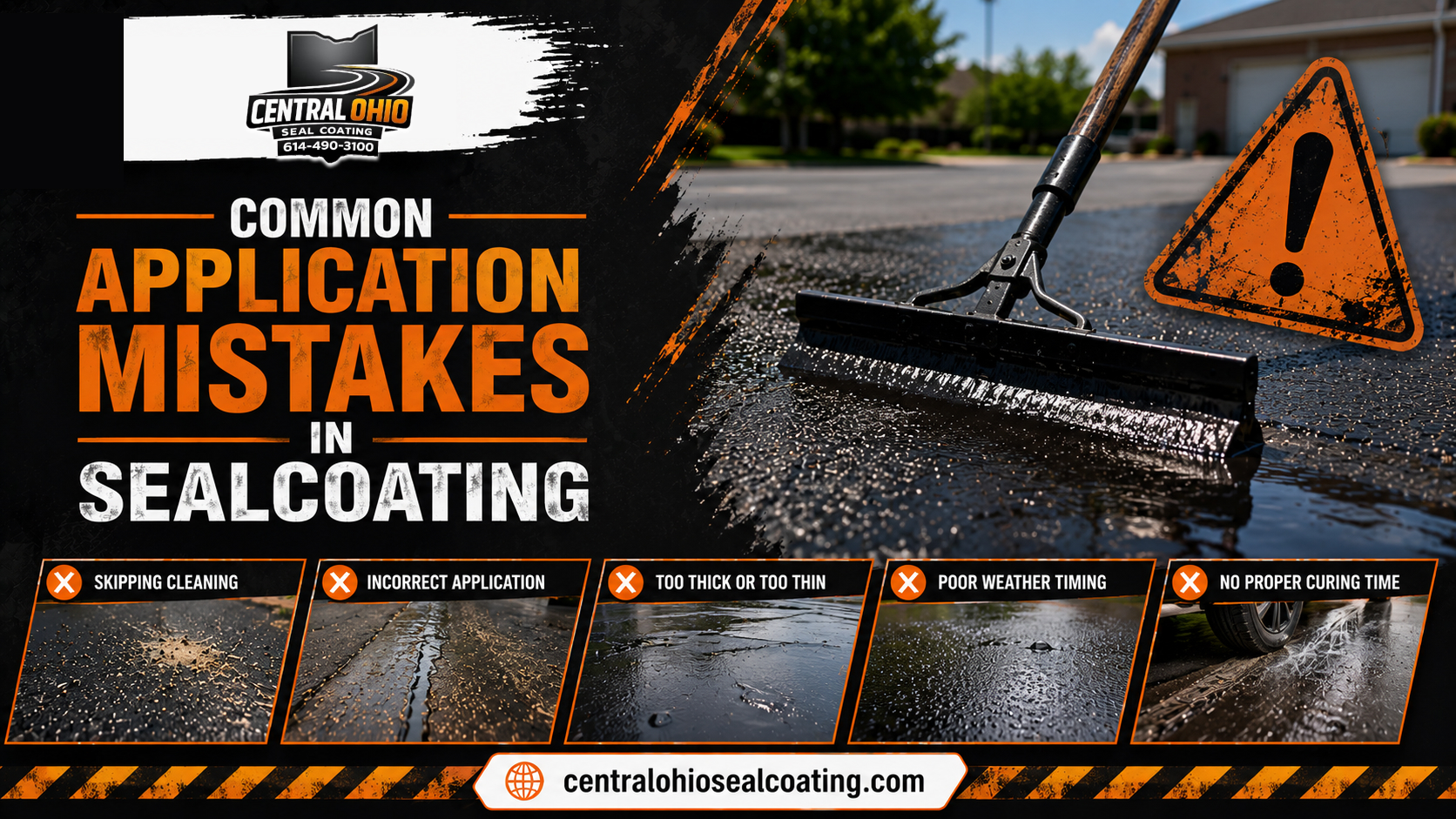
Proper curing is an important part of the overall sealcoating process. Central Ohio Seal Coating emphasizes professional application and proper preparation as important factors in achieving durable results.
3. Keep the Surface Clean
After the driveway has cured, regular cleaning can help maintain its appearance.
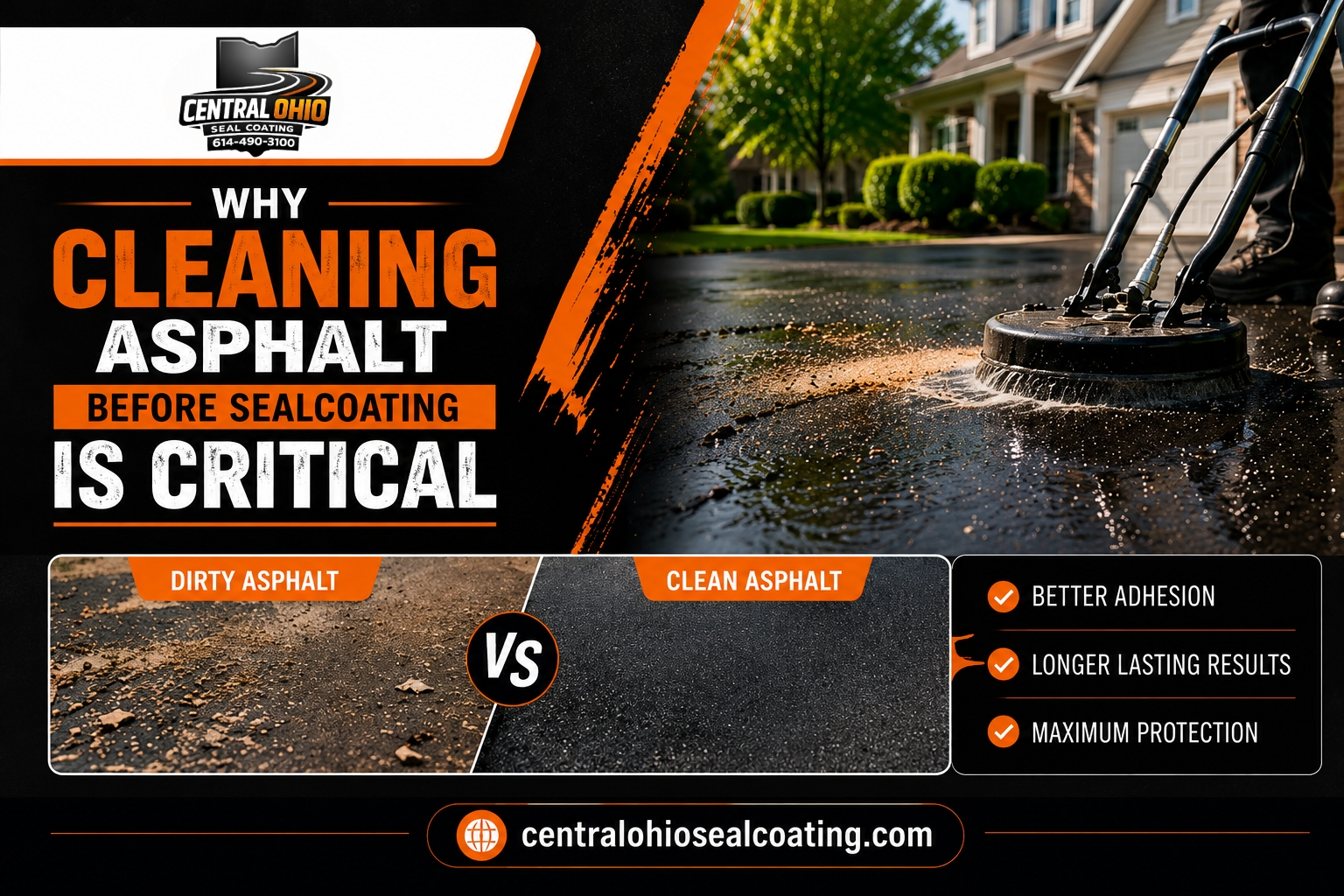
Leaves, dirt, mud, and other debris can accumulate on asphalt over time. Removing them regularly makes the driveway easier to inspect and helps maintain a clean appearance.
Simple maintenance can include:
- Sweeping loose debris
- Removing leaves
- Cleaning mud from the surface
- Addressing stains promptly
- Keeping driveway edges clear
Routine cleaning is especially useful because it allows homeowners to notice new cracks or other changes before they become more significant.
4. Clean Oil and Automotive Fluid Spills Quickly
Vehicles can leave oil and other fluids on residential driveways.
Although sealcoating provides an additional protective barrier against oil and chemicals, spills should still be cleaned promptly rather than being left on the surface. Central Ohio Seal Coating identifies oil spills, chemicals, and everyday wear among the factors sealcoating helps protect asphalt against.
Regularly checking parking areas for leaks can therefore help maintain the driveway after sealing.
5. Avoid Dragging Heavy or Sharp Objects
Once the driveway is ready for normal use, homeowners should still avoid unnecessarily dragging heavy objects across the pavement.
Moving equipment, construction materials, metal objects, or other heavy items across the surface can cause unnecessary wear.
When something heavy needs to be moved, use appropriate equipment and avoid scraping it directly across the asphalt.
6. Monitor the Driveway for New Cracks
Sealcoating is a preventative treatment, not a structural repair.
Central Ohio Seal Coating explains that crack filling and timely pavement repairs are important parts of an overall maintenance program.
After the driveway has been sealcoated, continue inspecting it periodically.
Look for:
- New cracks
- Expanding cracks
- Potholes
- Areas of standing water
- Surface deterioration
- Unusual discoloration
Identifying changes early gives homeowners an opportunity to address them before they become more extensive.
7. Keep Water From Standing on the Pavement
Good drainage remains important even after sealcoating.
Sealcoating helps reduce water penetration through the asphalt surface, but it cannot correct a drainage problem. Central Ohio Seal Coating notes that preventing moisture intrusion is an important benefit of routine pavement maintenance.
After heavy rain, check whether water remains on the driveway.
Persistent standing water may indicate:
- Low areas
- Drainage problems
- Blocked drainage routes
- Settlement
- Surface irregularities
These conditions should be evaluated separately rather than relying on sealcoating alone.
8. Continue Regular Crack Maintenance
Sealcoating does not eliminate the need for crack maintenance.
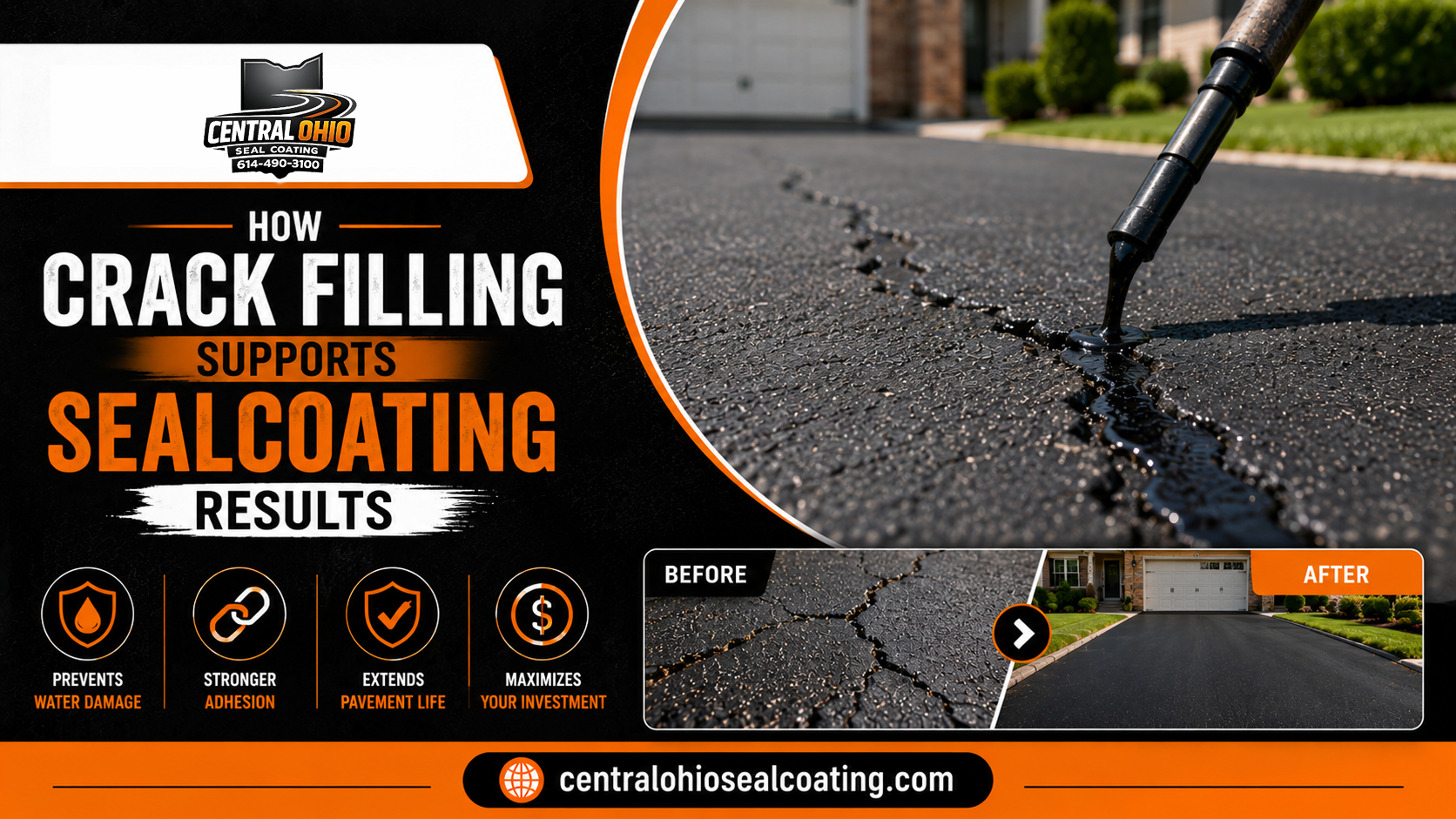
Small cracks can allow moisture to reach the pavement beneath the surface. Central Ohio Seal Coating offers crack filling as a complementary asphalt maintenance service designed to seal openings and help reduce water penetration.
A good long-term maintenance routine is:
Inspect → Clean → Repair cracks → Maintain drainage → Monitor
This keeps the driveway protected beyond the initial sealcoating project.
9. Be Careful During Ohio’s Seasonal Changes
Ohio’s weather changes significantly throughout the year.
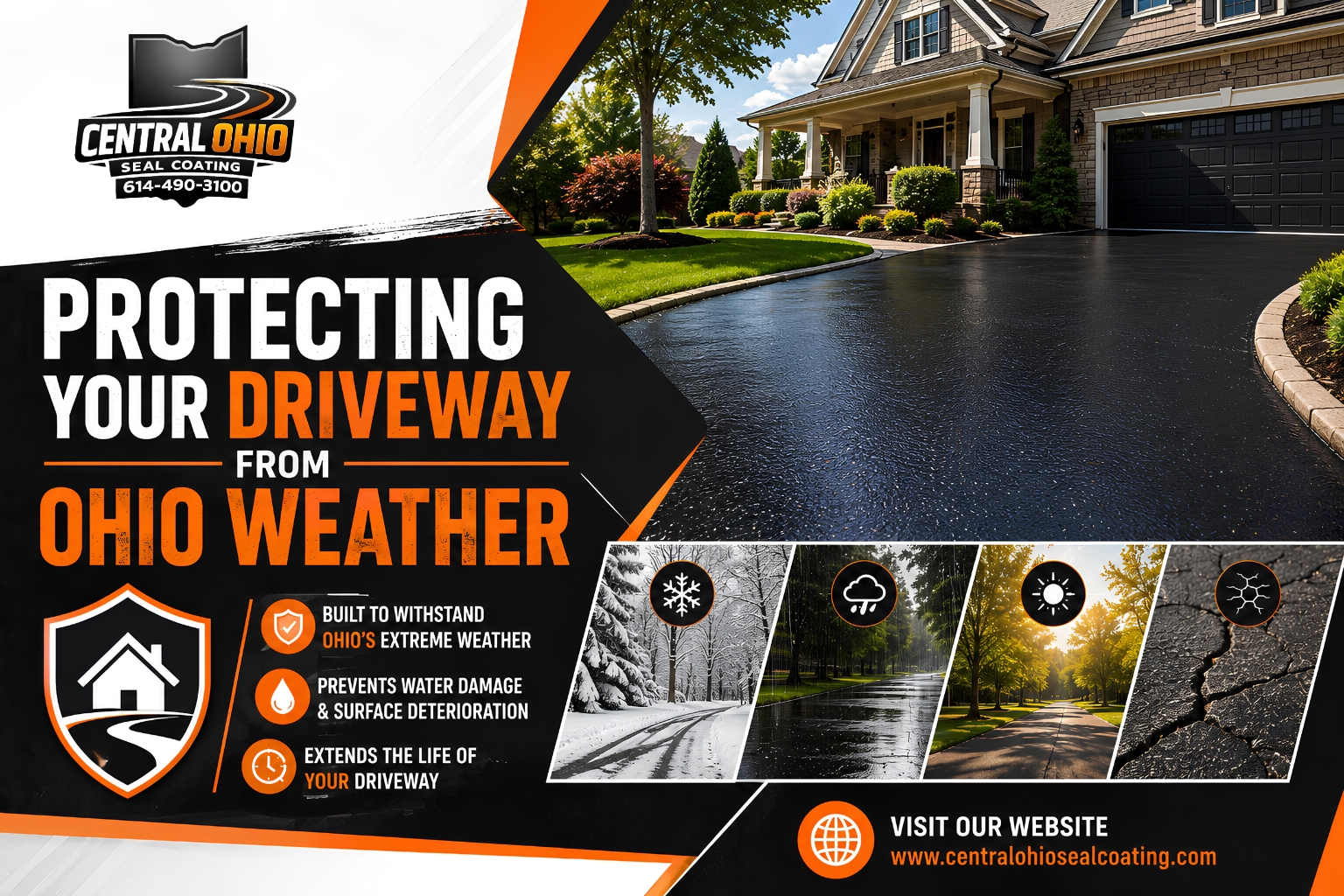
Central Ohio pavement experiences sunlight, rain, snow, moisture, and seasonal temperature changes that gradually affect asphalt.
During spring
Check for cracks and damage that may have developed during winter.
During summer
Watch for fading, stains, and surface wear.
During fall
Clean leaves and inspect the pavement before colder temperatures arrive.
During winter
Monitor areas where water collects or freezes and avoid allowing drainage problems to persist.
10. Don’t Apply Another Sealcoat Too Soon
More sealcoating is not necessarily better.
Central Ohio Seal Coating currently recommends that many residential driveways be sealcoated approximately every two to three years, although the appropriate schedule depends on pavement age, traffic, weather exposure, and surface condition.
Instead of automatically applying another coat, inspect the driveway and consider its actual condition.
A professional assessment can help determine when another application is appropriate.
11. Maintain the Driveway’s Edges
Driveway edges can be vulnerable to deterioration, particularly where asphalt meets grass, soil, or other surfaces.
Keep grass, leaves, soil, and other debris from accumulating along the edges.
Maintaining the perimeter also makes it easier to spot edge cracking or erosion early.
12. Avoid Ignoring Small Problems
A freshly sealcoated driveway can look excellent, but maintenance shouldn’t stop after the coating is applied.
Central Ohio Seal Coating emphasizes preventative maintenance because regular sealcoating, crack filling, and timely repairs can help protect pavement and extend its service life.
If you notice a new crack, pothole, drainage issue, or damaged area, have it evaluated rather than waiting for the problem to become larger.
Post-Sealcoating Care Checklist
| Maintenance Task | Why It Matters |
|---|---|
| Follow curing instructions | Helps protect the fresh coating |
| Keep vehicles off initially | Reduces early surface stress |
| Clean debris | Keeps the surface maintained |
| Remove fluid spills | Helps limit staining and chemical exposure |
| Monitor cracks | Allows early maintenance |
| Check drainage | Helps prevent prolonged moisture exposure |
| Inspect seasonally | Identifies weather-related changes |
| Follow a maintenance schedule | Supports long-term pavement protection |
How to Keep Your Driveway Looking New
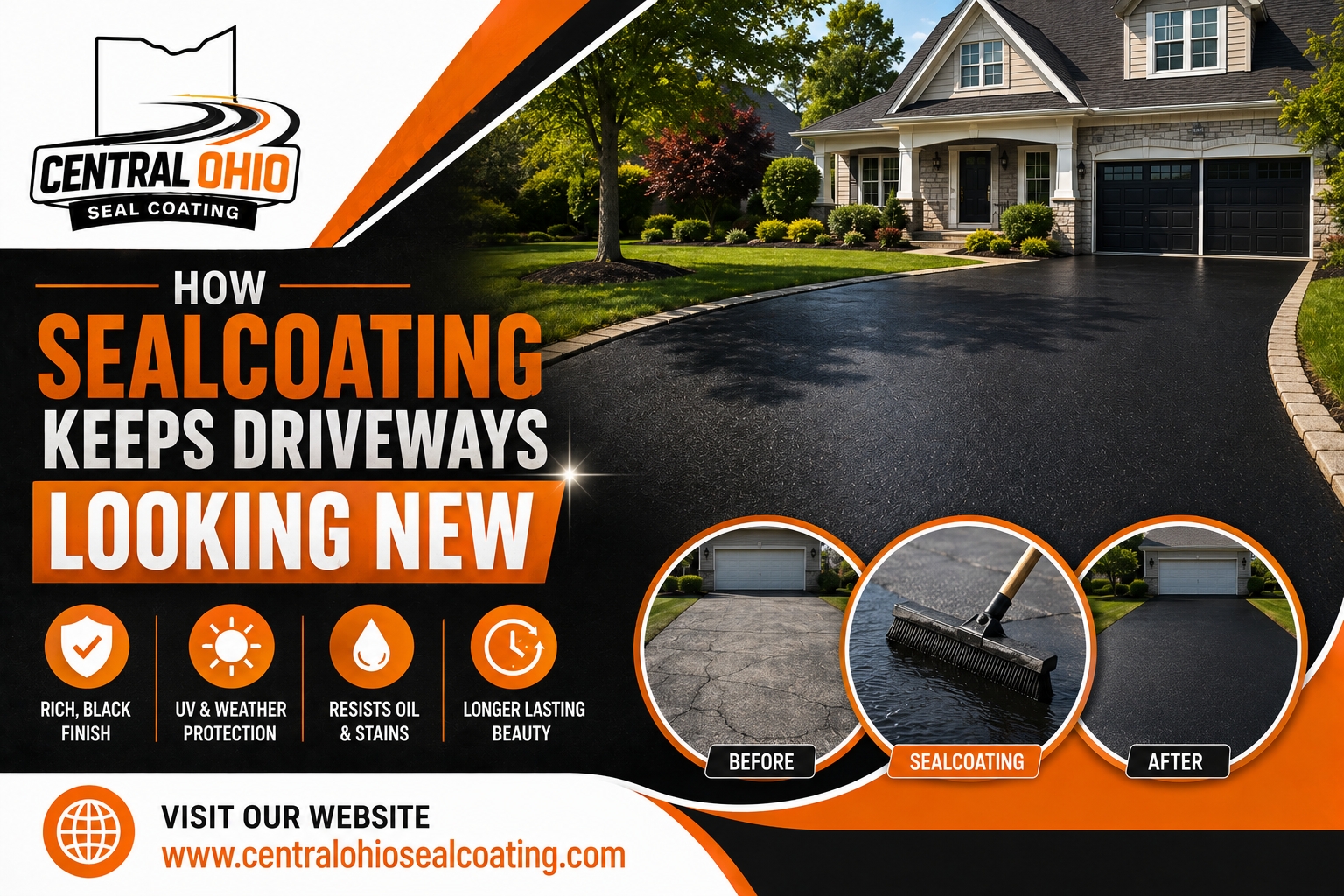
Sealcoating can restore a darker, more uniform appearance to aging asphalt, but keeping that appearance requires ongoing care.
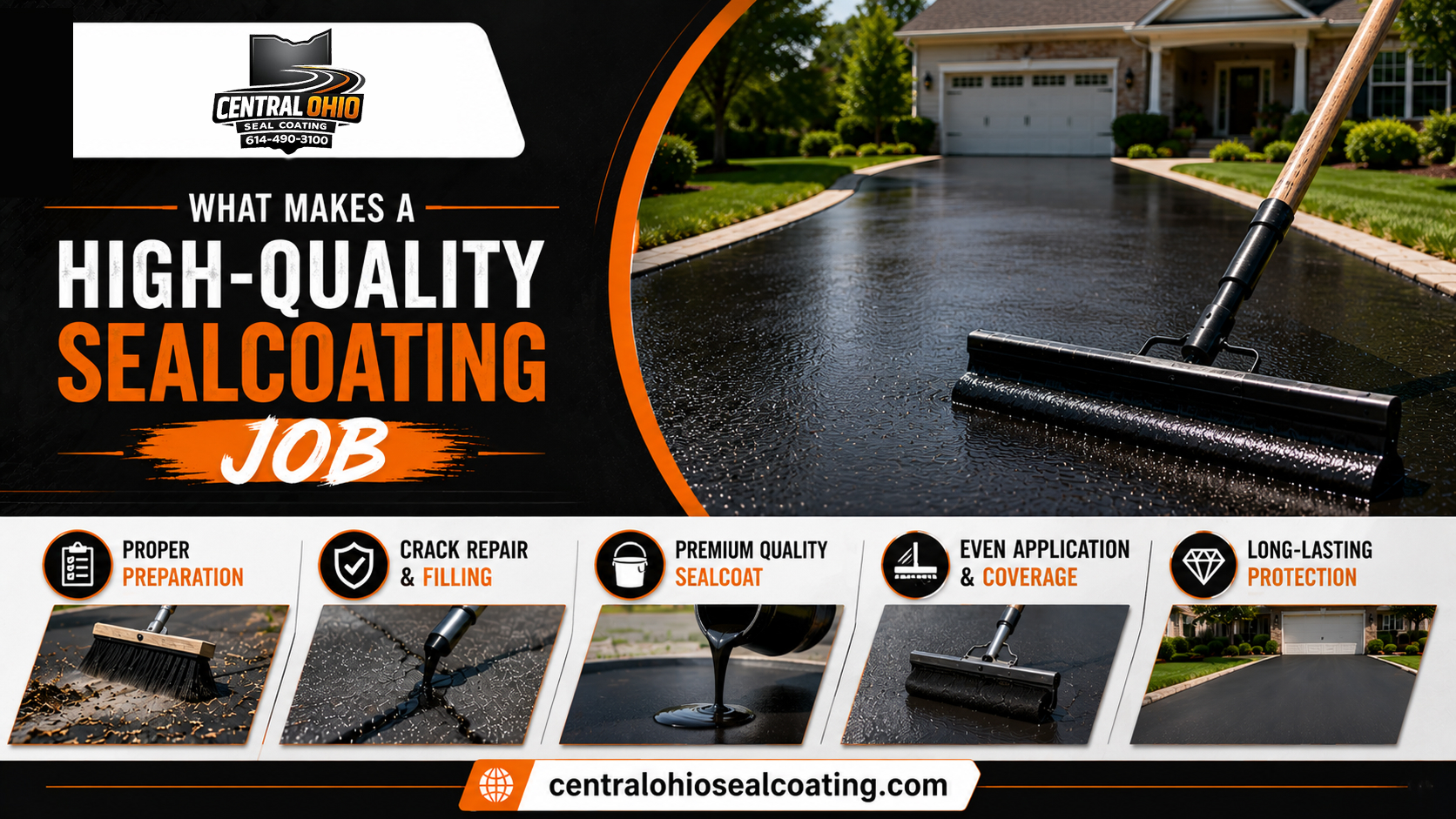
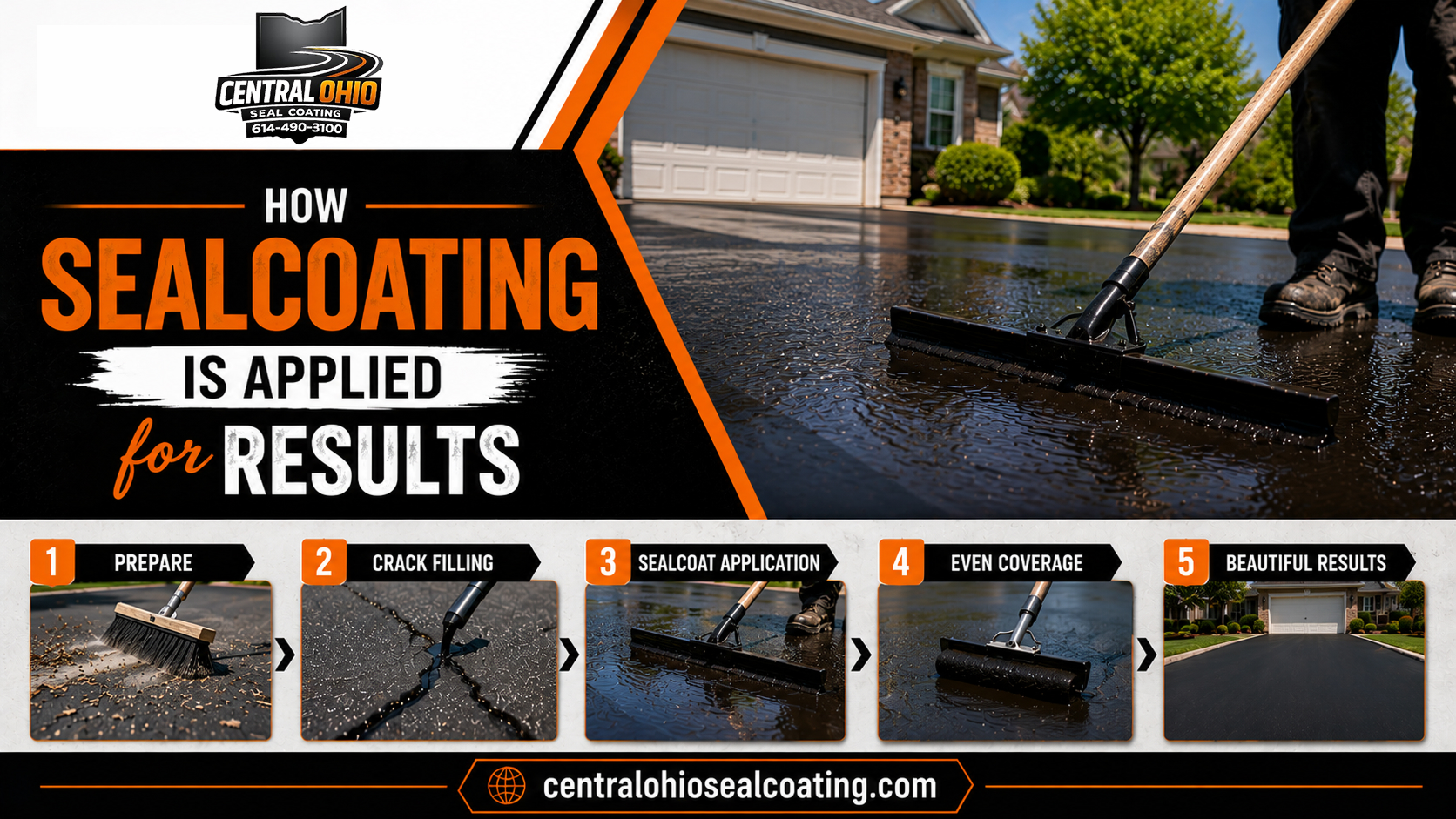
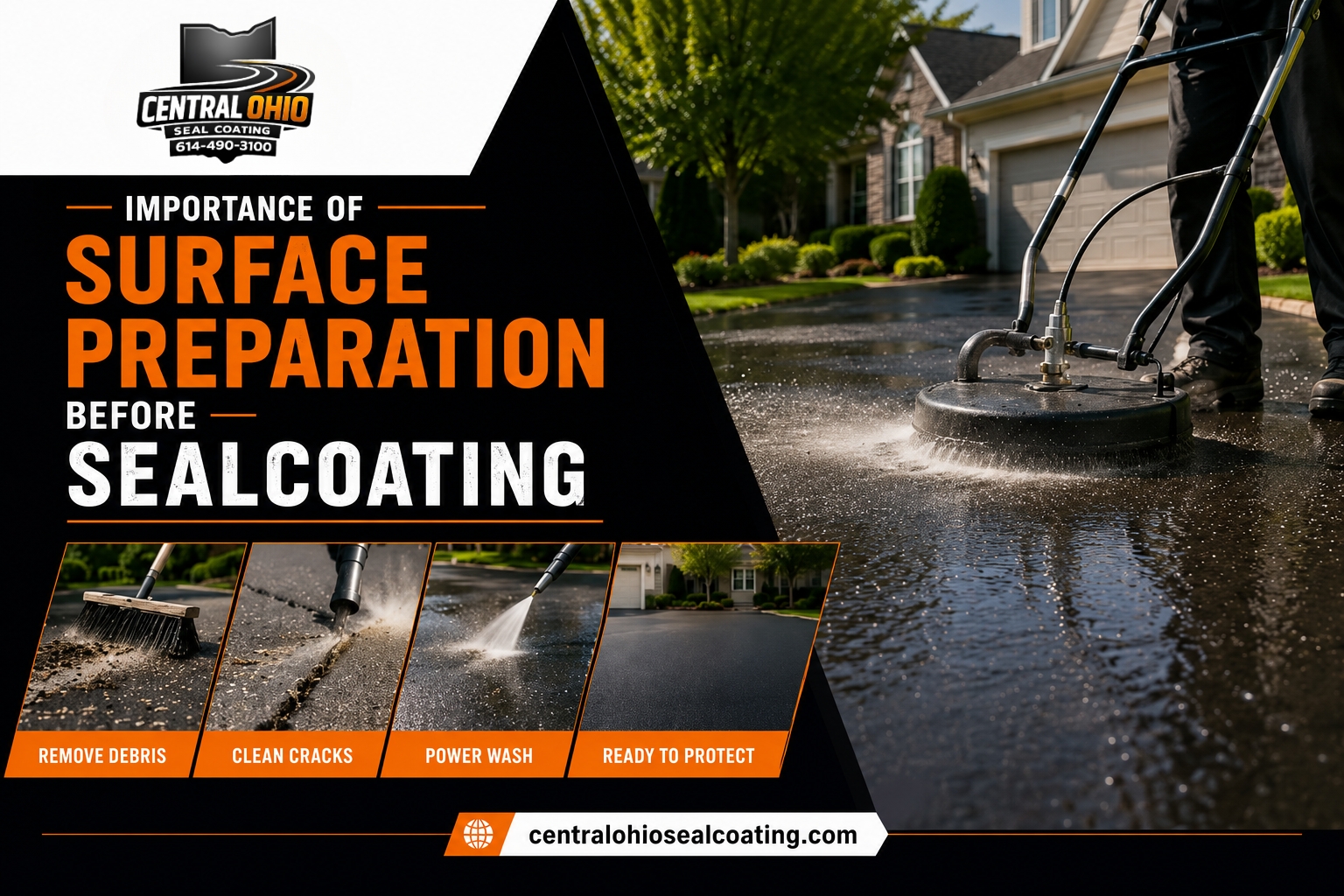
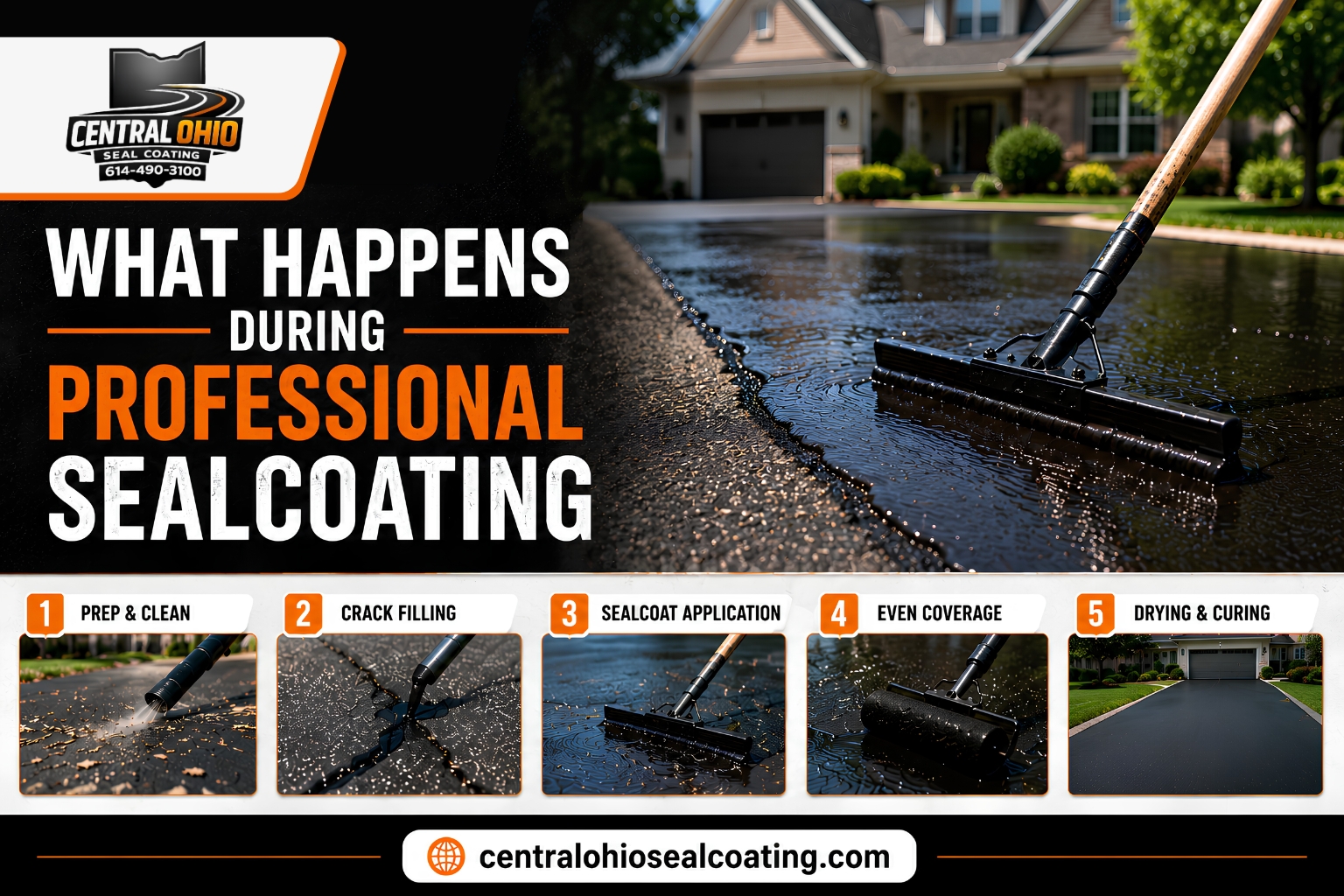
Central Ohio Seal Coating’s project information emphasizes thorough cleaning, crack repair, proper preparation, quality sealcoating materials, and uniform application as important elements of successful pavement maintenance.
Homeowners can protect the finished appearance by:
- Keeping the driveway clean.
- Removing spills promptly.
- Monitoring cracks.
- Maintaining drainage.
- Avoiding unnecessary heavy loads.
- Following recommended maintenance intervals.
- Scheduling professional evaluation when problems appear.
Final Thoughts
Following proper post sealcoating care Ohio homeowners can use is an important part of protecting a freshly treated driveway. Sealcoating provides a protective barrier against moisture, sunlight, oil, chemicals, and everyday wear, but the treatment works best when homeowners continue with regular pavement maintenance.
The most important immediate step is to follow the contractor’s curing instructions and keep vehicles and unnecessary traffic away from the driveway until the surface is ready. Afterward, routine cleaning, prompt spill removal, crack monitoring, and good drainage can help preserve the finished surface.
Central Ohio Sealcoating recommends regular preventative maintenance because sealcoating works best as part of a broader pavement-care strategy rather than as a one-time solution.
With proper care after application and periodic maintenance as the driveway ages, homeowners can help keep their asphalt cleaner, darker, and better protected through Ohio’s changing seasons.