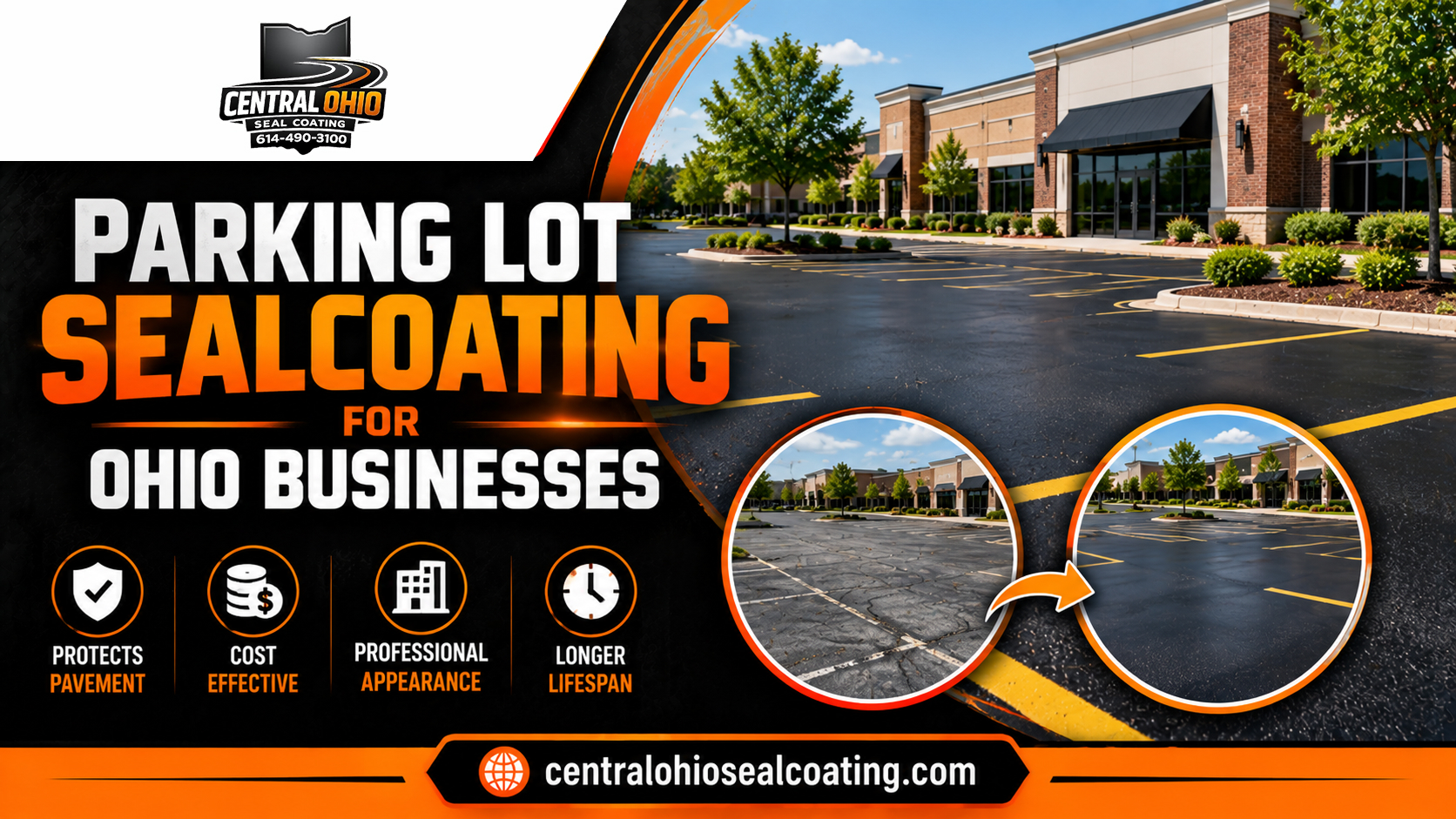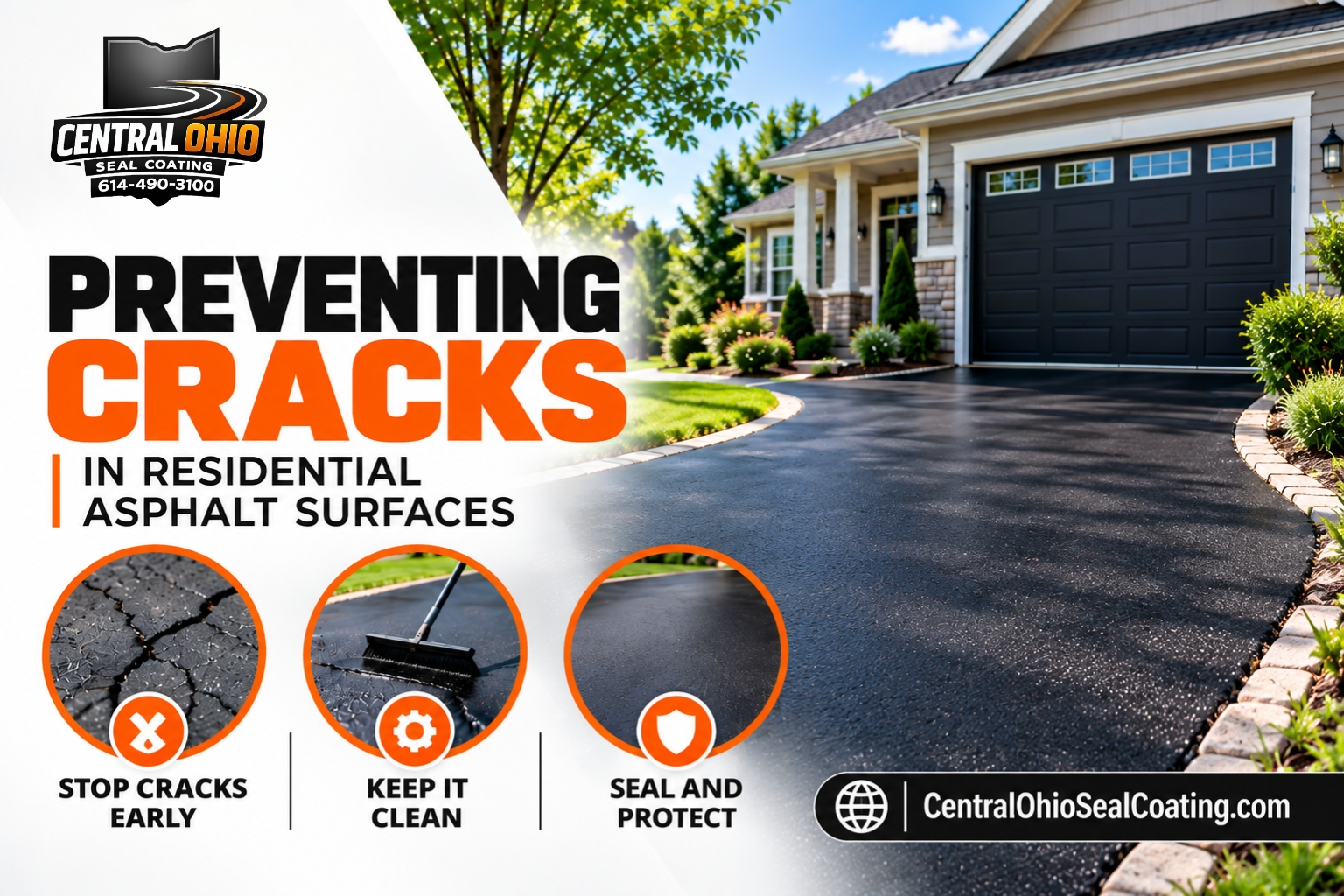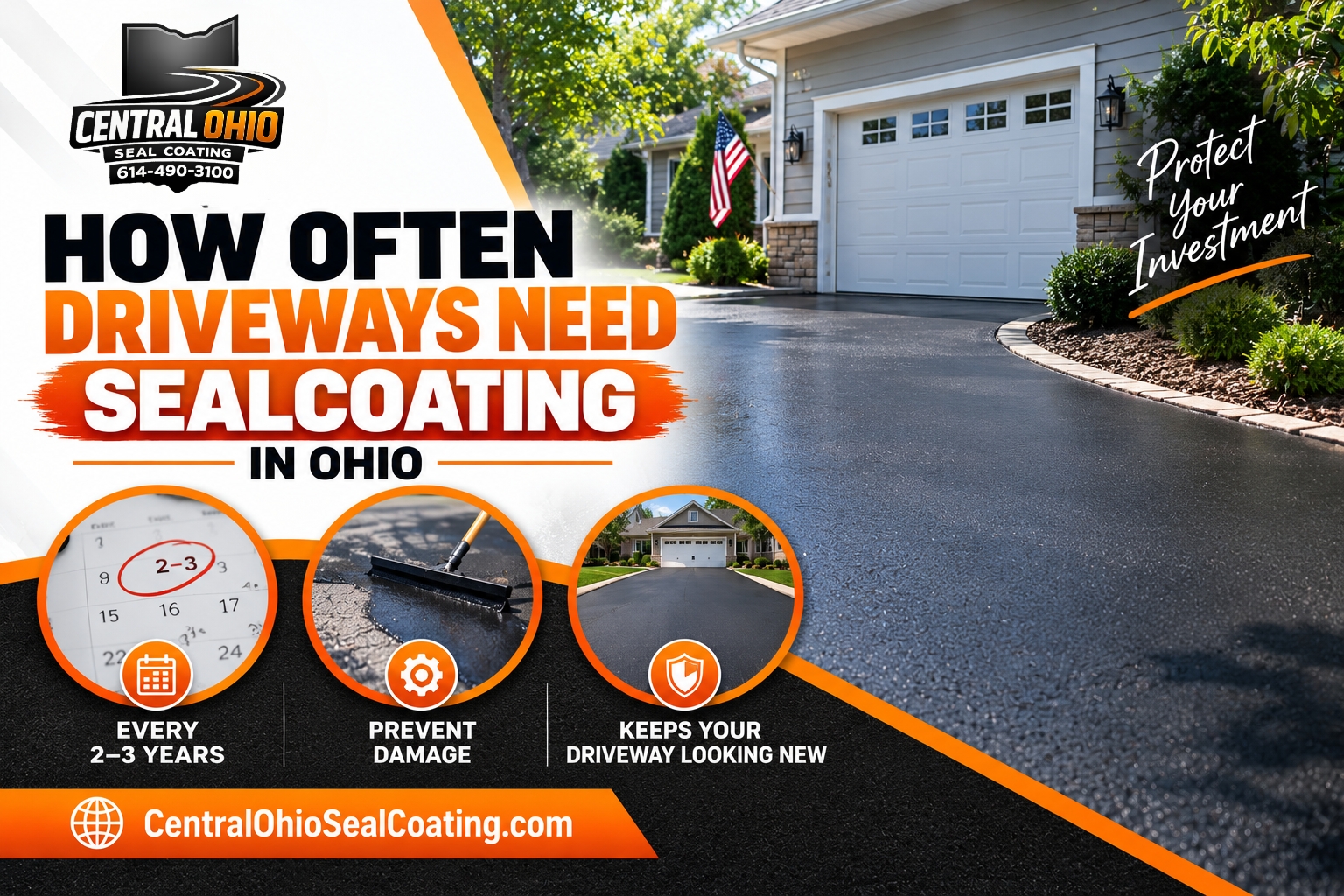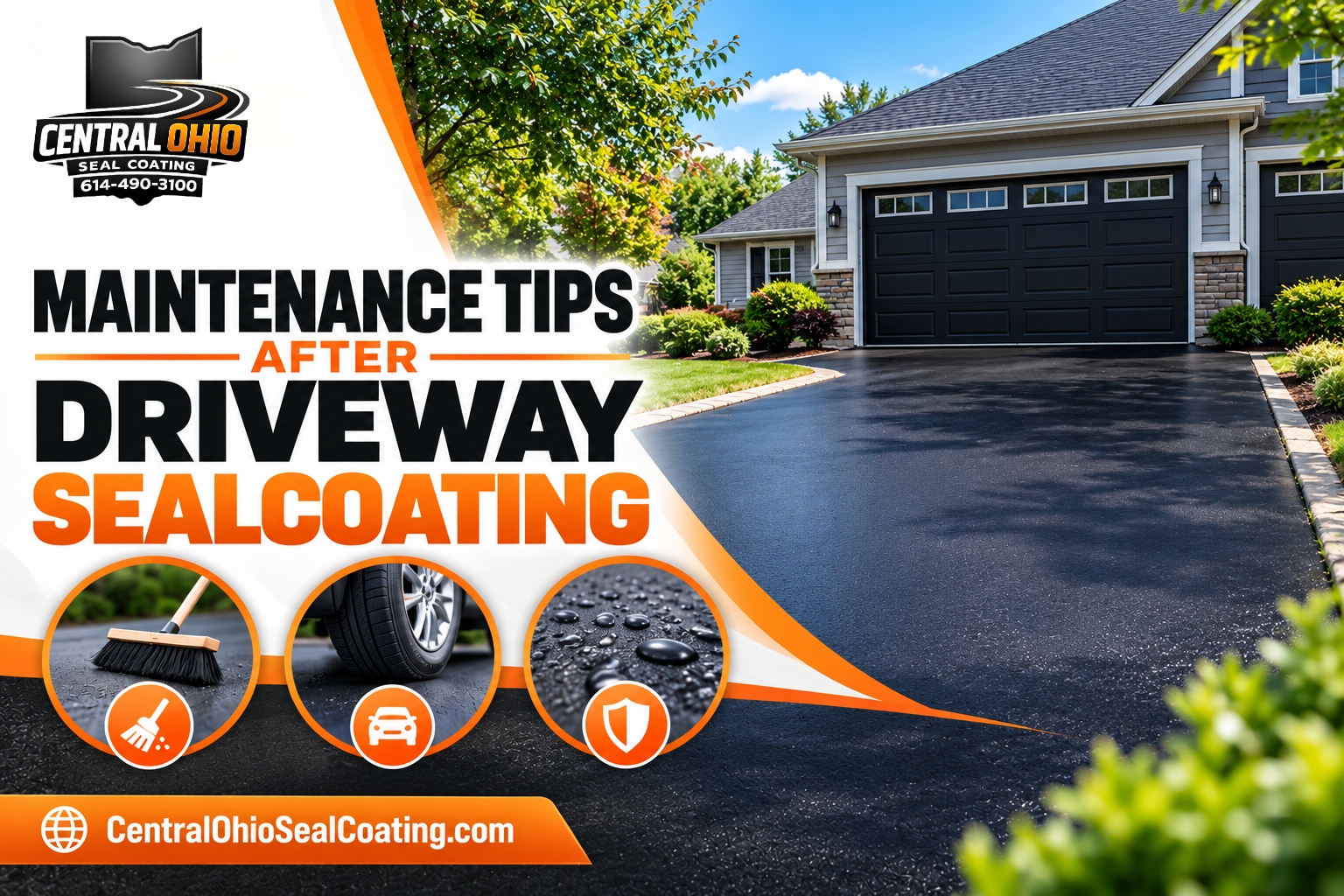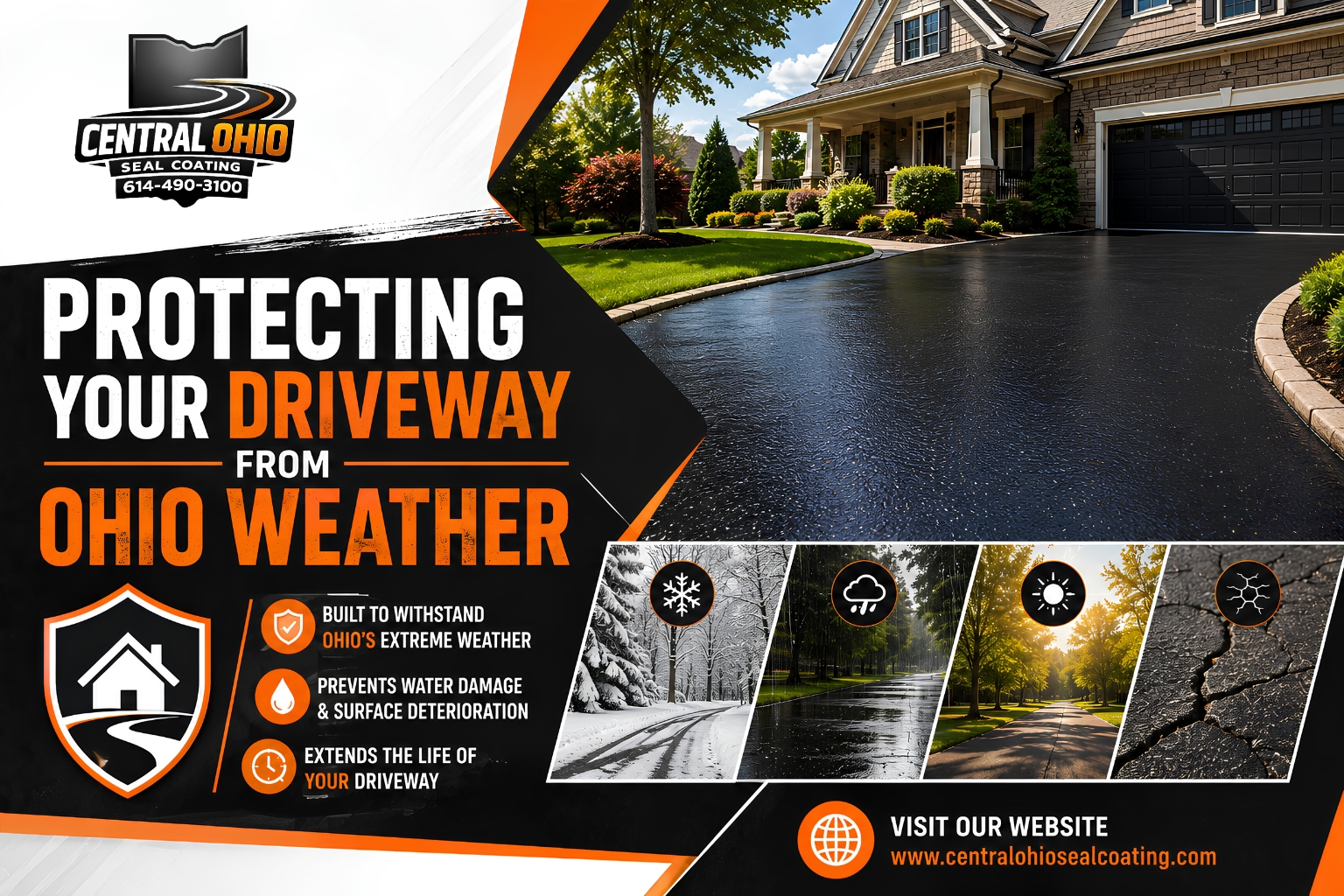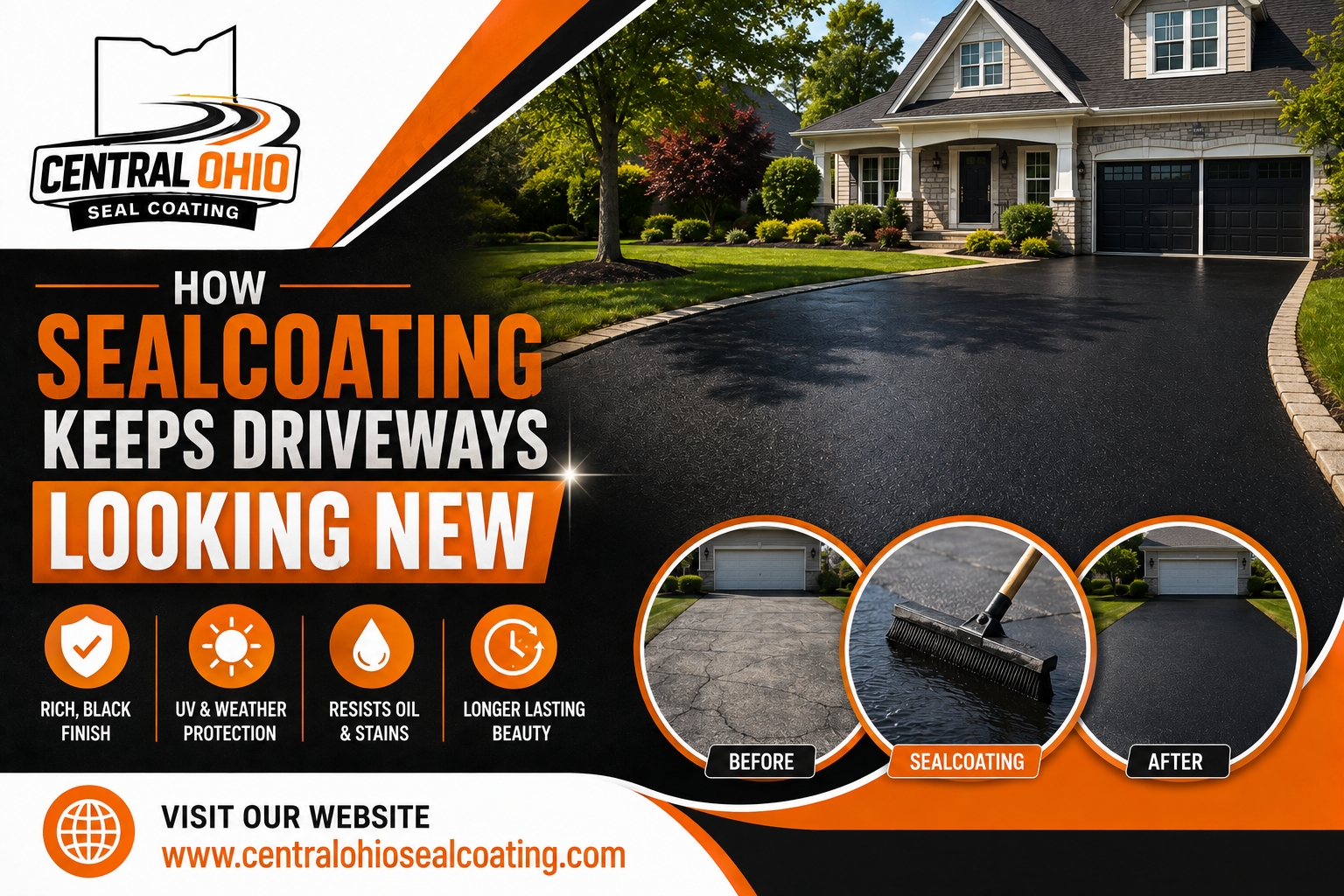

Why do some asphalt parking lots remain in good condition for years while others develop cracks, potholes, and faded surfaces? Routine parking lot care in Ohio helps property owners identify pavement problems early, protect asphalt from weather-related deterioration, improve appearance, and maintain safer access for vehicles and pedestrians. Regular inspections and timely maintenance can help prevent minor defects from becoming more extensive pavement problems.
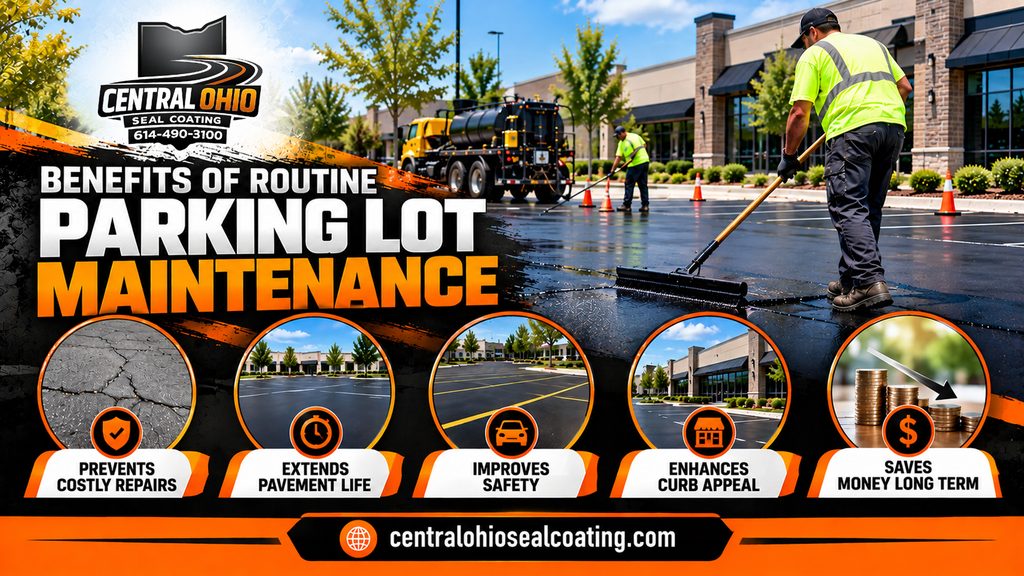
Ohio’s changing weather can place considerable stress on asphalt. Rain, sunlight, snow, freezing temperatures, and repeated freeze-thaw cycles can contribute to surface deterioration, while daily vehicle traffic adds further wear. Without a consistent maintenance plan, cracks can expand, water can enter the pavement, and damaged areas may require more extensive repairs.
Central Ohio SealCoating provides asphalt maintenance services for commercial properties, residential driveways, rental properties, apartment communities, and other paved areas throughout Columbus and surrounding Central Ohio communities. Whether you manage a business parking lot, maintain a rental property, or want to protect your home’s driveway, routine pavement care helps keep asphalt functional and presentable.
1. Extends the Useful Life of Asphalt Pavement
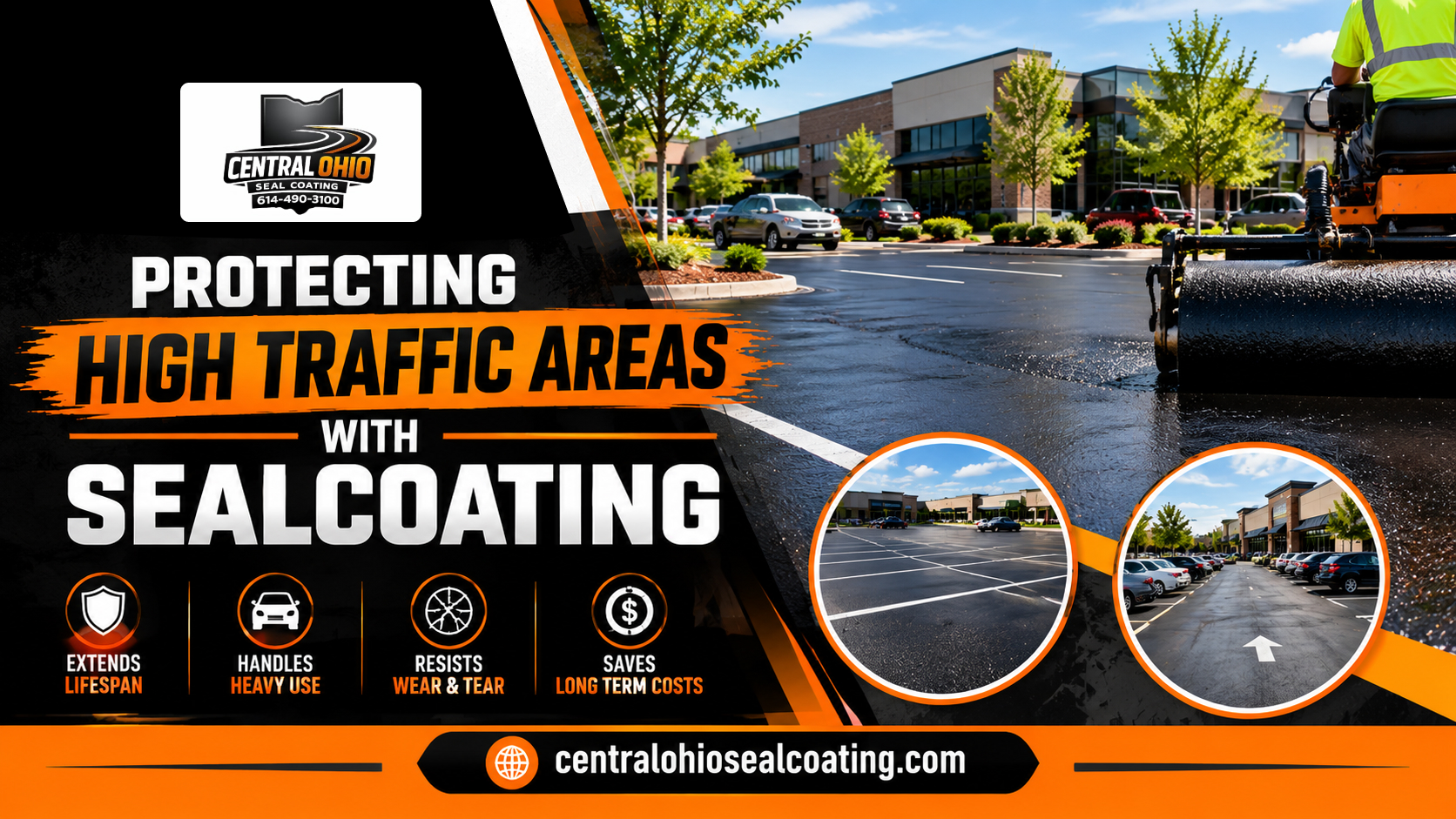
One of the main benefits of routine parking lot maintenance is helping asphalt remain usable for longer. Parking lots are exposed to traffic, sunlight, moisture, and changing temperatures every day. Over time, these conditions can weaken the surface and contribute to cracking, loose aggregate, and other defects.
Regular maintenance helps property owners address these issues before they spread or become more difficult to manage.
How routine care protects asphalt
- Early crack treatment: Helps limit water entry through suitable cracks.
- Timely patching: Addresses localized pavement damage before it expands.
- Sealcoating: Helps protect structurally sound asphalt against oxidation and environmental exposure.
- Drainage maintenance: Helps prevent standing water from contributing to pavement deterioration.
- Routine inspections: Make it easier to identify changing pavement conditions.
Maintenance cannot stop asphalt from aging indefinitely, but choosing suitable treatments at the right time can help preserve its useful life.
This approach is valuable for business parking lots, residential driveways, shared apartment parking areas, and rental properties where pavement condition affects everyday access.
2. Helps Prevent Small Problems From Becoming Major Repairs
Small pavement defects can be easy to overlook, particularly when a parking lot still appears functional. However, a minor crack may allow water to enter the pavement, while a small pothole can expand under repeated traffic.
Routine inspections help property owners identify developing problems and determine which maintenance tasks should be prioritized.
Common issues to address early
Cracks: Suitable cracks should be evaluated and treated before water infiltration contributes to further deterioration.
Potholes: Damaged areas should be repaired using a method appropriate for their depth and underlying condition.
Surface deterioration: Loose aggregate, rough patches, and widespread cracking may indicate that the pavement needs more than a protective coating.
Standing water: Persistent pooling may point to drainage or grading problems that require correction.
Damaged edges: Crumbling pavement edges can worsen if water enters the surrounding materials or vehicles repeatedly cross unsupported sections.
The appropriate response depends on the cause and severity of the damage. Sealcoating, for example, can refresh suitable asphalt but cannot repair a failed pavement base.
3. Improves Safety for Vehicles and Pedestrians
Parking lots are shared spaces used by drivers, pedestrians, delivery personnel, employees, customers, residents, and visitors. Uneven pavement, potholes, and unclear markings can make these areas harder to navigate.
Routine parking lot care helps property owners identify conditions that may affect safe movement and arrange the necessary repairs.
Maintenance priorities should include:
- Inspecting potholes and uneven surfaces.
- Addressing damaged pavement near entrances and walkways.
- Maintaining visible parking space lines and directional markings.
- Checking accessible parking spaces and access aisles.
- Monitoring drainage areas for persistent standing water.
- Inspecting curbs, wheel stops, and pavement edges.
- Keeping debris from accumulating in pedestrian routes.
Regular maintenance does not guarantee that accidents will never occur, but identifying and correcting pavement hazards is an important part of responsible property management.
Commercial property owners should pay particular attention to entrances, pedestrian crossings, and areas where customers regularly walk between parking spaces and buildings.
4. Enhances Property Appearance and Curb Appeal
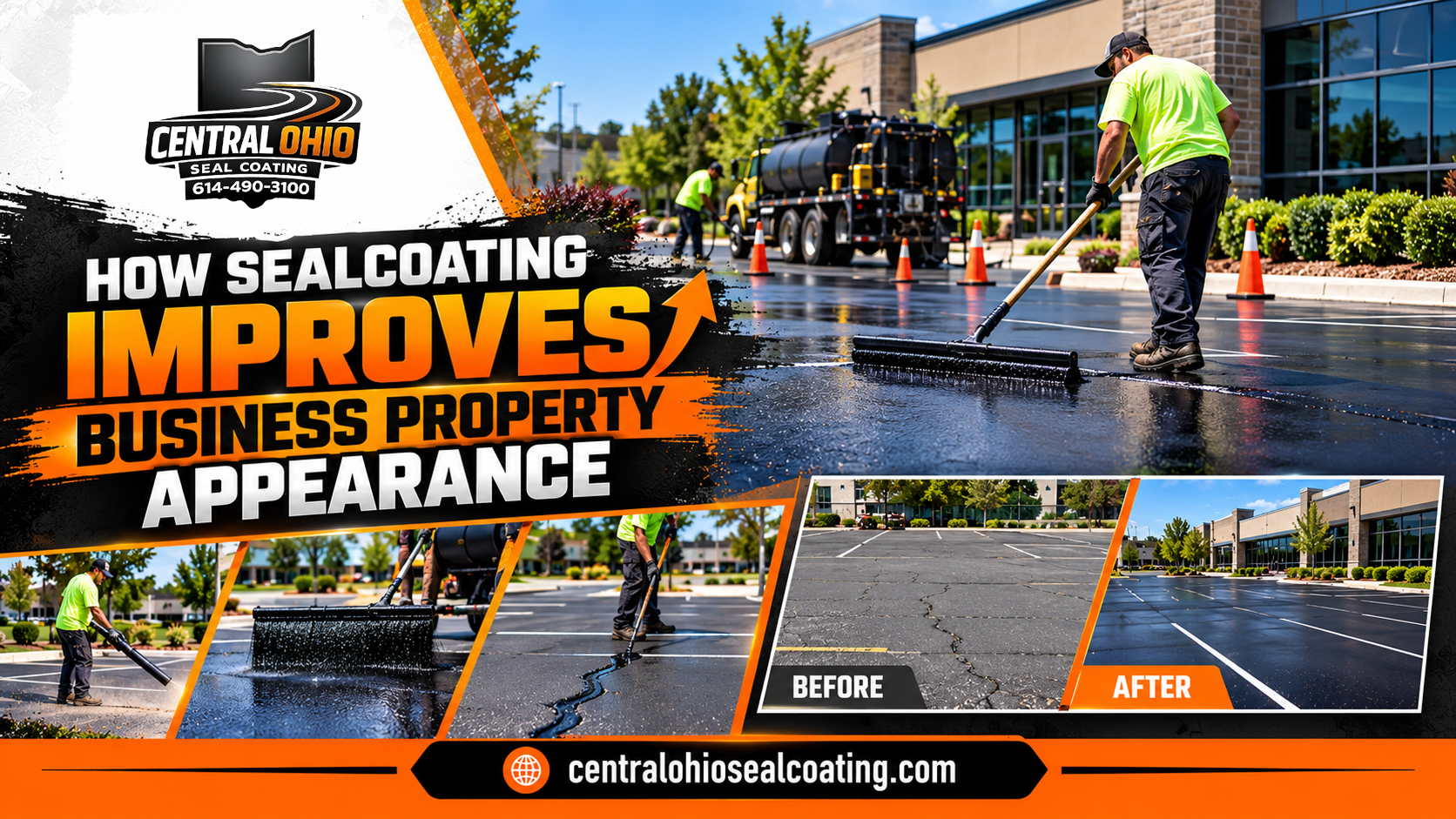
The condition of a parking lot or driveway contributes to the overall appearance of a property. Faded asphalt, potholes, and worn parking lines can make an otherwise well-maintained building look neglected.
Routine maintenance helps preserve a consistent, presentable appearance.
How maintenance improves appearance
- Sealcoating refreshes suitable asphalt: A protective coating can restore a darker, more uniform finish.
- Crack repairs reduce visible deterioration: Treating suitable cracks helps address defects before they become more extensive.
- Fresh striping improves organization: Clear markings help define parking spaces and traffic routes.
- Cleaning removes accumulated debris: Sweeping and removing leaves help keep paved areas looking maintained.
- Patching restores damaged sections: Appropriate repairs address localized pavement failures.
These benefits apply to more than commercial properties. Homeowners can maintain the appearance of their driveways, while landlords and rental property managers can keep shared parking areas and private access roads in better condition.
5. Helps Manage Long-Term Pavement Maintenance Expenses
Routine maintenance allows property owners to plan for asphalt care instead of reacting only when visible damage becomes severe.
When cracks, drainage concerns, and surface deterioration are left untreated, the required work may become more extensive. Regular inspections help identify suitable maintenance options and clarify when repairs, resurfacing, or reconstruction may be necessary.
A practical maintenance plan can help property owners:
- Identify problems before they spread.
- Schedule repairs in advance.
- Coordinate related maintenance work.
- Reduce unexpected disruptions.
- Monitor the condition of different pavement areas.
- Plan for future resurfacing or rehabilitation when needed.
However, not every repair can be avoided through preventive care. Asphalt has a finite service life, and major structural failures may require substantial work.
The objective is to maintain the pavement appropriately and make informed decisions about the next suitable treatment.
6. Protects Asphalt From Ohio’s Seasonal Weather
Ohio’s changing weather is an important consideration when planning parking lot care. Summer sunlight, rain, snow, and winter temperature fluctuations can all affect asphalt.
Spring: Inspect winter damage
Once winter conditions ease, inspect the pavement for cracks, potholes, loose material, and drainage problems. Snow and ice can make existing defects more noticeable as the weather changes.
Spring is also a useful time to document damage and arrange appropriate repairs.
Summer: Schedule suitable maintenance
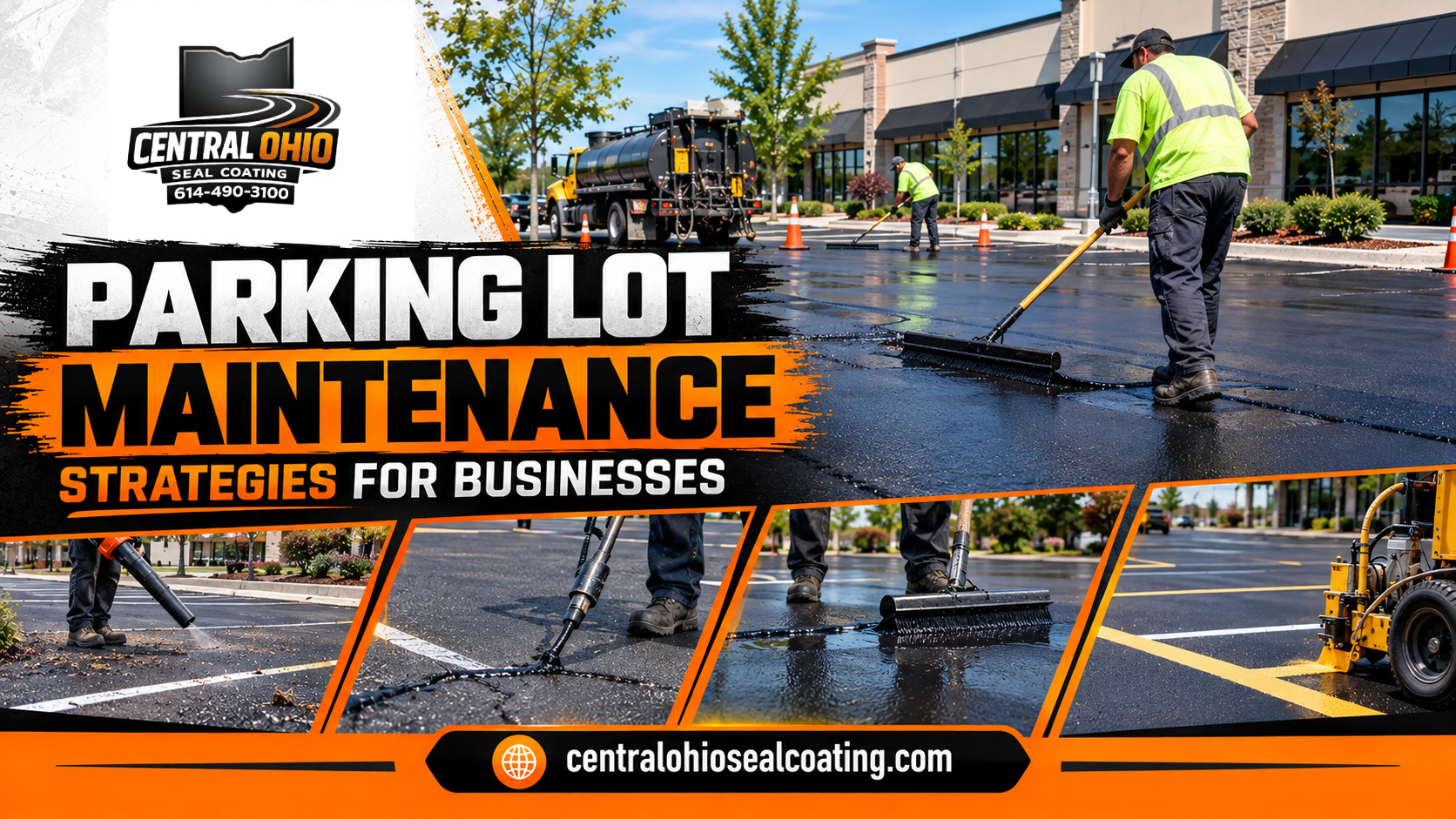
Warm, dry weather may provide suitable conditions for sealcoating, crack treatment, patching, and striping, depending on the specific product and pavement condition.
Property owners should schedule work according to application requirements and allow adequate curing time before reopening treated areas.
Fall: Prepare for colder weather
Before winter, review drainage, address suitable cracks, and identify pavement defects that may worsen during freezing conditions.
Cleaning drainage inlets and removing accumulated debris can help water move away from vulnerable areas.
Winter: Monitor pavement and access
Snow and ice management should be planned carefully. Property owners should use suitable snow-removal equipment and follow product guidance when applying deicing materials.
Routine seasonal attention helps property managers identify issues and plan maintenance around changing conditions.
7. Maintains Proper Drainage and Reduces Water-Related Damage
Water management is essential for maintaining asphalt pavement. When water collects in low spots or enters cracks, it can contribute to deterioration of the surface and underlying materials.
Routine parking lot care should include checking that drainage systems are functioning and that water is not repeatedly accumulating in the same areas.
Drainage maintenance checklist
- Remove leaves and debris from drainage inlets.
- Inspect low areas after heavy rainfall.
- Watch for water collecting near building entrances.
- Check pavement edges for erosion.
- Investigate recurring pooling or soft areas.
- Arrange professional evaluation when grading or drainage defects are suspected.
Sealcoating can help protect suitable asphalt surfaces, but it cannot correct poor grading or a defective drainage system. Where water repeatedly collects, addressing the underlying cause is more important than simply applying a new surface coating.
This is relevant to commercial parking lots, residential driveways, rental properties, and shared paved areas.
8. Keeps Parking Lot Markings Clear and Organized
Parking lot markings help drivers understand where to park and how to move through a property. Faded lines and worn directional arrows can make a parking area appear neglected and create confusion.
Routine maintenance should include checking the visibility and condition of:
- Parking space lines.
- Directional arrows.
- Stop lines.
- Pedestrian crossings.
- Loading and service zones.
- Accessible parking spaces and access aisles.
- Relevant signs and traffic-control features.
When sealcoating is part of the maintenance plan, striping may be completed after the coating has cured sufficiently.
Property owners should also review applicable accessibility requirements to ensure that spaces, markings, and signs are appropriate for the property. Fresh striping alone does not guarantee compliance.
9. Supports Better Maintenance Planning for Rental Properties
Parking lot care is important for rental properties as well as businesses. Rental homes, apartment communities, and other managed properties may include driveways, shared parking spaces, private access roads, and paved areas used by tenants and visitors.
Without regular inspections, minor pavement defects can go unnoticed until they interfere with access or require more extensive work.
Recommended practices for rental property managers
Inspect shared parking areas: Look for cracks, potholes, drainage issues, and faded markings.
Maintain residential driveways: Monitor surface wear and consider suitable sealcoating when the asphalt remains structurally sound.
Coordinate work with tenants: Provide advance notice when repairs or sealcoating require vehicles to be moved or access to be restricted.
Keep maintenance records: Document inspection dates, repairs, previous treatments, and recurring concerns.
Plan work around occupancy when practical: Where access arrangements allow, schedule maintenance to reduce disruption for residents.
Central Ohio SealCoating serves a range of property types, including single-family homes, rental properties, apartment communities, and commercial facilities. A consistent maintenance plan can help property owners keep these paved areas functional and presentable.
10. Helps Homeowners Maintain Residential Driveways
The benefits of routine pavement maintenance also extend to residential properties. Although a private driveway may experience less traffic than a commercial parking lot, it remains exposed to weather, moisture, and repeated vehicle use.
Homeowners can maintain suitable asphalt driveways by following a few practical steps:
- Inspect the surface for cracks and fading.
- Remove leaves, dirt, and loose debris.
- Check for standing water after rainfall.
- Arrange repairs for potholes and damaged sections.
- Consider sealcoating when the asphalt is suitable for treatment.
- Allow treated pavement to cure according to the product requirements.
A maintained driveway can improve the appearance of the home while helping preserve the existing pavement.
For homeowners with rental properties, the same principles can be applied to tenant driveways and other private paved areas.
11. Know Which Maintenance Service Your Pavement Needs
Routine parking lot care involves selecting the right treatment for the condition of the asphalt. Applying the wrong treatment may fail to address the underlying issue.
| Pavement condition | Potentially suitable action |
|---|---|
| Faded but structurally sound asphalt | Evaluate for sealcoating |
| Suitable cracks | Consider crack filling or sealing |
| Localized potholes | Arrange asphalt patch repair |
| Persistent standing water | Investigate drainage or grading |
| Broad surface wear with a stable base | Evaluate whether resurfacing is appropriate |
| Extensive structural failure | Consider more substantial rehabilitation |
| Faded parking lines | Arrange suitable restriping |
A pavement inspection can help determine whether a surface treatment is sufficient or whether repairs should come first.
Central Ohio SealCoating offers services including commercial sealcoating, residential sealcoating, asphalt resurfacing, and parking lot paving. The appropriate option depends on the property’s needs and the condition of the pavement.
12. Build a Practical Routine Maintenance Schedule
A written maintenance schedule helps property owners remember inspections, identify recurring issues, and plan work in advance.
The schedule should reflect the property’s use, pavement condition, weather exposure, and previous maintenance.
| Maintenance activity | Suggested timing | Purpose |
|---|---|---|
| Visual pavement inspection | Seasonally and when new damage appears | Identify developing problems |
| Cleaning and debris removal | Regularly, as needed | Maintain appearance and clear drainage areas |
| Drainage checks | After heavy rainfall and during routine inspections | Identify pooling or blocked inlets |
| Crack assessment | During inspections | Determine whether cracks need treatment |
| Pothole and damaged-area review | As soon as damage is identified | Address defects promptly |
| Sealcoating evaluation | Based on pavement condition and product guidance | Decide whether preventive surface treatment is appropriate |
| Striping review | Periodically and after relevant pavement work | Maintain visible parking layouts |
| Long-term pavement assessment | When deterioration becomes widespread or recurring | Evaluate resurfacing or reconstruction options |
These intervals are general planning guidance, not a fixed schedule for every property. Actual treatment timing should be based on the pavement’s condition and the requirements of the chosen product or repair method.
Frequently Asked Questions
How often should a parking lot be inspected in Ohio?
Seasonal inspections, particularly in spring and fall, provide useful opportunities to assess pavement condition. Busy properties may need more frequent checks, especially after severe weather or when damage has already been identified.
Does routine parking lot care include sealcoating?
It can. Sealcoating is one part of a broader maintenance plan and is most suitable for asphalt that remains structurally sound. Cracks, potholes, and drainage problems should be evaluated separately.
Can maintenance prevent all potholes?
No. Maintenance can help address conditions that contribute to pavement deterioration, but it cannot eliminate every cause of potholes. Traffic loads, drainage problems, pavement design, and aging can all contribute to damage.
Is parking lot maintenance necessary for rental properties?
Yes. Rental properties may have shared parking areas, driveways, and private access roads that need regular inspections, cleaning, repairs, and appropriate surface treatments.
Can homeowners benefit from routine asphalt maintenance?
Yes. Regular inspections and timely repairs can help homeowners maintain their driveways, while suitable sealcoating can refresh the surface and help protect it from environmental exposure.
When should asphalt be resurfaced instead of sealcoated?
Resurfacing may be appropriate when the existing surface is significantly worn but the underlying pavement structure remains suitable. Extensive structural failure may require more substantial rehabilitation. An assessment helps determine the correct approach.
Conclusion
The benefits of routine parking lot maintenance extend beyond improving appearance. Regular inspections, timely crack treatment, appropriate patching, drainage care, sealcoating, and clear pavement markings help property owners preserve asphalt and manage deterioration more effectively. In Ohio, seasonal weather makes a planned approach especially important because moisture and freezing temperatures can worsen existing pavement defects.
Central Ohio SealCoating supports property owners throughout Columbus and surrounding Central Ohio communities with asphalt maintenance solutions for commercial properties, residential driveways, and rental properties. Whether you manage a busy business parking lot, maintain a rental property’s shared parking area, or want to protect your home’s driveway, consistent pavement care helps keep asphalt functional and presentable. By identifying problems early and selecting treatments suited to the pavement’s condition, property owners can make more informed decisions about maintaining their paved surfaces over time.