
How Can You Protect Your Driveway From Ohio Weather? Is your asphalt driveway ready for another Ohio winter? Driveway protection Ohio homeowners use is especially important because residential pavement faces changing conditions throughout the year. Central Ohio experiences cold winters, freezing and thawing, heavy rain, summer sunlight, and regular vehicle traffic. These conditions can gradually weaken asphalt, especially when small cracks or surface damage are left untreated.
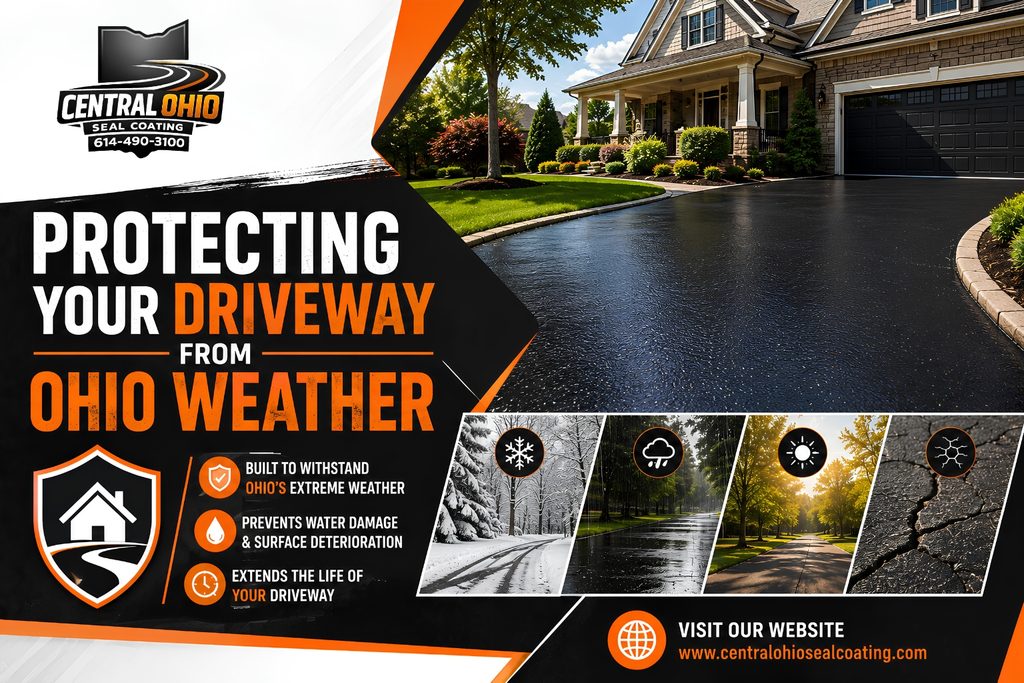
Central Ohio Seal Coating explains that asphalt is continually exposed to moisture, sunlight, traffic, and seasonal freeze-thaw cycles. Regular maintenance, including sealcoating and crack filling, can help protect the surface and reduce premature deterioration.
Protecting a driveway does not mean waiting until major damage appears. A proactive maintenance approach can help homeowners identify small problems, protect sound pavement, and keep the driveway looking better through changing seasons.
Why Ohio Weather Is Hard on Asphalt
Asphalt is designed to withstand regular traffic and environmental exposure, but weather can gradually affect its surface.
Central Ohio’s seasonal pattern creates several different challenges:
- Winter freezing temperatures
- Freeze-thaw cycles
- Spring rainfall
- Summer UV exposure
- Heavy rain
- Falling temperatures in autumn
- Year-round vehicle traffic
Central Ohio Seal Coating notes that these conditions can contribute to fading, cracking, moisture penetration, and general surface deterioration when asphalt is not properly maintained.
The important point is that weather damage usually develops gradually. A driveway may look acceptable one season and show noticeably more wear after several cycles of moisture, freezing, thawing, and sunlight.
1. Protect Against Freeze-Thaw Damage
Freeze-thaw cycles are one of the biggest concerns for Ohio asphalt.
When water enters small cracks or openings, freezing temperatures can cause the moisture to freeze and expand. As temperatures rise again, the water thaws. Repeated cycles can gradually enlarge existing weaknesses.
Central Ohio Seal Coating specifically identifies freeze-thaw cycles as a significant source of stress on local pavement.
Homeowners can reduce the risk by:
- Inspecting cracks regularly
- Addressing cracks before winter
- Maintaining proper drainage
- Keeping the pavement clean
- Using appropriate preventative treatments
Sealcoating can help reduce surface moisture exposure, but existing cracks should be properly addressed rather than simply covered.
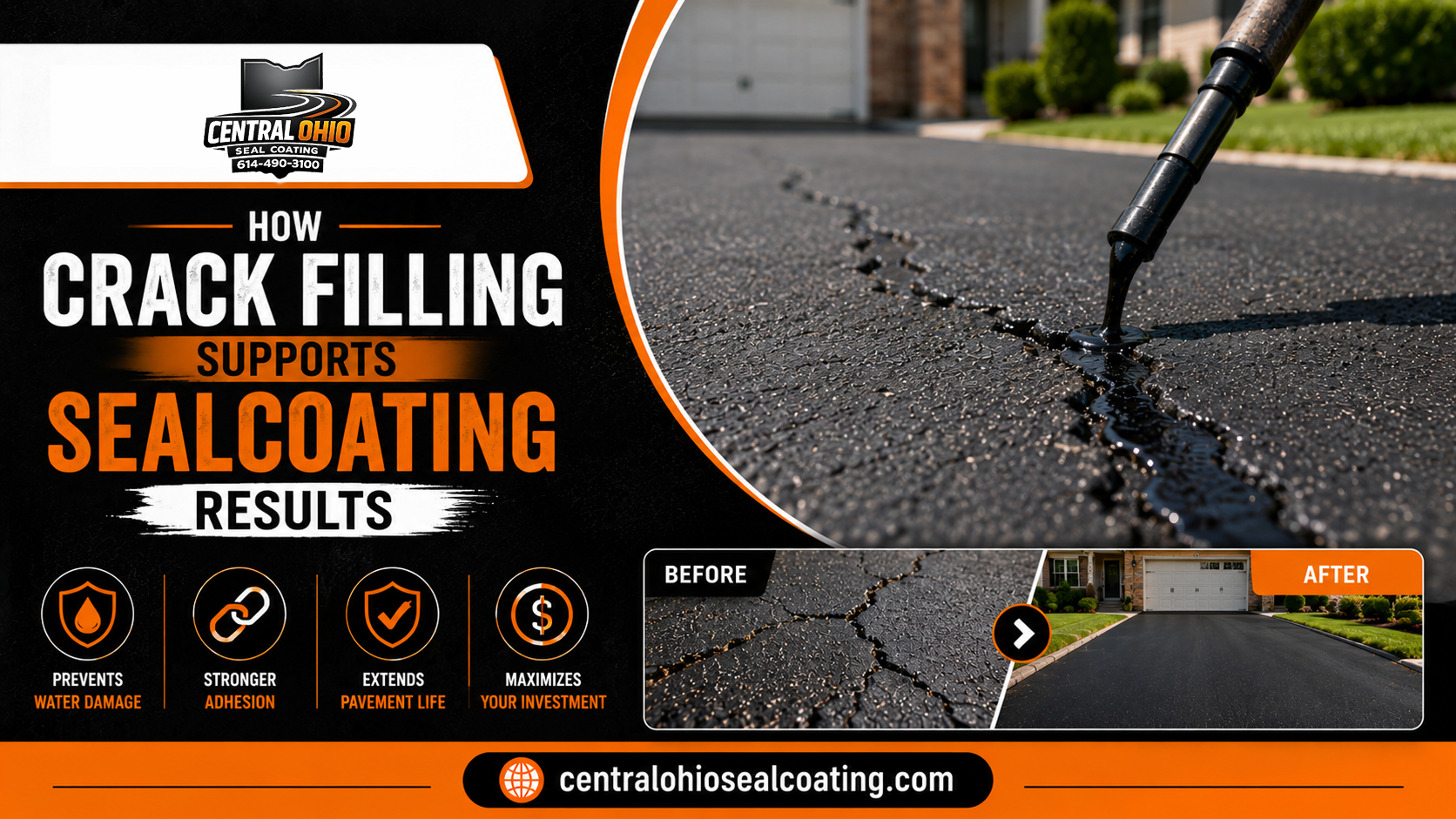
2. Address Cracks Before They Become Larger
A small crack may not seem important when it first appears.
However, cracks provide pathways for moisture to reach the pavement beneath the surface. In Ohio, repeated freezing and thawing can make these openings progressively larger.
Central Ohio Seal Coating recommends combining sealcoating with crack filling and timely pavement repairs as part of preventative maintenance.
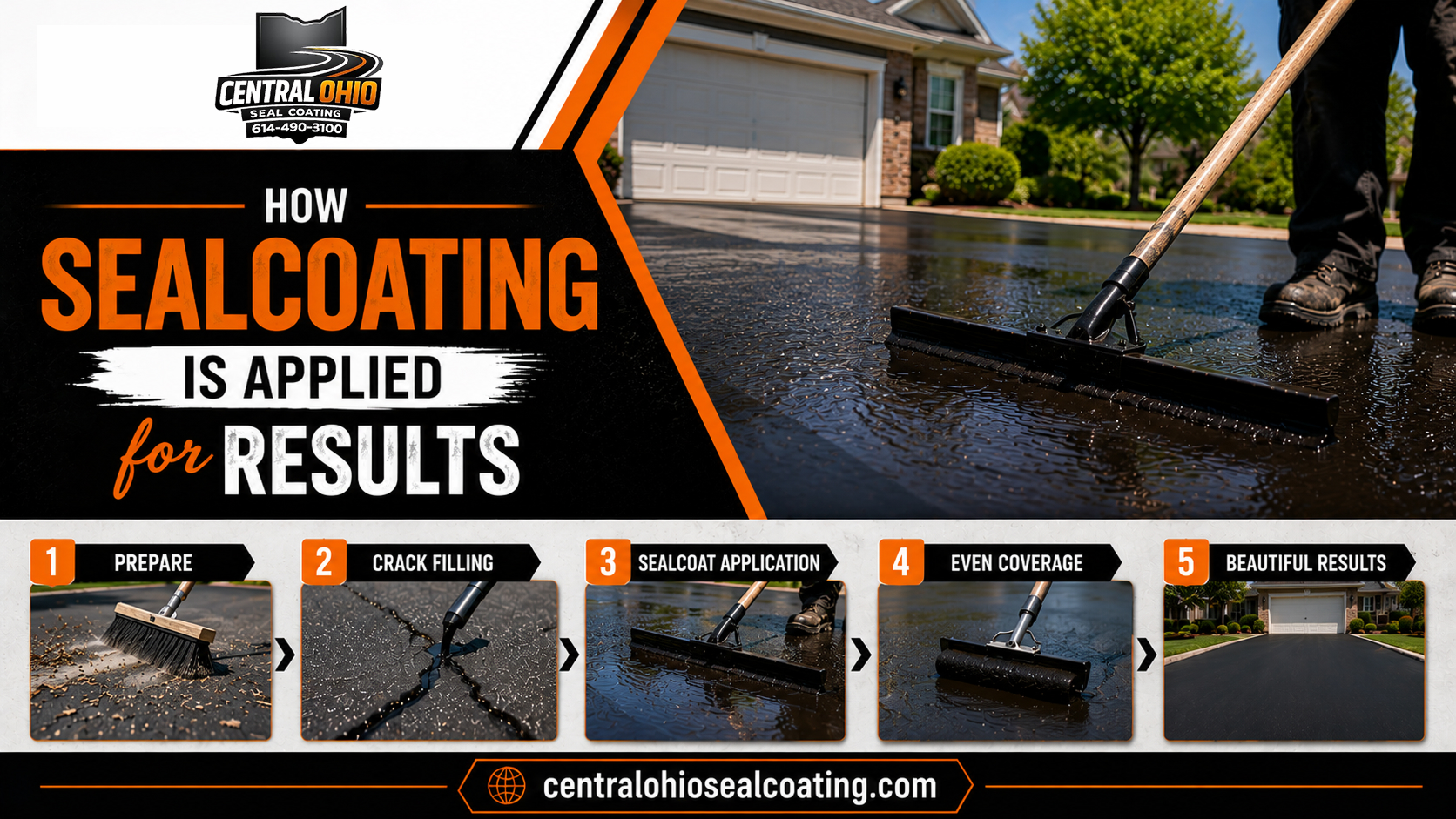
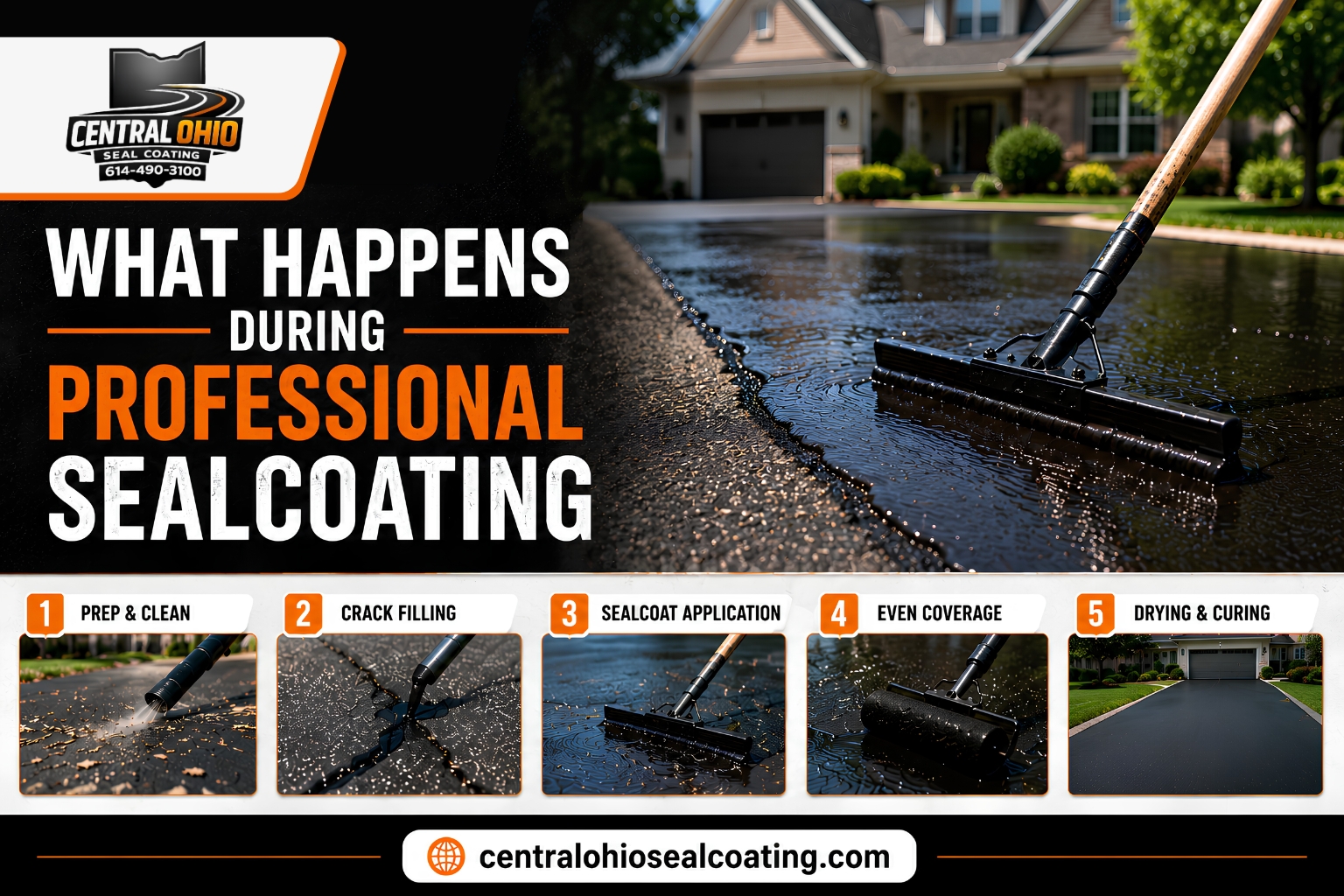
A basic maintenance sequence is:
Inspect → Clean → Fill cracks → Sealcoat → Monitor
Taking care of cracks early can help protect the rest of the pavement from unnecessary moisture exposure.
3. Use Sealcoating as Preventative Protection
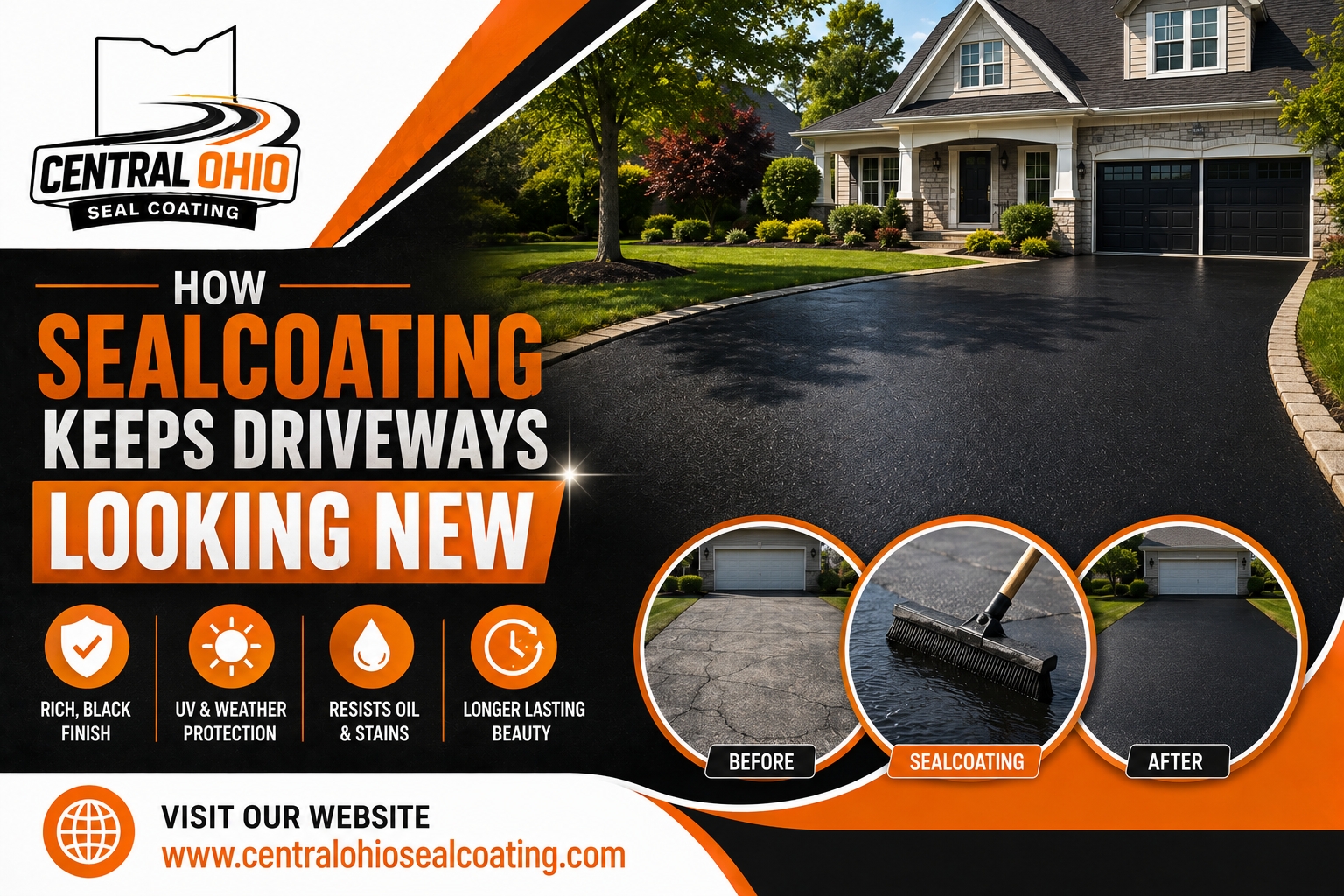
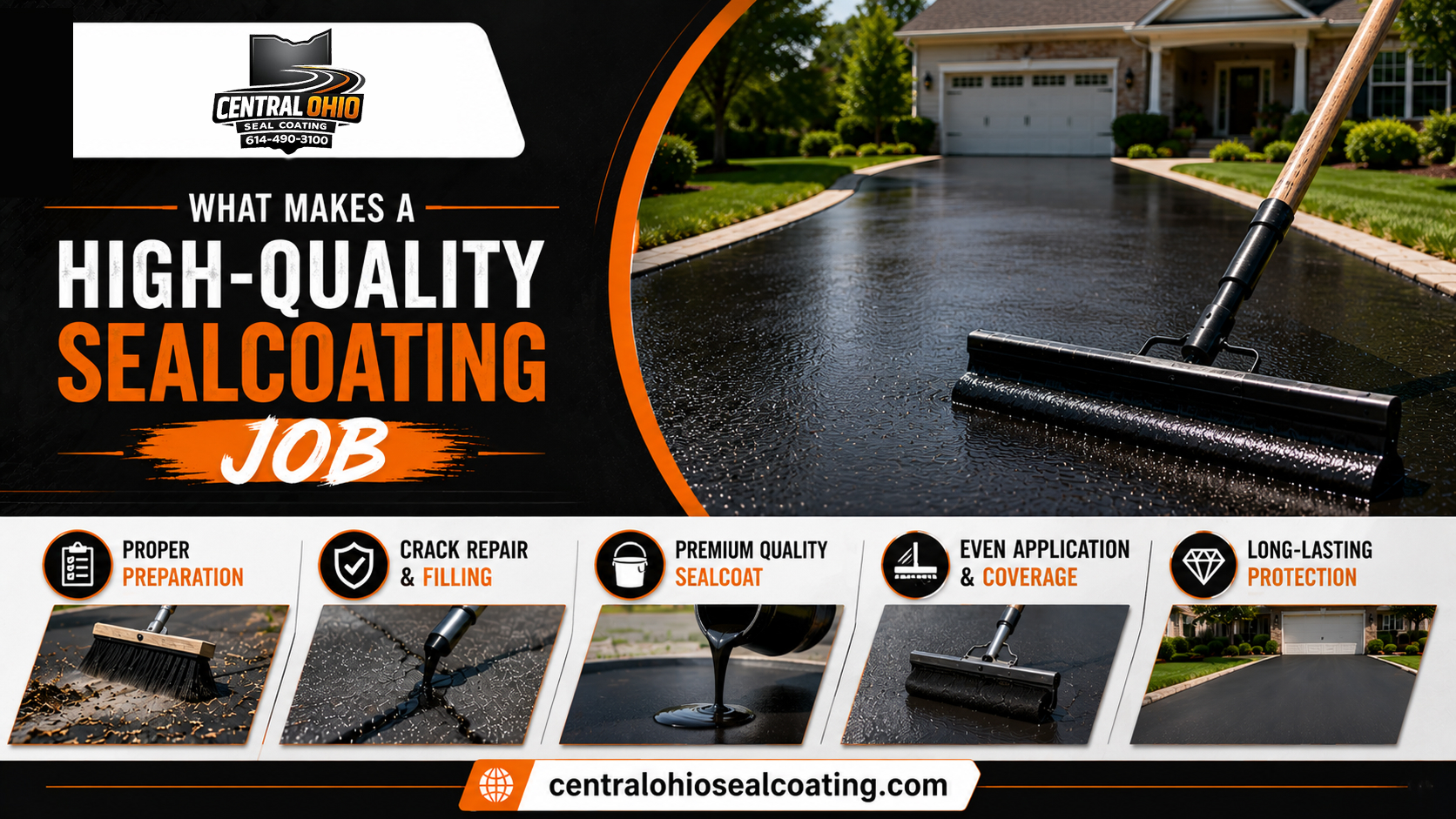
Sealcoating provides a protective layer over suitable asphalt.
Central Ohio Seal Coating explains that sealcoating helps create a barrier against water penetration, UV rays, oil spills, and daily wear.
This makes it particularly useful for homeowners who want to maintain an existing driveway before surface deterioration becomes extensive.
Sealcoating can help:
- Reduce moisture exposure
- Slow oxidation
- Protect against UV exposure
- Improve surface appearance
- Reduce the effects of everyday wear
- Support longer-term pavement maintenance
It is important to remember that sealcoating is a preventative treatment rather than a solution for severely failed pavement.
4. Protect the Driveway From Summer Sun
Ohio weather isn’t only challenging during winter.
Summer sunlight can also affect asphalt. UV exposure contributes to oxidation, which causes pavement to gradually become lighter and more weathered.
Central Ohio Seal Coating explains that sunlight can dry and weaken the asphalt surface over time, while sealcoating helps provide an additional protective barrier.
Signs of UV-related aging may include:
- Faded gray color
- Dry-looking surface
- Rough texture
- Increased surface wear
- Small cracks
Maintaining the surface throughout the year helps prepare the driveway for the next seasonal cycle.
5. Keep Water From Standing on the Driveway
Drainage is an important part of driveway protection.
Water that repeatedly sits on asphalt can find its way into cracks, weak areas, and pavement edges. Over time, continued moisture exposure can contribute to deterioration.
Central Ohio Seal Coating notes that water penetration is one of the factors that can accelerate asphalt deterioration.
Homeowners should watch for:
- Standing water
- Clogged drainage areas
- Water flowing toward cracks
- Low areas that remain wet
- Poorly draining driveway edges
Sealcoating can protect the surface, but it cannot correct a major drainage problem. Persistent water accumulation should be evaluated separately.
6. Clean Oil and Automotive Fluid Spills
Driveways are exposed to more than weather.
Cars can leak oil, coolant, and other fluids onto the pavement. Central Ohio Seal Coating explains that oil and chemicals can affect asphalt and contribute to surface deterioration.
Homeowners should clean spills as soon as practical rather than allowing them to remain on the surface.
Good driveway habits include:
- Watching for vehicle leaks
- Cleaning fresh spills promptly
- Removing accumulated debris
- Keeping the surface reasonably clean
- Checking frequently used parking areas
Sealcoating can provide an additional protective layer, but routine cleaning remains important.
7. Prepare the Driveway Before Winter
Fall is a useful time to inspect the driveway before freezing conditions arrive.
A simple pre-winter inspection can identify problems that may become worse during freeze-thaw cycles.
Check for:
Cracks:
Look for new or expanding openings.
Potholes:
Identify areas where the pavement has already failed.
Drainage problems:
Look for places where water remains after rainfall.
Faded asphalt:
Consider whether the surface needs preventative maintenance.
Edge damage:
Inspect the areas where asphalt meets grass, concrete, or other surfaces.
Addressing appropriate problems before winter can reduce the number of vulnerabilities exposed to freezing conditions.
8. Maintain the Driveway Throughout Spring
Winter can reveal pavement problems that weren’t obvious before the cold season.
Spring is therefore a good time to inspect the driveway again.
Look for:
- New cracks
- Enlarged existing cracks
- Potholes
- Surface deterioration
- Areas holding water
- Edge damage
Central Ohio Seal Coating recommends proactive pavement maintenance because addressing minor issues before they become larger problems can help preserve asphalt and reduce future repair needs.
9. Choose the Right Time for Sealcoating
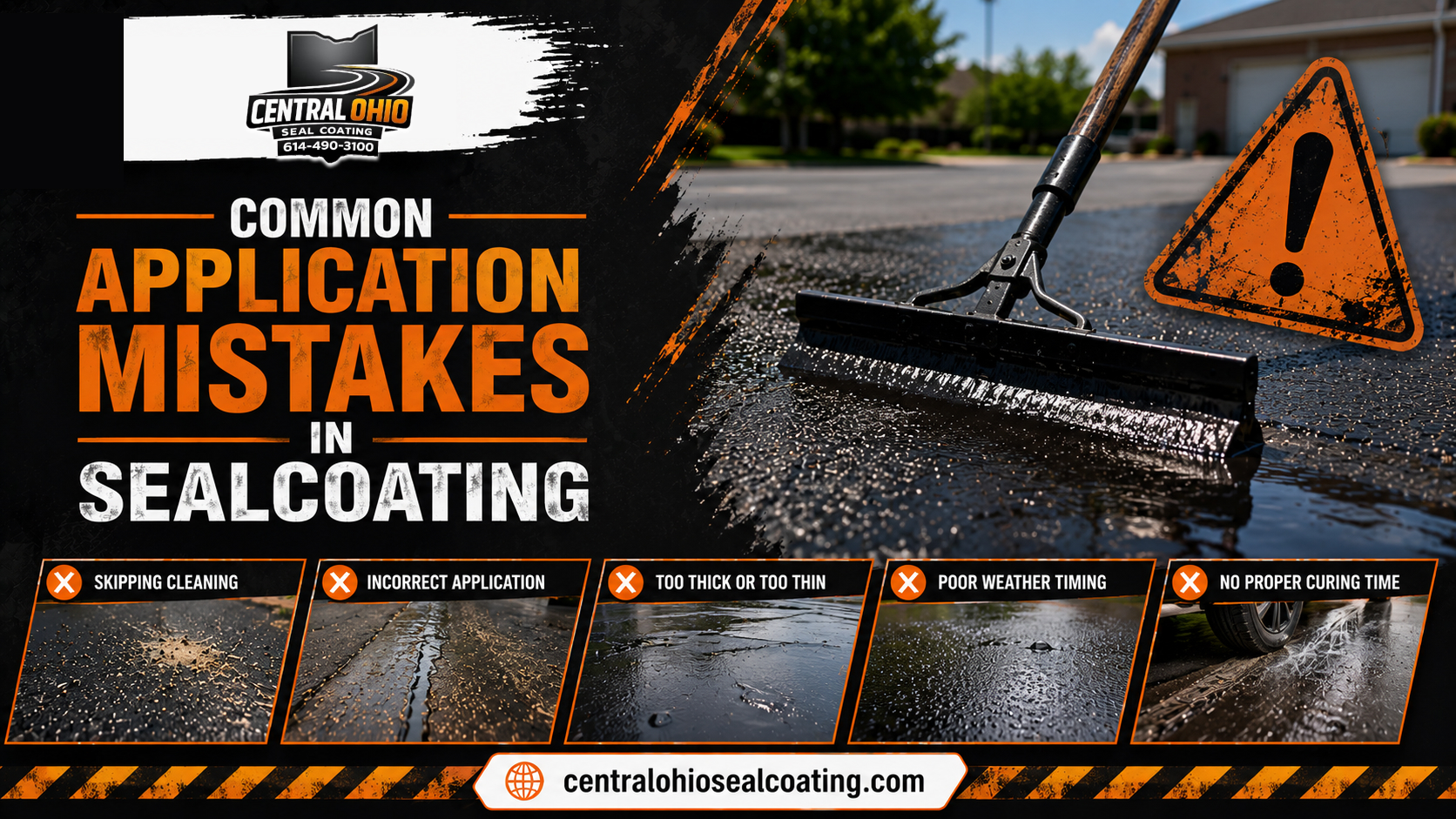
Sealcoating should be performed when weather conditions allow the material to apply and cure properly.
Central Ohio Seal Coating’s guidance indicates that many residential driveways in Central Ohio are sealcoated approximately every two to three years, depending on pavement age, traffic, weather exposure, and surface condition.
Timing depends on:
| Factor | Why It Matters |
|---|---|
| Pavement age | Older asphalt may require closer monitoring |
| Weather exposure | Sun, rain, and freezing affect pavement |
| Traffic | Daily use increases wear |
| Existing cracks | Cracks may need preparation first |
| Surface condition | Severe damage may require another solution |
| Previous maintenance | Past sealcoating affects current condition |
New asphalt generally needs time to cure before its first sealcoating application. Central Ohio Seal Coating recommends approximately 6–12 months for new asphalt before initial sealing.
10. Make Surface Preparation a Priority
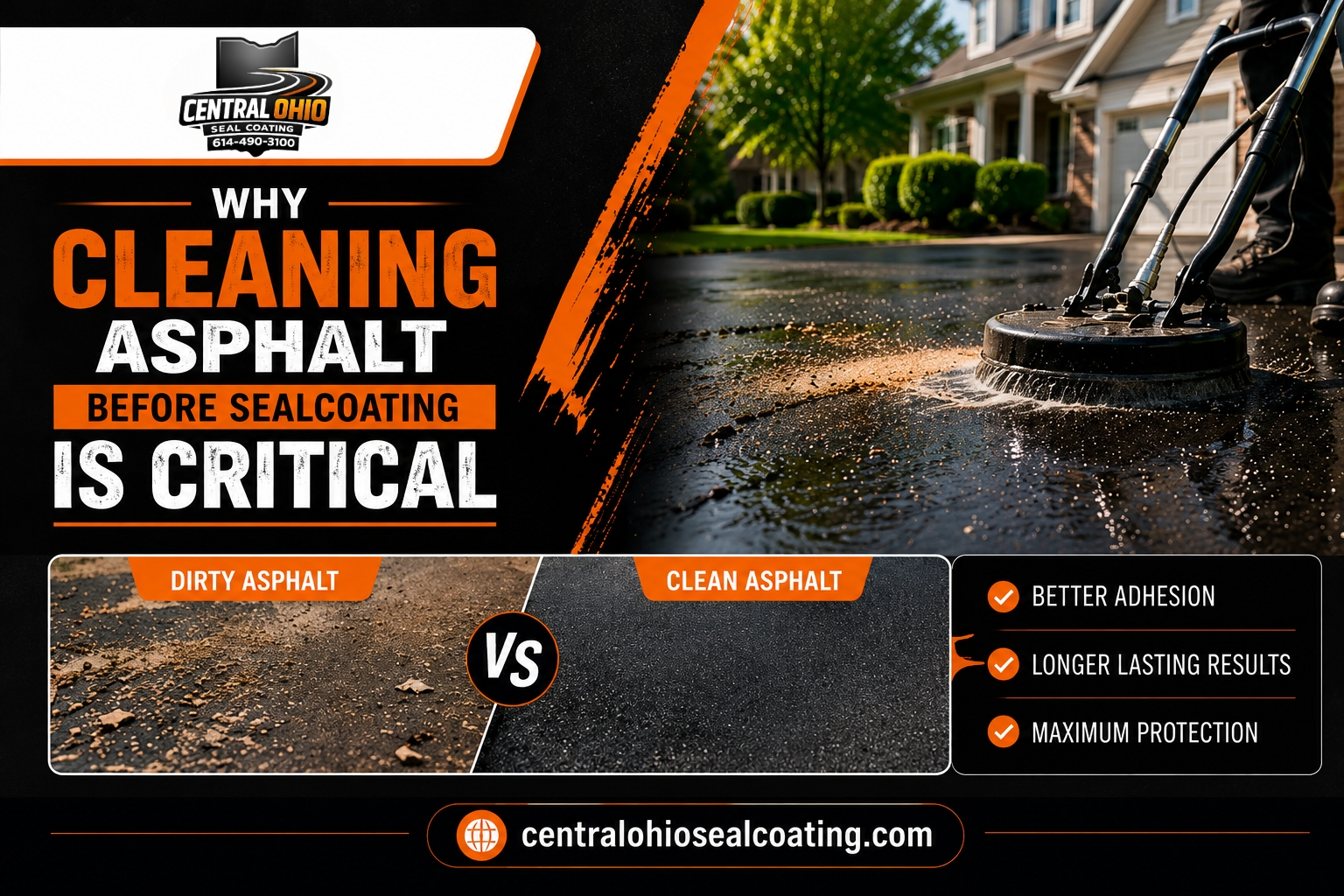
A protective coating cannot perform properly if the pavement underneath has not been prepared.
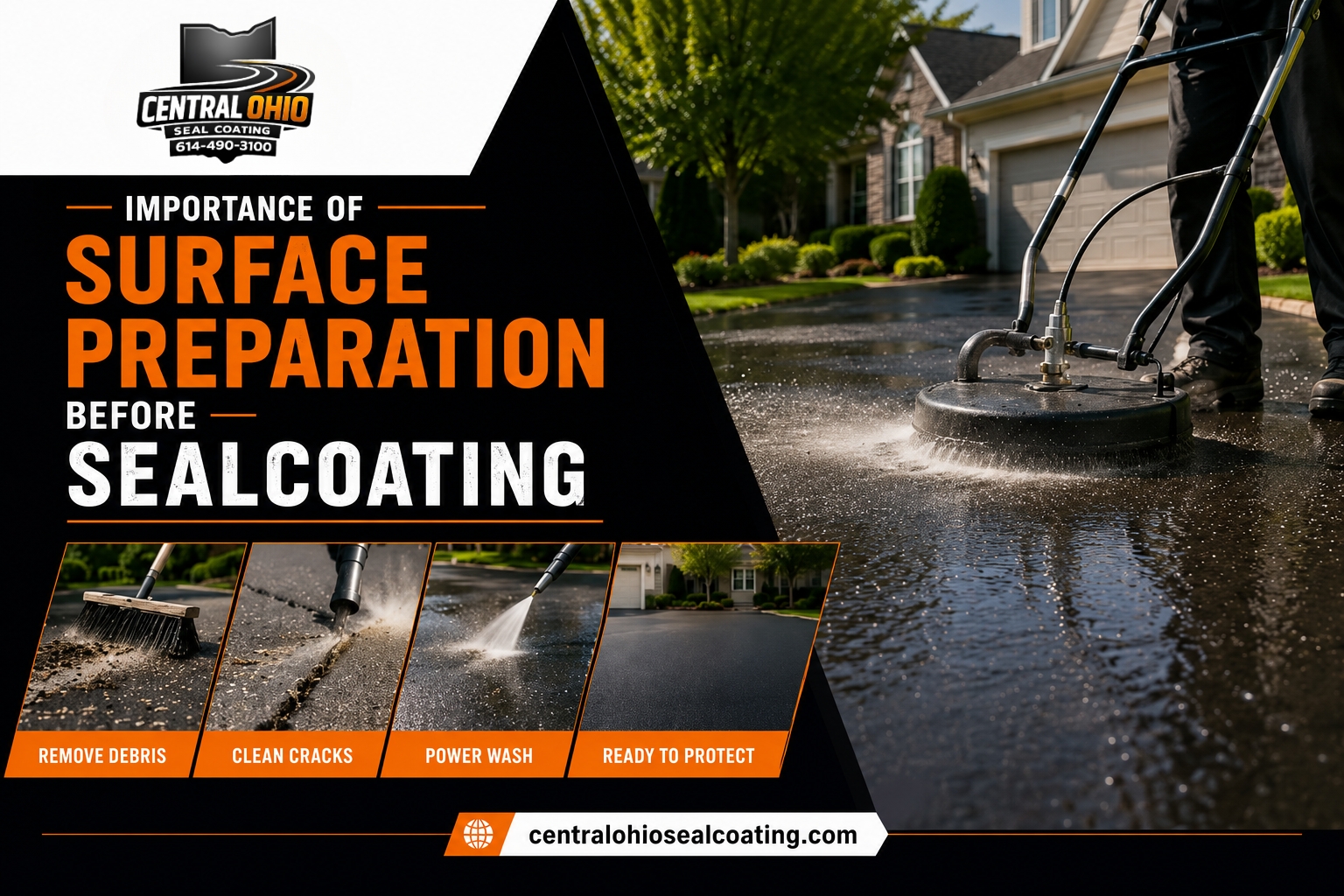
Before sealcoating, the driveway should be inspected and cleaned. Loose debris, dirt, and contaminants should be removed, while suitable cracks should be prepared.
Central Ohio Seal Coating emphasizes proper surface preparation and crack repair as important parts of its maintenance approach.
Proper preparation can involve:
- Inspecting the asphalt
- Sweeping loose material
- Cleaning contaminants
- Preparing cracks
- Addressing appropriate repairs
- Applying the sealcoat
- Allowing adequate curing time
The preparation stage is a major part of achieving consistent results.
11. Protect the Driveway From Everyday Traffic
Weather is only one part of the problem.
Daily vehicle traffic also places stress on residential asphalt. Parking in the same location repeatedly can increase wear in particular areas.
Central Ohio Seal Coating identifies vehicle traffic as one of the ongoing factors affecting asphalt surfaces.
Homeowners can help by:
- Avoiding unnecessary heavy loads
- Keeping vehicles in good condition
- Cleaning fluid leaks quickly
- Monitoring heavily used areas
- Maintaining the pavement regularly
12. Don’t Wait for Potholes to Start Maintenance
A pothole is an obvious sign that pavement deterioration has progressed.
Preventative maintenance is intended to address problems earlier.
Central Ohio Seal Coating recommends combining sealcoating, crack filling, and timely repairs to help prevent moisture penetration and slow deterioration.
Instead of waiting for:
Small crack → larger crack → pothole → major repair
homeowners can aim for:
Inspection → early maintenance → protection → continued monitoring
This approach can make driveway care more manageable.
13. Know When Sealcoating Is Not Enough
Sealcoating is not appropriate for every pavement problem.
If a driveway has significant structural deterioration, coating the surface will not rebuild the damaged pavement.
Professional evaluation may be needed for:
- Extensive alligator cracking
- Deep potholes
- Major settlement
- Severe rutting
- Failed pavement sections
- Significant drainage problems
Central Ohio Seal Coating explains that preventative maintenance works best when the asphalt is still suitable for treatment.
The goal is to use the appropriate solution for the condition of the driveway.
14. Keep the Driveway Clean
Regular cleaning is simple but useful.
Leaves, dirt, mud, and other debris can accumulate on pavement. Removing these materials makes it easier to see new cracks, stains, and other changes.
A simple routine can include:
- Sweeping periodically
- Removing leaves
- Cleaning spills
- Clearing driveway edges
- Checking for standing water
- Inspecting the surface after severe weather
Keeping the driveway clean also makes changes in pavement condition easier to identify.
15. Follow Proper Curing Instructions
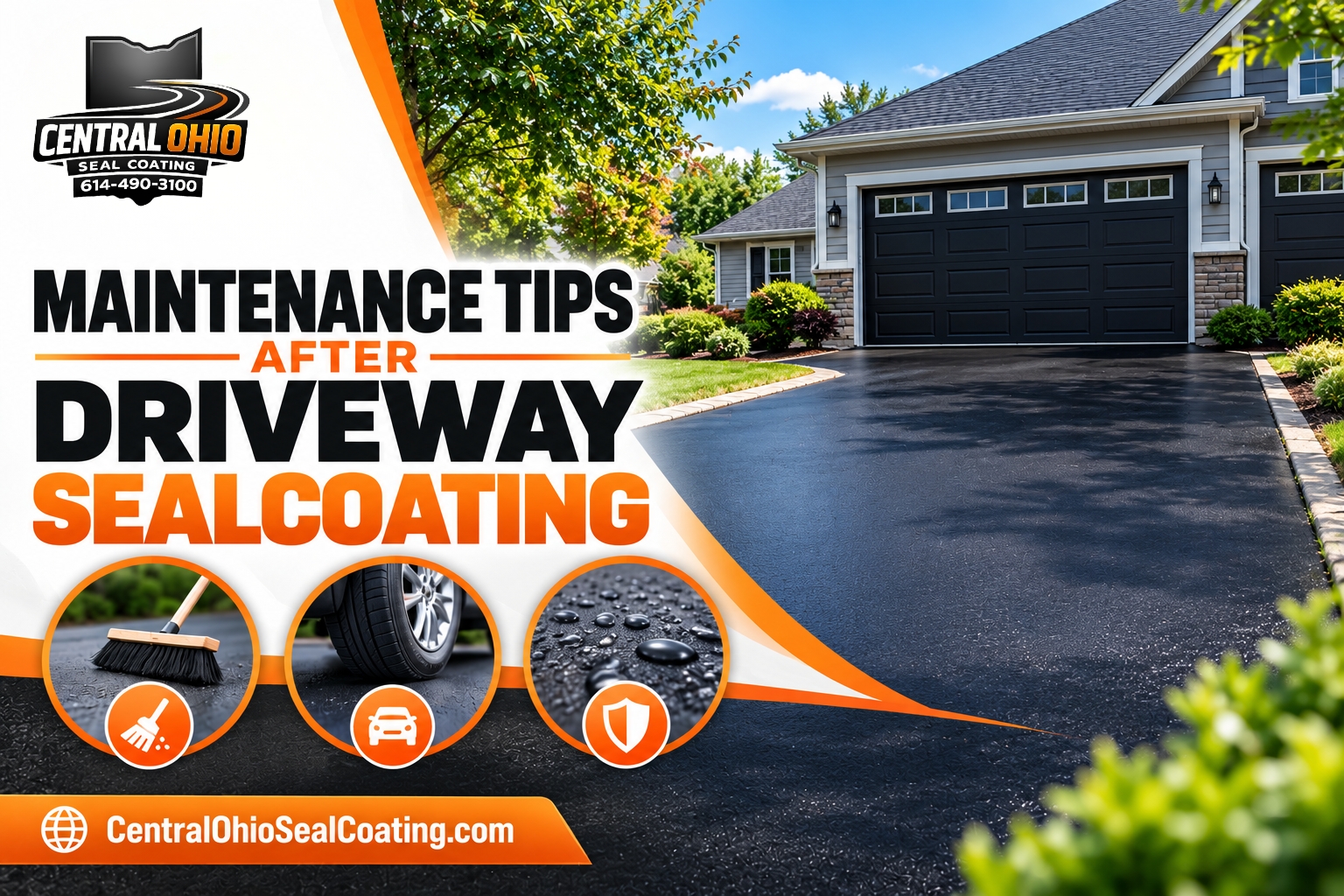
After sealcoating, the driveway needs time to cure.
Driving on the surface too soon can affect the finish and may interfere with the coating’s performance.
Homeowners should follow the specific curing instructions provided by their contractor.
During curing:
- Keep vehicles off the driveway
- Avoid unnecessary traffic
- Keep debris away
- Follow recommended waiting periods
- Protect the surface from contamination
Proper curing is the final step in ensuring that the maintenance treatment has an opportunity to perform as intended.
Seasonal Driveway Protection Checklist
| Season | What to Check |
|---|---|
| Spring | Cracks, potholes, winter damage, standing water |
| Summer | Fading, UV exposure, surface wear, oil stains |
| Fall | Cracks, drainage, surface condition before winter |
| Winter | Moisture accumulation, ice, drainage, new pavement damage |
Using a seasonal checklist can help homeowners stay ahead of changing conditions.
Why Preventative Maintenance Matters in Ohio
Ohio weather can repeatedly expose asphalt to conditions that accelerate deterioration.
Central Ohio Seal Coating explains that moisture, sunlight, traffic, and freeze-thaw cycles can all affect asphalt surfaces.
The important thing is that these factors work together.
For example:
Sunlight can contribute to oxidation.
Cracks can provide pathways for water.
Freezing temperatures can expand moisture inside openings.
Traffic can add repeated stress.
Rain can introduce more moisture.
Over multiple seasons, these factors can turn small surface imperfections into more significant pavement problems.
A Long-Term Driveway Protection Plan
Homeowners can organize driveway maintenance around five basic steps:
1. Inspect
Check the pavement regularly for cracks, fading, potholes, stains, and drainage issues.
2. Clean
Remove debris and address automotive-fluid spills.
3. Repair
Address suitable cracks and other minor pavement problems promptly.
4. Protect
Use sealcoating when the asphalt is suitable and weather conditions are appropriate.
5. Monitor
Continue checking the driveway after maintenance and address new problems early.
This approach turns driveway maintenance into an ongoing process rather than an emergency response.
Final Thoughts
Protecting an asphalt driveway in Ohio requires more than waiting until visible damage becomes severe. Driveway protection Ohio homeowners can use should account for the state’s changing seasons, moisture, freeze-thaw cycles, sunlight, and everyday vehicle traffic.
Central Ohio Seal Coating recommends preventative maintenance such as sealcoating, crack filling, and timely pavement repairs to help reduce moisture penetration, slow oxidation, and protect asphalt from changing weather conditions.
For many homeowners, the best approach is straightforward: inspect the driveway regularly, keep it clean, address cracks early, maintain drainage, and consider sealcoating when the pavement is suitable. Central Ohio Seal Coating’s guidance suggests that many Central Ohio driveways benefit from sealcoating approximately every two to three years, although the appropriate schedule depends on the driveway’s condition and exposure.
With consistent preventative care, homeowners can help maintain a cleaner appearance, reduce unnecessary surface deterioration, and keep their asphalt better prepared for Ohio’s demanding seasonal weather. Central Ohio Seal Coating provides residential sealcoating and pavement maintenance services designed to help protect driveways throughout Central Ohio.