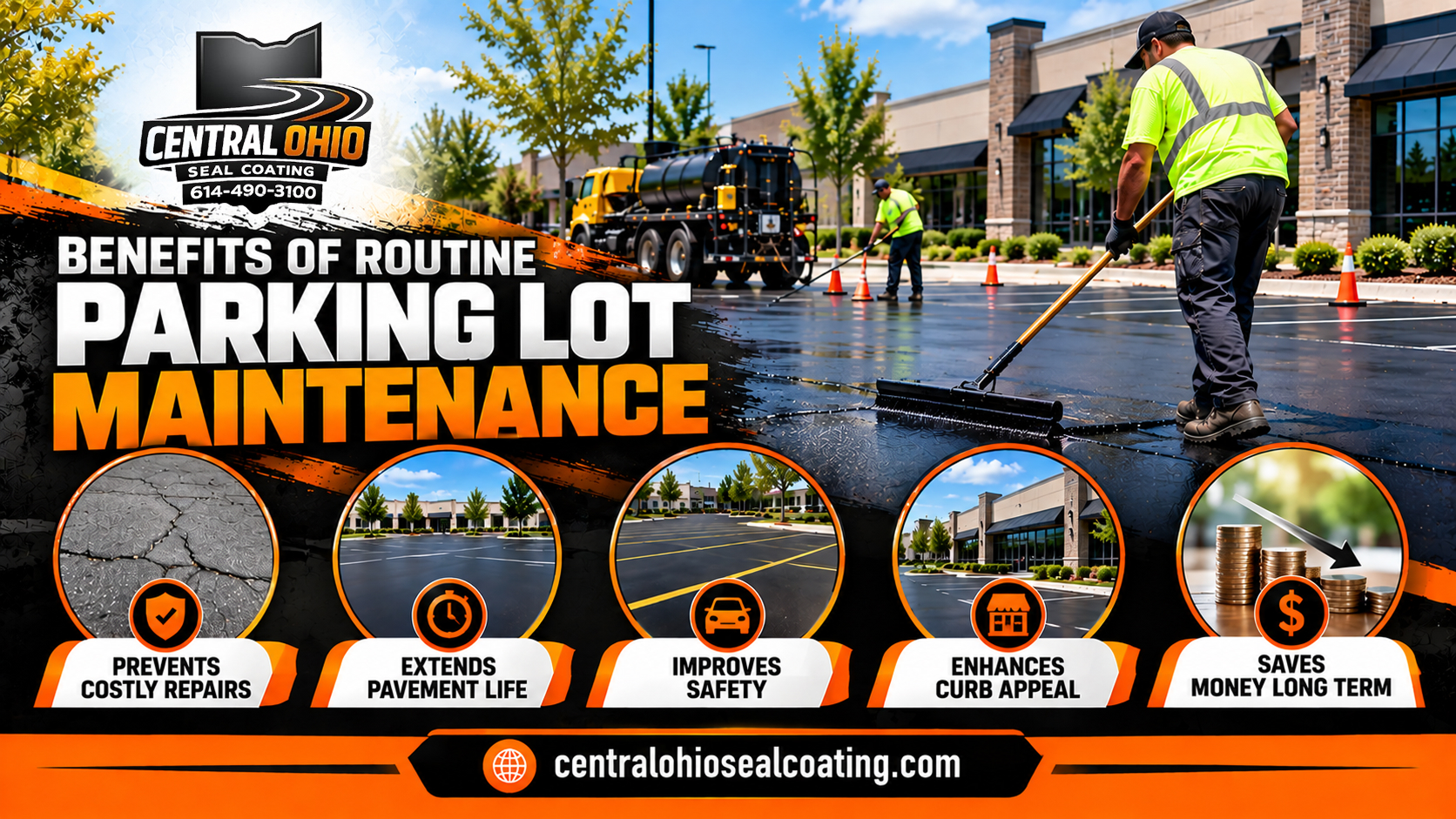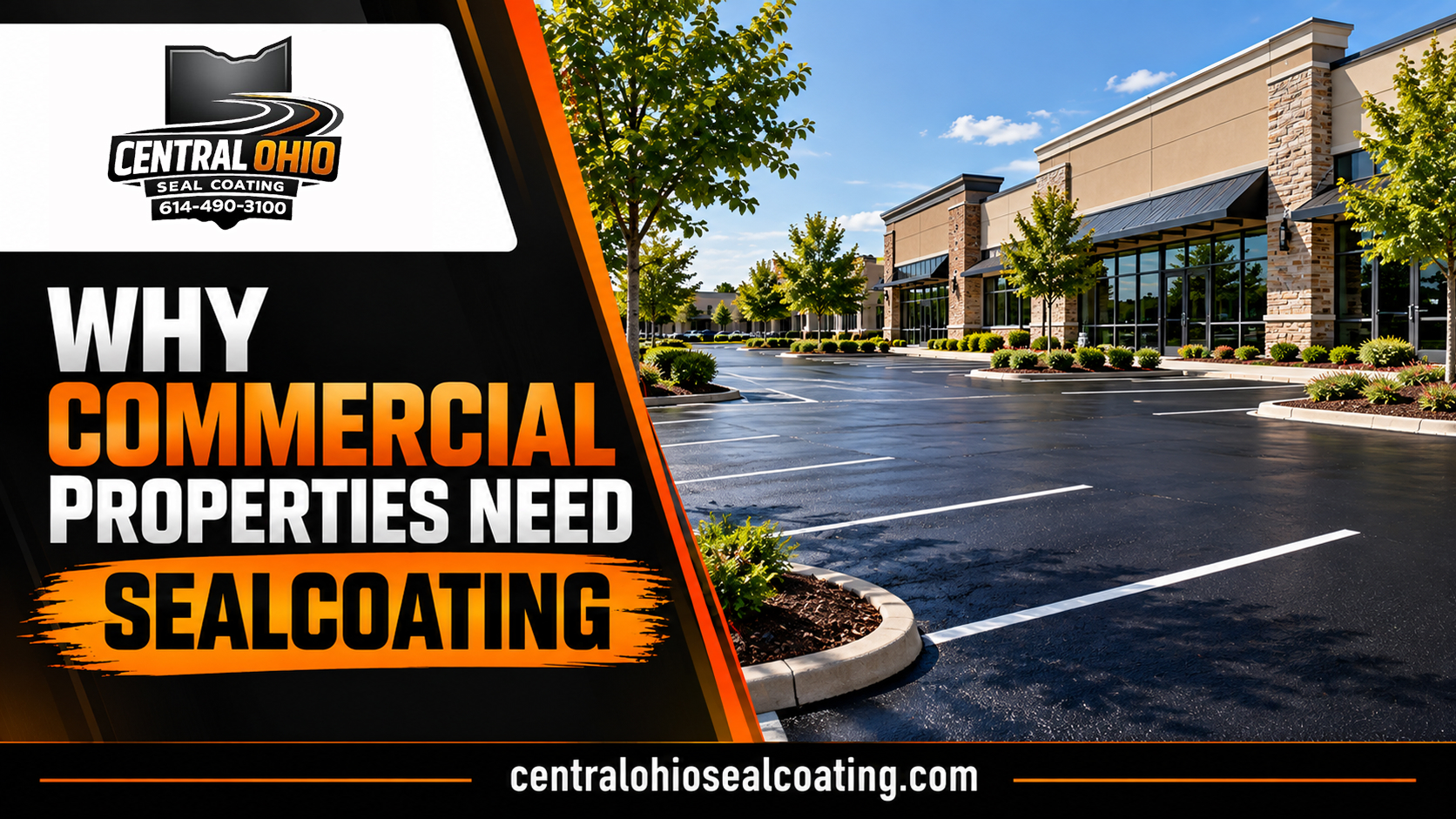

Why Is Regular Parking Lot Maintenance Important for Ohio Businesses? Some parking lots remain smooth and presentable for years, while others develop cracks, potholes, and drainage problems much sooner. The difference often comes down to consistent inspections, timely repairs, and a maintenance plan suited to the pavement’s condition. Parking lot maintenance in Ohio helps business owners protect asphalt, improve property appearance, support safe vehicle movement, and address surface deterioration before it becomes more extensive.
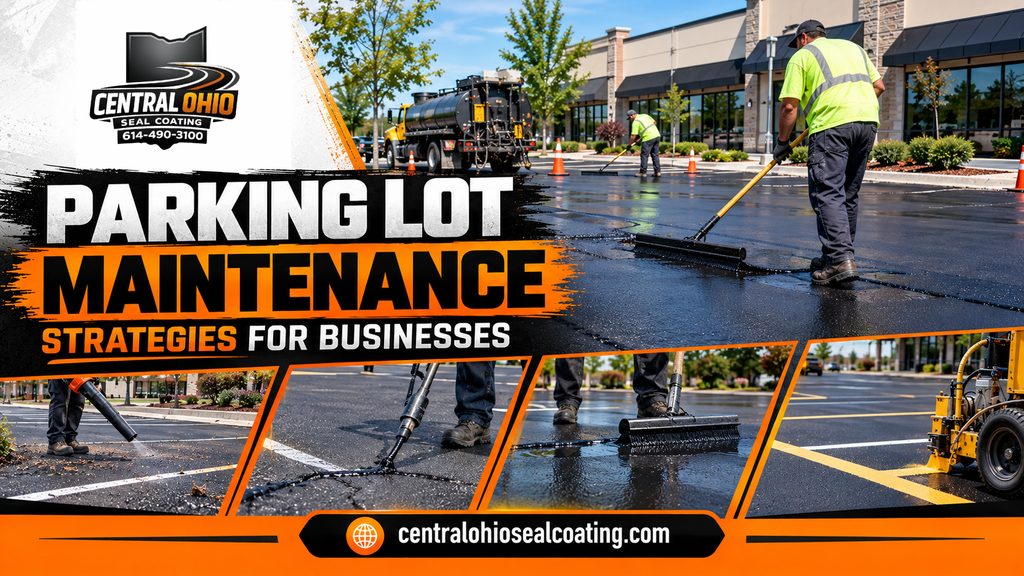
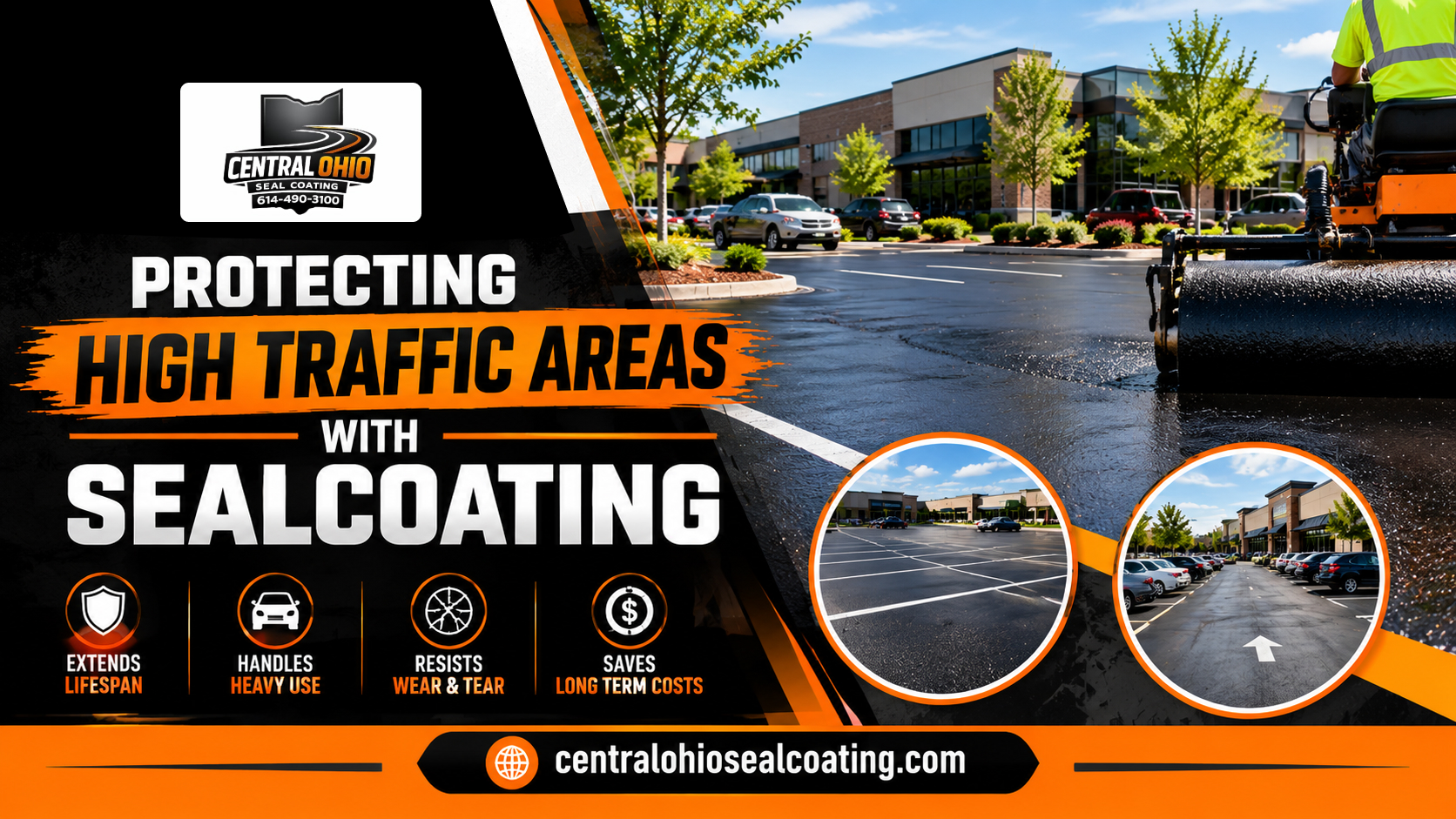
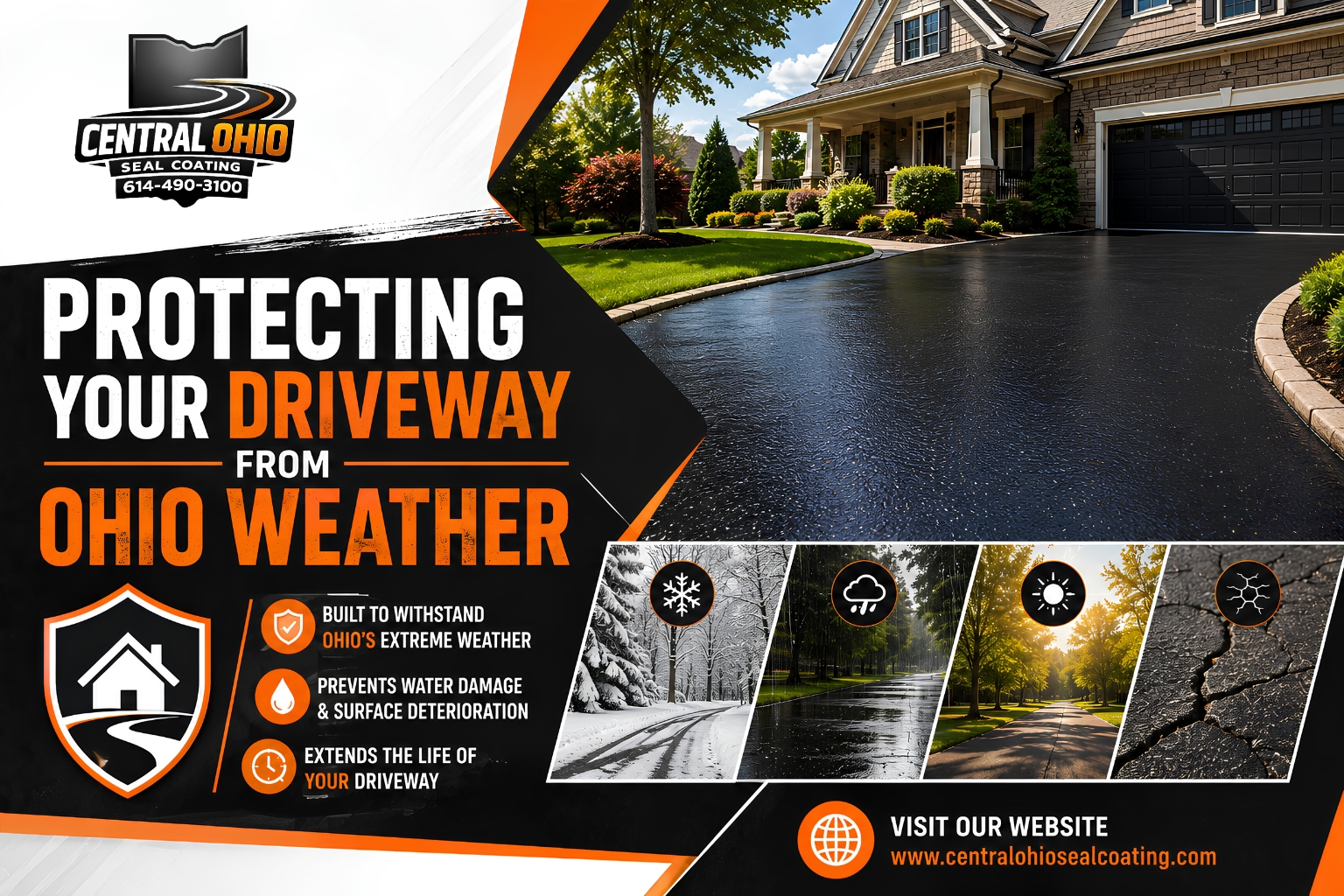
Ohio’s changing weather creates challenges for asphalt throughout the year. Rain, sunlight, snow, freezing temperatures, and repeated freeze-thaw cycles can contribute to pavement wear. Daily traffic from customers, employees, delivery vehicles, and tenants adds further stress to parking areas.
Central Ohio SealCoating provides asphalt maintenance solutions for commercial properties, residential driveways, rental properties, and other paved areas throughout Columbus and surrounding Central Ohio communities. Whether you manage a busy business parking lot, maintain a rental property, or want to protect your home’s driveway, a planned approach to pavement care helps you identify problems and choose suitable maintenance at the right time.
1. Start With Regular Parking Lot Inspections
One of the most effective parking lot maintenance strategies is to inspect the pavement regularly instead of waiting until visible damage disrupts daily operations.
A parking lot may appear acceptable from a distance while developing cracks, low spots, or drainage issues in areas with frequent vehicle movement. Routine inspections help property owners identify these concerns and determine which areas need attention first.
What should you inspect?
During a pavement inspection, look for:
- Cracks: Check for new, widening, or interconnected cracks that could allow water to enter the pavement.
- Potholes: Identify damaged areas that may create hazards for vehicles and pedestrians.
- Faded asphalt: Look for surface oxidation and signs that the pavement may need preventive maintenance.
- Standing water: Note areas where water remains after rainfall.
- Loose aggregate: Watch for rough surfaces or material separating from the pavement.
- Faded markings: Check whether parking spaces, directional arrows, and other pavement markings remain visible.
- Damaged edges: Inspect pavement boundaries and areas near curbs for crumbling or erosion.
Businesses with busy parking lots may benefit from seasonal inspections and additional checks after severe weather. Residential property owners and rental property managers can also use routine inspections to monitor driveways, shared parking areas, and private access roads.
Documenting the location and condition of each problem makes it easier to compare changes over time and prioritize repairs.
2. Repair Asphalt Cracks Before They Spread
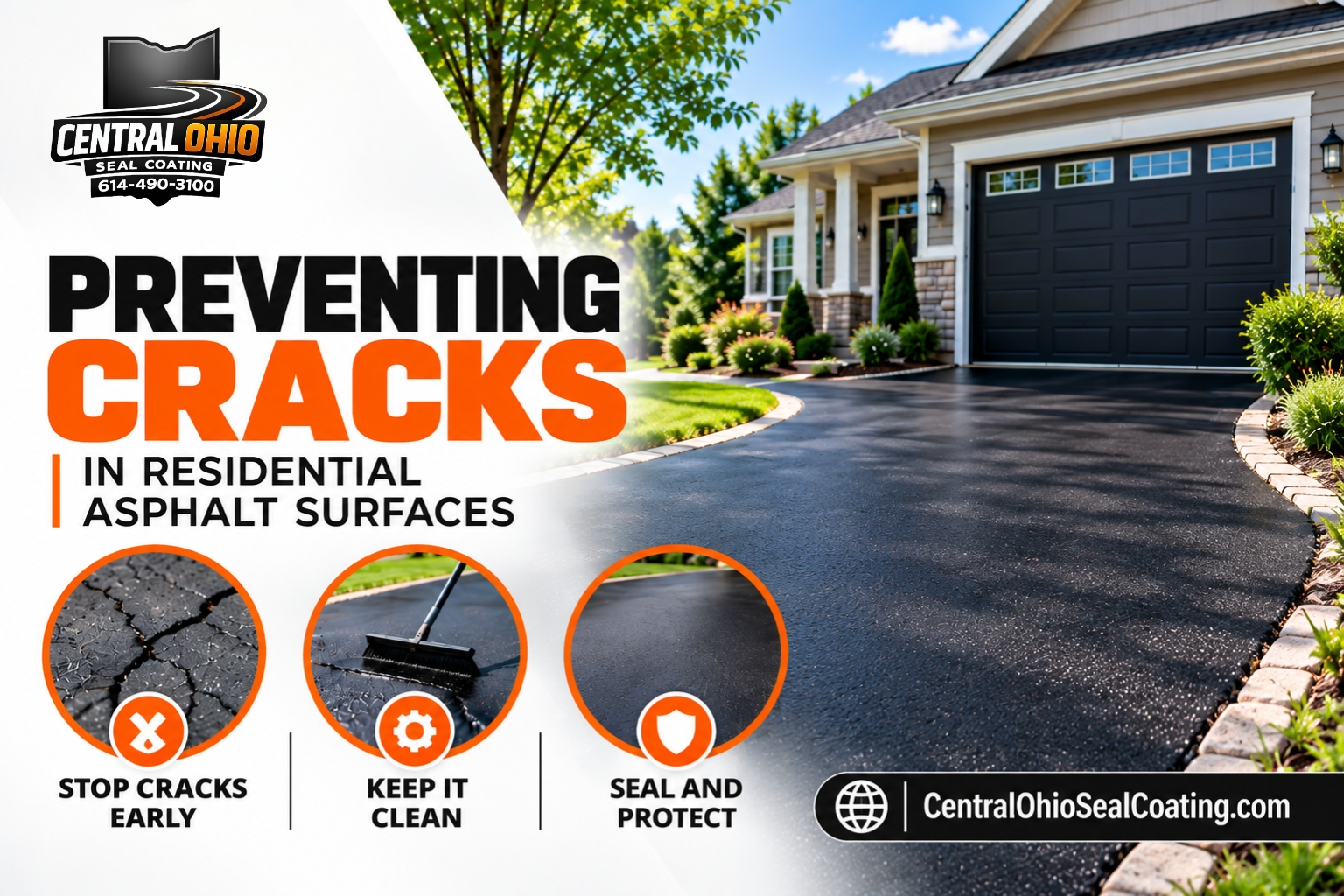
Crack management is an important part of parking lot maintenance in Ohio. Small cracks may initially appear harmless, but water can enter through openings in the pavement and affect the layers underneath.
During cold weather, water may freeze and expand, contributing to further deterioration. Repeated traffic can also place stress on already weakened sections.
Why early crack repair matters
Addressing suitable cracks early can help property owners:
- Reduce water entry through the pavement surface.
- Limit the spread of certain types of cracking.
- Protect the condition of the underlying pavement layers.
- Prepare the asphalt for suitable preventive treatments.
- Avoid leaving developing defects unattended.
Not all cracks require the same treatment. Narrow surface cracks may be suitable for crack sealing or filling, while extensive interconnected cracking can indicate structural problems that need more substantial repairs.
Central Ohio SealCoating can help property owners evaluate asphalt maintenance needs and determine whether crack treatment, patching, or another service is appropriate before sealcoating.
3. Use Sealcoating as Part of Preventive Maintenance
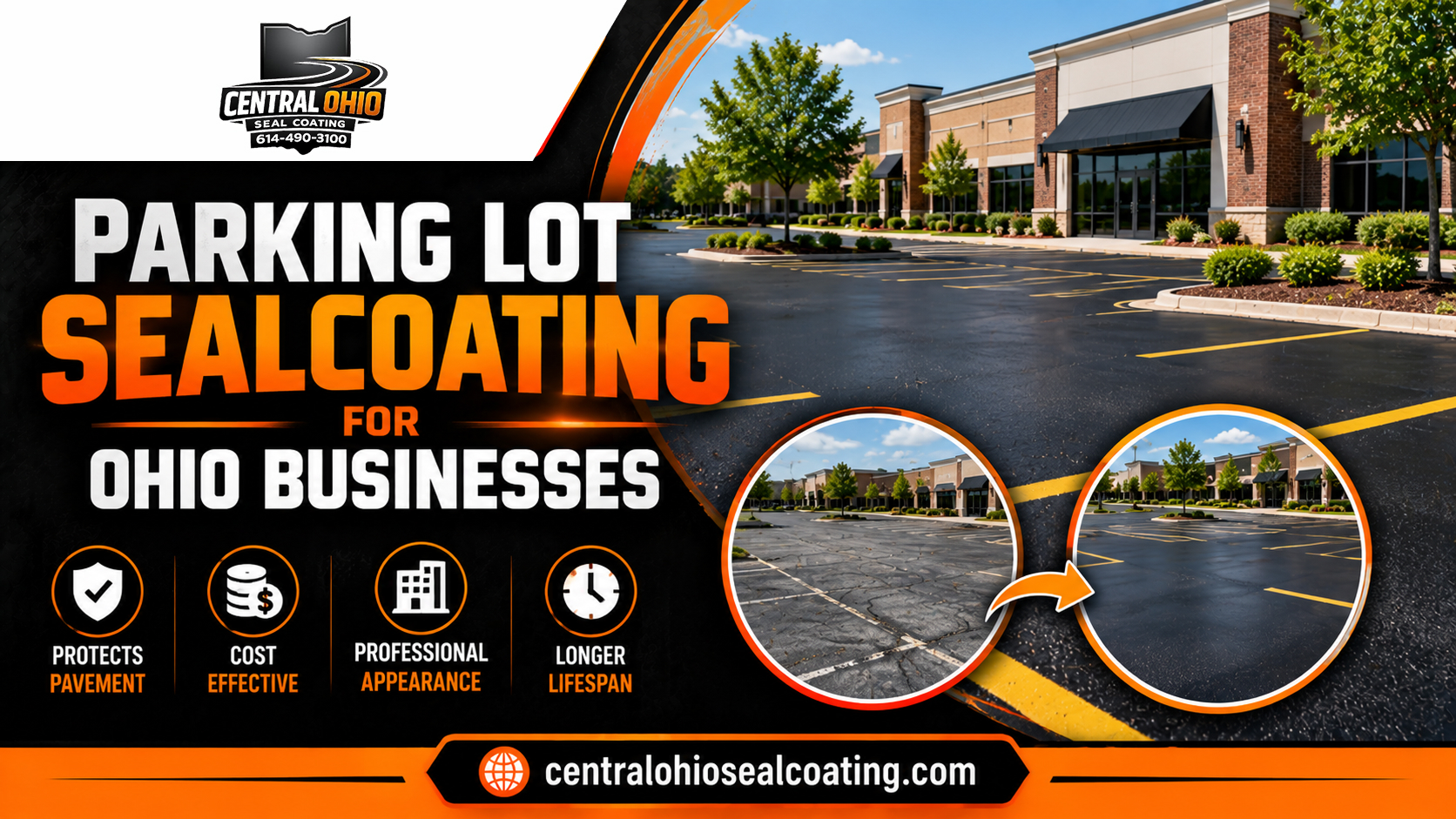
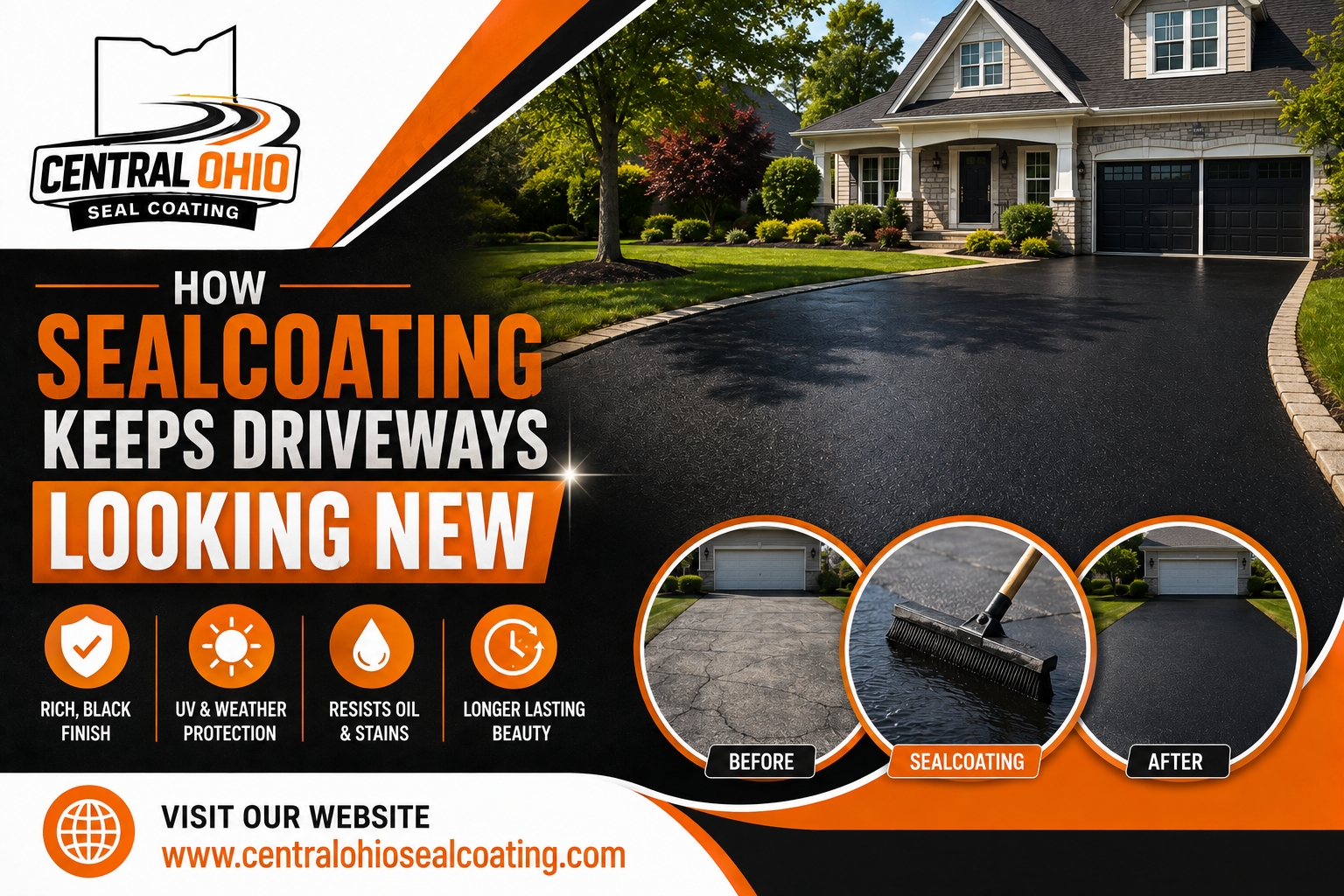
Sealcoating is a useful maintenance treatment for asphalt that remains structurally sound. It applies a protective coating over the existing surface to help reduce exposure to oxidation, moisture, and everyday environmental wear.
For businesses, maintaining a parking lot’s surface can support both pavement preservation and a professional property appearance.
Benefits of parking lot sealcoating
Helps slow surface aging: Sunlight and oxygen gradually affect asphalt binder. Sealcoating helps protect the surface from these environmental effects.
Supports moisture protection: A suitable coating helps limit water penetration through the treated surface, although existing cracks and drainage problems must be addressed separately.
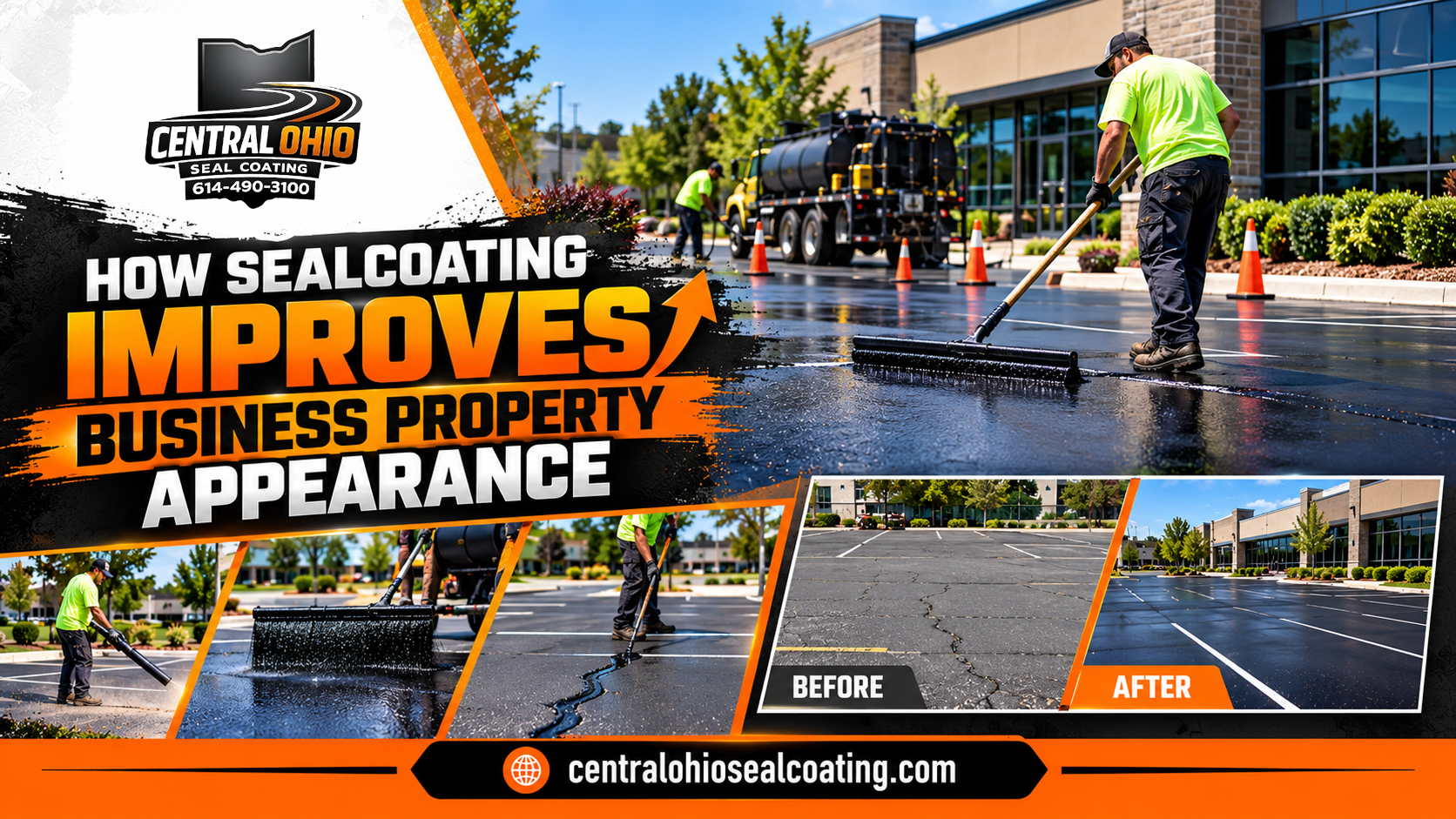
Refreshes pavement appearance: Sealcoating can restore a darker, more uniform finish to weathered asphalt.
Helps maintain customer-facing areas: A well-maintained parking lot contributes to the overall appearance of a business property.
Supports a planned maintenance program: Applying sealcoating at the appropriate time can help preserve suitable pavement instead of allowing preventable surface deterioration to continue.
Sealcoating does not repair potholes, deep cracks, sinking pavement, or a failed base. Necessary repairs should be completed first, and the coating should only be applied when the pavement and weather conditions are suitable.
4. Keep Parking Lot Drainage Working Properly
Water management is one of the most important parts of maintaining asphalt. Even a well-constructed parking lot can deteriorate prematurely if water repeatedly collects on the surface or enters damaged pavement.
Businesses should pay close attention to drainage because parking areas often include large paved surfaces that direct rainwater toward designated drainage points.
Common drainage problems
- Water collecting in depressions.
- Blocked drains or catch basins.
- Damaged drainage inlets.
- Erosion along pavement edges.
- Water flowing toward building entrances.
- Cracks that repeatedly appear in wet areas.
Standing water may indicate a problem with grading, settlement, or the drainage system. Applying sealcoat alone will not correct these underlying issues.
Property owners should keep drainage inlets clear of debris and arrange for assessment when pooling persists. Correcting the source of a drainage problem can help protect the surrounding asphalt and reduce recurring deterioration.
Proper drainage is equally important for rental properties and residential driveways. Water should move away from vulnerable pavement areas and building foundations rather than remaining trapped against the surface.
5. Follow a Seasonal Maintenance Schedule for Ohio
Ohio’s seasons affect when pavement should be inspected, repaired, and treated. A seasonal maintenance plan helps property owners prepare for weather-related wear and coordinate work under appropriate conditions.
| Season | Recommended maintenance | Main objective |
|---|---|---|
| Spring | Inspect winter damage, identify potholes, review drainage, and plan repairs | Address problems that developed during winter |
| Summer | Schedule suitable sealcoating, pavement repairs, and striping | Complete treatments under favorable weather conditions |
| Fall | Inspect cracks, clean drainage areas, and prepare for colder weather | Reduce avoidable moisture-related damage before winter |
| Winter | Monitor pavement hazards, manage snow and ice carefully, and document new damage | Maintain access and identify issues for follow-up |
The exact schedule depends on pavement condition, property use, and weather. Sealcoating requires suitable temperatures and surface conditions, so property owners should follow the coating product’s requirements and allow sufficient curing time.
Spring maintenance
After winter, inspect the parking lot for new potholes, cracks, loose asphalt, and drainage concerns. Prioritize damaged areas that may affect safe access or allow water to enter the pavement.
Summer maintenance
Warmer, drier weather may provide suitable conditions for sealcoating and certain asphalt repairs. This is also a useful time to review parking space markings and plan work around business activity.
Fall maintenance
Address suitable cracks and drainage concerns before freezing weather arrives. Review snow-removal arrangements and identify pavement areas that may be vulnerable to water accumulation.
Winter maintenance
Keep parking and access areas appropriately maintained for seasonal conditions. Snow-removal equipment and deicing products should be selected and used carefully to avoid unnecessary damage to pavement, curbs, and adjacent surfaces.
6. Maintain Clear Parking Lot Striping and Markings
A parking lot needs to support orderly vehicle movement and clear pedestrian access. Even when the asphalt itself is in good condition, faded markings can make a property harder to navigate.
Parking lot maintenance should include periodic reviews of:
- Parking space lines.
- Directional arrows.
- Stop lines and traffic markings.
- Pedestrian crossings.
- Accessible parking spaces and access aisles.
- Loading zones and designated service areas.
- Relevant signs and traffic-control features.
When sealcoating is completed, parking lot striping may need to be renewed after the coating has cured sufficiently.
Property owners should also verify that accessible parking spaces, markings, and signs meet applicable requirements. A fresh coat of paint alone does not guarantee compliance.
For commercial properties, visible markings can help organize traffic flow and make parking areas easier for customers, employees, and visitors to use.
7. Address Potholes and Damaged Areas Promptly
Potholes can develop when water enters pavement cracks, underlying materials weaken, or traffic places repeated stress on a deteriorated section. They may also appear after winter weather exposes existing pavement weaknesses.
Prompt attention is important because potholes can expand and create hazards for vehicles and pedestrians.
What should property owners do?
- Identify and document the location of the damaged area.
- Restrict access to an immediate hazard when necessary.
- Arrange an assessment to determine the depth and cause of the damage.
- Repair the affected pavement using a method suited to its condition.
- Investigate recurring damage to determine whether drainage or base problems are contributing.
The right repair depends on whether the damage is limited to the surface or extends into the pavement structure.
Central Ohio SealCoating offers asphalt patch repair and related pavement services to help property owners address damaged asphalt. If the underlying base has failed, more extensive work may be required before the surface can be restored effectively.
8. Create a Maintenance Plan for Rental Properties
Parking lot and driveway maintenance is not limited to large commercial businesses. Rental properties also need regular attention to keep paved areas functional, attractive, and suitable for everyday use.
Landlords and property managers may be responsible for monitoring shared parking areas, private driveways, access lanes, and other paved surfaces associated with a property.
Rental property maintenance priorities
Inspect shared parking areas: Look for cracks, potholes, drainage problems, and faded markings that could affect access.
Maintain driveways: Residential rental driveways can deteriorate through weather exposure, vehicle use, and delayed repairs.
Schedule repairs between occupancy periods when practical: Where access arrangements allow, planned work can sometimes be coordinated to reduce disruption for tenants.
Communicate access restrictions: Inform tenants about scheduled maintenance and any period when vehicles must remain off treated pavement.
Keep maintenance records: Record inspections, repairs, sealcoating dates, and recurring issues to help guide future decisions.
A consistent plan can help property managers respond to developing problems rather than waiting until a damaged area requires more extensive work.
Central Ohio SealCoating works with homeowners, businesses, and property managers, including those maintaining rental properties in Columbus and surrounding Central Ohio communities.
9. Do Not Overlook Residential Driveways and Private Paved Areas
Although parking lot maintenance is often associated with businesses, residential properties also benefit from preventive asphalt care.
A driveway may experience less traffic than a commercial parking lot, but it is still exposed to sunlight, rain, temperature changes, and vehicle weight. If small defects are ignored, the surface can gradually become more difficult to maintain.
Residential property owners should consider:
- Inspecting the driveway for cracks and surface fading.
- Keeping leaves, dirt, and debris from accumulating.
- Monitoring areas where water collects.
- Repairing suitable cracks and localized damage.
- Considering sealcoating when the asphalt is structurally sound.
- Keeping vehicles off newly treated pavement for the required curing period.
For homeowners, a maintained driveway supports the overall appearance of the property. For landlords, maintaining a rental property’s driveway and parking area can help preserve the condition of the paved surfaces provided with the property.
Central Ohio SealCoating offers residential sealcoating services designed to help homeowners protect suitable asphalt driveways while maintaining their appearance.
10. Know When Sealcoating Is Not Enough
One common maintenance mistake is assuming that every asphalt problem can be solved by applying a protective coating. Sealcoating is useful for suitable pavement, but it cannot correct every form of deterioration.
| Pavement condition | Potentially appropriate action |
|---|---|
| Faded but structurally sound asphalt | Evaluate for sealcoating |
| Suitable surface cracks | Consider crack sealing or filling |
| Localized potholes | Arrange appropriate asphalt patch repair |
| Persistent standing water | Investigate grading and drainage |
| Widespread interconnected cracking | Assess for structural damage |
| Significant settlement or base failure | Consider deeper repairs or reconstruction |
| Worn surface with a stable underlying structure | Evaluate whether resurfacing is suitable |
The pavement should be assessed before selecting a treatment. Applying sealcoat over severe damage may hide defects temporarily without addressing their cause.
Central Ohio SealCoating provides several asphalt-related services, including sealcoating, patch repair, resurfacing, and parking lot paving. The appropriate option depends on the pavement’s condition and the work required to address the problem.
11. Keep a Record of Maintenance Work
A written maintenance record helps property owners understand how their pavement changes over time. It also makes it easier to plan future work and explain why a particular repair or treatment is being considered.
A useful record may include:
- Inspection dates and pavement condition.
- Locations and types of cracks.
- Pothole repairs and other corrective work.
- Sealcoating dates and product information, when available.
- Drainage concerns and actions taken.
- Striping and marking updates.
- Notes about recurring damage.
- Recommendations for future inspections or repairs.
Businesses with several paved areas can keep separate records for parking lots, entrances, access roads, and loading zones. Property managers can use the same approach for multiple rental properties or residential locations.
Keeping accurate records does not prevent deterioration by itself, but it supports better maintenance decisions and helps property owners identify patterns that might otherwise be missed.
12. Plan Maintenance Around Daily Property Use
Parking lot maintenance can interrupt normal activities if the work is not coordinated carefully. Businesses may need to preserve customer access, employee parking, deliveries, and emergency routes while repairs or sealcoating are underway.
Planning can help reduce these disruptions.
Practical scheduling strategies
- Notify customers, employees, tenants, or residents before work begins.
- Identify alternative parking and access routes where possible.
- Schedule work during quieter periods when practical.
- Consider completing a large lot in separate sections if the site allows.
- Coordinate striping after sealcoating has cured.
- Follow the contractor’s guidance about reopening the treated area.
- Keep vehicles away from active work zones and freshly treated surfaces.
Rental property managers should also communicate with tenants about vehicle relocation and access restrictions. Homeowners may need to plan around driveway access while sealcoating or repairs are underway.
The objective is to complete the necessary maintenance while keeping the property organized and accessible wherever conditions permit.
Frequently Asked Questions
How often should a parking lot be inspected in Ohio?
At least seasonal inspections, particularly in spring and fall, provide useful opportunities to review pavement condition. Busy lots may benefit from more frequent checks, especially after severe weather or when damage has already been identified.
How often should a parking lot be sealcoated?
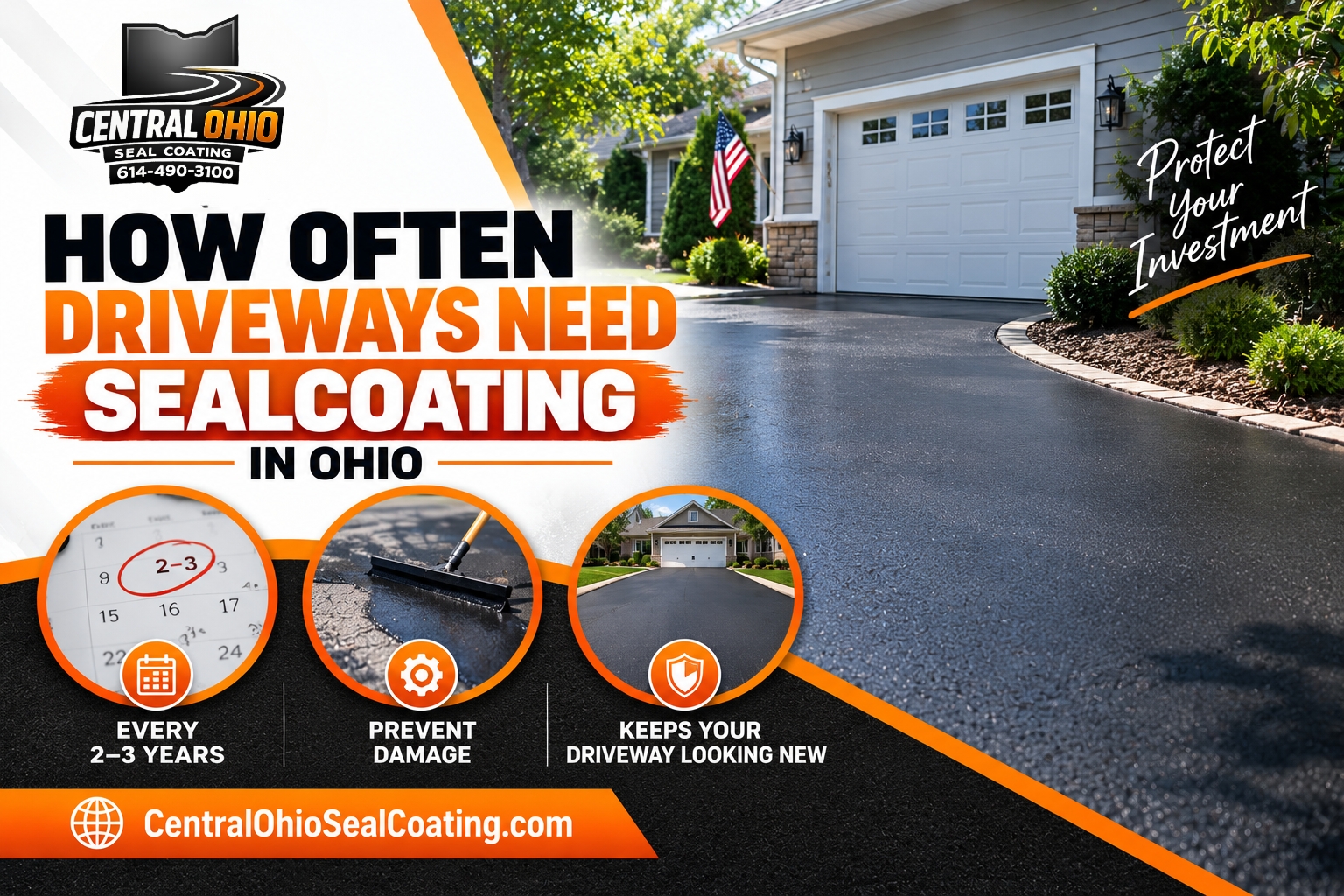
The appropriate interval depends on traffic, pavement condition, weather exposure, previous treatments, and product recommendations. Some properties may be considered for sealcoating every few years, but the pavement should be evaluated before a schedule is established.
Can sealcoating fix potholes in a parking lot?
No. Potholes require suitable repairs before sealcoating. If the pavement’s base has failed, more extensive work may be needed.
What is the biggest cause of parking lot deterioration in Ohio?
There is no single cause for every property. Water infiltration, freeze-thaw cycles, oxidation, traffic loading, poor drainage, and delayed maintenance can all contribute to deterioration.
Does parking lot maintenance apply to rental properties?
Yes. Rental properties may have driveways, shared parking areas, and private access roads that require inspections, crack repairs, sealcoating, and drainage maintenance. The appropriate services depend on the condition and use of the pavement.
Can Central Ohio SealCoating help with residential and commercial pavement?
Yes. Central Ohio SealCoating provides services for residential driveways, commercial parking lots, rental properties, and other paved areas throughout Columbus and surrounding Central Ohio communities.
Conclusion
Effective parking lot maintenance in Ohio starts with regular inspections, timely crack and pothole repairs, appropriate drainage management, and sealcoating when the asphalt is ready for treatment. Seasonal planning is especially important because Ohio’s changing weather can expose pavement weaknesses and contribute to deterioration. By addressing problems early and choosing treatments that match the condition of the asphalt, property owners can maintain better-looking, more functional paved areas.
These strategies are relevant not only to business owners but also to homeowners, landlords, rental property managers, and anyone responsible for maintaining driveways or parking areas. Central Ohio SealCoating provides residential and commercial asphalt maintenance solutions throughout Columbus and surrounding Central Ohio communities, including services for rental properties. Whether you need to maintain a business parking lot, protect a residential driveway, or plan upkeep for a rental property, a proactive maintenance approach can help keep your asphalt in better condition over time.