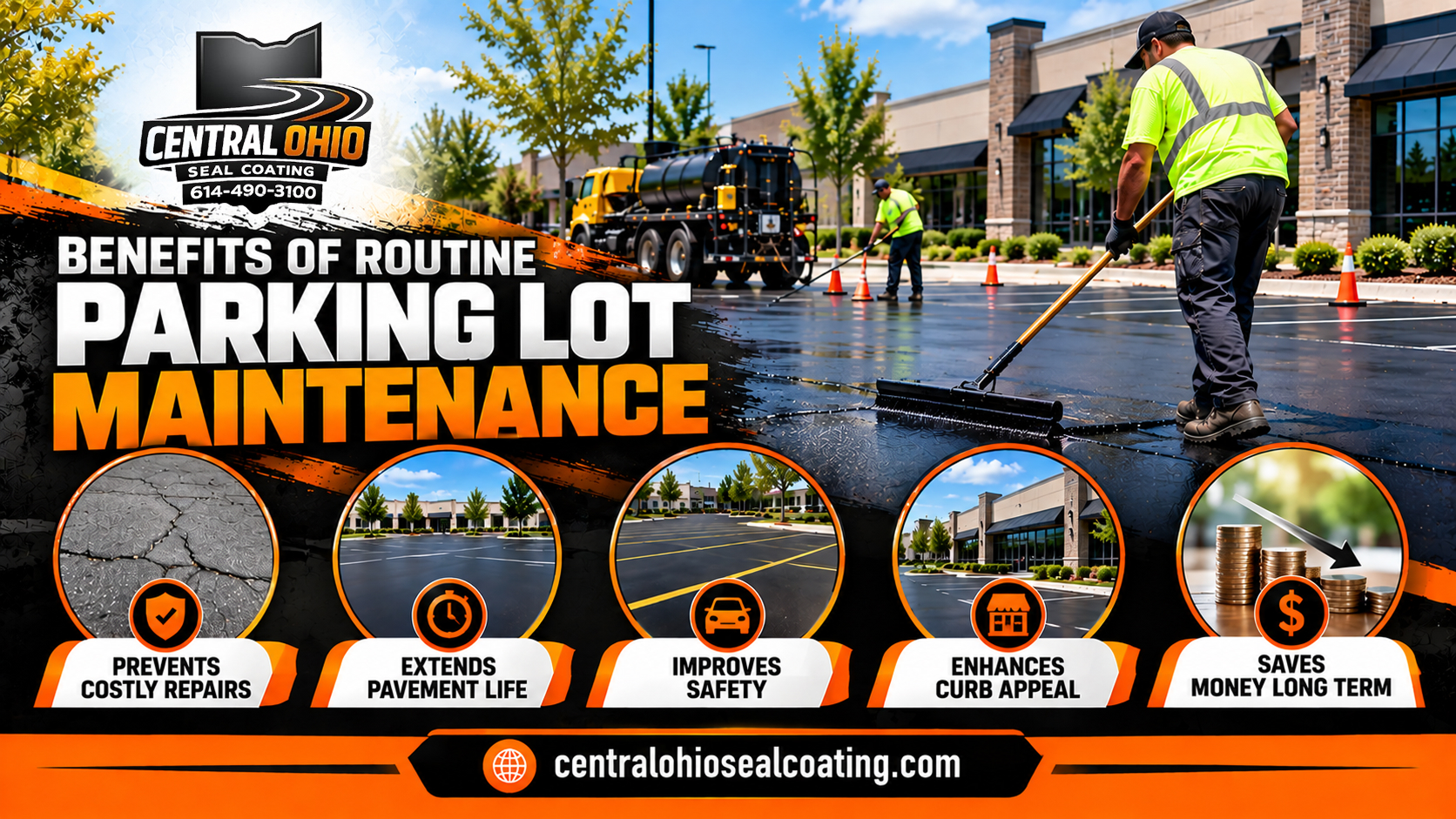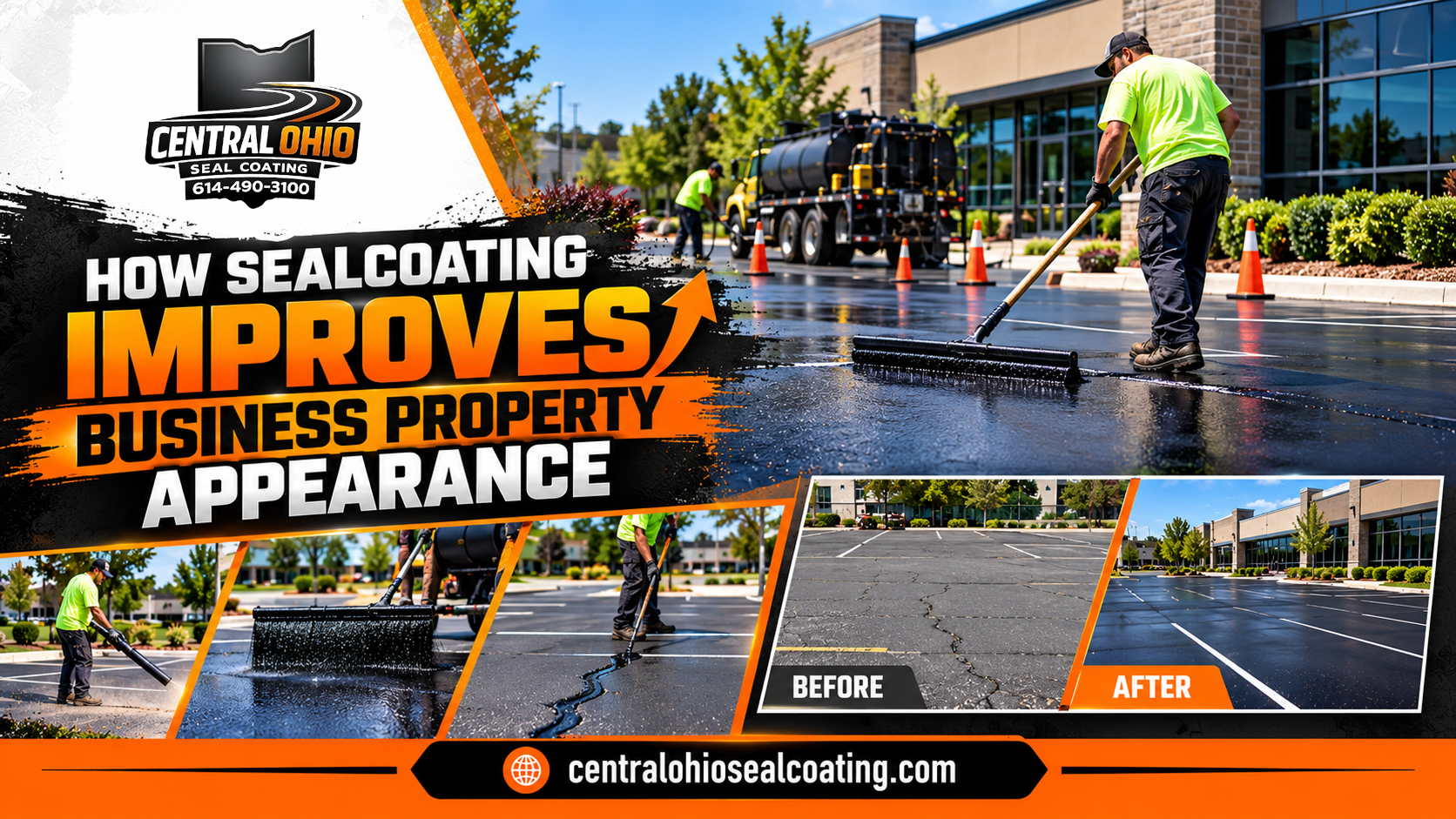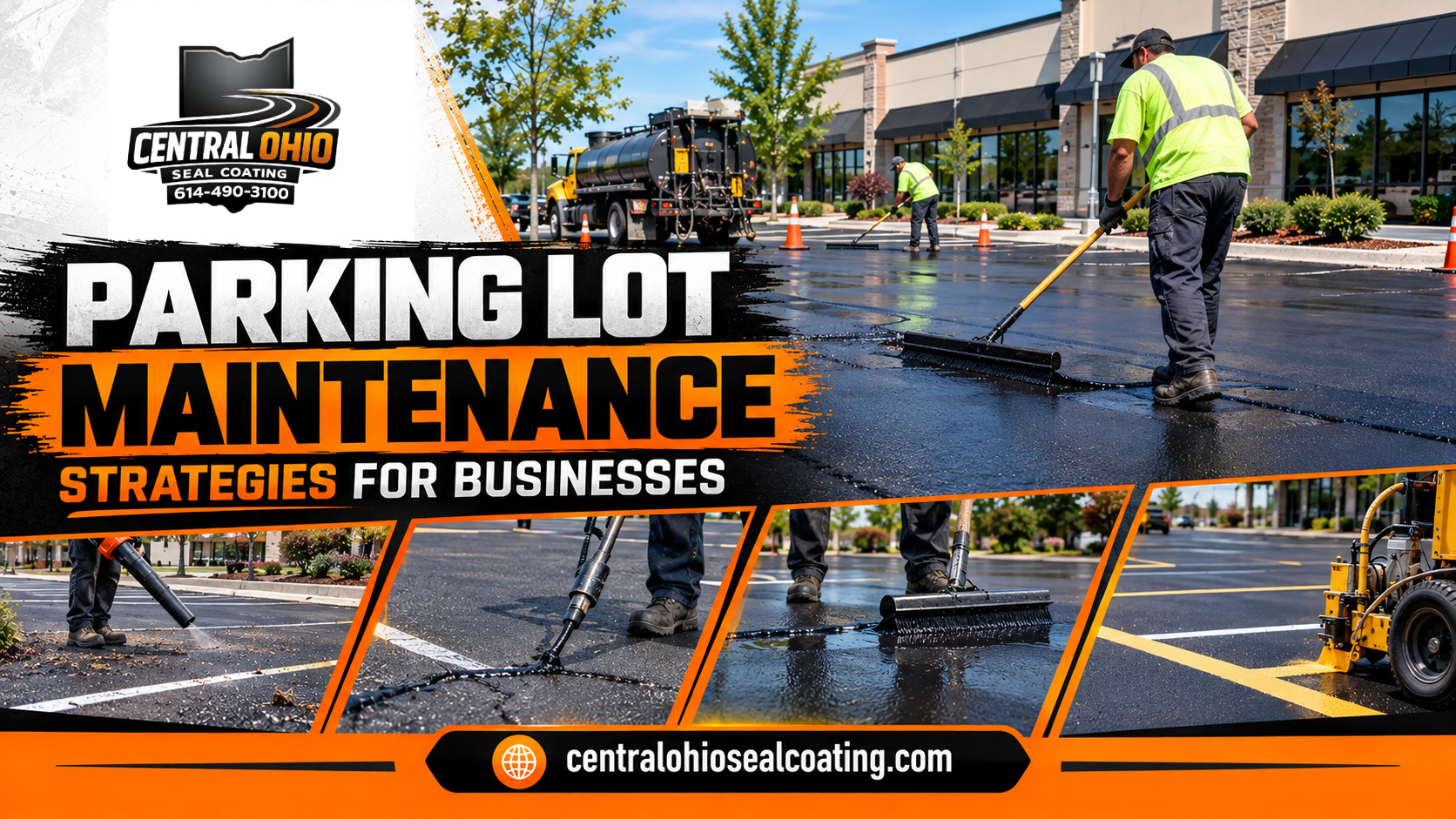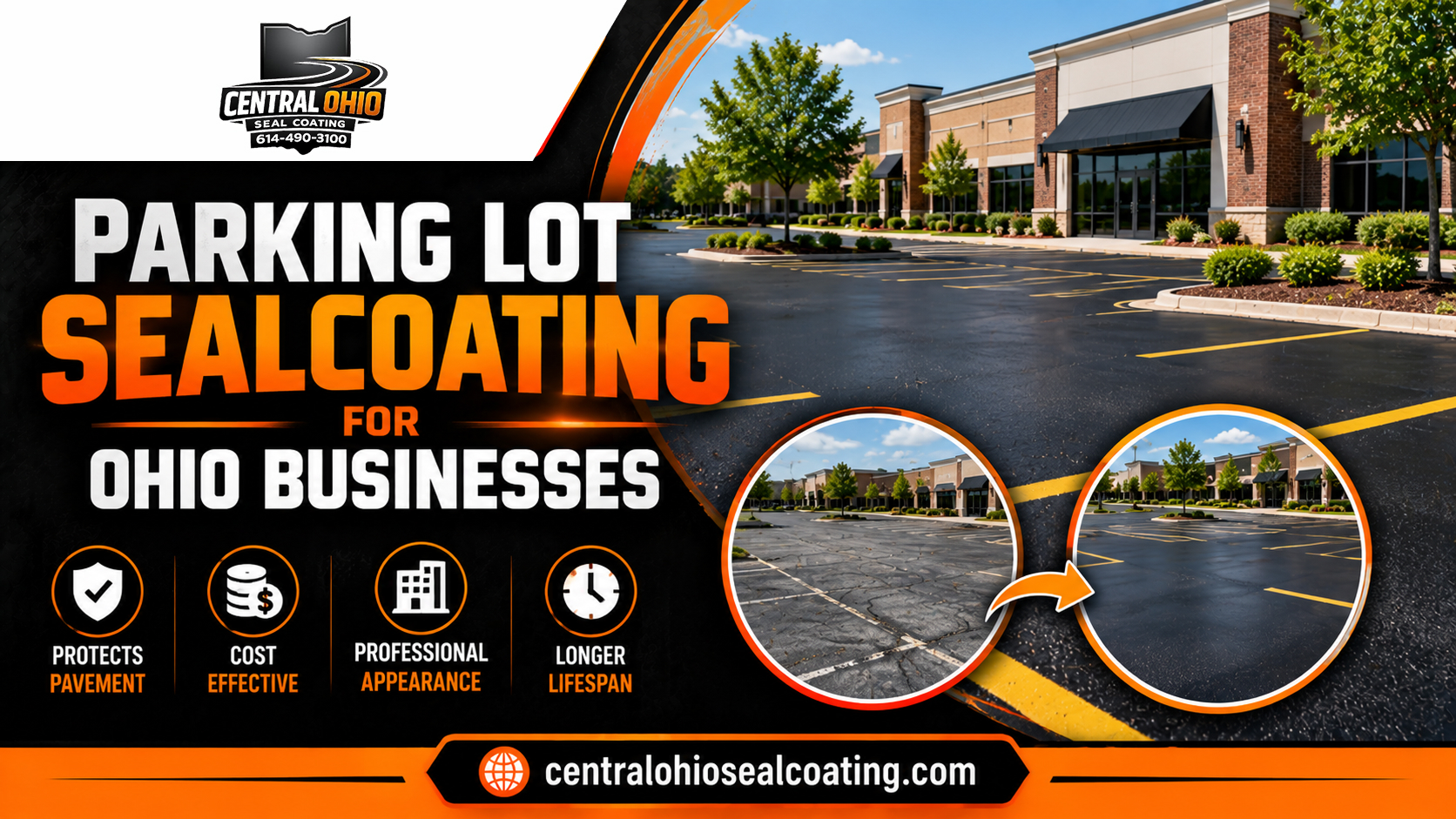


Why do high-traffic asphalt areas need special attention to stay in good condition? High traffic sealcoating in Ohio helps protect suitable asphalt surfaces from oxidation, moisture exposure, and everyday wear caused by frequent vehicle movement. Parking lot entrances, turning lanes, drive-through areas, loading zones, and commercial access roads often experience more concentrated traffic than other parts of a property, making regular pavement inspections and preventive maintenance especially important.
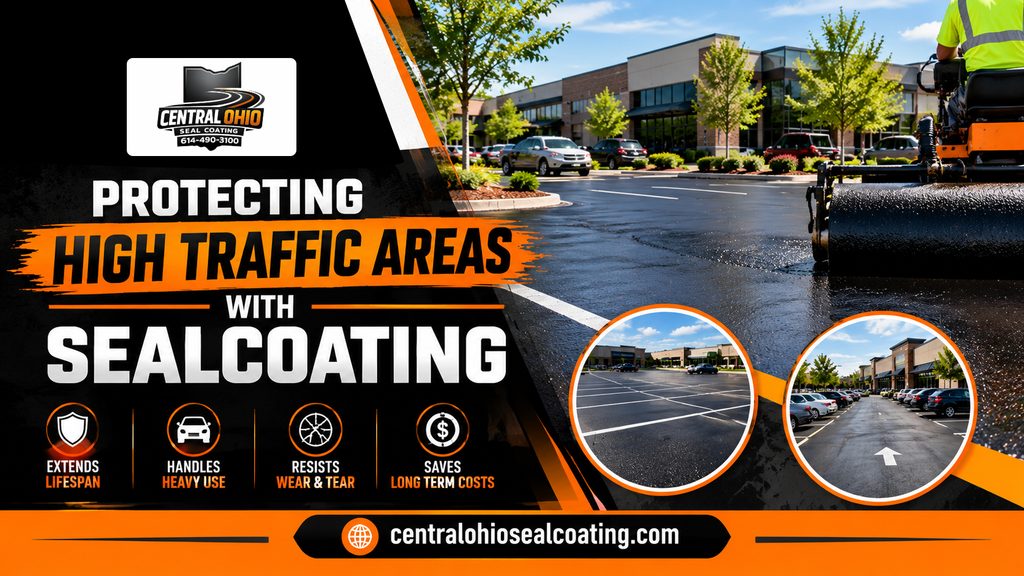
Ohio’s changing weather adds another challenge. Rain, summer sunlight, winter moisture, and repeated freeze-thaw cycles can contribute to asphalt deterioration, particularly when cracks and other surface defects are left untreated. A properly planned sealcoating program helps preserve the asphalt surface and maintain a clean, professional appearance.
Central Ohio SealCoating emphasizes careful application and attention to heavily used pavement areas. For property owners and managers, understanding where wear develops fastest can help guide maintenance decisions and prevent small surface problems from being overlooked.
1. What Makes High-Traffic Asphalt Different?
Not every part of an asphalt parking lot experiences the same level of stress. Areas with frequent vehicle movement can show wear sooner than sections used only occasionally.
High-traffic pavement commonly experiences repeated tire contact, braking, turning, and pressure from vehicles. Delivery trucks and other heavy vehicles can place additional stress on pavement, especially where the underlying base is weak or the asphalt was not designed for the loads it receives.
Common high-traffic areas include:
- Parking lot entrances and exits: Vehicles repeatedly slow down, accelerate, and turn.
- Drive-through lanes: Cars follow similar paths throughout the day, concentrating traffic in narrow sections.
- Loading and unloading zones: Delivery vehicles and heavier trucks may place additional stress on the pavement.
- Turning areas: Tires create extra friction and lateral forces as vehicles change direction.
- Main traffic lanes: Frequent vehicle movement can contribute to surface wear.
- Commercial driveway approaches: Vehicles entering and leaving the property repeatedly use the same pavement sections.
Identifying these locations helps property managers prioritize inspections and determine where maintenance may be needed first.
2. How Sealcoating Helps Protect Busy Asphalt Areas
Sealcoating applies a protective coating over suitable asphalt pavement. It helps slow surface oxidation, limit moisture penetration, and protect against some everyday environmental exposures.
For high-traffic areas, the objective is to preserve the existing asphalt surface before deterioration becomes extensive.
Helps slow oxidation
Sunlight and oxygen gradually age the asphalt binder. As the surface becomes older, it may fade, dry out, and become more vulnerable to cracking.
Sealcoating helps reduce direct exposure to these elements, supporting the long-term maintenance of asphalt that remains in good condition.
Helps limit moisture penetration
Water entering pavement cracks can contribute to deterioration below the surface. In Ohio, freezing and thawing can make existing damage worse.
Sealcoating helps protect the asphalt surface, but existing cracks should be evaluated and appropriately treated first. A surface coating alone cannot repair a damaged pavement base or prevent every form of water infiltration.
Helps protect against certain vehicle fluids
Oil and fuel leaks can affect asphalt, particularly in areas where vehicles regularly stop or park. A properly applied sealcoat can provide some resistance to these substances.
However, spills should be cleaned promptly, and severely contaminated or softened asphalt may need specialized preparation or repair.
These benefits make sealcoating a useful component of pavement maintenance, but the coating is not designed to withstand unlimited traffic or correct structural failures.
3. Why Ohio Weather Makes Preventive Maintenance Important
High-traffic pavement must withstand both vehicle activity and seasonal weather. When these factors combine, damaged areas can deteriorate more quickly.
Summer heat and sunlight
Sunlight contributes to asphalt oxidation over time. Busy pavement surfaces also experience repeated tire contact, which can gradually wear the surface and protective coating.
Regular inspections help property managers identify fading, cracking, and other changes that may indicate a need for maintenance.
Rain and standing water
Water can enter cracks and reach underlying pavement layers. If drainage is poor, some areas may remain wet longer, increasing the opportunity for deterioration.
Property managers should monitor low spots, drainage structures, and areas where water regularly collects. Sealcoating is not a substitute for correcting drainage problems.
Winter freezing and thawing
Ohio’s winter conditions can put additional stress on asphalt. Water entering existing cracks can freeze and expand, contributing to further pavement damage.
Before winter, property owners should address suitable cracks and repair damaged sections rather than relying on sealcoating alone to protect defective pavement.
4. High-Traffic Areas That Deserve Extra Attention
A useful pavement maintenance plan begins by identifying where traffic concentrates. These areas may need more frequent inspections than lightly used sections of the property.
| High-traffic area | Common concern | Recommended maintenance focus |
|---|---|---|
| Parking lot entrances | Repeated turning and braking | Inspect for cracking and surface wear |
| Drive-through lanes | Continuous, concentrated traffic | Monitor surface condition and recurring damage |
| Loading zones | Heavy vehicle loads | Check for depressions, cracking, and structural issues |
| Main access lanes | Frequent vehicle movement | Inspect for fading, cracks, and uneven areas |
| Parking areas near entrances | Repeated stopping and turning | Monitor surface wear and vehicle-fluid spills |
| Commercial driveway approaches | Concentrated entry and exit traffic | Inspect cracks, edges, and drainage |
These recommendations are general maintenance guidelines. The appropriate treatment depends on the pavement’s age, construction, condition, traffic loads, and drainage.
5. Signs That a High-Traffic Area Needs Attention
Property owners should not wait until a parking lot develops extensive damage before arranging an inspection. Early warning signs can help identify where preventive maintenance or repairs may be appropriate.
Faded or gray asphalt
Asphalt naturally changes color as the binder ages and oxidizes. Fading can indicate that the surface should be assessed for sealcoating, provided the pavement remains structurally sound.
Small cracks
Cracks can allow water to enter the pavement. Their size, pattern, and location help determine the appropriate repair method.
Crack filling should generally be completed before sealcoating when needed.
Loose aggregate or rough texture
A rough surface or loose stones may indicate surface deterioration. Depending on the extent of damage, the pavement may require repairs rather than simply a protective coating.
Depressions and standing water
Low areas can suggest drainage problems, settlement, or structural deterioration. Sealcoating will not correct these underlying issues.
Repeated damage in the same location
If a crack or damaged area repeatedly returns, the underlying cause should be investigated. Possible factors include heavy loads, water infiltration, inadequate drainage, or problems with the pavement structure.
Recognizing these warning signs helps property managers distinguish between surface maintenance and repairs that require more substantial work.
6. Preparing High-Traffic Areas for Sealcoating
Preparation is especially important in busy pavement areas because the coating needs a suitable surface to adhere properly. Applying sealcoat over dirt, untreated cracks, or damaged asphalt can compromise the results.
A professional sealcoating project typically involves several stages.
Step 1: Inspect the pavement
The contractor evaluates the surface for cracks, potholes, oil stains, drainage problems, and signs of structural failure.
High-use sections should receive particular attention because visible damage may be concentrated in relatively small areas.
Step 2: Clean the surface
Loose dirt, leaves, gravel, and other debris are removed. Oil or fuel contamination may require additional treatment before the coating can be applied.
Step 3: Repair existing defects
Suitable cracks should be treated, and potholes or damaged sections should be repaired using appropriate methods. Areas with structural failure may require more extensive rehabilitation.
Step 4: Apply sealcoating under suitable conditions
The sealcoat is applied according to the product’s specifications and the condition of the pavement. Temperature, surface dryness, and the weather forecast all influence application and curing.
Step 5: Allow sufficient curing time
Treated pavement must remain closed to traffic until the coating has cured adequately. Reopening too early can damage the new surface.
Following these steps helps support a more consistent result and reduces the risk of applying a protective coating over pavement that is not ready for treatment.
7. How Often Should High-Traffic Areas Be Sealcoated in Ohio?
There is no single sealcoating schedule that works for every property. The appropriate interval depends on the asphalt’s condition, traffic volume, exposure to sunlight and moisture, previous treatments, and the product used.
High-traffic commercial areas may need closer monitoring and maintenance at the shorter end of a property’s normal maintenance cycle. However, frequent vehicle movement does not automatically mean the pavement should receive repeated sealcoat applications without an inspection.
Property managers can use the following general approach:
- Inspect regularly: Check busy areas for cracks, fading, surface deterioration, and standing water.
- Address damage promptly: Repair suitable cracks and localized failures before they become more extensive.
- Evaluate sealcoating when appropriate: Consider the surface condition and previous maintenance history rather than relying on appearance alone.
- Follow product guidance: Allow the required curing period and avoid applying new coatings too frequently.
- Review the results: Monitor how the pavement performs after maintenance and adjust the plan as needed.
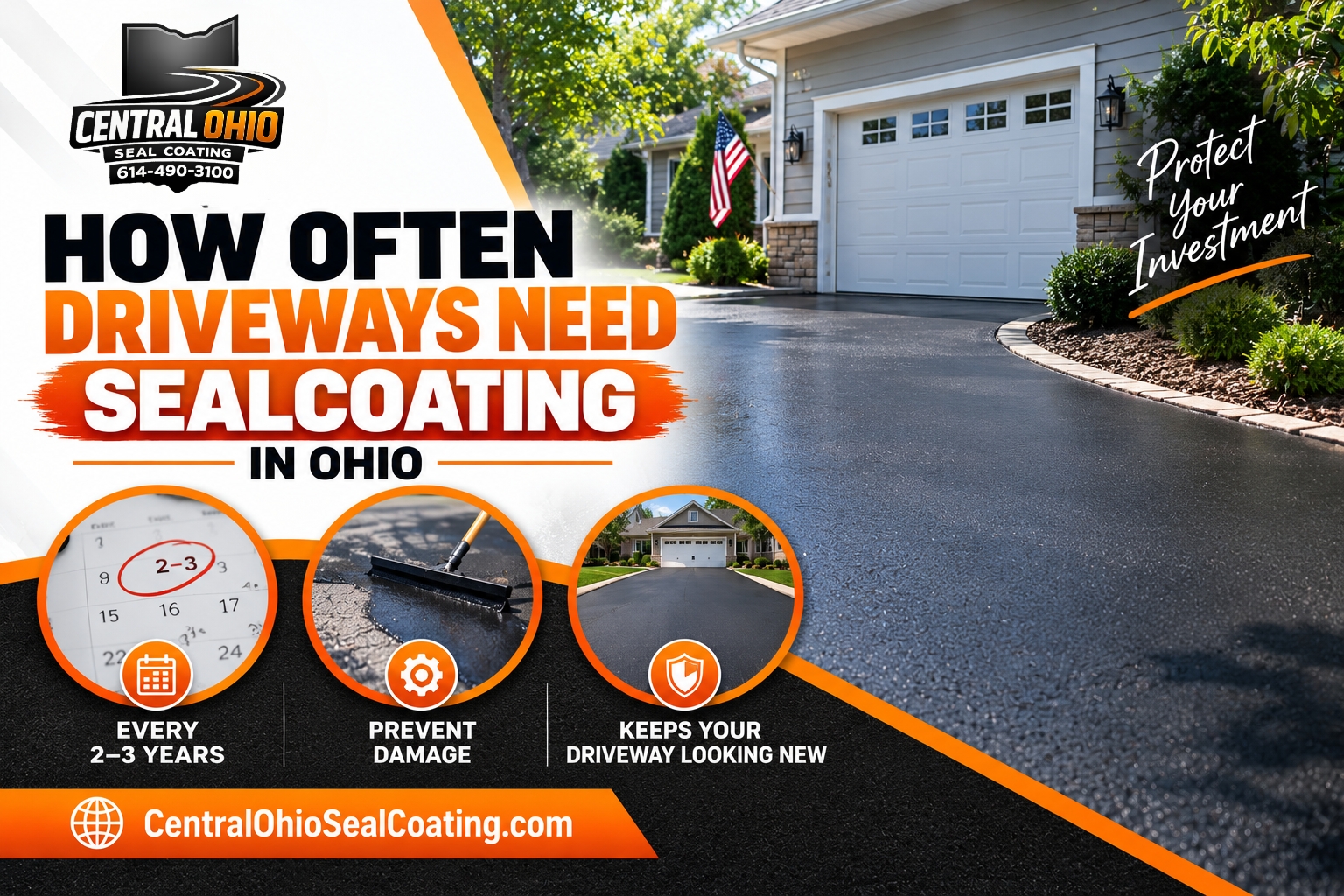
Some Ohio commercial properties use sealcoating intervals of roughly two to three years for heavily used pavement, while others may require a different schedule. The condition of the asphalt and professional assessment should guide the final decision.
8. Sealcoating vs. Repairs for High-Traffic Pavement
Sealcoating is often part of a broader pavement maintenance plan, but it should not be treated as a universal solution.
| Treatment | Primary purpose | When it may be appropriate |
|---|---|---|
| Sealcoating | Protects and refreshes the asphalt surface | Sound asphalt showing surface aging |
| Crack filling | Helps limit water entry through suitable cracks | Pavement with repairable cracks |
| Patching | Repairs localized pavement damage | Potholes and isolated failures |
| Resurfacing | Renews a broader asphalt surface | Worn pavement with a suitable underlying structure |
| Reconstruction | Rebuilds failed pavement layers | Extensive structural deterioration |
For example, a faded parking lot entrance with sound asphalt may be suitable for sealcoating after preparation. An entrance with deep cracks, potholes, or a failed base may need repairs or reconstruction before any surface treatment is considered.
Selecting the correct treatment helps ensure that maintenance addresses the actual problem instead of covering up visible damage.
9. Managing Sealcoating Without Unnecessary Business Disruption
Busy commercial properties cannot always close an entire parking lot for maintenance. Customers, employees, tenants, and delivery vehicles may still need access while work is being completed.
Advance planning can help reduce disruption.
Property managers should consider:
- Scheduling work during periods of lower traffic where practical.
- Identifying alternative parking or access routes.
- Notifying tenants, employees, and customers before work begins.
- Coordinating deliveries and service vehicle access.
- Dividing a large property into sections when site conditions allow.
- Keeping treated areas closed until the coating has cured.
- Planning any necessary striping after the sealcoat is ready.
Phased work may help maintain access to unaffected sections, but it must be planned carefully to keep vehicles away from active work areas and freshly treated pavement.
The goal is to balance maintenance needs with the property’s operational requirements.
10. How Central Ohio SealCoating Helps Protect High-Traffic Areas
High-traffic asphalt requires careful evaluation because the busiest sections of a property do not always need the same treatment as the rest of the pavement.
Central Ohio SealCoating discusses the importance of paying attention to entrances, turning areas, traffic lanes, and other heavily used sections when evaluating sealcoating workmanship. Its guidance also emphasizes the importance of proper surface preparation and suitable weather conditions.
For property owners in Columbus and surrounding Central Ohio communities, a practical maintenance approach should include:
- Identifying the areas that receive the most traffic.
- Evaluating fading, cracking, and other signs of deterioration.
- Determining whether crack filling or patching is necessary.
- Scheduling sealcoating when the pavement and weather conditions are suitable.
- Planning curing time and access restrictions.
- Monitoring the treated areas as part of ongoing pavement maintenance.
By considering both surface condition and traffic patterns, property managers can make better-informed decisions about when sealcoating is appropriate and which areas may require additional repairs.
Frequently Asked Questions
Does sealcoating make asphalt stronger enough for heavy trucks?
No. Sealcoating is a surface treatment and does not increase the structural load-bearing capacity of asphalt. Pavement that regularly accommodates heavy trucks should be designed and maintained to handle those loads.
Can sealcoating stop all cracks from developing?
No. Sealcoating helps protect suitable asphalt from environmental exposure, but it cannot eliminate cracking caused by structural movement, heavy loads, poor drainage, or other underlying issues. Existing cracks should be evaluated and repaired when appropriate.
Should high-traffic areas be sealcoated more often than other sections?
They may require more frequent inspections and, depending on their condition, a shorter maintenance interval. However, the decision should be based on pavement condition, wear, previous treatments, and product recommendations rather than traffic volume alone.
Is sealcoating suitable for a damaged loading zone?
It depends on the damage. A loading zone with surface aging but sound pavement may be suitable. A section with potholes, deep cracks, depressions, or structural failure should be assessed for repairs before sealcoating.
When should sealcoating be scheduled in Ohio?
Sealcoating should be performed when temperatures, surface conditions, and the weather forecast meet the product’s application and curing requirements. Property managers should allow enough time for the pavement to cure before reopening it to traffic.
Conclusion
Protecting high-traffic asphalt areas requires a combination of preventive maintenance, timely repairs, and regular inspections. Commercial entrances, turning lanes, loading zones, and busy parking lot sections often experience concentrated wear, making it important to identify deterioration before it becomes more extensive. High traffic sealcoating service in Ohio can help protect suitable asphalt from oxidation and environmental exposure while supporting a cleaner, more consistent pavement appearance.
For commercial property owners and managers, sealcoating works best when it is part of a broader maintenance plan that also addresses cracks, potholes, drainage, and structural problems. Central Ohio SealCoating can help property owners evaluate their sealcoating needs and plan maintenance for suitable asphalt surfaces throughout Central Ohio. Taking a proactive approach helps keep heavily used pavement maintained and better prepared for everyday traffic and Ohio’s changing weather.