
How Can Homeowners Properly Care for Asphalt Driveways in Ohio? A residential asphalt driveway is exposed to changing weather and everyday vehicle use throughout the year. Rain, snow, sunlight, moisture, freezing temperatures, thawing, and traffic gradually affect the pavement surface. Without regular care, minor cracks and surface wear can eventually develop into more significant pavement problems.
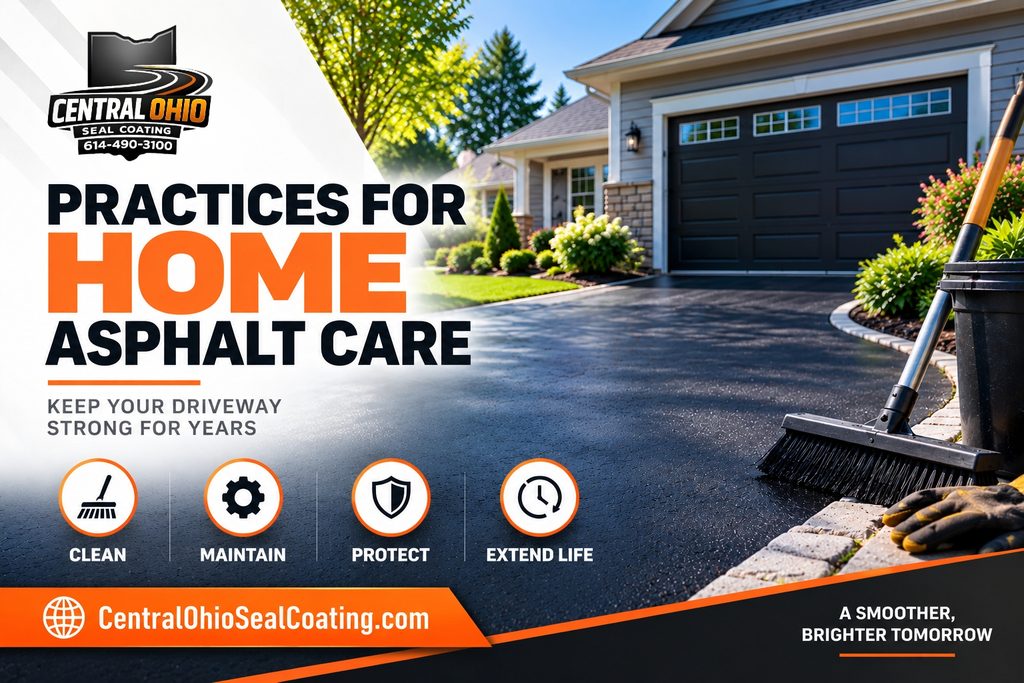
Effective asphalt care residential Ohio starts with prevention. Homeowners should inspect their driveways regularly, maintain proper drainage, address cracks early, keep the surface clean, manage oil and chemical exposure, and use sealcoating when the asphalt is suitable for a protective treatment.
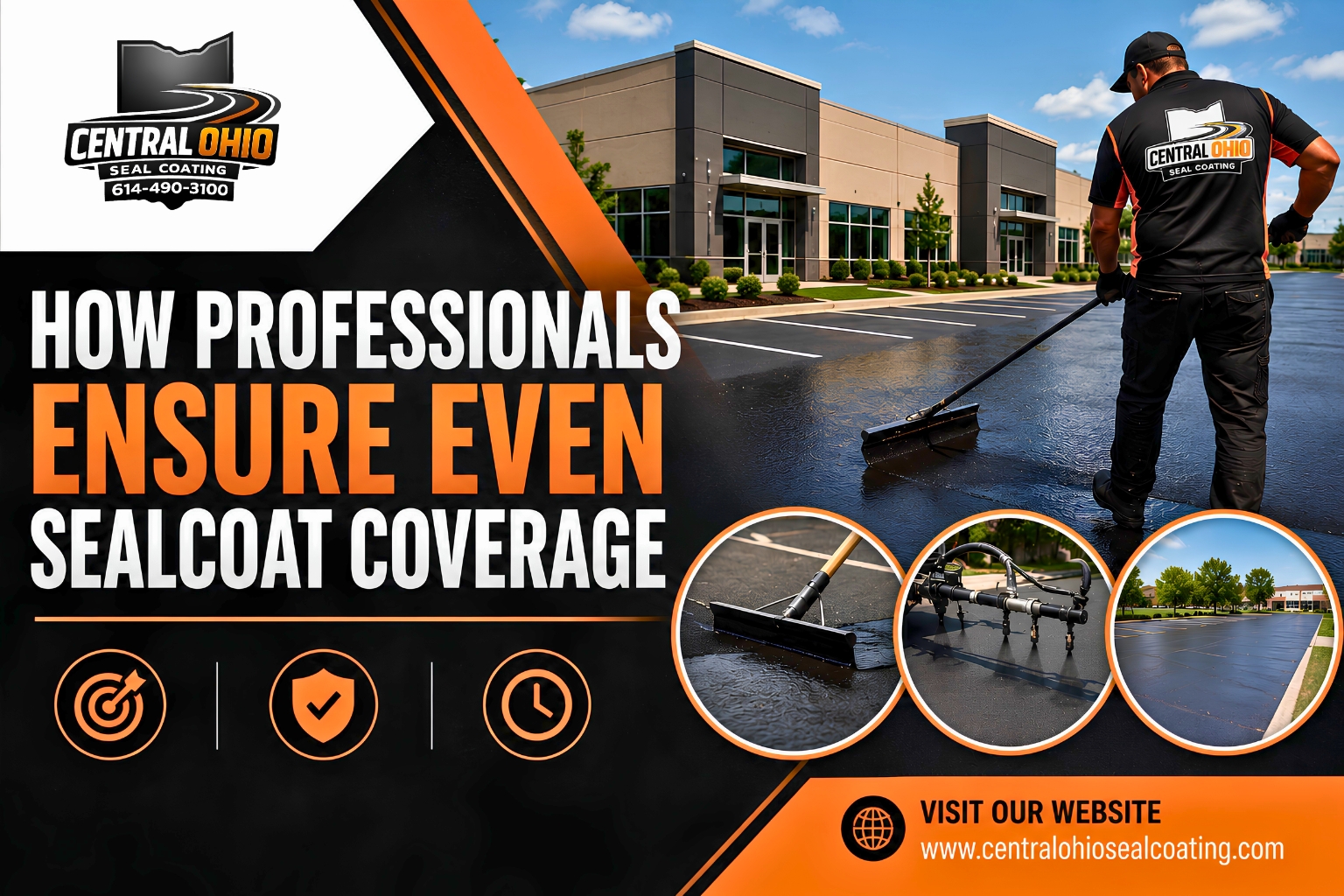
Central Ohio Seal Coating helps homeowners protect and maintain residential asphalt through professional sealcoating, surface preparation, crack treatment, and preventive pavement care. Its residential sealcoating service is designed to help protect suitable asphalt from moisture, sunlight, vehicle fluids, and everyday wear.
1. Inspect Your Asphalt Driveway Regularly
One of the simplest and most effective asphalt-care practices is regular inspection.
Homeowners do not need specialized equipment to notice many early warning signs. Simply walking around the driveway and looking closely at the pavement can reveal changes that deserve attention.
Look for:
- Small cracks
- Expanding cracks
- Potholes
- Faded asphalt
- Rough texture
- Loose aggregate
- Standing water
- Crumbling edges
- Oil stains
- Uneven areas
- Previous repairs that are deteriorating
The purpose of an inspection is not to diagnose every pavement problem yourself. It is to notice changes early enough that they can be evaluated and addressed appropriately.
Central Ohio Seal Coating emphasizes pavement evaluation as part of its maintenance approach, helping determine whether a surface needs preventive sealcoating or repairs first.
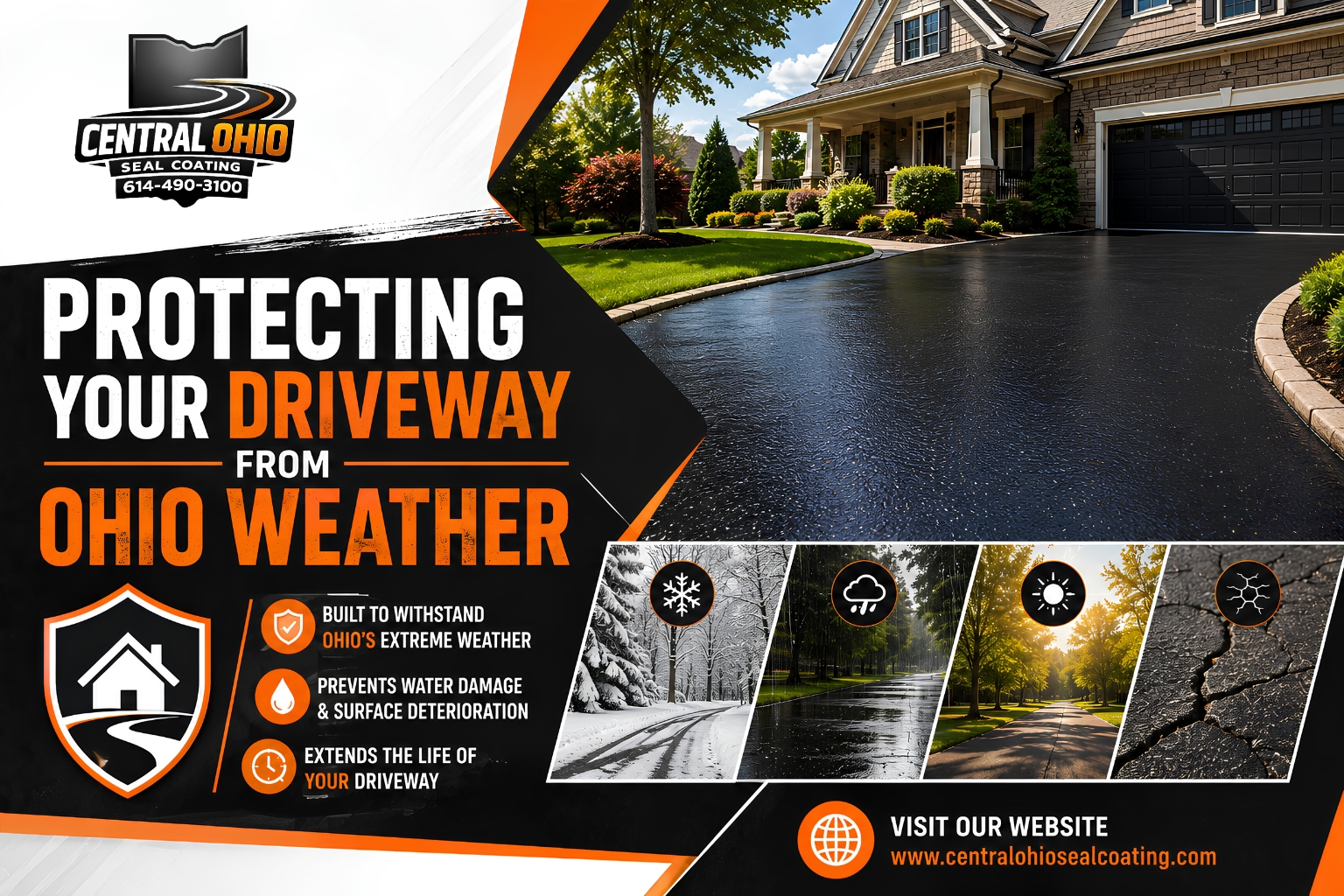
2. Understand How Ohio Weather Affects Asphalt
Ohio homeowners need to consider the full range of seasonal conditions when caring for asphalt.
A driveway can experience:
- Summer heat
- Strong sunlight
- Heavy rain
- Snow
- Freezing temperatures
- Thawing conditions
- Repeated temperature changes
- Vehicle traffic
These conditions can gradually affect asphalt’s appearance and surface condition.
Central Ohio Seal Coating notes that sunlight, moisture, traffic, and seasonal temperature changes can cause asphalt to weaken and deteriorate over time.
This is why asphalt care should be continuous rather than something homeowners think about only after damage becomes obvious.
3. Pay Attention to Freeze-Thaw Cycles
Freeze-thaw conditions are particularly important when maintaining Ohio asphalt.
Water can enter existing cracks and pavement openings. When temperatures fall, that moisture can freeze and expand. Repeated cycles can contribute to further deterioration.
This makes crack maintenance an important part of residential asphalt care.
Central Ohio Seal Coating specifically identifies Ohio’s seasonal freeze-thaw conditions as a factor affecting residential asphalt.
Homeowners should therefore inspect driveways after winter and address appropriate cracks or damaged areas rather than allowing them to remain untreated.
4. Keep Water From Collecting on the Driveway
Proper drainage is one of the most important parts of long-term pavement care.
Water should have a clear path away from the driveway.
After rainfall, look for:
- Puddles
- Low spots
- Water collecting beside the driveway
- Water flowing across the pavement
- Erosion around the edges
- Areas that remain wet longer than surrounding pavement
If water repeatedly collects in the same location, simply applying another surface treatment may not solve the problem.
The drainage condition should be evaluated.
Preventing unnecessary moisture exposure can help reduce one of the major factors contributing to asphalt deterioration.
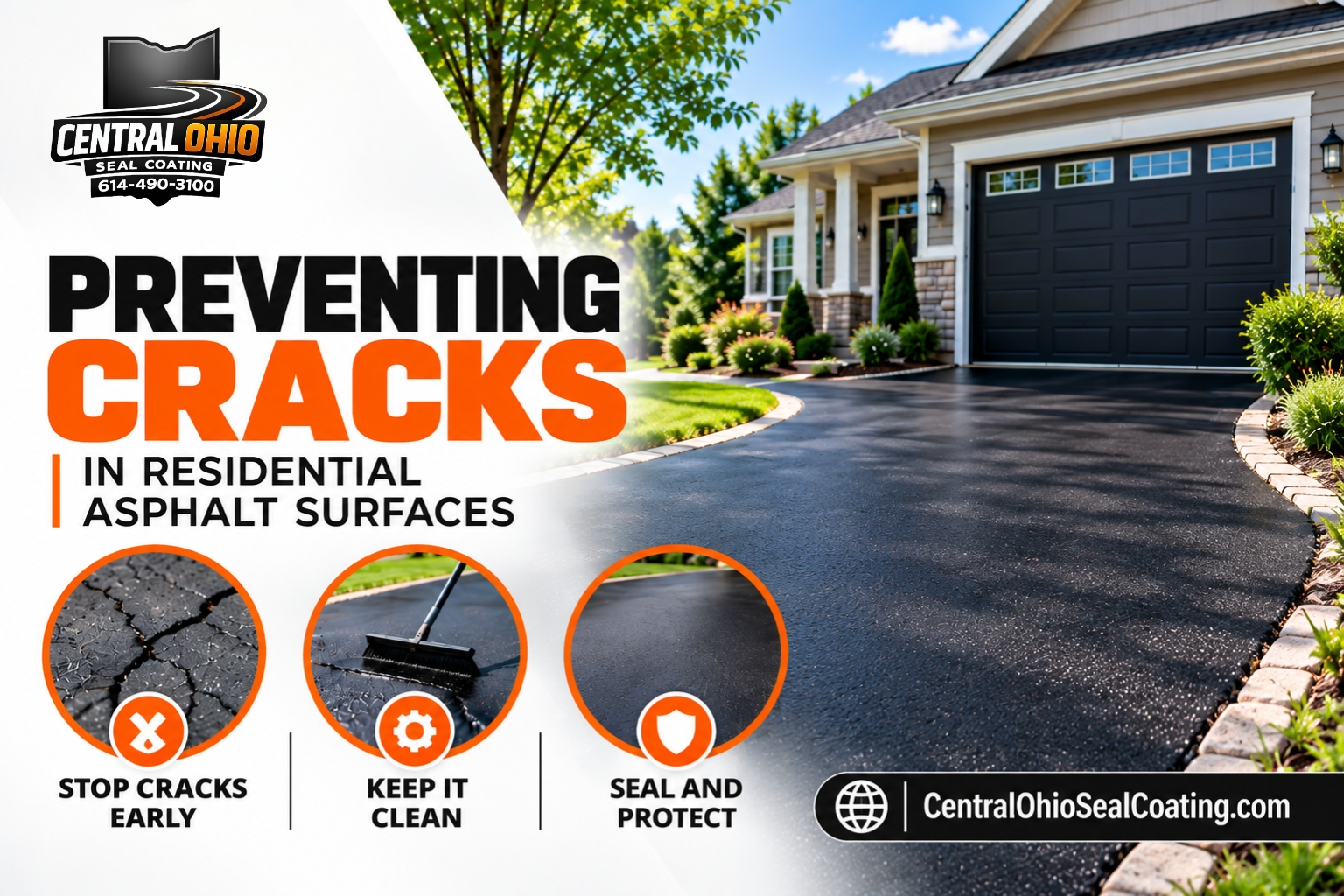
5. Repair Cracks Before They Spread
Cracks should be treated as maintenance signals rather than ignored.
A small crack may initially appear harmless, but it provides an opening through which water and debris can enter the pavement.
The Asphalt Institute identifies crack sealing as a pavement-preservation treatment that can reduce water infiltration through cracks.
For homeowners, a useful rule is:
Small crack → inspect and treat appropriately
rather than:
Small crack → wait until it becomes a major problem
Central Ohio Seal Coating provides crack treatment as part of its broader asphalt maintenance services.
6. Do Not Assume Every Crack Is the Same
Different cracks can indicate different pavement conditions.
A driveway may have:
- Hairline cracks
- Linear cracks
- Edge cracks
- Wider cracks
- Interconnected cracking
- Alligator cracking
Minor surface cracks may be appropriate for crack filling and preventive maintenance.
Extensive interconnected cracking may indicate a deeper structural issue.
Therefore, homeowners should not assume that applying sealcoat over every type of crack will solve the problem.
Central Ohio Seal Coating explains that repairs should be addressed before coating when pavement requires more than surface protection.
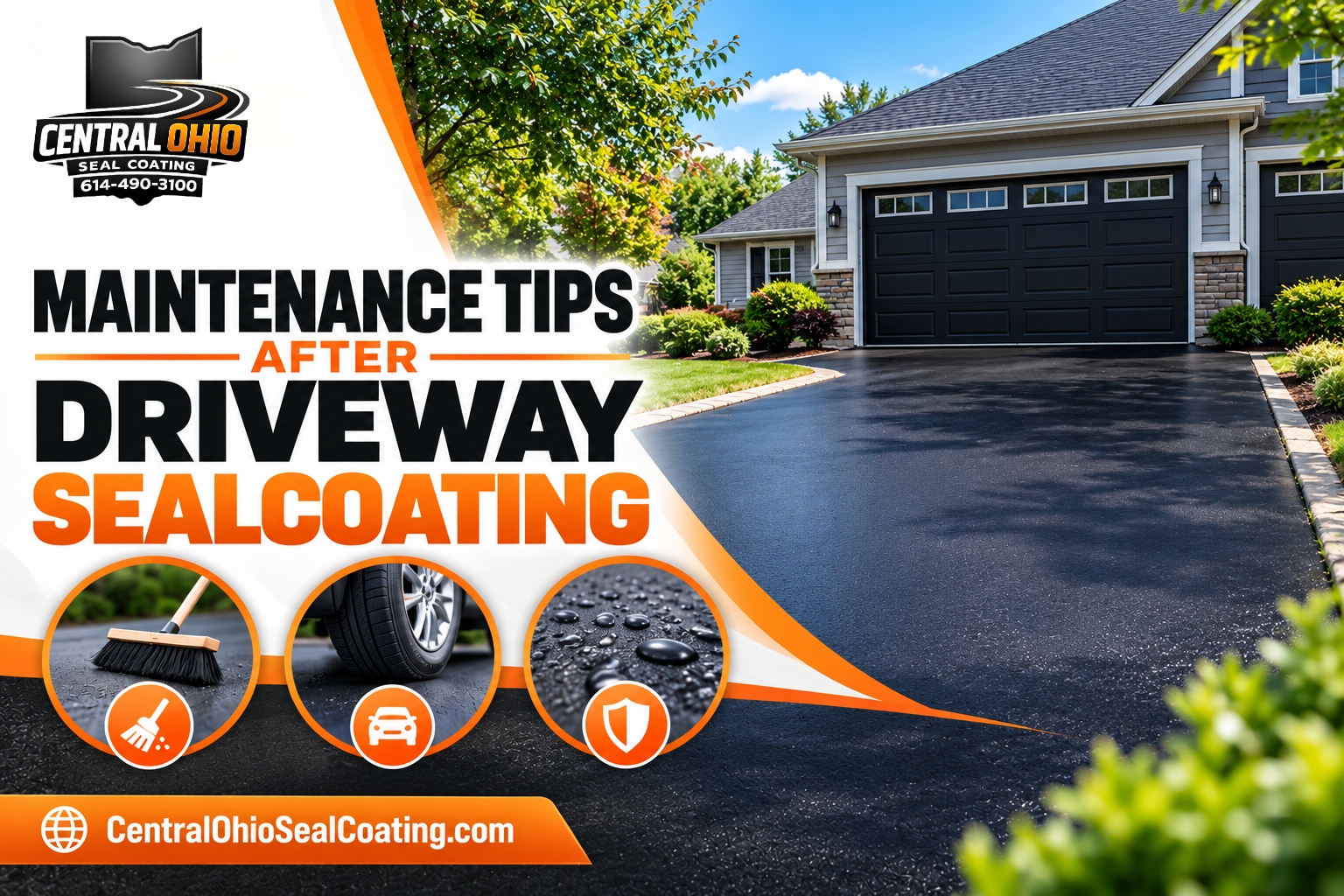
7. Keep the Driveway Clean
Regular cleaning is another simple part of asphalt care.
Remove:
- Leaves
- Grass
- Dirt
- Gravel
- Branches
- Other loose debris
Keeping the driveway clean provides two benefits.
First, it helps maintain appearance.
Second, it makes new pavement problems easier to see.
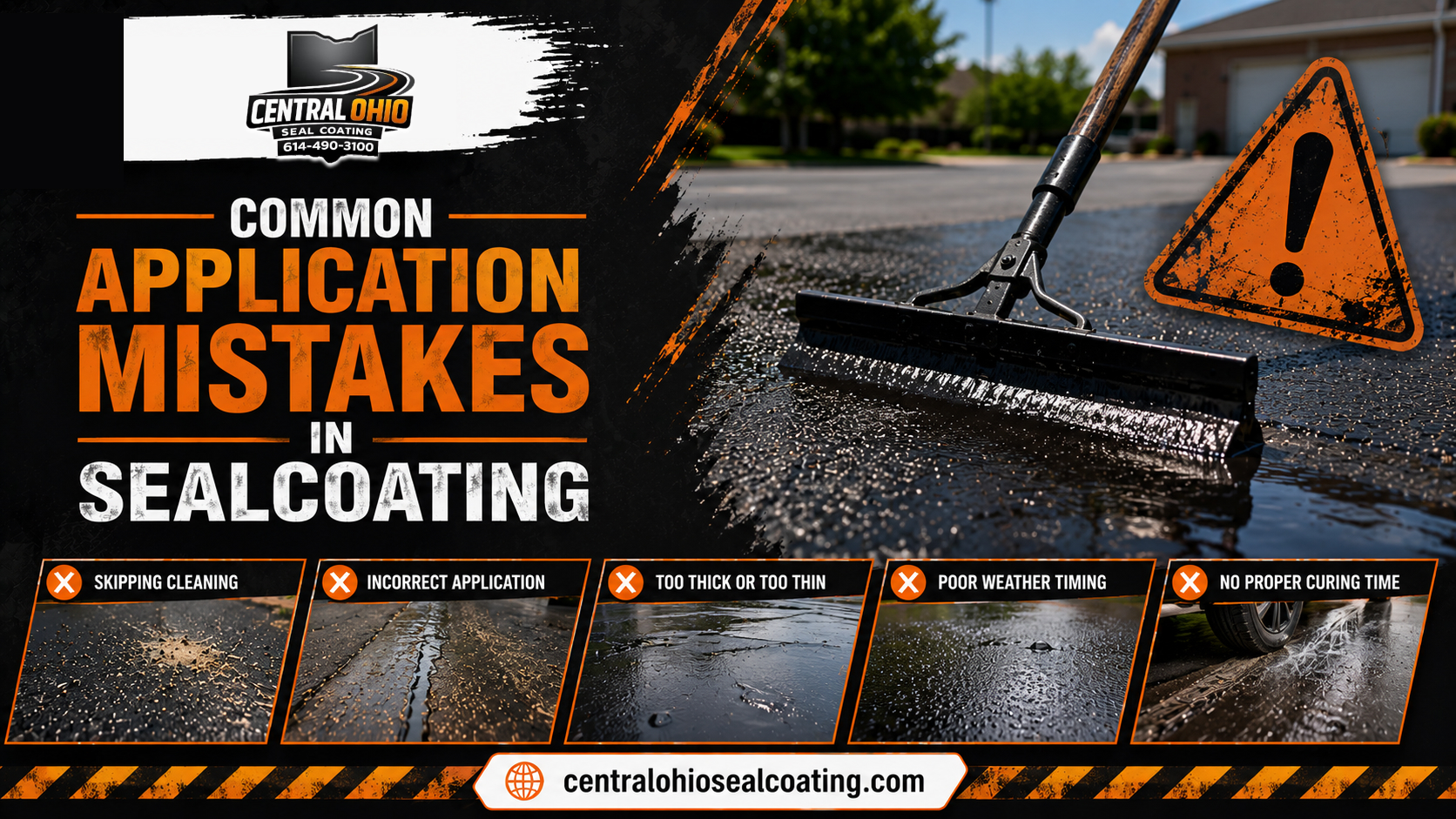
Cleaning is also especially important before sealcoating because dirt and contaminants can interfere with proper coating adhesion.
Central Ohio Seal Coating identifies proper cleaning and surface preparation as important parts of its residential sealcoating process.
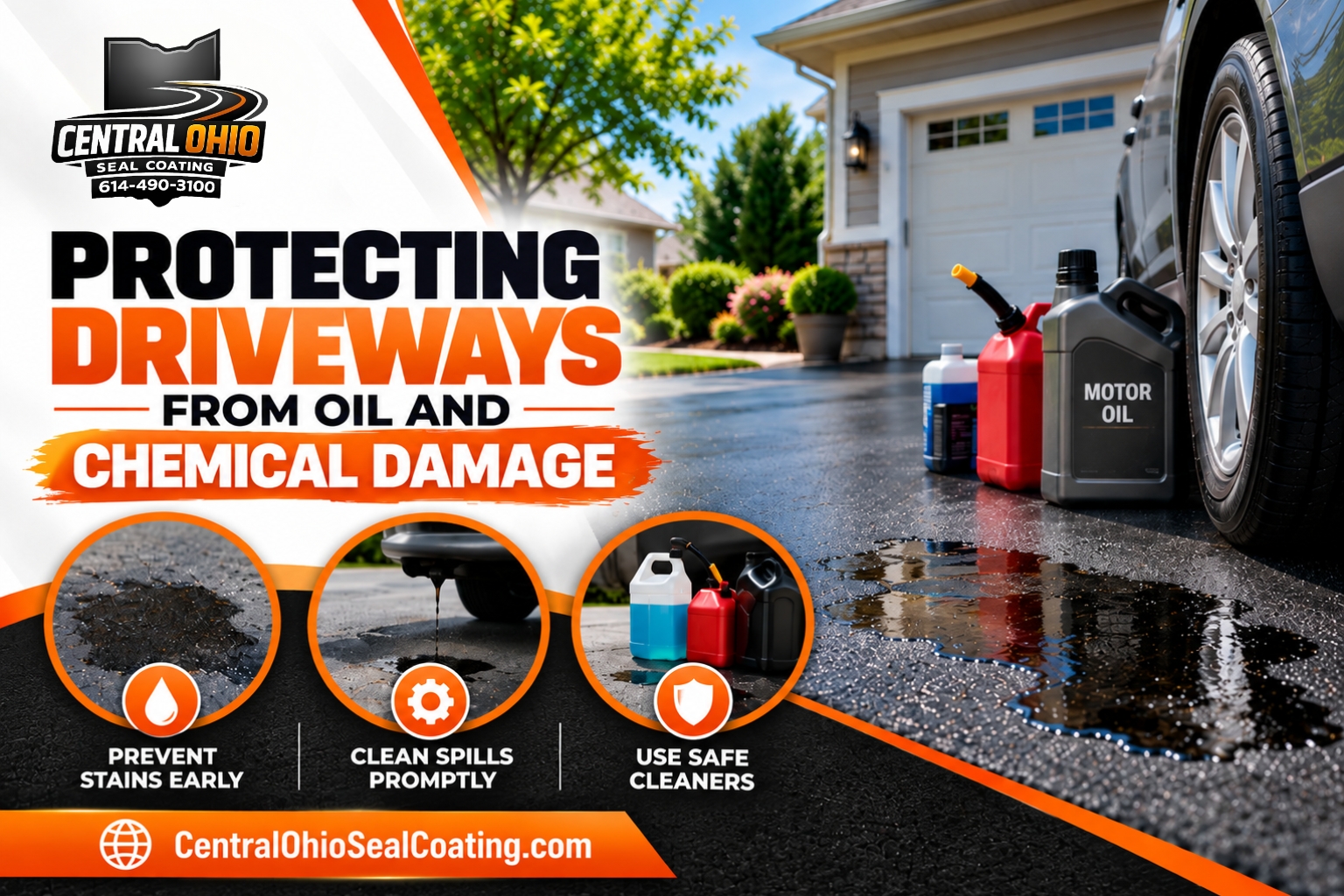
8. Address Oil and Automotive Fluid Leaks
Vehicle fluids can create another source of asphalt deterioration.
Common driveway contaminants include:
- Motor oil
- Gasoline
- Grease
- Transmission fluid
- Other automotive fluids
Repeated exposure can stain asphalt and potentially affect the pavement surface.
Homeowners should address recurring vehicle leaks instead of allowing the same area of pavement to be contaminated repeatedly.
Central Ohio Seal Coating identifies protection from oil spills and vehicle fluids among the benefits of its sealcoating services.
9. Don’t Perform Major Vehicle Repairs on the Asphalt
One way to reduce chemical exposure is to avoid performing fluid-related vehicle maintenance directly on the driveway whenever possible.
Oil changes, fluid replacement, and other mechanical work can result in accidental spills.
If a spill occurs, addressing it promptly is preferable to allowing the material to remain on the asphalt for an extended period.
Prevention is particularly useful because repeated contamination can create maintenance problems that ordinary cleaning cannot completely eliminate.
10. Protect the Driveway With Sealcoating
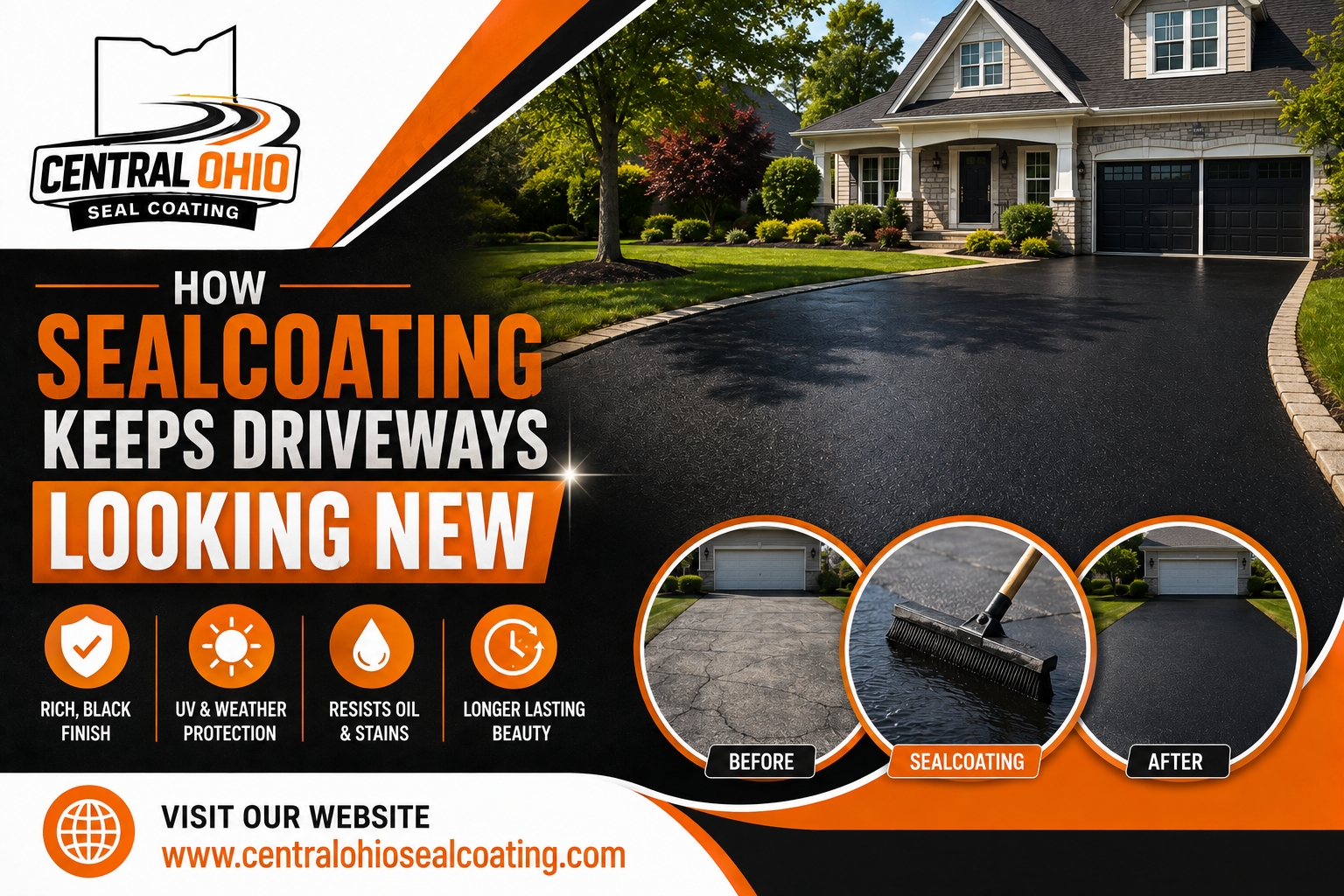
Sealcoating is a preventive asphalt-maintenance treatment designed for suitable pavement.
Central Ohio Seal Coating explains that sealcoating creates a protective barrier that helps defend asphalt from:
- Moisture
- Sunlight
- Oil spills
- Chemicals
- Everyday wear
It can also restore a darker, cleaner appearance.
Sealcoating should therefore be considered part of a larger maintenance plan rather than a standalone solution for damaged pavement.
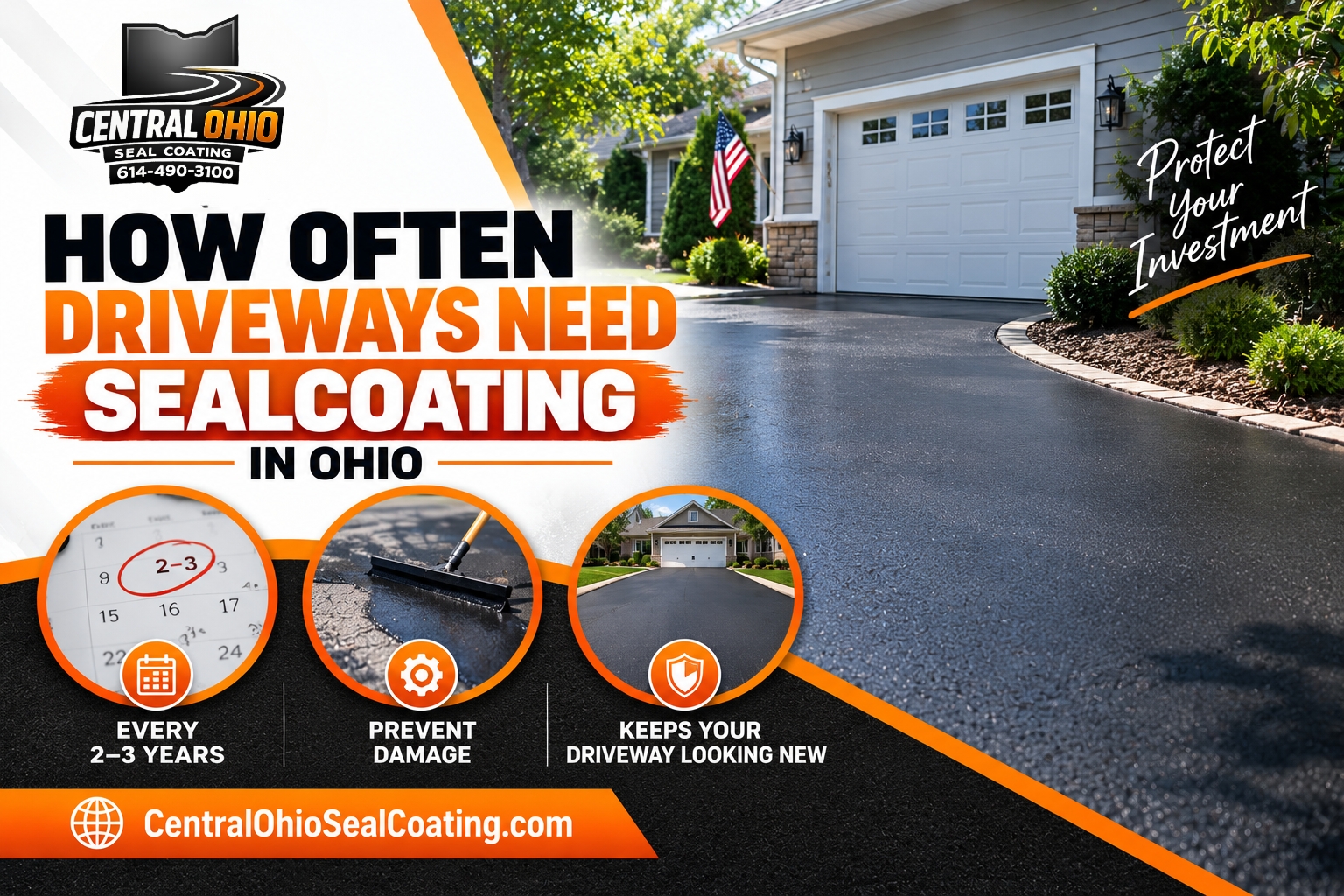
11. Know When Your Driveway Is Ready for Sealcoating
There is no single date that works for every driveway.
The appropriate timing depends on factors such as:
- Pavement age
- Existing sealcoat
- Traffic
- Weather exposure
- Surface condition
- Cracking
- Drainage
- Previous maintenance
Central Ohio Seal Coating states that many homeowners choose residential asphalt sealing every few years as part of preventive maintenance.
The important point is to evaluate the condition of the asphalt before applying another coating.
12. Avoid Applying Sealcoat Over Serious Damage
Sealcoating is not designed to reconstruct damaged pavement.
It does not correct:
- Deep potholes
- Major structural cracks
- Severe settlement
- Base failure
- Extensive alligator cracking
- Major drainage problems
Central Ohio Seal Coating explains that sealcoating is intended to protect structurally sound asphalt and that repairs should be addressed when necessary before coating.
This distinction is important because applying a surface coating cannot correct an underlying structural problem.
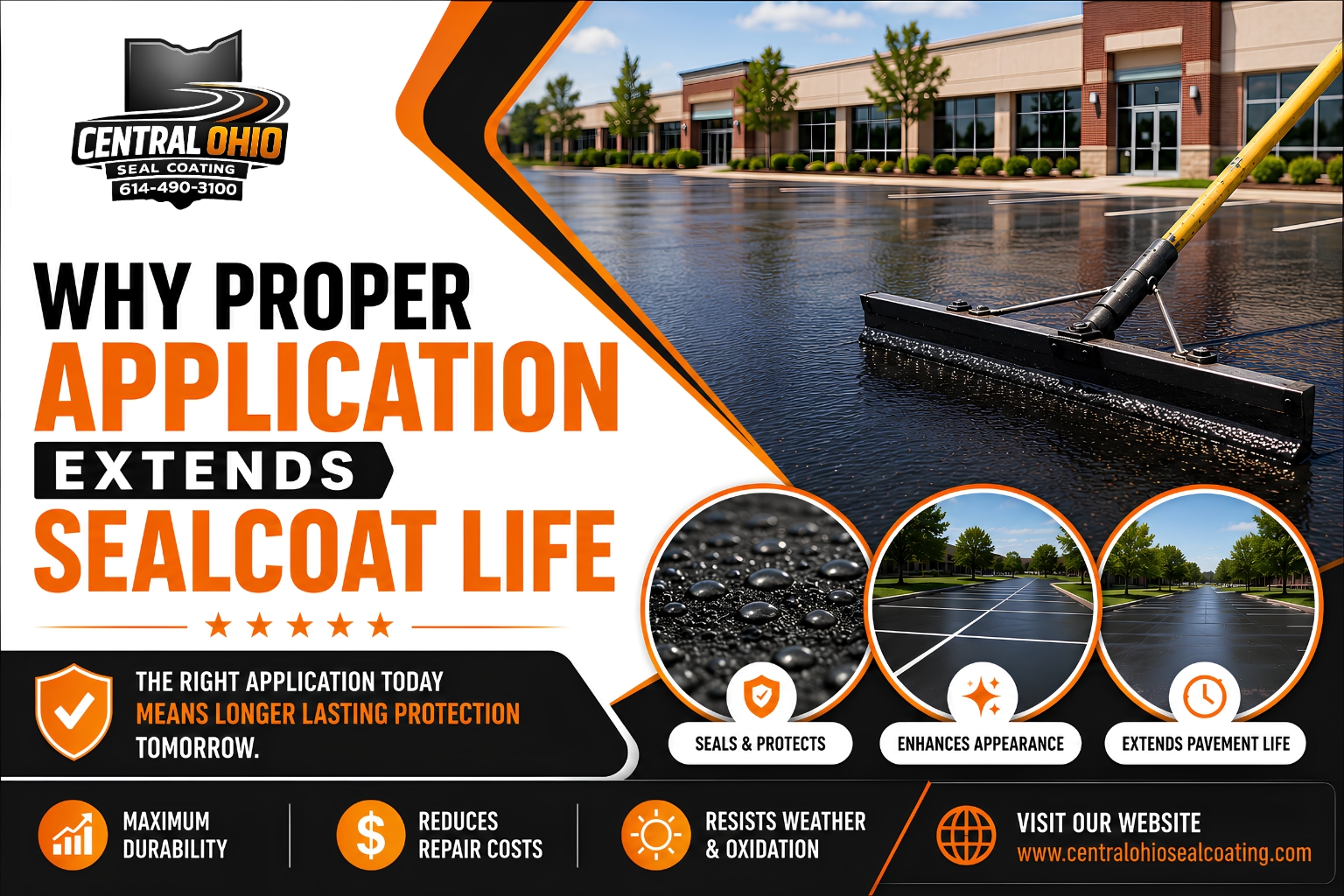
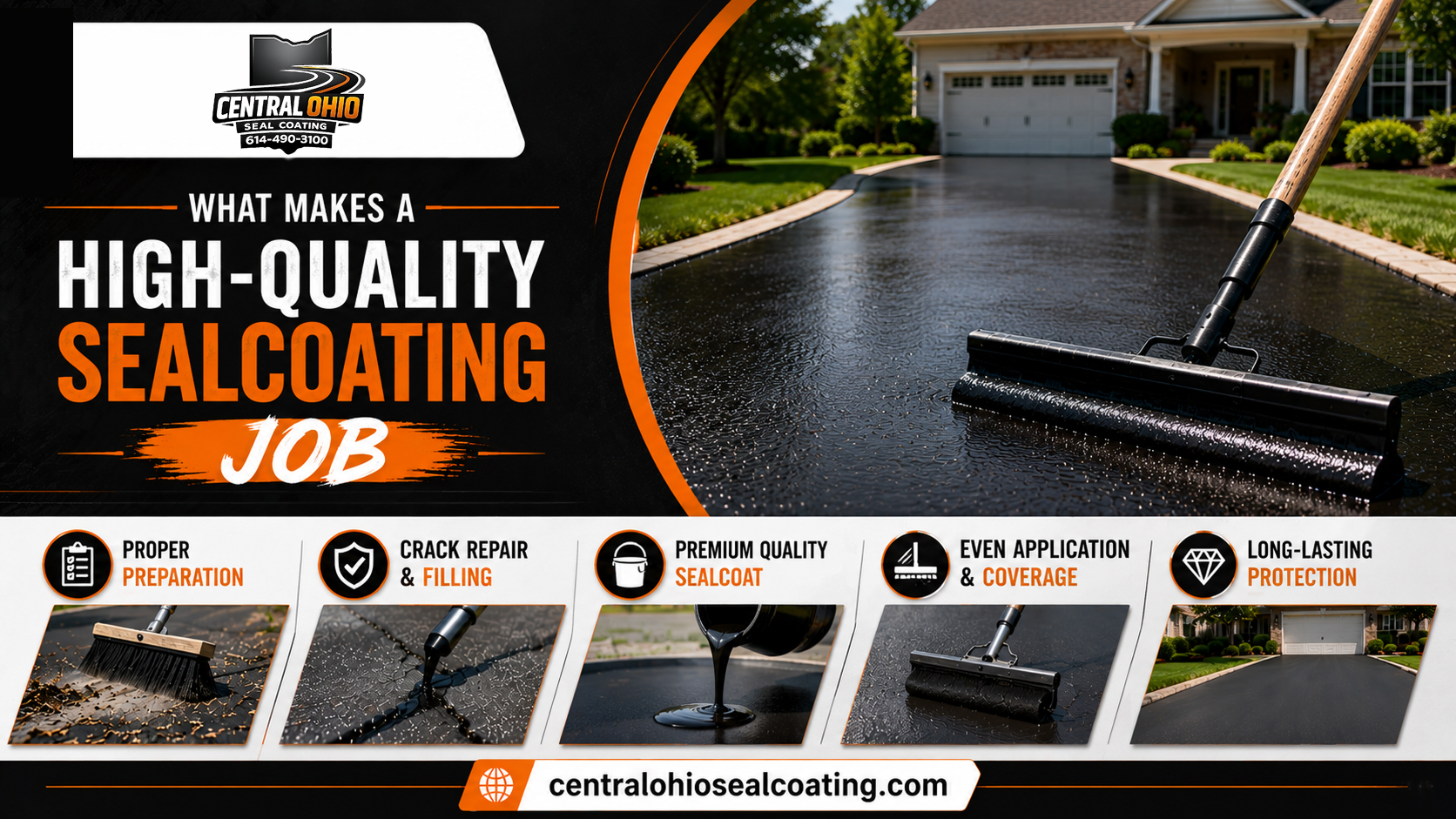
13. Prepare the Surface Before Sealcoating
Proper preparation is essential for a durable sealcoating application.
A typical maintenance process can involve:
- Inspecting the pavement
- Cleaning dirt and debris
- Removing contaminants
- Treating appropriate cracks
- Addressing minor damaged areas
- Preparing edges
- Applying sealcoat
- Allowing the surface to cure
Central Ohio Seal Coating emphasizes proper surface preparation and professional application as part of its approach to residential asphalt protection.
Good preparation gives the coating a cleaner and more suitable surface to bond with.
14. Watch the Driveway Edges
Driveway edges deserve special attention.
They can be affected by:
- Soil erosion
- Water runoff
- Grass growth
- Landscaping
- Vehicle traffic
- Lack of edge support
Inspect the edges periodically for crumbling, cracking, or erosion.
If water repeatedly flows alongside the pavement, investigate the drainage rather than treating the edge deterioration as an isolated problem.
15. Keep Grass and Vegetation Under Control
Vegetation growing through cracks can make existing pavement openings more noticeable and may complicate maintenance.
Keep grass and weeds from becoming established in pavement cracks and along deteriorating edges.
This also makes the driveway easier to inspect and keeps the surface cleaner.
Vegetation control should be combined with appropriate crack treatment rather than being considered a complete solution.
16. Repair Potholes Promptly
Potholes indicate that the pavement has already deteriorated beyond a simple surface-aging issue.
Ignoring them allows traffic and moisture to continue affecting the damaged area.
Homeowners should have potholes evaluated and repaired rather than attempting to cover them with sealcoat.
Central Ohio Seal Coating lists asphalt patch repair among its pavement-maintenance services and distinguishes repairs from protective sealcoating.
17. Monitor Fading and Oxidation
A driveway gradually becomes lighter as asphalt ages and oxidizes.
A change from deep black to gray does not automatically mean the driveway needs replacement.
If the pavement remains structurally sound, preventive sealcoating may be an appropriate maintenance option.
Central Ohio Seal Coating describes sealcoating as a way to restore a cleaner, darker appearance while protecting suitable asphalt.
18. Be Careful With Heavy Loads
Residential driveways are normally designed around expected household traffic.
Repeated exposure to unusually heavy vehicles can place additional stress on pavement.
Homeowners should pay extra attention if the driveway regularly receives:
- Heavy trucks
- Trailers
- Construction equipment
- Large delivery vehicles
Look for rutting, depressions, cracking, or deformation after heavy use.
If these signs appear, the pavement should be evaluated.
19. Avoid Parking Heavy Vehicles on Weak Areas
If a driveway already contains a damaged or visibly weak section, repeatedly placing heavy loads in that location may increase stress on the pavement.
Whenever possible, avoid unnecessary loading of visibly compromised areas until the condition can be evaluated.
This is particularly important when cracking, settlement, or rutting is already present.
20. Check the Driveway After Winter
Spring is an excellent time for a detailed driveway inspection.
Walk the entire surface and check for:
- New cracks
- Enlarged cracks
- Potholes
- Loose asphalt
- Edge deterioration
- Standing water
- Areas of settlement
Winter can reveal pavement problems that were less noticeable during warmer months.
Addressing these issues early can simplify the maintenance process for the rest of the year.
21. Use Summer for Appropriate Preventive Work
Warmer weather is generally the primary period for asphalt maintenance and sealcoating.
Depending on pavement condition, summer maintenance may include:
- Crack treatment
- Cleaning
- Sealcoating
- Minor asphalt repairs
- Drainage-related maintenance
Central Ohio Seal Coating emphasizes proper application conditions and preparation as part of its professional maintenance process.
22. Prepare the Driveway Before Fall
Before winter returns, homeowners should check whether the driveway has unresolved maintenance needs.
A useful fall checklist includes:
- Inspect cracks
- Check drainage
- Repair potholes
- Clean debris
- Inspect edges
- Check for oil stains
- Evaluate sealcoating condition
The goal is to avoid carrying preventable pavement problems into another winter.
23. Don’t Wait for Major Damage
Preventive maintenance works because it addresses problems before they become extensive.
Consider this progression:
Minor crack → water entry → expanding deterioration → pothole → larger repair
Regular inspection and timely maintenance can help interrupt that progression.
This is one of the central principles behind professional pavement preservation.
24. Understand the Difference Between Maintenance and Replacement
Not every aging driveway needs complete replacement.
If the pavement is structurally sound and mainly showing surface aging, preventive treatments may be appropriate.
If the driveway has widespread structural deterioration, more extensive work may be necessary.
A basic distinction is:
Maintenance: protects existing sound pavement.
Repair: corrects localized damage.
Resurfacing: adds a new asphalt surface over suitable existing pavement.
Replacement: removes and rebuilds severely deteriorated pavement.
Choosing the correct approach requires looking at the actual pavement condition.
25. Keep a Record of Maintenance
A simple driveway maintenance record can be surprisingly useful.
Write down:
- Original installation date
- Sealcoating dates
- Crack repairs
- Pothole repairs
- Drainage improvements
- Any noticeable recurring problems
This information helps homeowners recognize how quickly the pavement changes and when another inspection may be appropriate.
26. Look for Recurring Problems
If the same crack or damaged area repeatedly returns, don’t simply treat it again without investigating.
Recurring problems may indicate:
- Drainage issues
- Movement
- Settlement
- Weak pavement support
- Repeated vehicle loading
- Underlying deterioration
Repeated surface treatment may not solve a problem caused by an underlying condition.
Central Ohio Seal Coating can evaluate the pavement and help determine whether preventive coating or another maintenance approach is appropriate.
27. Make Driveway Care a Year-Round Habit
A driveway does not need daily maintenance.
Instead, homeowners can build simple habits into their normal property care.
Monthly
Take a quick look for new cracks, stains, or drainage problems.
After major storms
Check for standing water and erosion.
After winter
Perform a detailed pavement inspection.
Before sealcoating
Make sure cracks, contaminants, and other surface problems are addressed.
Every few years
Evaluate whether the driveway needs another protective sealcoat.
This approach makes maintenance much more manageable.
28. How Central Ohio Seal Coating Can Help
Central Ohio Seal Coating provides residential asphalt maintenance focused on protecting and preserving suitable pavement.
Its services include residential sealcoating and related pavement-maintenance solutions. The company emphasizes:
- Proper surface preparation
- Professional sealcoat application
- Crack repair
- Preventive maintenance
- Consistent coverage
- Protection from weather and everyday wear
Its residential service information explains that regular asphalt maintenance can help extend driveway life, while sealcoating helps protect the surface and maintain its appearance.
For homeowners, the benefit is having the driveway evaluated based on its actual condition instead of automatically applying a coating regardless of the pavement’s needs.
29. Long-Term Benefits of Good Asphalt Care
Consistent residential asphalt care can provide several long-term benefits.
Helps extend pavement life
Preventive treatments can slow surface deterioration and help preserve suitable asphalt.
Helps control minor problems
Early crack treatment and maintenance can reduce the opportunity for small issues to become larger ones.
Protects appearance
Cleaning and sealcoating can help maintain a darker, more uniform driveway surface.
Helps manage weather exposure
Protective treatments can reduce the effects of moisture, sunlight, and everyday surface wear.
Supports easier maintenance
A regularly inspected driveway is easier to maintain than one that is ignored for years.
Can delay major pavement work
Maintaining structurally sound asphalt can help homeowners avoid prematurely moving to more extensive repairs.
Central Ohio Seal Coating describes routine maintenance as an important part of protecting residential pavement and supporting longer-lasting asphalt performance.
What to Check and Why It Matters
| Asphalt Care Practice | What Homeowners Should Check | Why It Matters |
|---|---|---|
| Regular inspection | Cracks, potholes, fading, rough areas, and damaged edges | Helps identify problems before they become more extensive |
| Crack maintenance | Small and widening cracks | Helps limit water entering the pavement |
| Drainage control | Standing water, low spots, and erosion | Reduces prolonged moisture exposure |
| Surface cleaning | Leaves, dirt, grass, gravel, and debris | Keeps the driveway cleaner and makes damage easier to spot |
| Oil and chemical care | Oil spots, fuel, grease, and vehicle-fluid leaks | Helps prevent contamination and surface deterioration |
| Sealcoating | Fading, oxidation, minor surface wear | Adds a protective layer to suitable asphalt |
| Pothole repair | New or expanding potholes | Prevents localized damage from becoming more extensive |
| Edge maintenance | Crumbling edges, vegetation, and erosion | Helps preserve pavement support around the driveway |
| Seasonal inspection | Winter damage, freeze-thaw cracking, drainage issues | Helps address seasonal deterioration early |
| Professional evaluation | Recurring cracks, settlement, extensive cracking | Helps determine whether maintenance or more substantial repair is appropriate |
Residential Asphalt Care Checklist
For a quick reference, Ohio homeowners can use this asphalt care residential Ohio checklist:
- Inspect: Look for cracks, potholes, fading, and surface deterioration.
- Clean: Remove leaves, dirt, grass, and loose debris.
- Check drainage: Make sure water can move away from the pavement.
- Treat cracks: Address suitable cracks before they become larger.
- Monitor oil: Look for vehicle-fluid leaks and stains.
- Protect: Consider sealcoating when the asphalt is structurally sound.
- Watch edges: Check for erosion and crumbling.
- Control vegetation: Keep grass and weeds from growing through pavement openings.
- Check after winter: Look for freeze-thaw-related damage.
- Avoid unnecessary heavy loads: Protect weakened pavement from excessive stress.
- Repair potholes: Don’t rely on sealcoating to correct pavement failures.
- Track maintenance: Record previous repairs and sealcoating dates.
- Inspect recurring problems: Investigate damage that repeatedly returns.
Final Thoughts
Good asphalt care residential Ohio is not about waiting until a driveway looks severely damaged. It is about consistently protecting the pavement while problems are still manageable. Regular inspections, good drainage, crack treatment, cleaning, appropriate sealcoating, and timely repairs all play a role in maintaining residential asphalt.
Ohio’s changing seasons make this preventive approach especially valuable. Moisture can enter cracks, temperature changes can contribute to pavement deterioration, and sunlight and traffic gradually age the surface. Central Ohio Seal Coating explains that professional sealcoating can help protect suitable asphalt against moisture, sunlight, chemicals, and everyday wear while improving the overall appearance of the driveway.
The most important point is to match the maintenance treatment to the pavement’s actual condition. Sealcoating protects sound asphalt; it does not replace structural repairs. Cracks, potholes, drainage problems, and significant deterioration should be identified and addressed appropriately before relying on a surface treatment.
Central Ohio Seal Coating can help homeowners evaluate their driveway and determine whether it needs preventive sealcoating, crack treatment, surface preparation, or another maintenance solution. With regular attention and the right maintenance at the right time, homeowners can keep their asphalt driveways cleaner, better protected, and more functional through Ohio’s changing seasons.