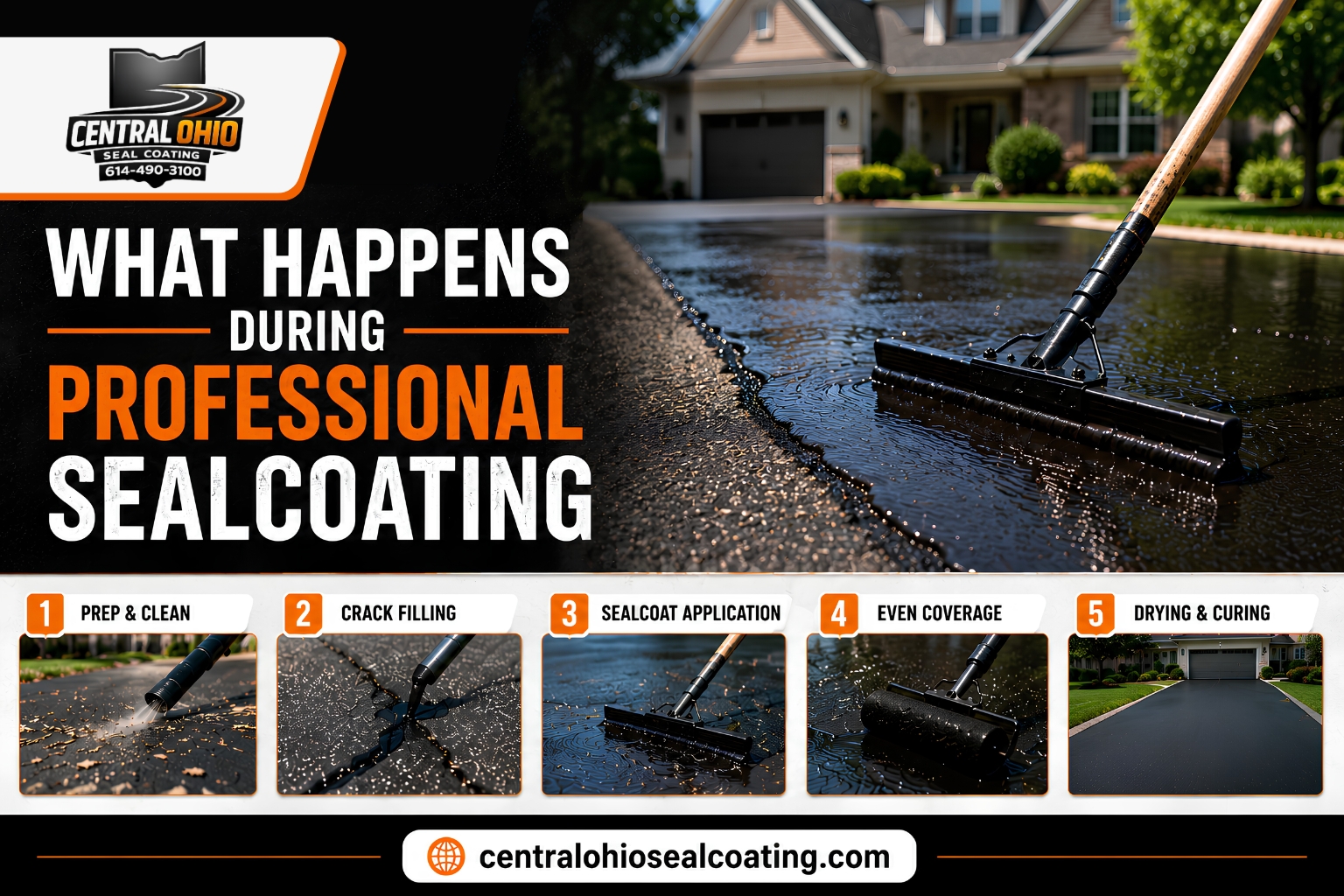

Does proper sealcoating application really make a difference? How long a sealcoat lasts depends on much more than the coating material itself. Sealcoating durability Ohio property owners can expect is strongly influenced by how well the pavement is prepared, how consistently the material is applied, and whether the coating is given the right conditions to cure. A high-quality sealcoating job creates a protective barrier that helps asphalt resist moisture, oxidation, sunlight, chemicals, and everyday traffic.
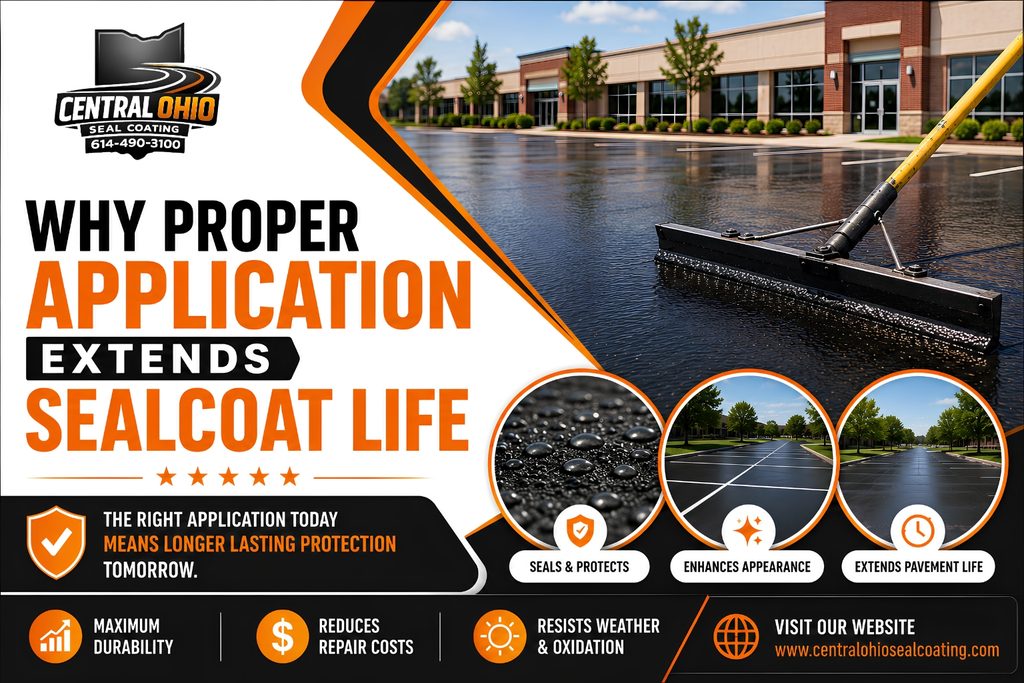
In Ohio, this preparation and application process becomes particularly important because asphalt faces changing conditions throughout the year. Rain, summer UV exposure, winter moisture, freezing temperatures, freeze-thaw cycles, and vehicle traffic can gradually weaken unprotected pavement. Proper sealcoating does not eliminate these stresses, but it can help protect a structurally sound asphalt surface and slow surface deterioration.
Central Ohio Sealcoating emphasizes thorough cleaning, crack repair, proper preparation, quality materials, professional application, and curing as important parts of achieving dependable sealcoating results.
What Is Sealcoating?
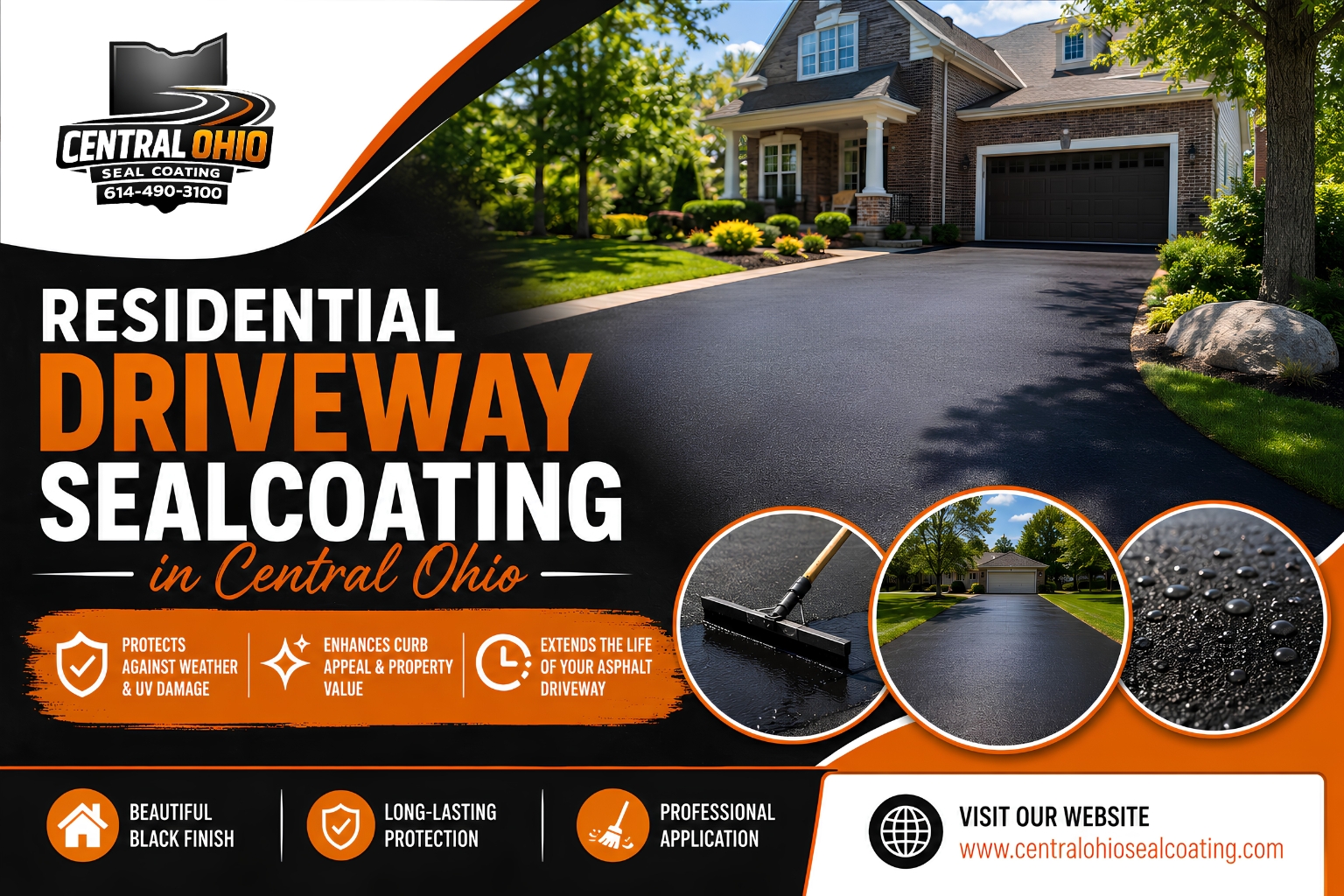
Sealcoating is a protective treatment applied to asphalt pavement. Its primary purpose is to protect the existing surface rather than rebuild damaged pavement.
Asphalt naturally contains oils that contribute to flexibility. Over time, exposure to sunlight, oxygen, water, vehicle traffic, and chemicals can cause the pavement surface to oxidize and become more vulnerable to cracking and deterioration. Sealcoating creates a protective barrier over suitable asphalt, helping reduce exposure to some of these damaging factors.
Properly applied sealcoating can help:
- Reduce oxidation
- Limit moisture penetration
- Protect against UV exposure
- Reduce surface wear
- Improve pavement appearance
- Preserve the asphalt surface
- Support longer pavement service life
However, the quality of the result depends heavily on application. Central Ohio Seal Coating notes that improper preparation, uneven application, unsuitable weather, and inadequate curing can all reduce sealcoat performance.
Why Proper Application Matters for Sealcoat Durability
A sealcoat needs to form a consistent, properly bonded layer over the asphalt.
If the pavement is dirty, contaminated, wet, poorly repaired, or improperly prepared, the coating may not bond as effectively. Likewise, applying the material unevenly can leave portions of the pavement with inconsistent protection.
Central Ohio Seal Coating’s published guidance emphasizes that proper preparation and professional application are essential for long-lasting results.
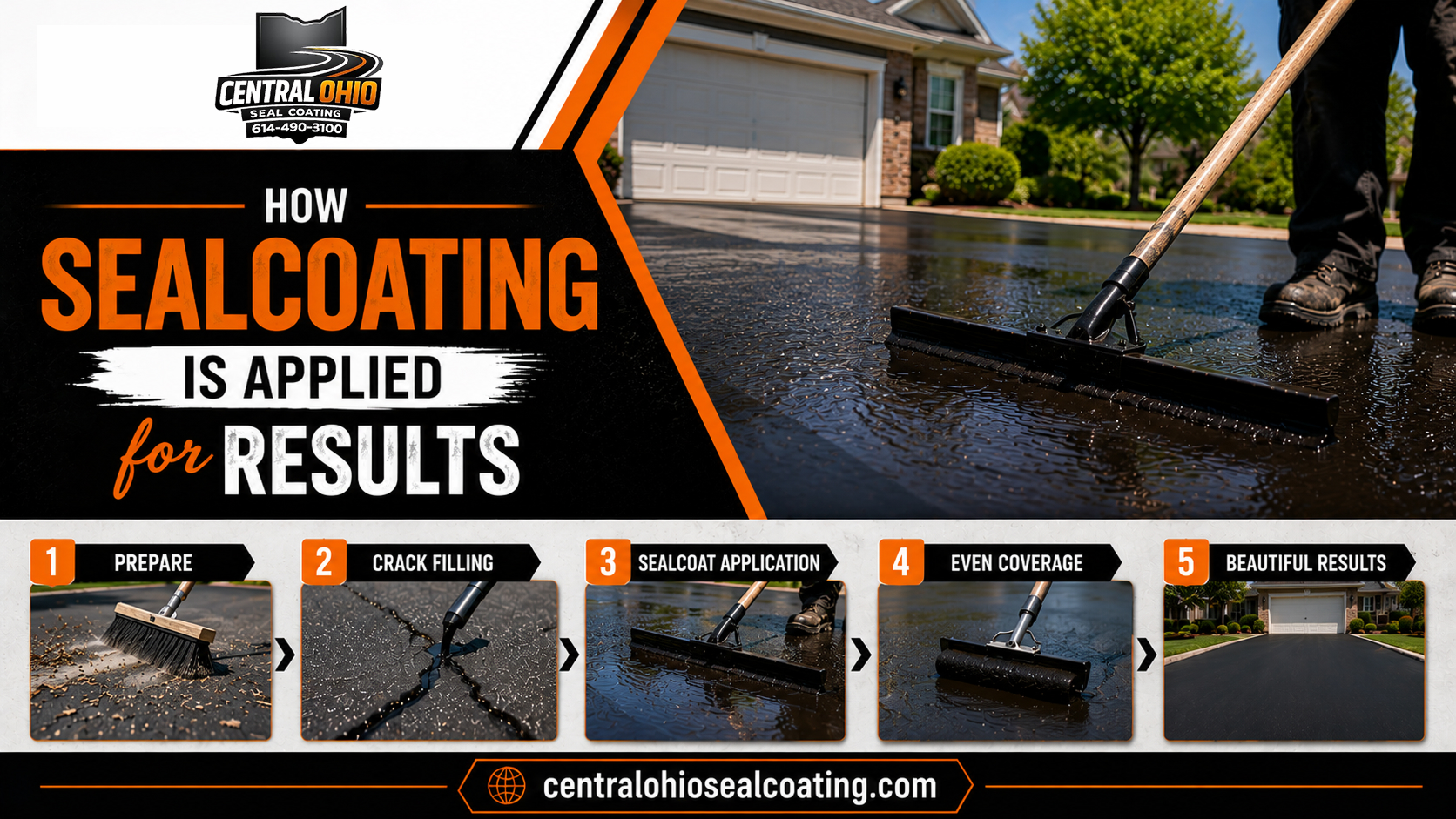
Think of sealcoating as a complete process rather than a single application step:
Inspection → Cleaning → Repairs → Preparation → Material application → Curing → Final inspection
Each stage contributes to the quality of the finished surface.
1. Proper Inspection Comes First
Before applying sealcoat, professionals should inspect the existing asphalt.
This determines whether the pavement is actually suitable for sealcoating and identifies problems that should be addressed beforehand.
Professionals may look for:
- Surface cracking
- Potholes
- Oil contamination
- Loose material
- Faded asphalt
- Drainage concerns
- Weak pavement areas
- Existing repairs
Central Ohio Seal Coating explains that pavement inspection helps identify necessary repairs and preparation before sealcoating begins.
Why inspection improves durability
Sealcoating is not designed to correct major structural pavement failures. If severe deterioration exists beneath the surface, applying a protective coating over it will not eliminate the underlying problem.
Identifying these issues first helps ensure that sealcoating is used where it can provide meaningful protection.
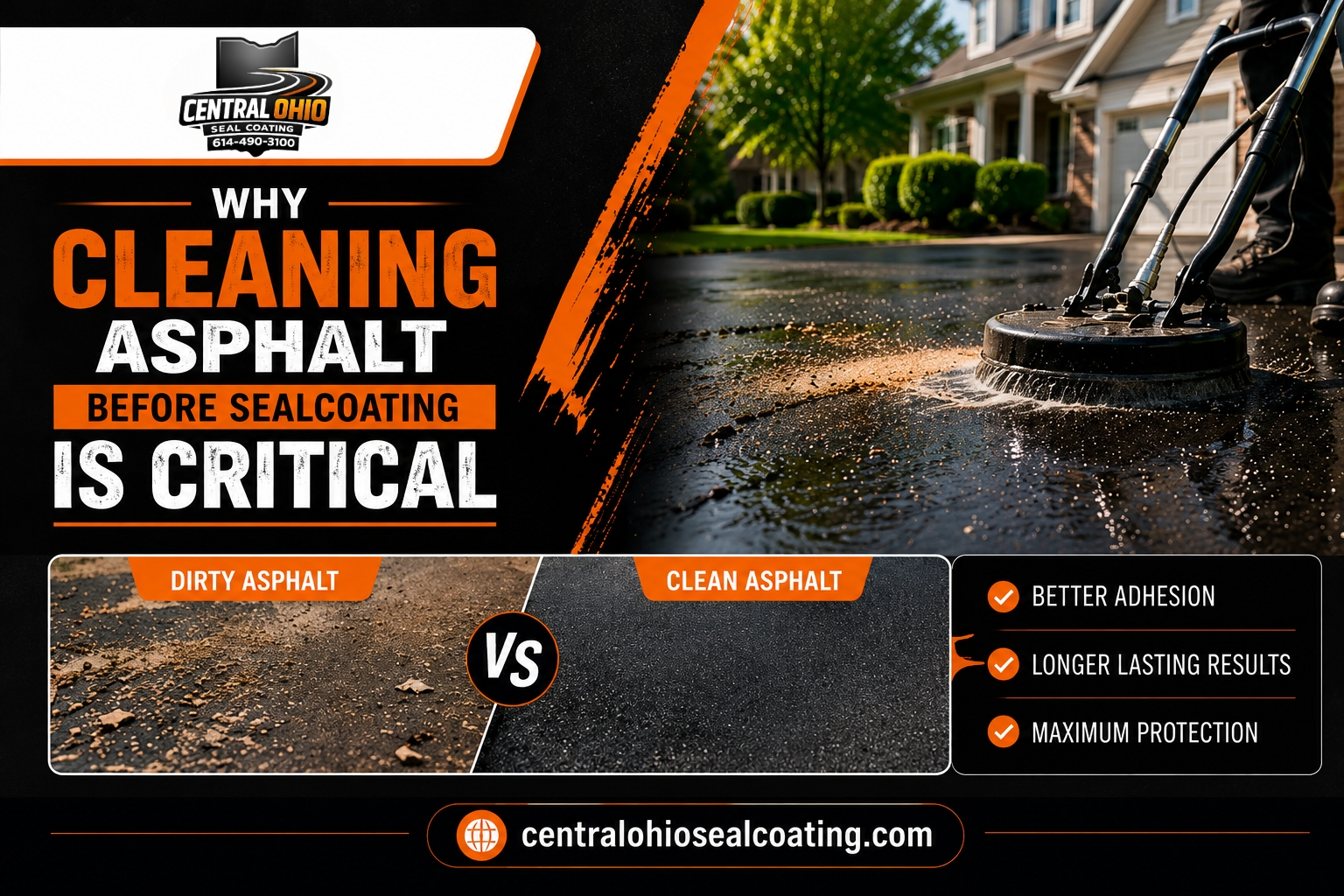
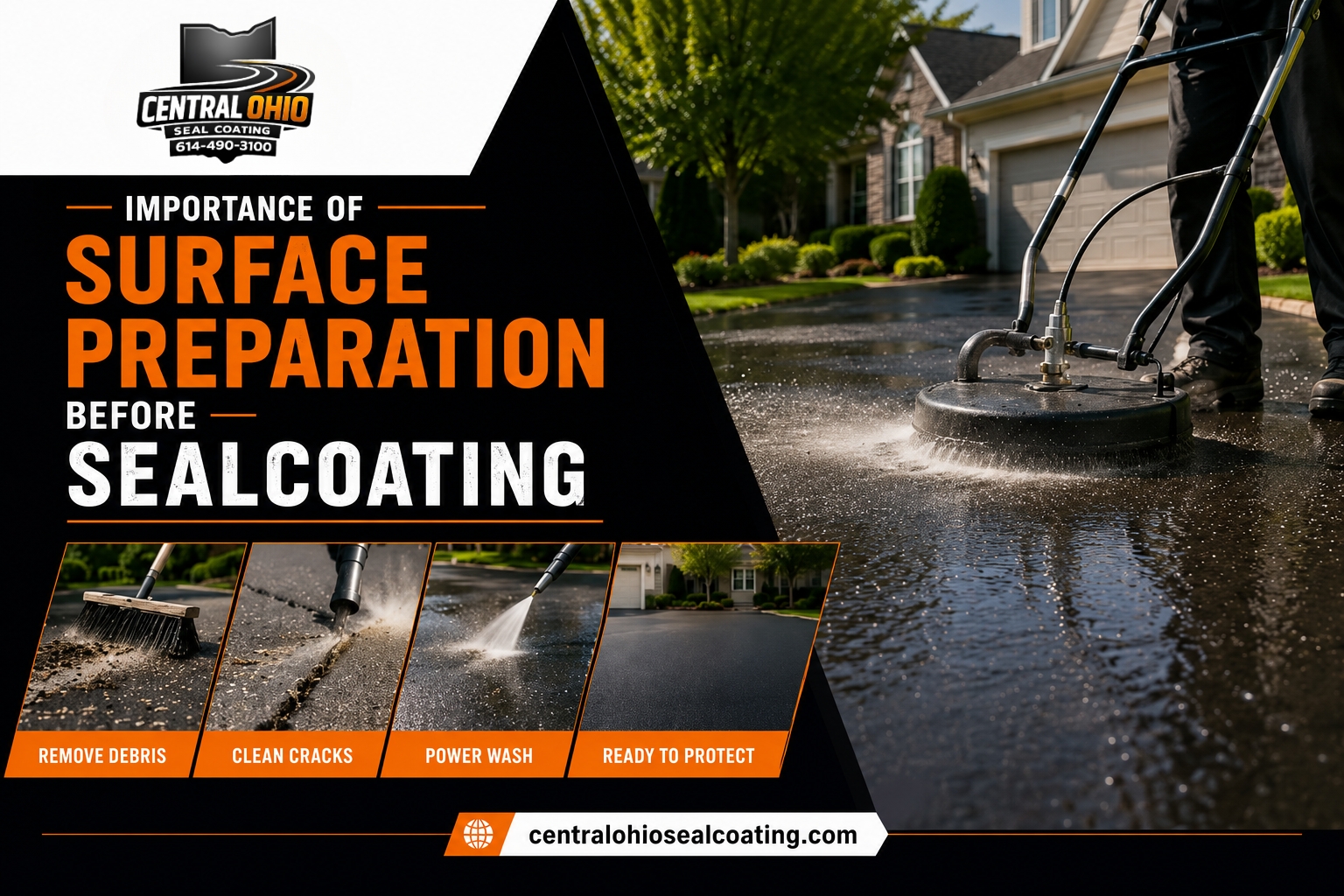
2. Thorough Cleaning Improves Bonding
One of the most important application steps happens before the sealcoat is applied.
The asphalt needs to be properly cleaned so the coating can contact the pavement rather than bonding to dirt and loose debris.
Central Ohio Seal Coating specifically identifies thorough cleaning as an important part of its preparation process.
Cleaning may remove:
- Dirt
- Dust
- Sand
- Leaves
- Grass
- Loose gravel
- Mud
- Other surface debris
If these contaminants remain, they can interfere with adhesion.
Why this matters
A clean pavement surface provides a better foundation for consistent sealcoat bonding. Poor cleaning can contribute to peeling, weak areas, or premature wear.
This is why professional preparation is one of the biggest factors affecting long-term sealcoating performance.
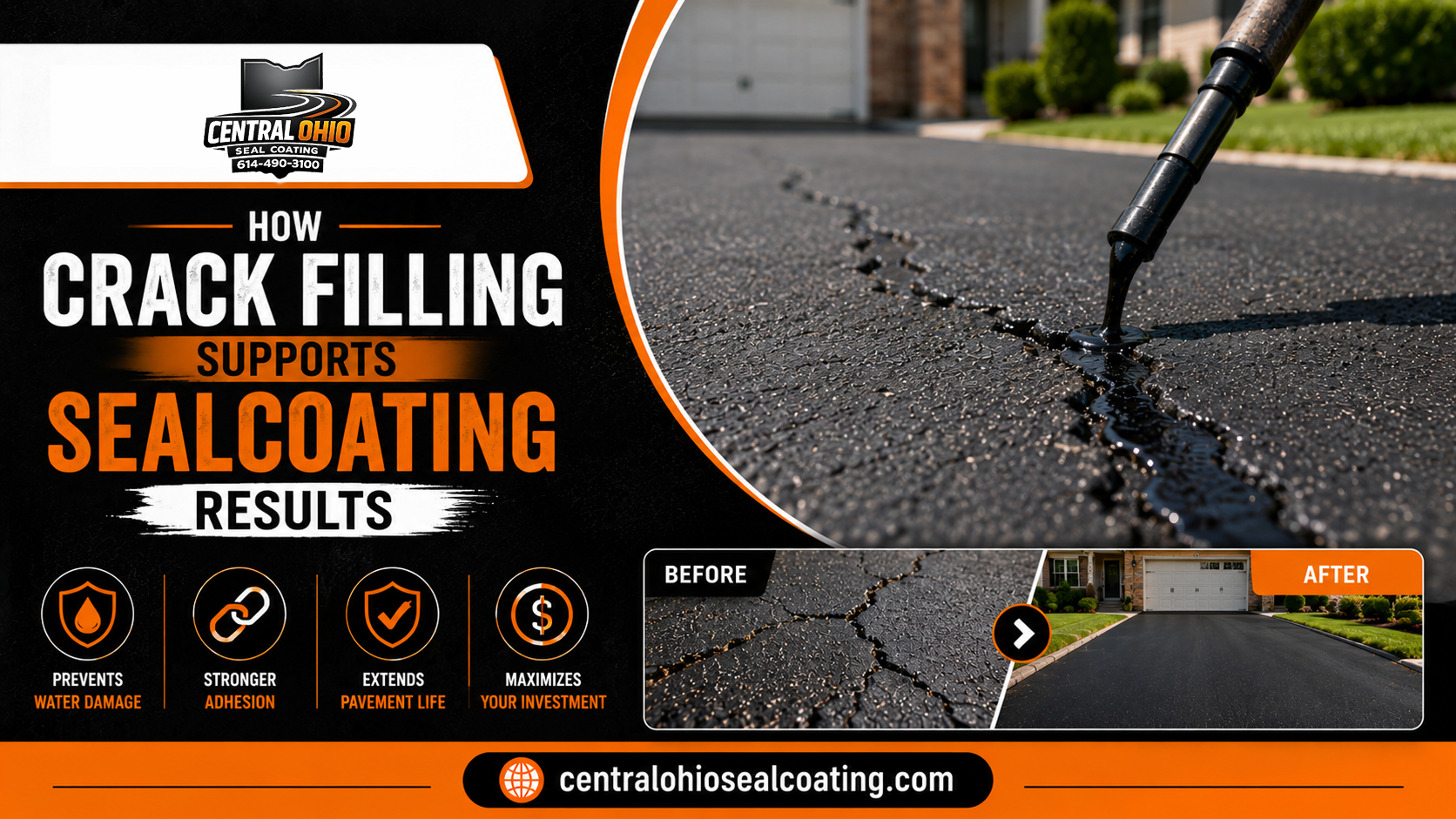
3. Crack Repair Protects the Finished Surface
Sealcoating should not be considered a substitute for crack repair.
Open cracks can allow water to enter the pavement structure. In Ohio, that moisture can become especially problematic during freezing weather.
Central Ohio Seal Coating explains that cracks should be treated before sealcoating because sealing without addressing them leaves pathways for moisture to continue entering the pavement.
Repairing suitable cracks first can:
- Improve the surface appearance
- Reduce moisture entry
- Create a more uniform pavement surface
- Support better sealcoat performance
- Reduce the chance of cracks continuing to deteriorate
The sequence matters:
Repair first → sealcoat afterward
This gives the protective coating a better-prepared surface to work with.
4. Oil Contamination Must Be Addressed
Oil and automotive fluids can create challenging conditions for sealcoating.
Petroleum contamination may interfere with adhesion and can cause certain areas to behave differently from the surrounding asphalt.
Central Ohio Seal Coating identifies oil stains as one of the conditions that should be addressed during pavement preparation.
Before application, professionals can identify:
- Oil spots
- Fuel contamination
- Chemical exposure
- Other surface contaminants
The affected areas can then be cleaned or treated as appropriate.
Ignoring contamination can result in isolated areas where the sealcoat doesn’t perform as expected.
5. Proper Material Preparation Supports Consistency
The sealcoat material itself must be prepared correctly.
Central Ohio Seal Coating’s professional process includes material preparation before application, noting that proper mixing helps create consistent texture and application.
A properly prepared coating can be distributed more consistently across the pavement.
Material consistency helps support:
- Uniform coverage
- Consistent texture
- Better adhesion
- Predictable application
- Improved finished appearance
Improperly prepared material can contribute to inconsistent results even when the pavement itself has been cleaned properly.
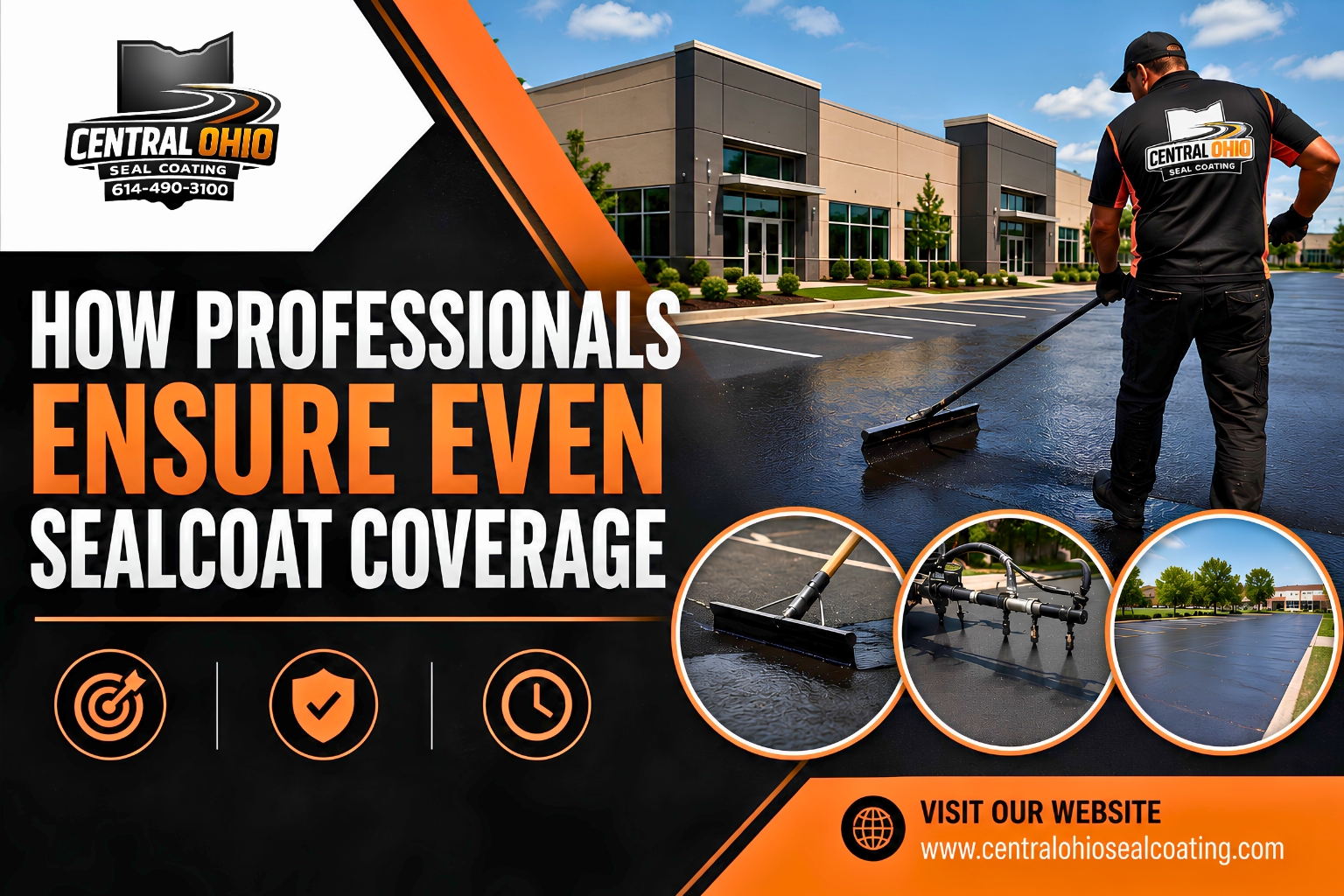
6. Even Coverage Protects the Entire Surface
A sealcoat should be distributed consistently across the pavement.
Uneven application can create areas that are noticeably different from the surrounding surface.
Problems caused by inconsistent application can include:
- Thin areas
- Heavy buildup
- Streaking
- Uneven color
- Inconsistent texture
- Faster wear in under-applied sections
Central Ohio Seal Coating emphasizes smooth, uniform application as an important component of professional sealcoating work.
The objective is to create a consistent protective layer rather than simply covering the pavement with as much material as possible.
7. Application Thickness Needs to Be Controlled
Applying more sealcoat does not automatically produce better protection.
Too little material can result in inadequate coverage, while excessive material can create other application and curing problems.
Professionals focus on applying the appropriate amount consistently across the pavement.
Controlled application helps reduce:
- Thin spots
- Heavy areas
- Uneven drying
- Inconsistent texture
- Premature wear
This is one reason professional equipment and experience matter when the goal is long-lasting pavement maintenance.
8. Weather Conditions Affect Durability
Ohio’s weather creates a challenging environment for asphalt maintenance.
Central Ohio Seal Coating notes that sealcoating should be performed under suitable weather conditions because rain, moisture, temperature, and humidity can affect drying and curing.
Poor application conditions can contribute to:
- Slow curing
- Poor bonding
- Uneven appearance
- Surface damage
- Premature coating failure
Professionals therefore consider the weather before beginning a project rather than applying sealcoat regardless of conditions.
9. Proper Curing Protects the New Coating
Curing is just as important as application.
After sealcoat has been applied, the pavement needs time to dry and cure before regular traffic resumes.
Central Ohio Seal Coating’s FAQ states that sealcoating generally takes about 24 to 48 hours to fully cure, although weather conditions such as temperature and humidity can influence the actual curing period.
Allowing proper curing helps prevent:
- Tire marks
- Scuffing
- Surface damage
- Premature wear
- Uneven finish
Putting vehicles on the pavement too early can damage a coating that has not yet developed its intended condition.
10. Professional Equipment Helps Maintain Application Quality
Equipment plays an important role in professional sealcoating.
Central Ohio Seal Coating emphasizes professional equipment and proven application techniques as part of its approach to achieving consistent results.
Professional equipment can help crews:
- Apply material more consistently
- Cover larger surfaces efficiently
- Control application
- Reach edges and difficult areas
- Maintain a more uniform finish
Equipment does not replace experience, but it can provide better control when combined with proper preparation and application techniques.
11. Attention to Edges Prevents Missed Areas
Edges, corners, joints, and areas around obstacles can be more difficult to coat consistently.
Professionals pay attention to these areas so the completed surface doesn’t contain obvious untreated sections.
Areas requiring extra attention can include:
- Driveway edges
- Parking lot borders
- Curved sections
- Around drainage structures
- Around concrete
- Near curbs
- Narrow pavement areas
Central Ohio Seal Coating describes careful attention to pavement edges, joints, and high-traffic areas as part of its professional approach.
This detail contributes to both appearance and consistency.
12. High-Traffic Areas Need Special Consideration
Not every portion of a property experiences the same level of use.
Parking-lot entrances, turning lanes, driveway approaches, and other heavily used areas may experience greater surface wear.
Central Ohio Seal Coating highlights attention to high-traffic areas when discussing professional sealcoating workmanship.
High-use areas may experience:
- More tire contact
- More turning pressure
- Increased surface abrasion
- Greater exposure to vehicle fluids
- Faster visible wear
Recognizing these areas helps property owners develop a more realistic maintenance strategy.
13. Ohio Freeze-Thaw Cycles Make Preparation Important
One of the biggest environmental challenges for Ohio pavement is repeated freezing and thawing.
When water enters existing cracks and temperatures fall below freezing, the water can freeze and expand. Repeated cycles can enlarge existing openings and contribute to pavement deterioration.
Central Ohio Seal Coating specifically identifies freeze-thaw cycles as a significant threat to asphalt in Ohio.
This is another reason cracks should be addressed before sealcoating.
Sealcoating can help protect a suitable surface, but it works best as part of a broader maintenance plan that includes crack repair and proper drainage.
14. UV Exposure Gradually Ages Asphalt
Summer sunlight also affects asphalt.
UV exposure contributes to oxidation, which causes asphalt to lose some of its natural flexibility over time.
Central Ohio Seal Coating explains that sunlight and oxidation can cause asphalt to dry out, fade, and become more vulnerable to cracking.
Sealcoating creates a protective surface barrier that helps reduce direct environmental exposure.
This can help maintain:
- Surface appearance
- Pavement flexibility
- Resistance to surface deterioration
- Overall pavement condition
Regular maintenance can therefore be particularly valuable when asphalt is exposed to sunlight throughout the warmer months.
15. Moisture Protection Supports Pavement Longevity
Water is one of the most important factors in asphalt deterioration.
Rain and snowmelt can enter cracks and weak areas. If moisture reaches the supporting layers, it can contribute to weakening and settlement.
Central Ohio Seal Coating explains that sealcoating helps create a barrier against moisture and can reduce water penetration into suitable asphalt pavement.
However, sealcoating should not be used to compensate for poor drainage.
Effective pavement maintenance combines:
Sealcoating + crack repair + drainage management + regular inspection
Together, these practices provide more comprehensive protection than any one treatment alone.
How Proper Application Improves Sealcoat Life
| Application Factor | What It Does | Effect on Sealcoat Performance |
|---|---|---|
| Pavement inspection | Identifies existing problems | Helps ensure the surface is suitable |
| Thorough cleaning | Removes contaminants | Improves bonding |
| Crack repair | Addresses open pavement cracks | Reduces moisture pathways |
| Oil treatment | Addresses contamination | Supports adhesion |
| Proper material preparation | Creates consistent coating | Improves uniformity |
| Controlled application | Distributes material evenly | Reduces thin or heavy areas |
| Weather monitoring | Avoids unsuitable conditions | Supports proper curing |
| Proper curing | Allows coating to develop properly | Reduces early surface damage |
| Final inspection | Identifies inconsistencies | Helps improve finished quality |
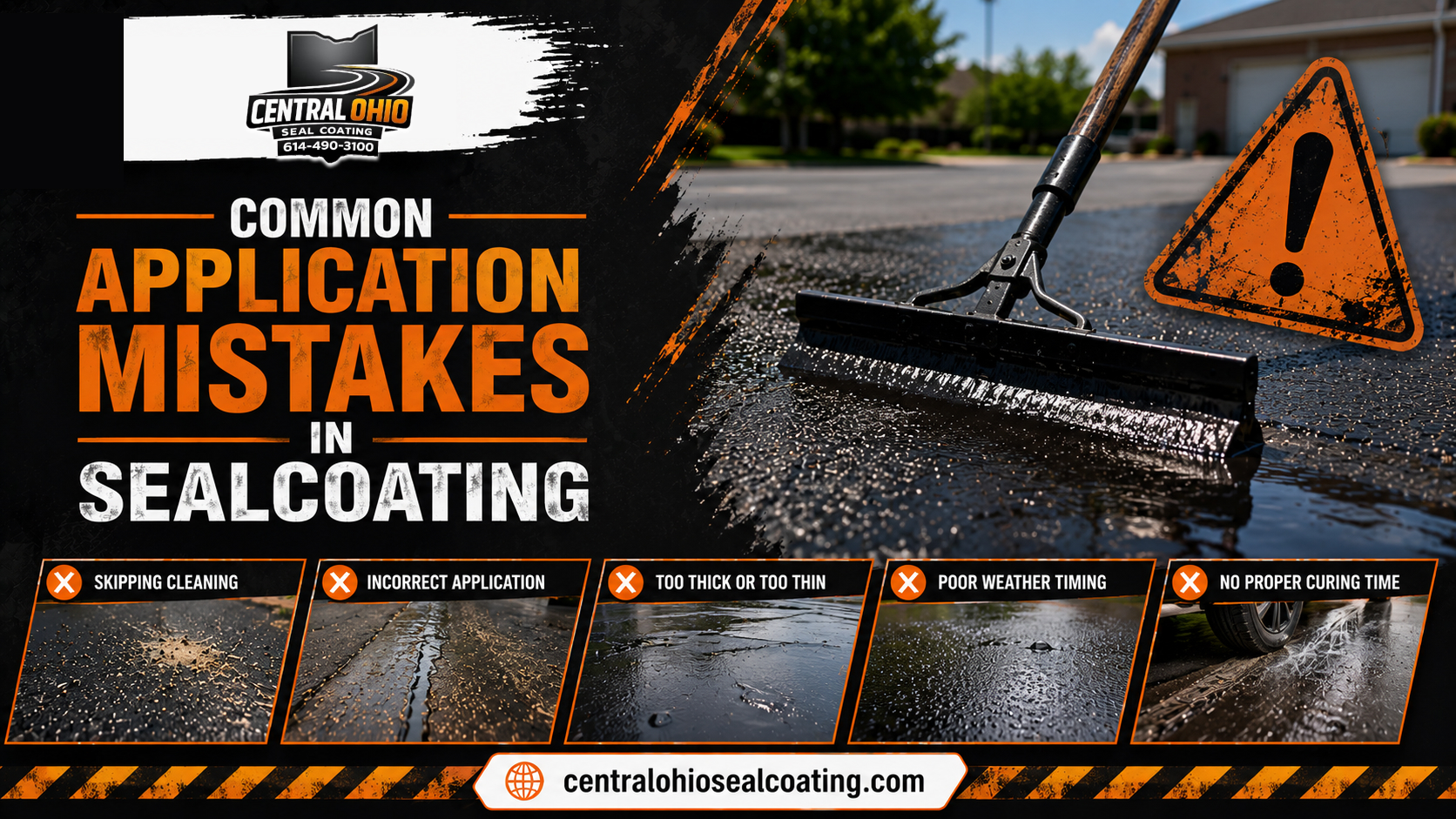
Common Application Mistakes That Shorten Sealcoat Life
Even good sealcoating material can perform poorly when basic application principles are ignored.
Central Ohio Seal Coating identifies several common mistakes that can reduce sealcoat lifespan.
Poor Surface Cleaning
Applying sealcoat over dirt or loose debris can prevent proper bonding.
Skipping Crack Repair
Open cracks can continue allowing water beneath the pavement.
Applying in Poor Weather
Rain, moisture, and unsuitable temperatures can interfere with curing.
Uneven Application
Thin areas may wear faster while excessive buildup can create other problems.
Insufficient Drying Time
Traffic placed on fresh sealcoat can leave marks and damage the surface.
Ignoring Oil Stains
Contaminated asphalt can prevent proper adhesion.
Using Poor-Quality Materials
Material quality affects the durability and appearance of the finished treatment.
Professional Application vs. DIY Application
| Professional Approach | Poor DIY Approach |
|---|---|
| Pavement inspected first | Coating applied immediately |
| Surface thoroughly cleaned | Dirt remains on pavement |
| Cracks addressed | Cracks covered without repair |
| Oil stains identified | Contamination ignored |
| Material prepared properly | Inconsistent mixture |
| Coverage controlled | Heavy and thin areas |
| Weather considered | Application during unsuitable conditions |
| Proper curing allowed | Traffic resumes too soon |
| Final inspection completed | No quality-control check |
DIY sealcoating can appear straightforward, but the preparation and application requirements are easy to overlook.
Central Ohio Seal Coating explains that professional application provides advantages through proper surface preparation, crack filling, equipment, and commercial-grade materials.
How Often Should Sealcoating Be Applied?
There is no single schedule that applies to every property.
Central Ohio Seal Coating’s FAQ states that many asphalt surfaces should be sealcoated approximately every two to three years, depending on factors such as traffic, weather, and pavement condition.
The appropriate interval can depend on:
- Traffic volume
- Weather exposure
- Pavement age
- Existing surface condition
- Previous sealcoating
- Crack development
- Maintenance history
Regular inspection is therefore more useful than simply applying sealcoat according to a fixed calendar.
When Sealcoating Should Not Be the First Step
Sealcoating works best on asphalt that is fundamentally suitable for surface protection.
It is not designed to repair major structural failures.
Problems that may require other solutions include:
- Deep potholes
- Severe alligator cracking
- Significant settlement
- Failed pavement foundations
- Major drainage problems
- Extensive structural deterioration
Central Ohio Seal Coating states that sealcoating does not repair deep potholes, failed bases, or major structural damage.
In these situations, repairs may need to be completed before sealcoating can provide meaningful protection.
Sealcoating Should Be Part of a Larger Maintenance Plan
The longest-lasting asphalt is not simply asphalt that has been sealed once.
It is pavement that receives regular attention throughout its service life.
A maintenance plan can include:
- Regular pavement inspections
- Prompt crack repair
- Pothole repair
- Sealcoating at appropriate intervals
- Drainage maintenance
- Cleaning and removal of contaminants
- Monitoring high-traffic areas
- Professional evaluation when deterioration increases
Central Ohio Seal Coating describes regular sealcoating as part of broader asphalt maintenance for residential driveways, commercial parking lots, and other paved surfaces.
Why Professional Work Can Make a Difference
Professional sealcoating is not simply about having the right coating material.
It is about controlling the entire process.
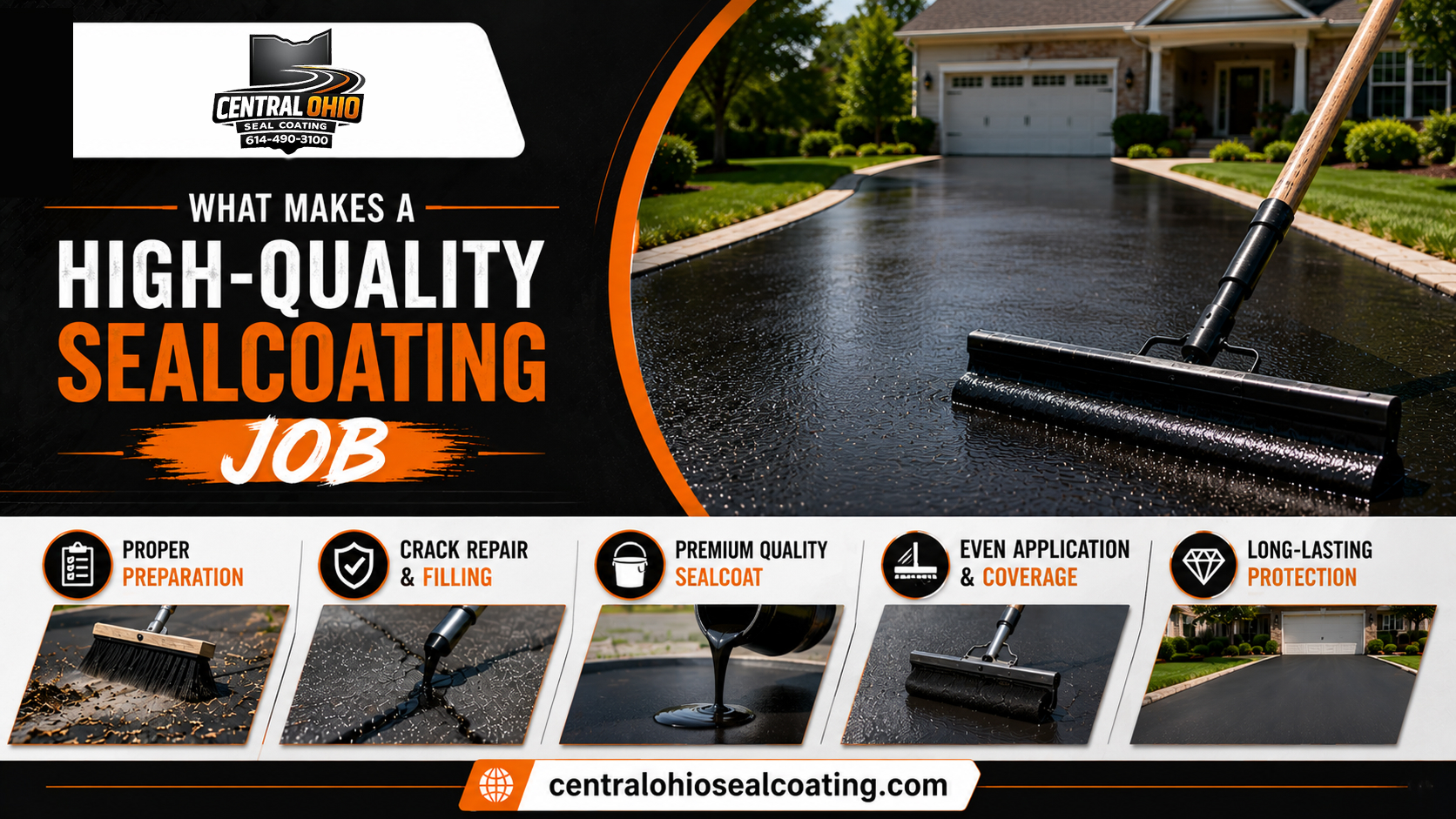
Central Ohio Seal Coating’s approach includes detailed pavement evaluation, thorough cleaning, crack repair, professional application, quality materials, and final inspection.
That attention to each stage helps reduce common causes of premature coating failure.
A professional process provides:
- Better preparation
- More consistent coverage
- Proper material handling
- Attention to difficult areas
- Appropriate weather considerations
- Proper curing procedures
- Quality-control inspection
When these factors are combined, the finished coating has a better opportunity to provide the protection expected from professional pavement maintenance.
Final Thoughts
Proper application is one of the most important factors influencing sealcoating durability Ohio property owners can achieve. A sealcoat cannot perform at its best when it is applied over dirty, contaminated, cracked, or poorly prepared pavement. Likewise, inconsistent application, unsuitable weather, or insufficient curing can reduce the performance of an otherwise quality coating.
The best results come from treating sealcoating as a complete maintenance process. Inspection, cleaning, crack repair, oil-stain treatment, material preparation, controlled application, proper curing, and final inspection all contribute to the finished result.
Ohio’s freeze-thaw cycles, moisture, sunlight, and seasonal temperature changes make proper pavement maintenance particularly important. Regular sealcoating can help protect suitable asphalt from moisture, oxidation, UV exposure, and everyday wear while preserving its appearance and supporting longer pavement life.
Central Ohio Sealcoating provides professional sealcoating and pavement maintenance services for residential and commercial properties throughout Columbus and surrounding Central Ohio communities, with an emphasis on proper preparation, professional application, quality materials, and long-lasting pavement protection.