
Is your business parking lot beginning to look faded, rough, or worn despite regular cleaning and maintenance? These changes may indicate that the asphalt is aging and becoming more vulnerable to weather exposure, moisture, and everyday traffic. For commercial properties, maintaining the parking lot is about more than appearance. It also helps protect a valuable pavement investment and maintain a professional environment for customers, employees, tenants, and visitors.
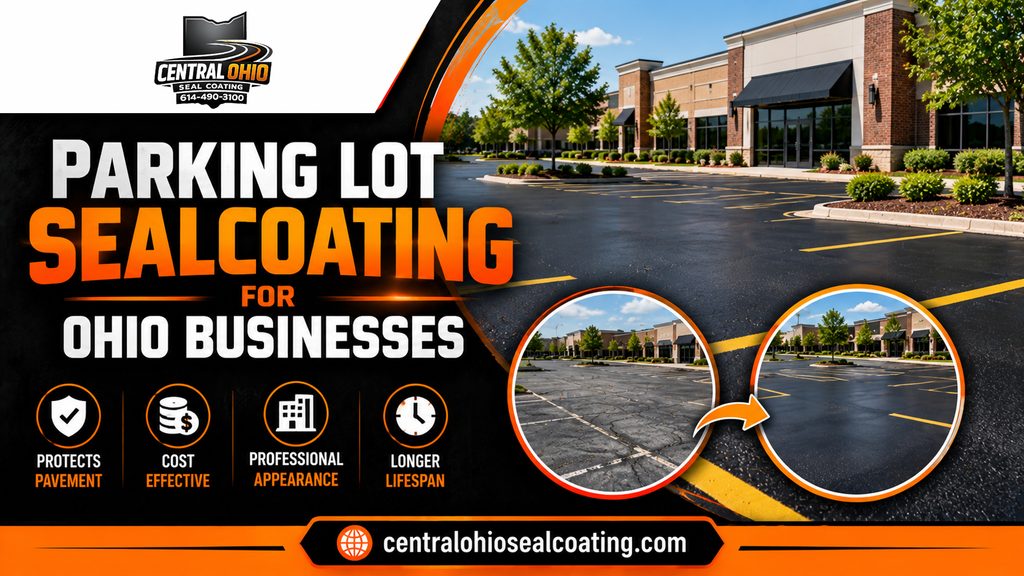
Parking lot sealcoating Ohio businesses can use as part of a preventive maintenance plan helps protect suitable asphalt surfaces from moisture intrusion, oxidation, and routine surface wear. Ohio’s changing seasons, winter freeze-thaw cycles, rainfall, and vehicle traffic can gradually contribute to pavement deterioration. When asphalt is left unprotected, its binder can age, surface defects may develop, and small cracks can provide openings for water to enter.
Why Is Parking Lot Sealcoating Important for Ohio Businesses?
Central Ohio SealCoating provides commercial sealcoating services for parking lots and other business properties across Central Ohio. Its approach includes evaluating the pavement, preparing the surface, addressing suitable defects, and applying a protective coating to help maintain the asphalt.
Sealcoating is not a substitute for repairing failed pavement, but it can be a valuable part of a planned maintenance strategy. Understanding how it works, when to apply it, and what preparation is required helps business owners make better decisions about their parking lots.
What Is Commercial Parking Lot Sealcoating?
Commercial parking lot sealcoating is the application of a protective coating over an existing asphalt surface. The coating forms a barrier that helps reduce the effects of sunlight, air exposure, moisture, and everyday surface wear.
Over time, asphalt binder undergoes oxidation. This process gradually makes the binder harder and less flexible, contributing to a faded appearance and increasing susceptibility to cracking. Water entering through cracks can also contribute to deterioration, particularly when the pavement’s supporting layers are vulnerable.
A suitable sealcoat helps protect the surface from some of these exposures while giving the asphalt a darker, more uniform appearance. It is generally most appropriate for pavement that remains structurally sound and has been properly prepared.
For Ohio businesses, sealcoating may be part of a broader maintenance program that includes crack sealing, localized asphalt repairs, drainage management, and pavement marking maintenance.
It is important to understand what sealcoating does not do. It does not rebuild a weak foundation, correct significant settlement, or repair deep potholes by itself. Those problems should be assessed and addressed before a protective coating is applied.
How Ohio Weather Affects Commercial Asphalt Parking Lots
Commercial parking lots in Central Ohio experience repeated weather changes throughout the year. These conditions can affect both the appearance of asphalt and the rate at which pavement defects develop.
1. Freeze-Thaw Cycles During Winter
During colder periods, water can enter existing cracks and freeze. Repeated freezing and thawing can place stress on damaged areas, gradually widening cracks and contributing to surface breakup.
If moisture reaches the base or supporting soil, the resulting deterioration may become more serious. Sealcoating can help protect a suitable, intact surface, but existing cracks and structural problems must be addressed separately.
2. Rainfall and Moisture Exposure
Rainwater can collect in low areas, flow toward pavement edges, or enter through cracks. If drainage is poor, water may remain around vulnerable sections of the parking lot.
Moisture can weaken supporting materials and contribute to potholes, settlement, and recurring repairs. A well-planned maintenance program should therefore consider drainage as well as surface protection.
3. Sunlight and Asphalt Oxidation
Exposure to sunlight and air gradually changes asphalt binder. As oxidation progresses, the surface can lose its original dark appearance and become less flexible.
Sealcoating helps limit direct exposure of the asphalt surface to weathering. However, it does not reverse oxidation that has already occurred throughout the pavement or restore severely deteriorated asphalt.
4. Traffic and Repeated Turning
Business parking lots experience a variety of traffic patterns. Customers enter and exit, delivery vehicles move through access lanes, and drivers turn or brake near entrances and loading areas.
Repeated traffic can gradually wear the pavement, particularly in high-use locations. Heavy vehicles may place additional stress on areas with insufficient structural support.
Sealcoating can protect suitable surfaces against some forms of wear, but heavily loaded or structurally damaged sections may need repairs before coating.
5. Snow Removal and Winter Maintenance
Snowplows, scraping equipment, and winter maintenance activities can contribute to wear when pavement is already deteriorated or equipment is operated improperly. Deicing products and repeated moisture exposure can also affect the overall maintenance needs of a commercial property.
Before winter, business owners should inspect their parking lots and address significant cracks, potholes, and drainage issues. Sealcoating should be scheduled when weather conditions are suitable rather than applied immediately before cold temperatures arrive.
Key Benefits of Parking Lot Sealcoating for Businesses
A well-maintained parking lot can support a property’s appearance and help protect the existing asphalt. Sealcoating offers several benefits when it is applied to a suitable surface as part of a consistent maintenance plan.
1. Helps Protect Asphalt from Oxidation
Oxidation gradually changes asphalt binder through exposure to air and sunlight. As the binder hardens, the pavement becomes less flexible and more vulnerable to cracking.
A protective sealcoat helps reduce direct exposure to these elements and can slow certain forms of surface deterioration. This is particularly useful for asphalt that remains in sound condition but is beginning to show signs of aging.
2. Helps Limit Surface Moisture Penetration
Cracks and openings provide pathways for water to enter asphalt pavement. A suitable sealcoating application can help protect intact portions of the surface against moisture exposure.
However, cracks should be evaluated and treated separately before sealcoating. Applying a coating over untreated defects does not reliably prevent water from entering through them.
3. Improves Parking Lot Appearance
Faded asphalt can make a commercial property look older or less maintained. Sealcoating gives suitable pavement a darker, more consistent finish, which can improve the overall appearance of the parking area.
For businesses that welcome customers, clients, tenants, or visitors, maintaining a clean-looking exterior can contribute to a more professional first impression.
4. Supports Preventive Pavement Maintenance
Preventive maintenance focuses on protecting pavement before deterioration becomes extensive. Sealcoating can be one part of this strategy when combined with crack treatment, patching, drainage maintenance, and regular inspections.
The goal is to maintain suitable asphalt in usable condition for longer, rather than waiting until major defects require extensive intervention.
5. Helps Prepare the Surface for New Pavement Markings
Commercial parking lots rely on visible lines, directional markings, accessible parking spaces, and other traffic guidance. A freshly sealcoated surface can provide a consistent background for new markings once the coating has cured and the surface is ready.
Existing pavement markings may be covered during sealcoating, so line striping should be included in the project plan.
6. Helps Business Owners Plan Maintenance
A planned sealcoating project allows property managers to coordinate pavement protection with other maintenance activities. It also provides an opportunity to identify areas that need crack sealing, patching, or further evaluation.
Scheduling maintenance before deterioration becomes extensive can help businesses manage pavement work more systematically. However, the actual benefit depends on the existing condition of the asphalt and the quality of preparation and application.
Which Ohio Businesses Can Benefit from Parking Lot Sealcoating?
Sealcoating may be suitable for many commercial and managed properties, provided the asphalt is in appropriate condition.
Retail Stores and Shopping Centers
Retail parking lots experience frequent vehicle movement, turning, and braking. Their appearance also matters because customers encounter the parking area before entering the business.
Sealcoating can help maintain a uniform asphalt finish, while a broader maintenance plan can address cracks, potholes, worn markings, and drainage problems.
Office Buildings and Business Parks
Office properties need parking areas that remain orderly and functional for employees, visitors, and tenants. Preventive pavement maintenance helps property managers monitor deterioration and schedule repairs around normal business operations.
Larger properties may benefit from dividing the parking lot into sections for inspection, maintenance, and project scheduling.
Restaurants and Hospitality Properties
Restaurants and hospitality businesses often experience concentrated traffic near entrances, pickup areas, and service access points. Turning movements and repeated vehicle use can contribute to localized wear.
Sealcoating may help protect suitable asphalt in these areas, but loading zones, grease exposure, and damaged pavement require separate evaluation where applicable.
Apartment Communities and Property Management Companies
Managed residential communities often maintain shared parking lots, private roads, and visitor spaces. Consistent pavement maintenance can help preserve the appearance and usability of these areas.
Property managers should coordinate work schedules, notify residents, and ensure that vehicles can be moved before coating begins.
Warehouses and Light Industrial Facilities
Industrial and warehouse properties may have parking areas and access lanes used by employee vehicles, service trucks, and delivery traffic.
The pavement must be evaluated in relation to the vehicles using it. Sealcoating can be appropriate for sound asphalt, but areas exposed to heavy loads or repeated turning may require additional repairs or a different maintenance approach.
Churches, Schools, and Community Facilities
These properties may experience periods of concentrated traffic around services, events, school activities, and community gatherings. Scheduling sealcoating during quieter periods can help reduce disruption.
The project plan should account for pedestrian access, emergency routes, and the time needed for the coating to cure before normal use resumes.
Central Ohio SealCoating identifies businesses, property managers, retail centers, office buildings, apartment communities, and other commercial facilities among the property types it serves.
How Often Should an Ohio Business Sealcoat Its Parking Lot?
There is no single sealcoating schedule that works for every commercial parking lot. The appropriate interval depends on traffic volume, pavement condition, sun exposure, drainage, previous maintenance, and the type of coating used.
Some commercial lots may be suitable for maintenance every few years, while heavily used areas may need more frequent assessment. The condition of the asphalt should guide the schedule rather than relying on a fixed calendar alone.
Property owners should consider the following factors:
- Traffic volume: Frequent vehicle movement can increase wear, especially near entrances, exits, and turning areas.
- Pavement age: Older asphalt may need repairs or rehabilitation before another sealcoat can be applied.
- Weather exposure: Sunlight, rainfall, and seasonal temperature changes influence pavement deterioration.
- Existing cracks: Cracks should be evaluated and treated as appropriate before sealcoating.
- Previous applications: The condition and compatibility of the existing coating affect the next maintenance decision.
Regular inspections can help determine when the surface needs attention. Central Ohio SealCoating can evaluate a parking lot’s condition and help property owners understand whether sealcoating is appropriate.
What Is the Best Time to Sealcoat a Parking Lot in Ohio?
Sealcoating requires suitable weather for application and curing. In Ohio, the warmer months are generally the most practical time to schedule commercial sealcoating, but actual conditions matter more than the season alone.
Late Spring Through Early Fall
Late spring, summer, and early fall often provide better opportunities for sealcoating because temperatures are more favorable than during winter. The surface must be dry, and the temperature must meet the product manufacturer’s requirements during application and curing.
Cold conditions can slow curing, while rain arriving too soon can interfere with the coating’s performance. Property managers should check the forecast and allow sufficient time for the coating to cure before reopening the lot.
Schedule Around Business Operations
Commercial parking lots cannot always be closed for an entire project. Retail centers, office buildings, restaurants, and apartment communities may need to maintain access for customers, employees, tenants, and deliveries.
Planning ahead allows businesses to consider phased work, temporary parking arrangements, and suitable project dates.
Before the project begins, confirm:
- Which sections of the parking lot will be closed.
- Where customers and employees can park.
- How delivery and emergency access will be maintained.
- When vehicles can return to the treated areas.
- Whether pavement markings need to be replaced.
Sealcoating should never be rushed simply to meet a preferred date. Suitable application and curing conditions are essential to achieving a satisfactory result.
The Commercial Parking Lot Sealcoating Process
A successful sealcoating project involves more than spreading a coating over asphalt. Proper preparation, repair of suitable defects, careful application, and adequate curing all contribute to the result.
Step 1: Inspect the Parking Lot
The process begins with evaluating the existing asphalt. The inspection should identify cracks, potholes, raveling, worn areas, drainage concerns, and any signs of structural deterioration.
The purpose is to determine whether the pavement is suitable for sealcoating or whether repairs are needed first.
If the asphalt has widespread structural failure, applying a protective coating alone will not solve the problem.
Step 2: Clean and Prepare the Surface
The pavement needs to be clean so the coating can adhere properly. Dirt, loose aggregate, vegetation, and other debris should be removed.
Oil or fuel contamination may require additional treatment because contaminated areas can interfere with adhesion. The surface must also be sufficiently dry for the selected product.
Preparation is especially important in commercial parking lots, where traffic and outdoor exposure can leave the asphalt covered with debris and contaminants.
Step 3: Address Cracks and Damaged Areas
Cracks and damaged pavement should be evaluated before the sealcoat is applied. Suitable cracks may require sealing, while potholes or deteriorated areas may need patching.
If an area has failed because of weak base materials or poor drainage, those issues should be addressed as part of the repair plan.
Sealcoating should follow appropriate repairs rather than conceal defects that are likely to continue deteriorating.
Step 4: Apply the Sealcoat
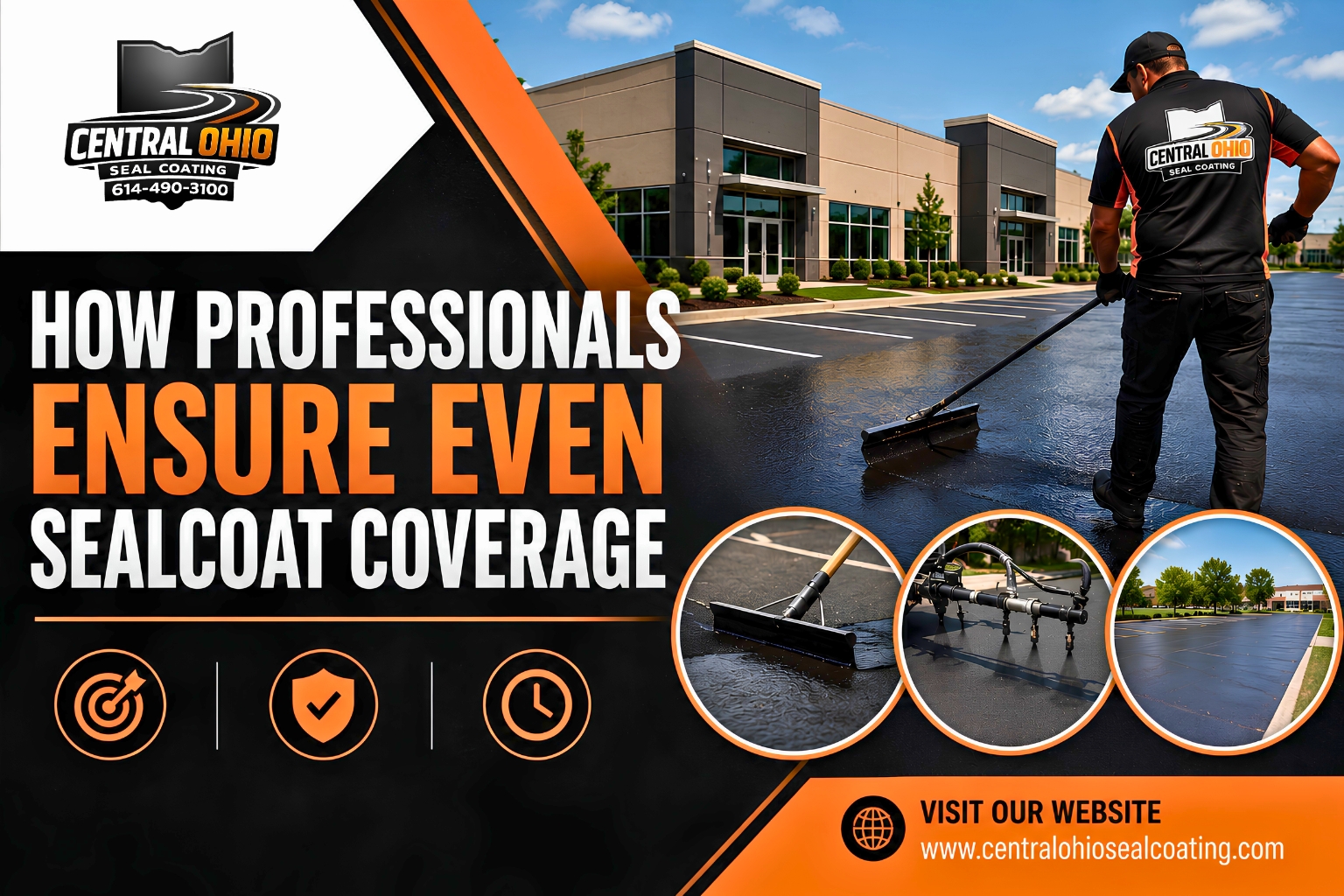
Once the pavement has been prepared, the coating is applied according to the product requirements and the needs of the property.
Application methods and the number of coats depend on the surface condition, material specifications, and project requirements. The goal is to achieve appropriate coverage without applying the material under unsuitable conditions.
Step 5: Allow Adequate Curing Time
The coated area must remain closed to vehicles until the material has cured sufficiently. Drying and curing times vary with temperature, humidity, sunlight, product type, and application thickness.
Property managers should follow the contractor’s instructions rather than assuming that the surface is ready after a fixed number of hours.
Step 6: Restore Pavement Markings and Reopen the Lot
Once the coating has cured, the project may proceed to line striping and other planned finishing work.
Markings should be installed when the surface is ready for the specified paint or marking material. Before reopening the parking lot, the work area should be checked and temporary restrictions removed when appropriate.
Central Ohio SealCoating describes a process involving pavement evaluation, surface cleaning, review of cracks and problem areas, professional application, and guidance on when the surface can be used again.
Parking Lot Sealcoating vs. Asphalt Repair and Resurfacing
Business owners sometimes assume sealcoating can correct every type of pavement problem. In reality, different maintenance methods serve different purposes.
| Service | Main Purpose | When It May Be Appropriate |
|---|---|---|
| Sealcoating | Protects the asphalt surface and improves appearance | Pavement is structurally sound but needs preventive maintenance |
| Crack sealing | Helps limit water entry through suitable cracks | Cracks are present in otherwise stable pavement |
| Asphalt patching | Repairs localized damaged areas | Potholes or broken sections require material replacement |
| Full-depth repair | Addresses damage extending into deeper pavement layers | Localized structural failure or weakened support is present |
| Asphalt resurfacing | Adds a new asphalt layer over a suitable existing surface | The surface is deteriorated but the underlying pavement remains suitable |
| Drainage improvements | Reduces water accumulation and related deterioration | Poor drainage contributes to pavement damage |
Sealcoating is most effective as a preventive surface treatment. It should not be used as a replacement for repairs when the asphalt is cracked extensively, unstable, or structurally compromised.
Signs Your Business Parking Lot May Need Sealcoating
Recognizing early signs of surface aging can help property owners decide when to arrange a pavement assessment.
Faded or Gray Asphalt
Asphalt often becomes lighter as the binder ages through oxidation and weather exposure. A faded surface may indicate that the pavement needs maintenance, although color alone cannot determine whether sealcoating is appropriate.
Minor Surface Wear
A parking lot may develop a worn appearance after years of sunlight, rainfall, and vehicle use. If the asphalt remains sound, sealcoating may help protect the surface and restore a more uniform finish.
Suitable Cracks Beginning to Appear
Small cracks may indicate that the pavement is aging. They should be assessed and treated appropriately before sealcoating, because the coating itself is not a substitute for crack sealing.
Uneven Appearance Across the Lot
Some sections may appear more weathered than others because of differences in traffic, drainage, or sun exposure. A pavement inspection can help identify whether the variation is cosmetic or associated with more serious deterioration.
Increasing Maintenance Needs
If a parking lot requires repeated minor repairs, property managers should review its overall condition rather than relying on individual treatments alone. Sealcoating may be appropriate for sound areas, while damaged sections may need other work.
Remember: A faded parking lot may be a candidate for sealcoating, but deep cracks, potholes, sinking, and widespread breakup require further assessment before a coating is applied.
How Businesses Can Minimize Disruption During Sealcoating
For many businesses, the biggest challenge is maintaining access while pavement work is underway. Careful scheduling can make the process easier for customers, employees, tenants, and contractors.
Divide the Parking Lot into Sections
Where the site layout permits, the project may be organized into separate work areas. This can allow some parking spaces to remain available while another section is being treated.
The feasibility depends on the lot’s size, access points, traffic flow, and curing requirements.
Notify Customers and Employees in Advance
Clear communication helps people prepare for temporary closures. Businesses should provide information about the planned work dates, affected parking spaces, alternative entrances, and temporary parking arrangements.
For managed properties, residents and tenants should receive instructions early enough to move their vehicles before work begins.
Protect Emergency and Service Access
The project plan should account for emergency vehicles, deliveries, accessible routes, and essential services. These needs should be discussed before the contractor establishes work zones.
Coordinate Sealcoating and Line Striping
Planning sealcoating and pavement marking together can reduce scheduling conflicts and help the business restore normal parking operations efficiently.
Allow Enough Time for Curing
Opening the lot too soon may damage the coating or lead to an uneven finish. Follow the product requirements and the contractor’s reopening instructions, even when business operations create pressure to reopen quickly.
Frequently Asked Questions About Parking Lot Sealcoating in Ohio
Does sealcoating make an old parking lot look new?
Sealcoating can give suitable asphalt a darker, more uniform appearance. However, it cannot restore missing pavement, correct major depressions, or eliminate extensive cracking. Repairs may be needed before coating, and severely deteriorated pavement may require resurfacing or reconstruction.
Can sealcoating prevent all asphalt cracks?
No. Sealcoating helps protect the surface, but it cannot prevent every crack or correct underlying structural problems. Crack sealing and other appropriate repairs remain important parts of pavement maintenance.
Should potholes be repaired before sealcoating?
Yes. Potholes and deteriorated sections should be evaluated and repaired before applying the coating. The repair method depends on the depth and cause of the damage.
How long does a parking lot sealcoating project take?
The schedule depends on the parking lot’s size, condition, preparation requirements, number of coats, weather, and curing time. Larger commercial sites may require phased work to manage access.
Can a business keep part of its parking lot open during sealcoating?
Sometimes. Phased scheduling may allow unaffected sections to remain available, provided the site layout and safety requirements permit it. The contractor should determine a practical plan for closures and access.
Does sealcoating replace resurfacing?
No. Sealcoating is a protective surface treatment, while resurfacing adds a new asphalt layer. The appropriate option depends on the existing pavement’s condition and whether its underlying structure remains suitable.
How can a business know whether its parking lot is ready for sealcoating?
A pavement assessment should check the surface condition, cracks, potholes, drainage, and signs of deeper deterioration. This helps determine whether the asphalt can be coated directly after preparation or needs repairs first.
Protect Your Commercial Parking Lot with Central Ohio SealCoating
A commercial parking lot is an important part of a business property. It supports daily vehicle access, shapes the property’s appearance, and requires ongoing attention to remain in good condition. Ohio’s seasonal weather, moisture exposure, oxidation, and regular traffic can gradually wear down asphalt, making preventive maintenance an important consideration for property owners and managers.
Parking lot sealcoating Ohio businesses choose should be based on the condition of the pavement, the property’s traffic demands, and suitable weather for application and curing. Sealcoating can help protect sound asphalt and improve its appearance, but it works best when combined with crack treatment, necessary repairs, drainage management, and regular inspections.
Central Ohio SealCoating provides commercial sealcoating services for parking lots and business properties across Central Ohio. Its team evaluates pavement conditions and prepares suitable surfaces before applying protective coatings. Businesses can also discuss scheduling and project requirements to help minimize disruption during the work.
By planning maintenance before significant deterioration develops, businesses can make more informed decisions about their asphalt, keep their parking areas looking professional, and support the long-term performance of their pavement.