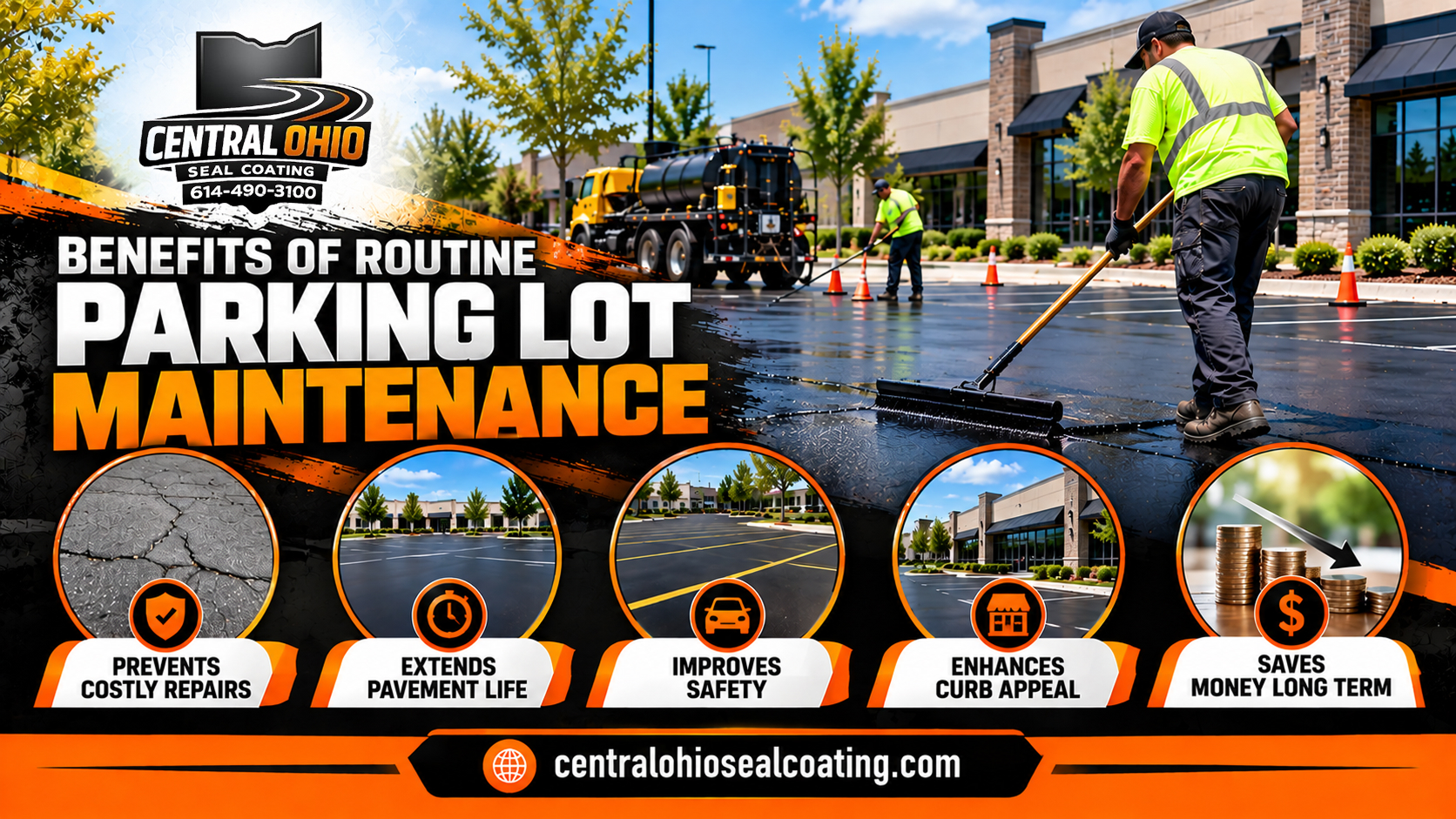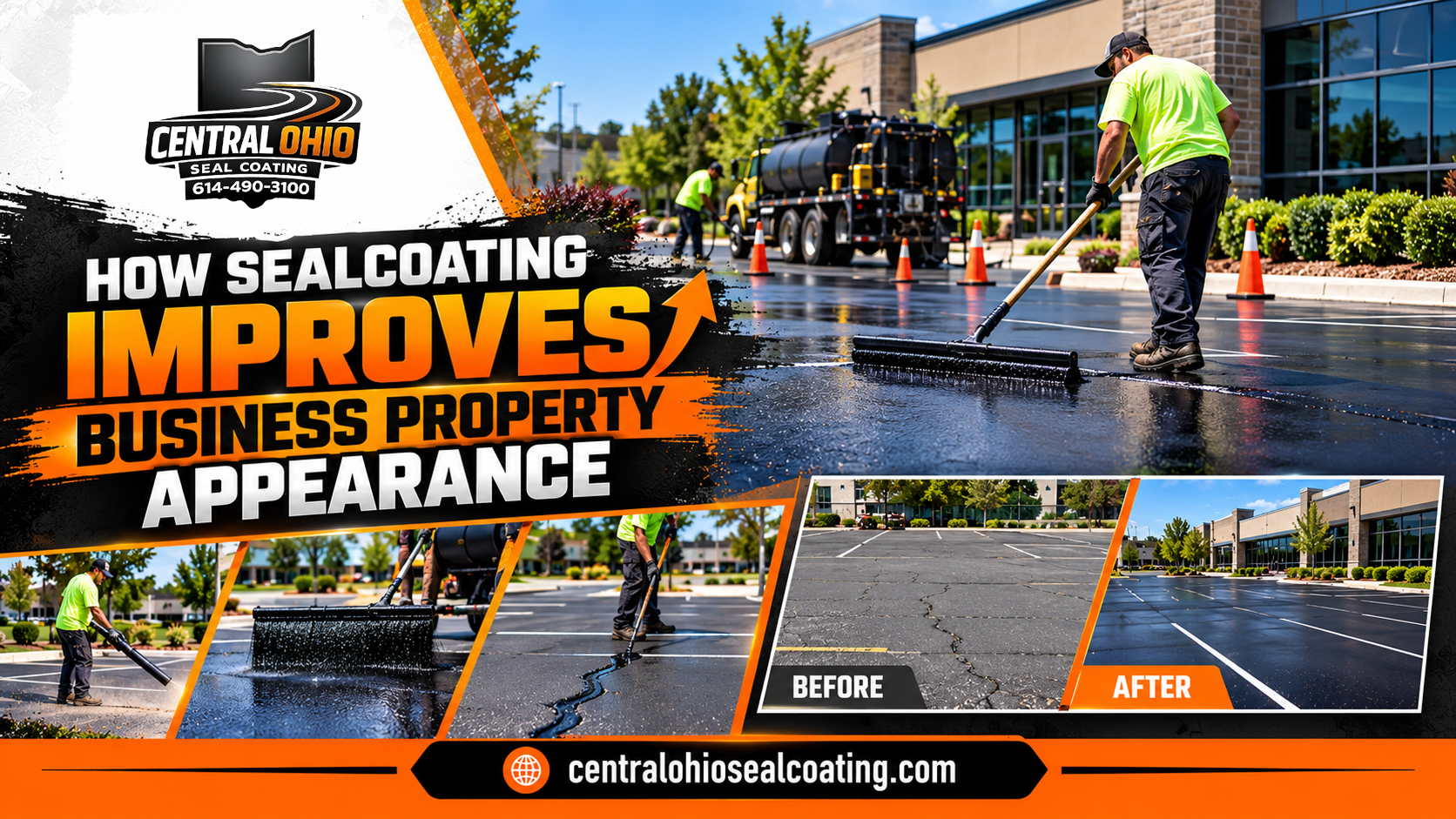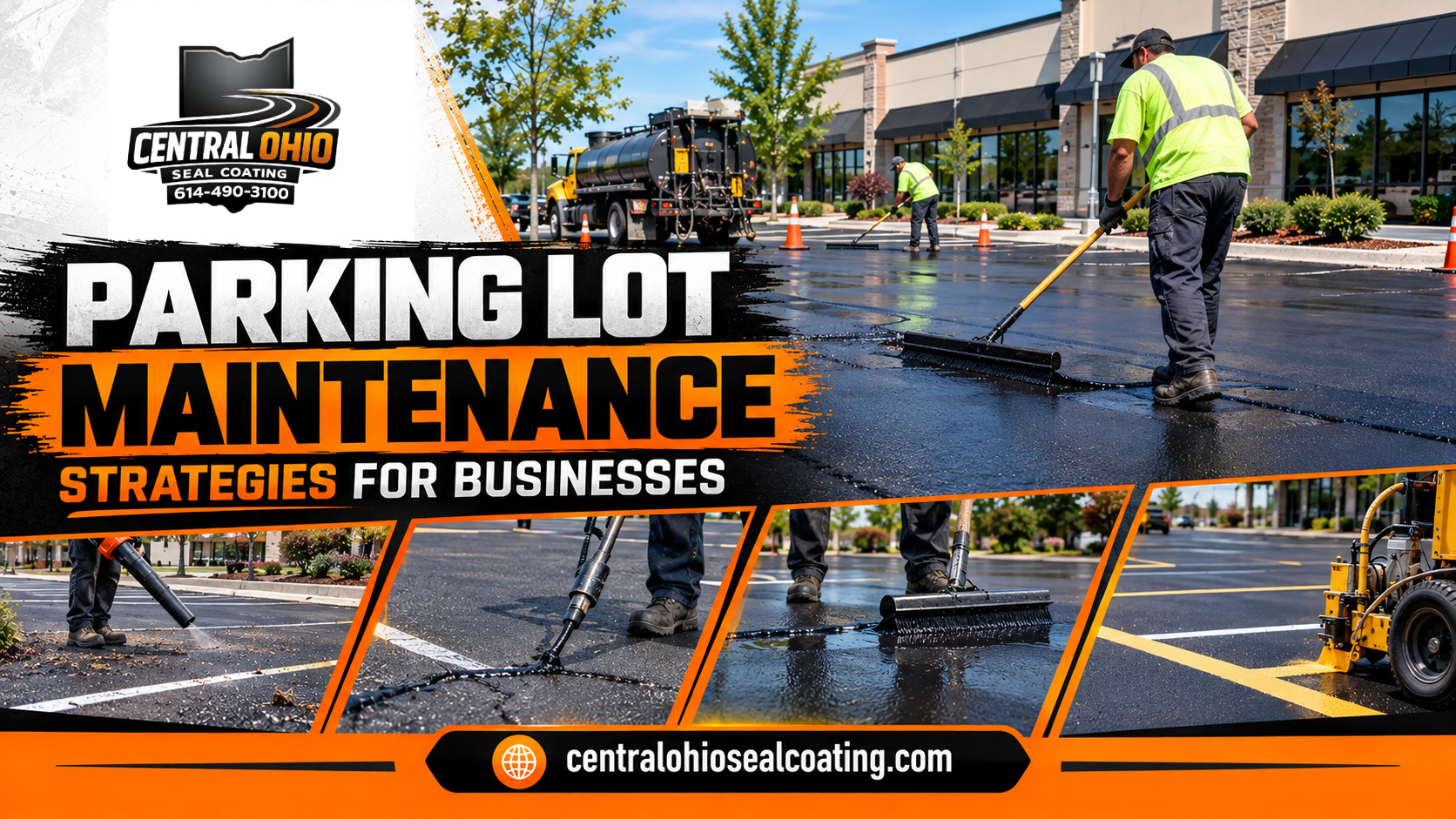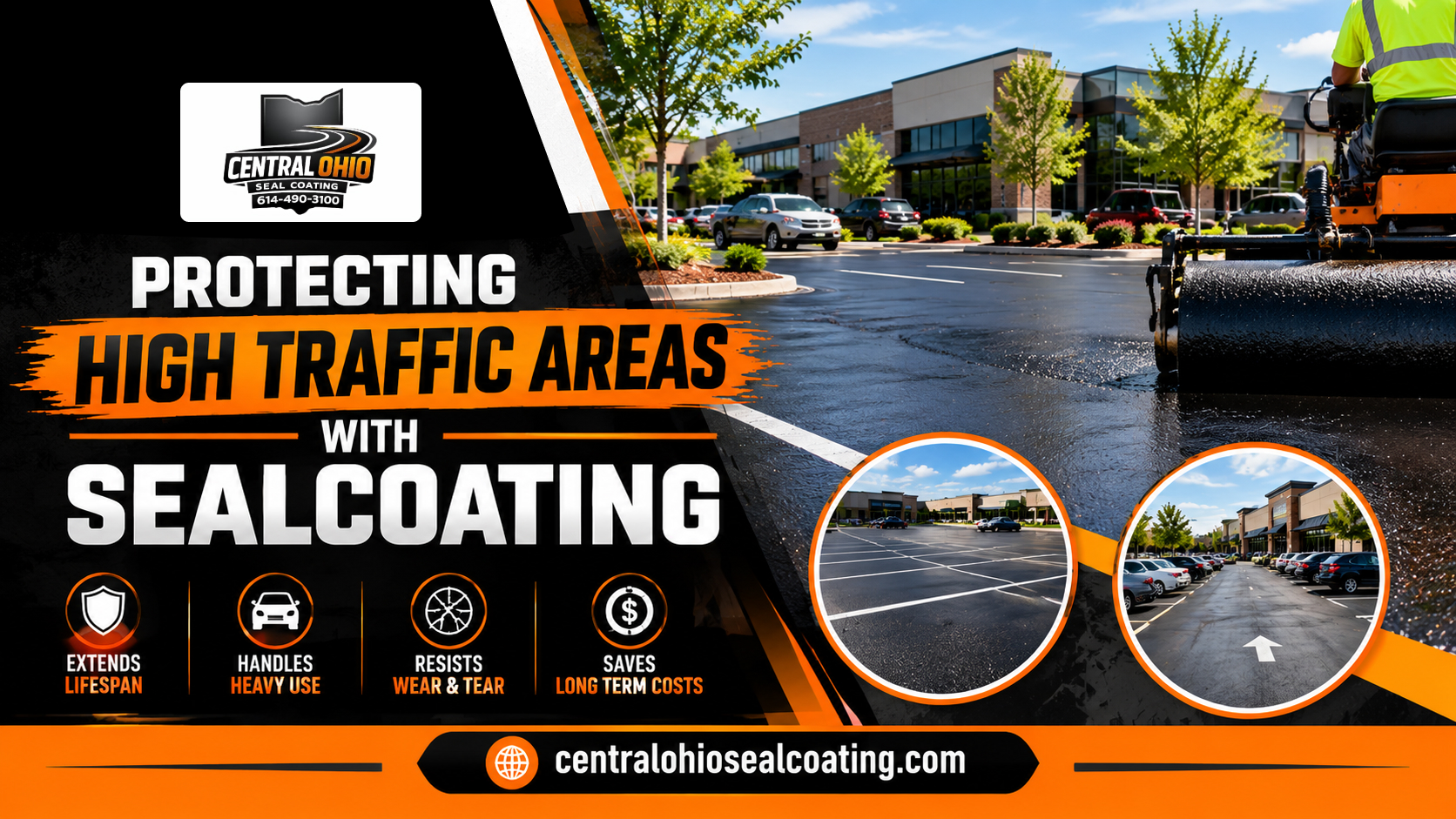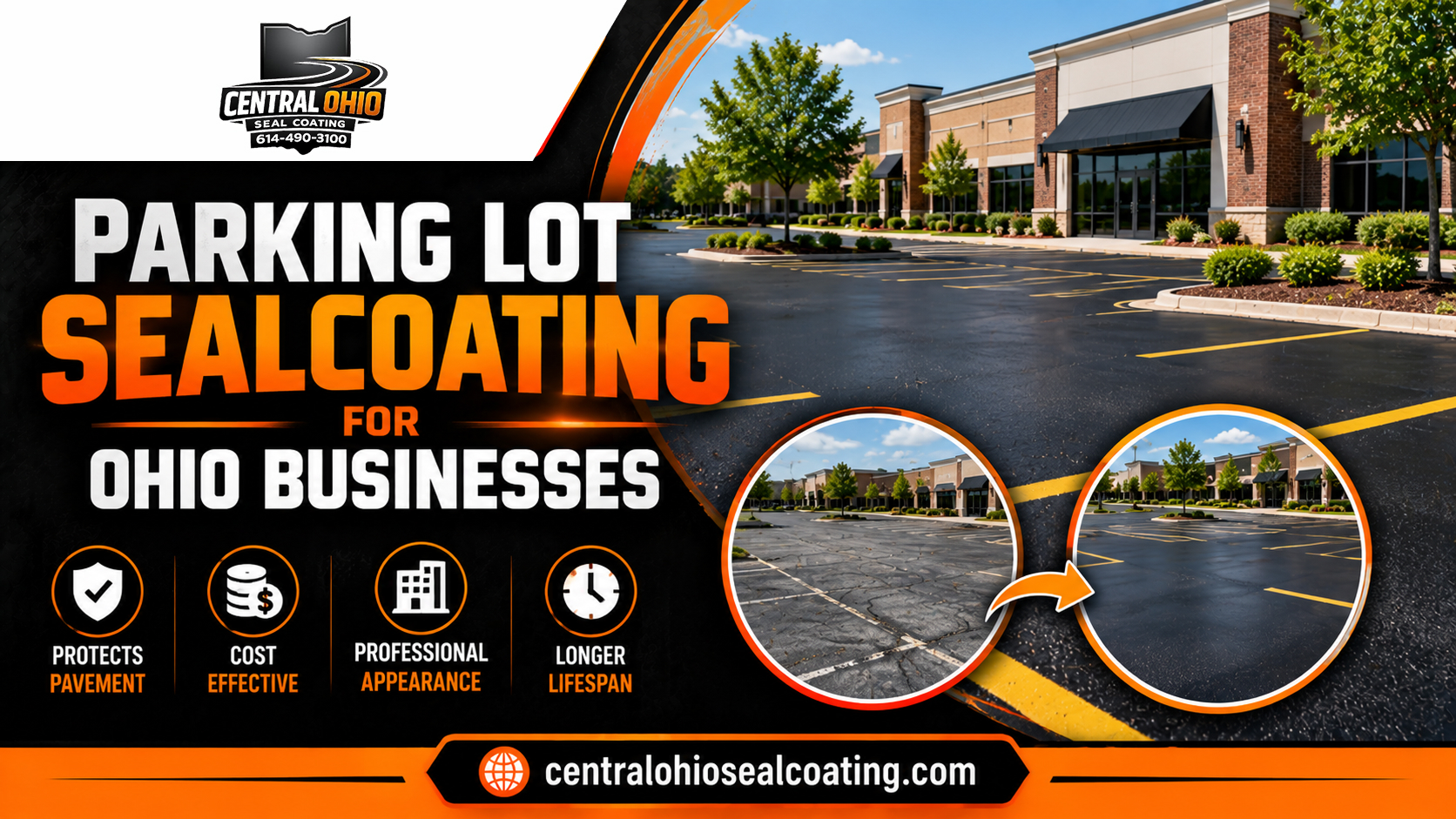

Why do commercial properties need regular sealcoating to protect their asphalt parking lots? Commercial sealcoating in Ohio helps protect asphalt from moisture, oxidation, vehicle fluids, and everyday traffic while maintaining a clean, professional appearance. For businesses, shopping centers, office buildings, apartment communities, and industrial facilities, sealcoating is an important part of a preventive pavement maintenance plan.
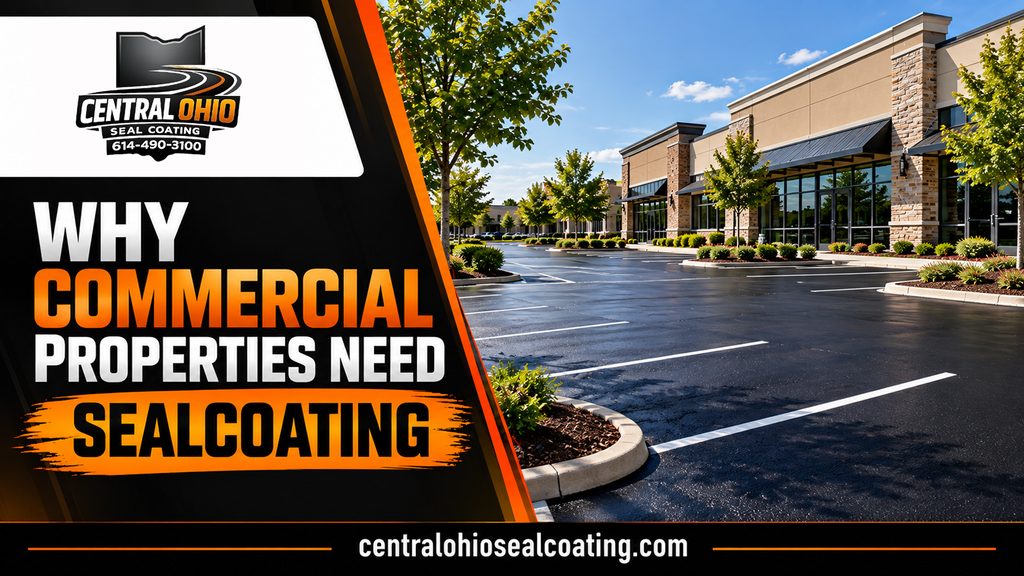
Commercial asphalt surfaces experience continuous wear from vehicles, changing weather, and regular property use. Without proper maintenance, the pavement can fade, become brittle, develop cracks, and gradually require more extensive repairs. Ohio’s seasonal temperature changes and winter freeze-thaw cycles make timely pavement maintenance particularly important.
Central Ohio SealCoating provides commercial sealcoating services designed to help property owners and managers preserve asphalt surfaces, improve curb appeal, and plan maintenance before minor surface deterioration becomes a larger concern.
What Is Commercial Sealcoating?
Commercial sealcoating is the application of a protective coating over an existing asphalt surface. The coating helps limit the effects of sunlight, water penetration, oxidation, and certain vehicle fluids. It also restores a darker, more uniform appearance to weathered asphalt.
Commercial sealcoating is commonly used on:
- Retail and shopping center parking lots
- Office building parking areas
- Apartment complexes and condominium communities
- Warehouses and industrial facilities
- Churches, schools, and community properties
- Private access roads and other commercial asphalt surfaces
Sealcoating works best when the asphalt is structurally sound and properly prepared. It is a preventive maintenance treatment, not a replacement for repairing potholes, severe cracking, drainage problems, or a failing pavement base.
1. Protects Asphalt From Ohio’s Changing Weather
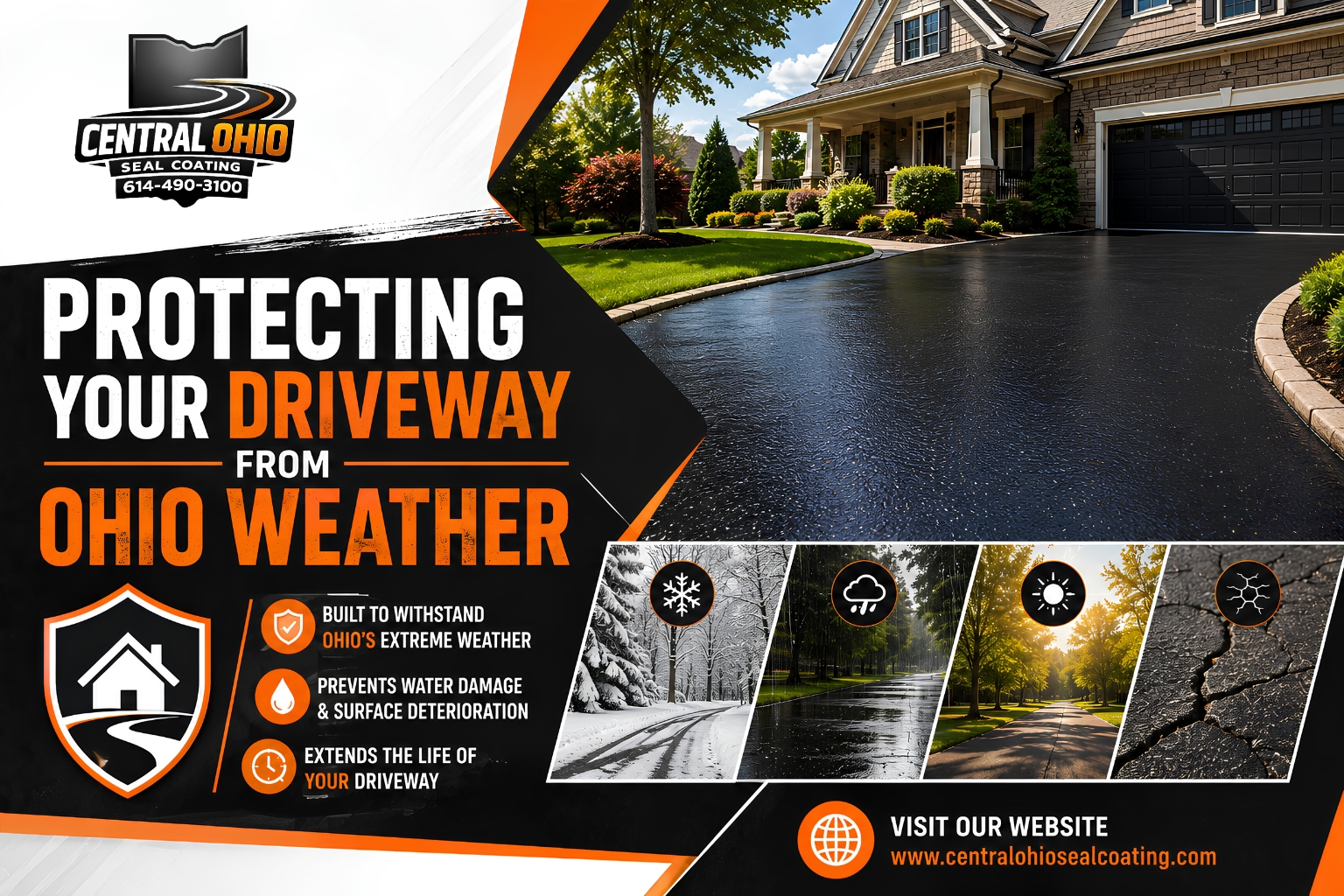
Ohio’s weather can be challenging for commercial asphalt. Pavement is exposed to summer heat, sunlight, rain, falling temperatures, snow, and winter freeze-thaw cycles. Over time, these conditions can contribute to surface deterioration, particularly when asphalt is already aging or has untreated cracks.
Sealcoating adds a protective surface layer that helps reduce exposure to several common causes of asphalt wear.
Reduces moisture penetration
Water is one of the main concerns for asphalt pavement. When moisture enters cracks or other openings, it can weaken underlying pavement layers. During cold weather, trapped water may freeze and expand, contributing to further damage.
A properly applied sealcoat helps limit water penetration through the asphalt surface. However, existing cracks and drainage problems should be addressed separately before the coating is applied.
Slows oxidation and surface aging
Sunlight and oxygen gradually affect the asphalt binder that holds pavement materials together. As the binder ages, asphalt can lose flexibility, fade from black to gray, and become more susceptible to cracking.
Sealcoating helps protect the surface from oxidation and weathering, supporting a preventive maintenance strategy for commercial properties.
2. Maintains a Professional Appearance
A commercial property’s exterior influences how customers, employees, tenants, and visitors experience the site. A faded, uneven-looking parking lot can make a property appear neglected, even when the building itself is well maintained.
Commercial sealcoating helps restore a dark, consistent finish across suitable asphalt surfaces.
Benefits for property appearance include:
- Improved curb appeal: A refreshed parking lot creates a cleaner first impression.
- More uniform pavement color: Sealcoating helps reduce the faded appearance of aging asphalt.
- Clearer pavement markings: Fresh striping applied after the sealcoat has properly cured can make parking spaces and traffic markings easier to see.
- A more maintained property: Consistent pavement care supports the overall appearance of a business or managed facility.
For shopping centers, office buildings, apartment communities, and other customer-facing properties, maintaining the parking area can be an important part of presenting a professional environment.
3. Helps Reduce Long-Term Pavement Maintenance Needs
Commercial parking lots are exposed to repeated vehicle movement, turning tires, braking, and occasional fluid spills. If asphalt is left without suitable maintenance, surface deterioration can progress and lead to more extensive repair requirements.
Sealcoating supports preventive maintenance by helping protect asphalt before substantial surface damage develops.
For property owners, this means a maintenance plan can focus on addressing wear early rather than waiting until the pavement requires more disruptive work.
A well-planned maintenance program may include:
- Routine pavement inspections.
- Timely crack filling.
- Patching damaged sections.
- Cleaning debris and addressing vegetation along pavement edges.
- Applying sealcoating when the asphalt’s condition and previous maintenance history indicate it is appropriate.
- Monitoring drainage and areas that receive heavy traffic.
Sealcoating does not eliminate the need for repairs or guarantee that asphalt will never deteriorate. Its value comes from using the treatment at the appropriate stage and combining it with other necessary maintenance work.
4. Provides Protection Against Vehicle Fluids
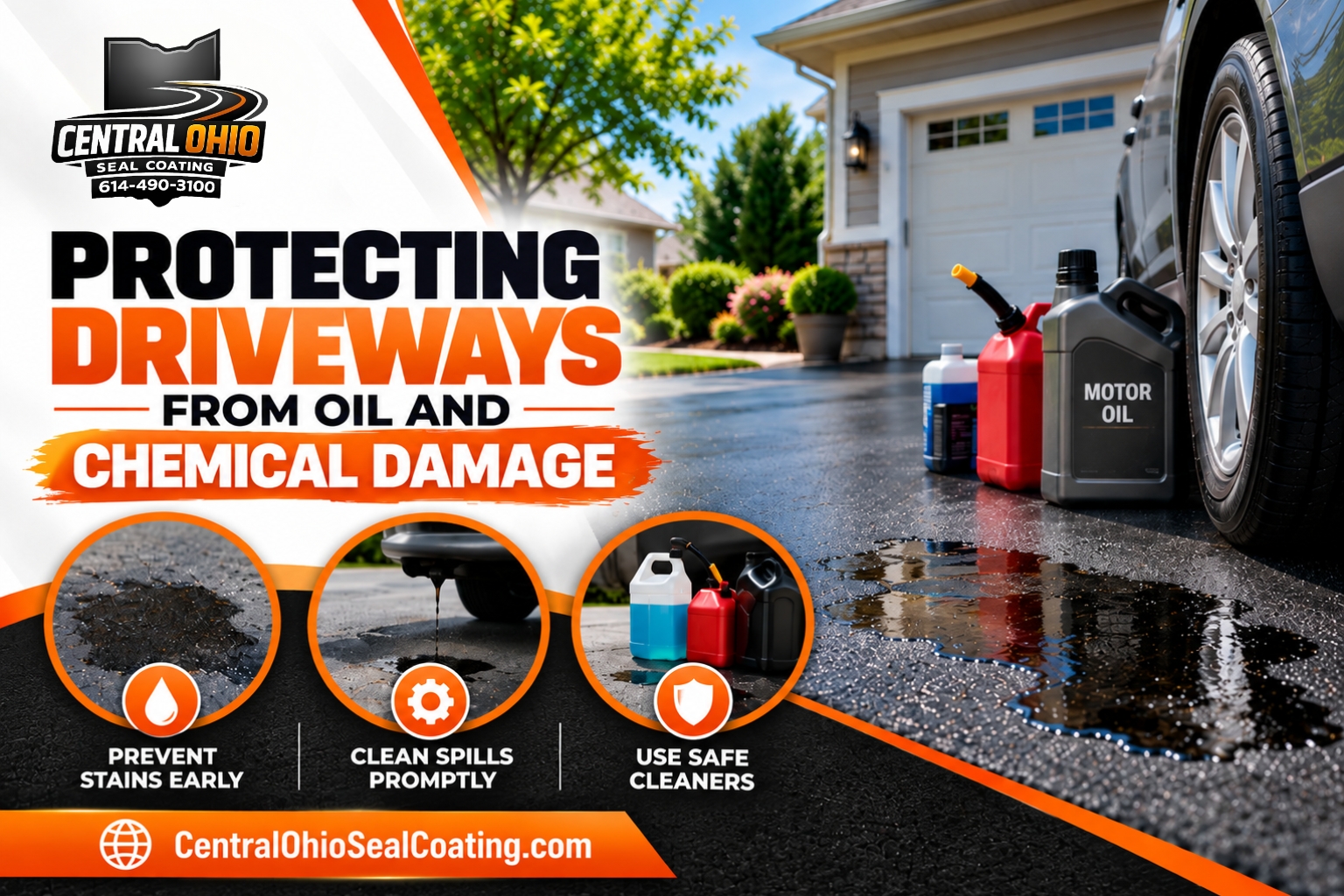
Commercial parking areas regularly accommodate cars, delivery vans, service vehicles, and trucks. These vehicles may leave behind oil, fuel, and other fluids that can affect unprotected asphalt.
Sealcoating provides a protective barrier that helps limit the penetration of certain vehicle fluids into the pavement surface. This can be particularly useful in parking areas with frequent vehicle activity.
However, sealcoating should not be treated as a complete solution for chemical exposure. Spills should be addressed promptly using appropriate cleanup procedures, and areas where asphalt has already softened or deteriorated may need repairs before coating.
Properties that experience frequent deliveries, vehicle queuing, or concentrated traffic should pay particular attention to pavement condition in those areas.
5. Supports Better Parking Lot Maintenance and Striping
A commercial parking lot needs to do more than provide a place for vehicles. It should support organized traffic movement, visible parking spaces, and convenient access to entrances and loading areas.
Sealcoating can form part of a broader parking lot maintenance project. After the coating has cured according to the product requirements and weather conditions, property managers may arrange for pavement markings to be renewed.
This can help improve the visibility of:
- Individual parking spaces.
- Directional arrows and traffic lanes.
- Pedestrian crossings.
- Reserved parking spaces.
- Loading and service areas.
- Accessible parking spaces and associated markings, where required.
Sealcoating itself does not establish compliance with accessibility requirements or correct a poorly designed traffic layout. Property managers should ensure that markings, signs, and parking arrangements meet applicable requirements.
6. Helps Commercial Properties Plan Maintenance More Effectively
Commercial property managers often need to coordinate maintenance around tenants, customers, employees, deliveries, and daily business operations. Waiting until extensive pavement damage develops can make planning more difficult.
A scheduled sealcoating program helps property owners identify suitable maintenance periods and coordinate work before the asphalt deteriorates further.
For example, a property manager may arrange pavement inspections during routine facility reviews, identify sections needing crack filling or patching, and schedule sealcoating during a suitable period of warm, dry weather.
Larger parking lots may also be suitable for phased work, where sections are maintained separately to help preserve access to the rest of the property. The feasibility of this approach depends on the property’s layout, traffic needs, weather, and the contractor’s work plan.
What affects the timing of commercial sealcoating?
Several factors determine when a commercial property should be sealcoated:
- Pavement condition: Faded but structurally sound asphalt may be a good candidate, while severely damaged pavement may need repairs first.
- Traffic volume: Frequently used parking lots may experience faster surface wear.
- Weather exposure: Sunlight, moisture, and seasonal temperature changes affect pavement aging.
- Previous maintenance: The type and timing of earlier treatments influence the next suitable application.
- Product requirements: Sealcoat products need appropriate surface conditions and sufficient time to cure.
There is no single schedule that suits every commercial property. A pavement assessment can help determine the appropriate timing based on the asphalt’s actual condition.
7. Which Commercial Properties Benefit From Sealcoating?
Different commercial properties have different traffic patterns and maintenance priorities. Sealcoating can be useful for many types of asphalt surfaces when the pavement is in suitable condition.
| Property type | Common pavement concern | How sealcoating helps |
|---|---|---|
| Retail centers | Customer traffic and appearance | Refreshes pavement and helps protect the surface |
| Office buildings | Long-term surface aging | Supports routine preventive maintenance |
| Apartment communities | Frequent resident and visitor traffic | Helps maintain common parking areas |
| Warehouses | Repeated vehicle movements | Helps protect suitable asphalt surfaces from weathering |
| Schools and churches | Periodic high-volume parking | Supports planned pavement upkeep |
| Industrial facilities | Vehicle fluids and concentrated traffic | Helps limit certain surface exposures when combined with proper maintenance |
The correct approach depends on the condition, construction, drainage, and use of each paved area. Properties with significant structural damage may require more extensive work before sealcoating is appropriate.
8. What Happens When Commercial Asphalt Is Left Unmaintained?
When property owners postpone pavement maintenance, small surface issues may become more difficult to manage. The exact progression varies, but common warning signs include fading, open cracks, loose aggregate, potholes, and localized depressions.
Ignoring these warning signs can make it harder to distinguish between surface wear and deeper structural problems.
Potential consequences include:
- Water entering cracks and contributing to further pavement deterioration.
- Increasing areas of cracking or surface breakup.
- A less professional appearance around entrances and parking spaces.
- More complicated maintenance planning when damaged areas expand.
- The need for patching, resurfacing, or reconstruction in areas where deterioration has progressed.
Sealcoating is most useful when applied before serious damage develops. It should not be applied over major defects as a substitute for proper repairs.
9. The Commercial Sealcoating Process
Proper preparation and application are essential for a successful sealcoating project. Commercial lots often have different surface conditions, traffic demands, and access requirements, so the work should be planned around the property’s needs.
Step 1: Inspect the asphalt
The pavement should be assessed for fading, cracks, potholes, drainage concerns, oil contamination, and other signs of deterioration. This helps determine whether the surface is suitable for sealcoating or needs additional work.
Step 2: Prepare the surface
Dirt, leaves, loose debris, and other contaminants should be removed so the coating can adhere properly. Oil spots and other problem areas may require additional preparation.
Step 3: Complete necessary repairs
Cracks, potholes, and damaged pavement should be evaluated and repaired using suitable methods before the sealcoat is applied. Structural problems may require more extensive treatment.
Step 4: Apply the sealcoat
The coating is applied using an appropriate method and in accordance with the product specifications. Suitable weather and surface conditions are important for proper application.
Step 5: Allow adequate curing time
The treated area must remain closed to traffic for the required period. Curing time depends on the product, temperature, humidity, and other environmental conditions.
Step 6: Review the completed surface
Before reopening the area, the property manager or contractor should confirm that the coating has cured sufficiently and that the work area is ready for use. Striping can then be coordinated if included in the maintenance plan.
10. Sealcoating vs. Asphalt Repair and Resurfacing
Commercial property owners should understand the difference between preventive sealcoating and treatments designed to repair damaged pavement. Choosing the right service helps ensure that maintenance addresses the actual problem.
| Pavement treatment | Primary purpose | Best suited for |
|---|---|---|
| Sealcoating | Protects and refreshes the asphalt surface | Structurally sound pavement showing normal surface aging |
| Crack filling | Seals suitable cracks to help limit water entry | Asphalt with repairable cracks |
| Asphalt patching | Repairs localized damaged sections | Potholes and isolated pavement failures |
| Asphalt resurfacing | Adds a new asphalt layer after appropriate preparation | Pavement needing broader surface renewal where the underlying structure is suitable |
| Reconstruction | Rebuilds failed pavement layers | Extensive structural failure or major base problems |
These treatments are not interchangeable. For example, sealcoating will not correct a failed base, resolve an underlying drainage problem, or restore the structural strength of severely damaged asphalt. A professional assessment can help determine which treatment, or combination of treatments, is appropriate.
11. How Central Ohio SealCoating Helps Commercial Property Owners
Commercial pavement maintenance requires more than applying a coating. Property owners need to understand the current condition of their asphalt, identify repairs that should come first, and schedule work under suitable conditions.
Central Ohio SealCoating offers commercial sealcoating services in Columbus, Ohio, to help property owners and managers maintain suitable asphalt surfaces. Its commercial service focuses on protecting pavement, improving appearance, and supporting ongoing parking lot maintenance.
When planning a project, commercial property managers should consider:
- The current condition of the asphalt and any necessary repairs.
- Areas with high traffic or recurring surface deterioration.
- The weather window needed for application and curing.
- How parking and vehicle access will be managed during the work.
- Whether pavement markings need to be renewed afterward.
- A practical maintenance schedule based on the property’s needs.
A site-specific assessment helps establish whether sealcoating is the right next step and whether other repairs should be completed first.
Frequently Asked Questions
How often should commercial properties in Ohio be sealcoated?
The appropriate interval depends on pavement condition, traffic volume, weather exposure, previous maintenance, and the sealcoat product. Some commercial parking lots may be considered for sealcoating every few years, but an inspection is a better guide than following a fixed schedule for every property.
Can sealcoating repair cracks and potholes?
No. Sealcoating is a preventive surface treatment. Cracks generally need suitable crack filling, while potholes and other damaged areas require appropriate repairs before the coating is applied.
What is the best time of year for commercial sealcoating in Ohio?
Sealcoating is generally scheduled during warmer, drier weather when the pavement and surrounding conditions meet the product’s application and curing requirements. Property managers should plan ahead to allow sufficient time for the work and for the surface to reopen safely.
Does sealcoating make a commercial parking lot look new?
It can significantly improve the appearance of suitable asphalt by restoring a darker, more uniform finish. However, it will not remove all visible defects or correct uneven pavement, deep cracks, potholes, or structural problems.
Can a commercial parking lot remain open during sealcoating?
The treated areas generally need to be closed during application and curing. Depending on the size and layout of the property, work may sometimes be phased to maintain access to other sections. The plan should be based on site conditions and the contractor’s recommendations.
Is sealcoating suitable for every commercial asphalt surface?
No. It is most appropriate for asphalt that remains structurally sound. Pavement with extensive cracking, potholes, drainage problems, or base failure should be evaluated for repairs or more substantial rehabilitation first.
Conclusion
Commercial sealcoating in Ohio is an important part of maintaining asphalt parking lots and other commercial paved surfaces. By helping protect against moisture penetration, oxidation, and everyday surface wear, it supports pavement preservation while improving the appearance of business properties. Combined with timely repairs and regular inspections, sealcoating can help property owners manage their asphalt more effectively over time.
For businesses, retail centers, offices, apartment communities, and industrial facilities, the key is to maintain pavement before minor deterioration becomes a larger problem. Central Ohio SealCoating can help commercial property owners in Columbus and surrounding Central Ohio communities evaluate their asphalt maintenance needs and determine whether sealcoating is appropriate for their property. A planned approach to pavement care helps keep commercial spaces looking maintained and ready for everyday use.