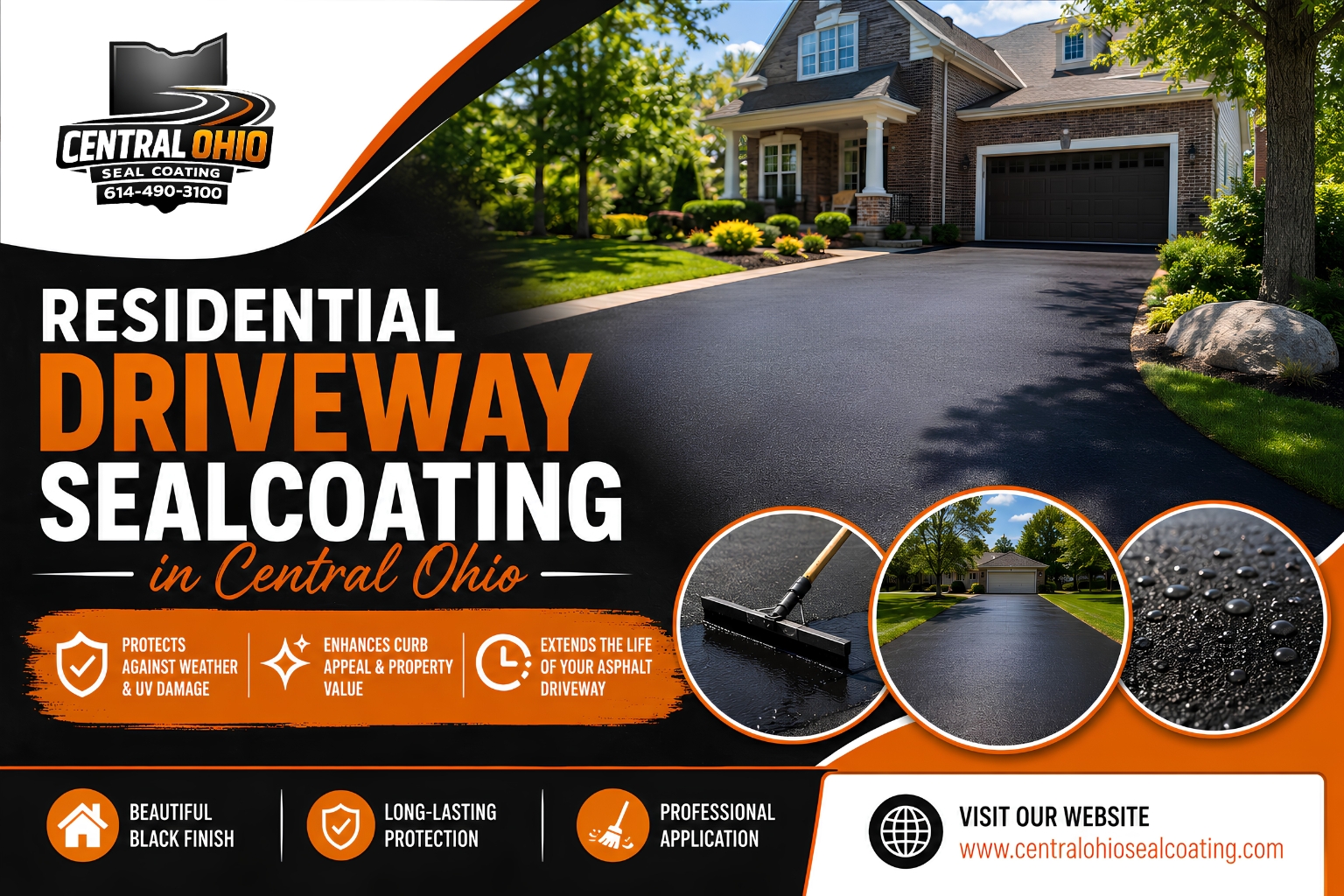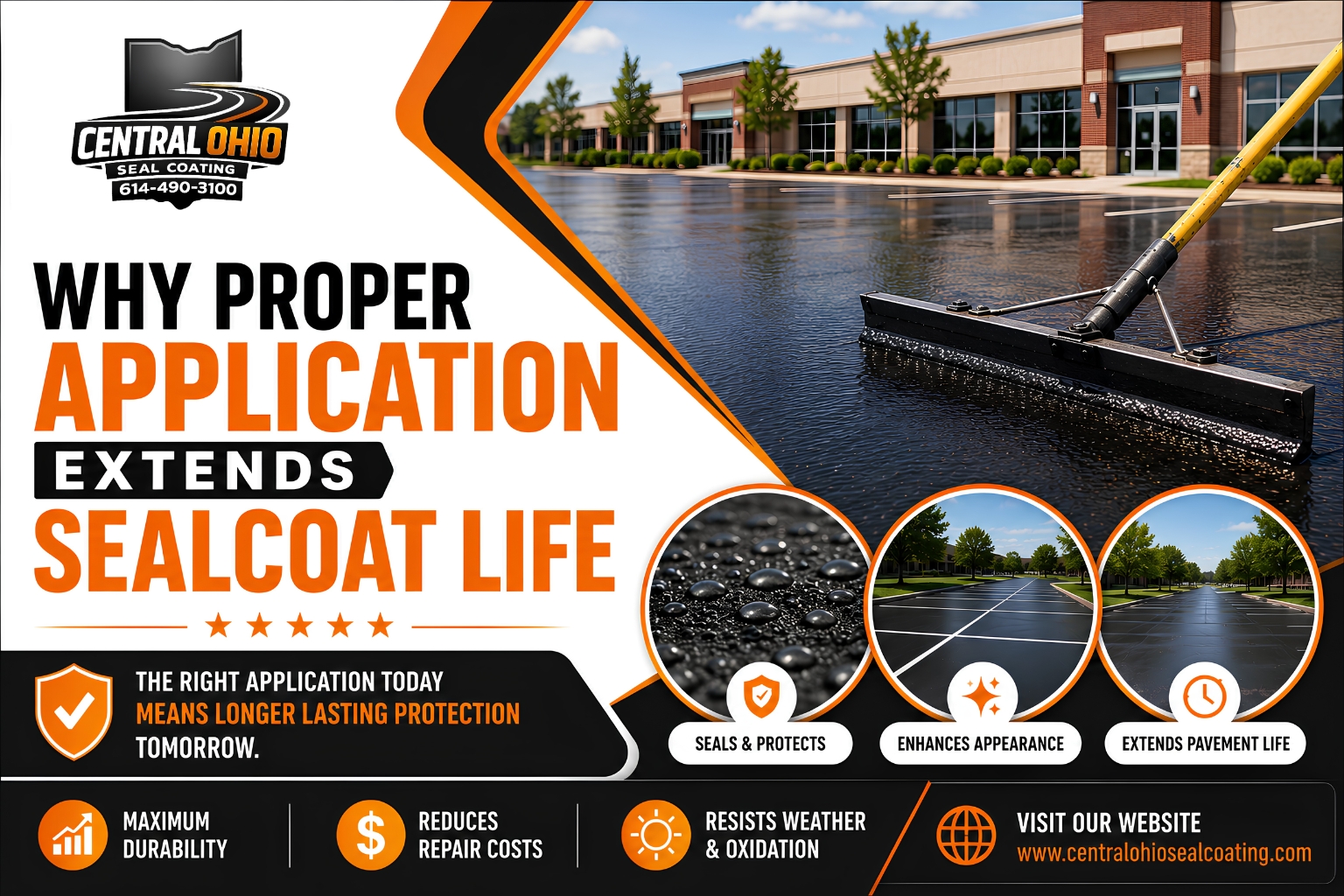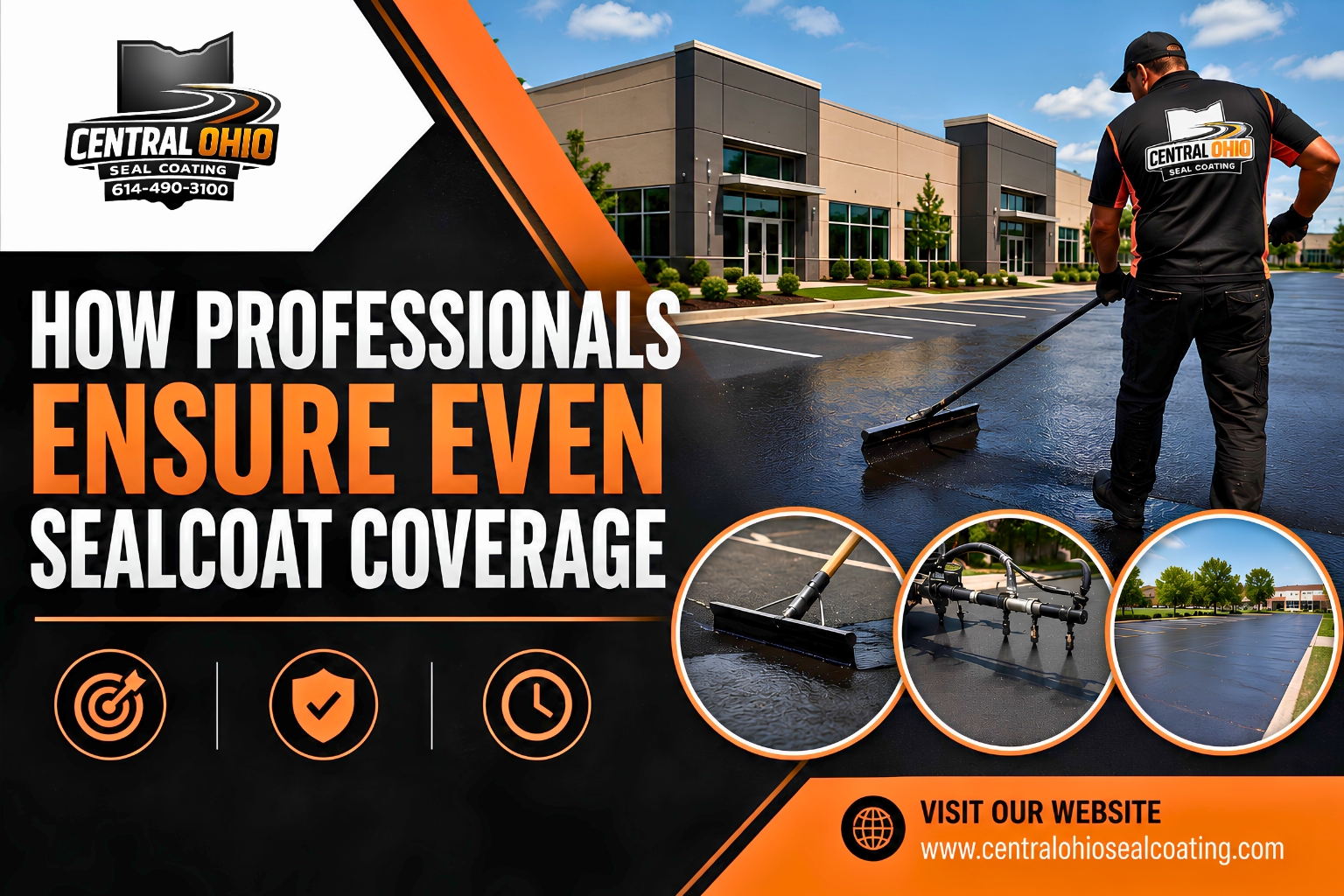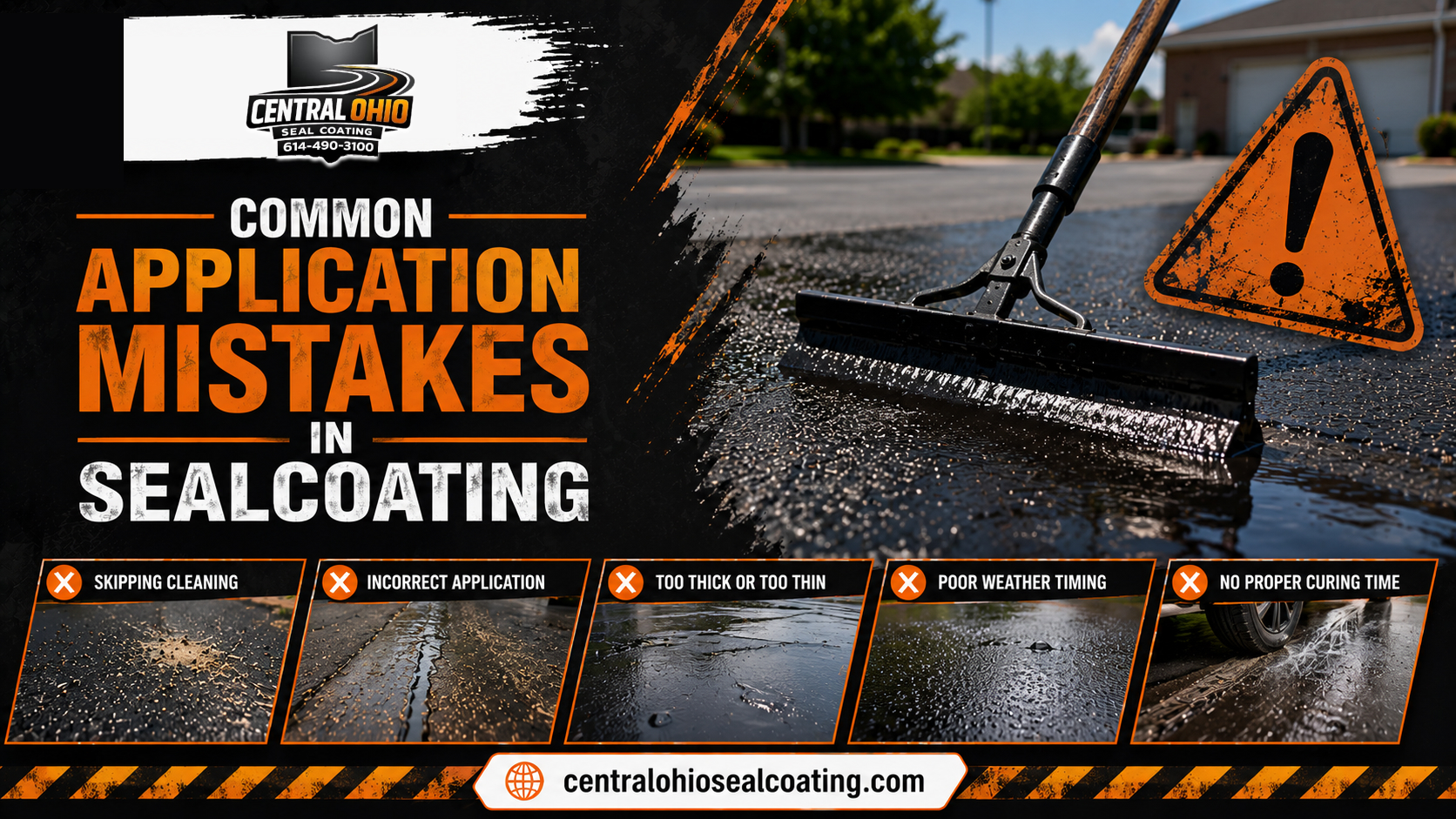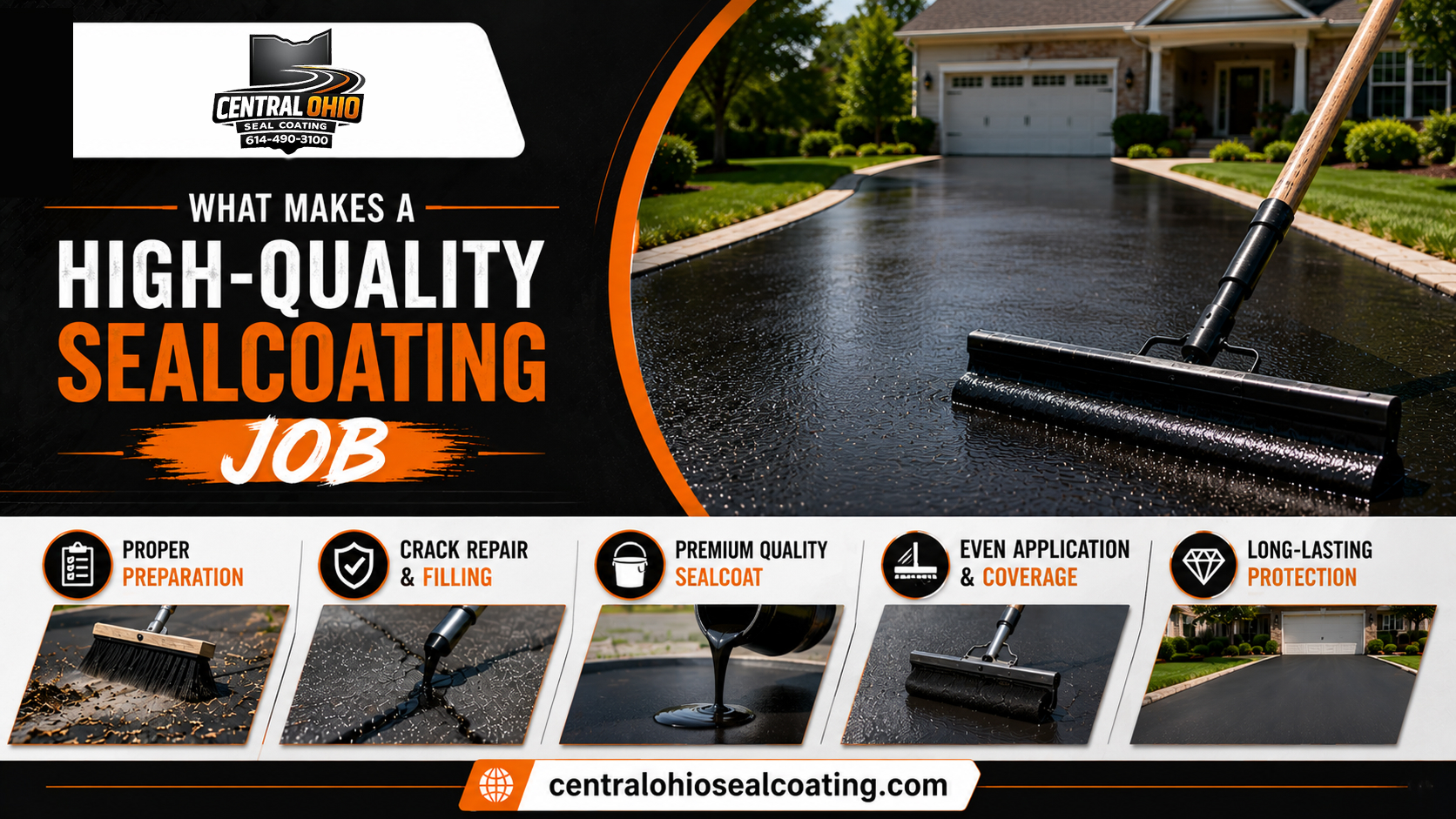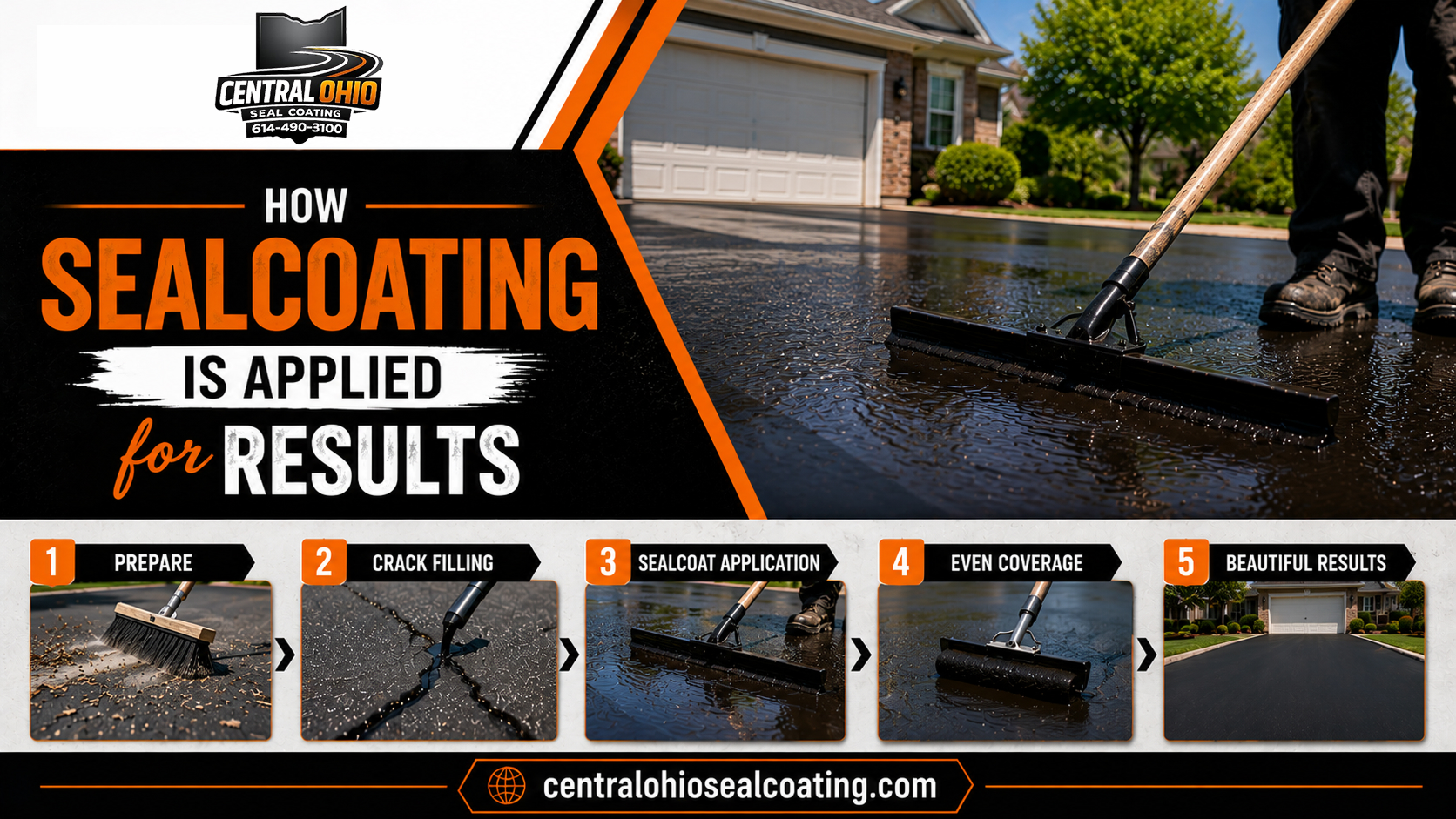

What does a professional sealcoating job actually involve, and why does the process matter so much for long-term pavement condition? The answer is simple: sealcoating works best when the surface is prepared correctly, applied evenly, and given enough time to cure. In Ohio, where weather changes can be tough on asphalt, that careful process helps protect the surface from fading, cracking, moisture damage, and early wear. Central Ohio Seal Coating explains that sealcoating protects asphalt from UV rays, water, oil, and chemicals while improving curb appeal and extending pavement life with the proper sealcoating process Ohio.
For property owners looking for Professional sealcoating Experts in Columbus Ohio, the process should feel organized and deliberate rather than rushed. Central Ohio Seal Coating’s blog and service page show that the company focuses on residential and commercial sealcoating, asphalt patch & repair, and expert asphalt sealcoating services in Columbus, which supports the idea that preparation and application are both part of a professional result.
1. Initial inspection and surface evaluation
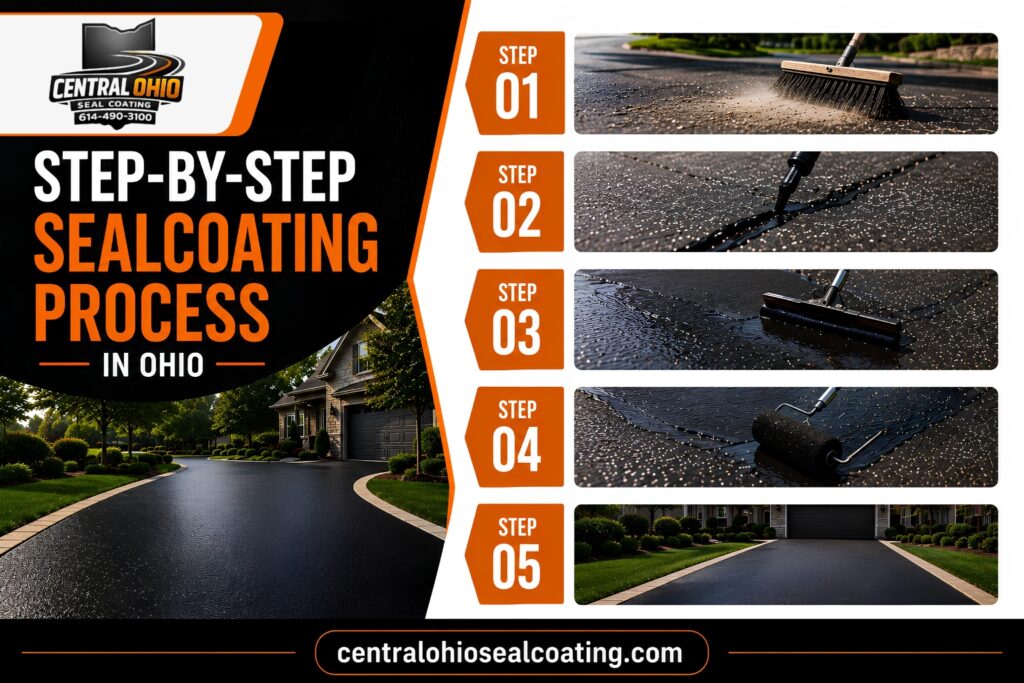
The first step is a close look at the pavement. A contractor checks the condition of the asphalt, looks for cracks, faded sections, soft spots, oil stains, and drainage concerns, and decides whether the surface is ready for sealcoating or needs repair work first. Central Ohio Seal Coating says that its maintenance guidance emphasizes watching for fading, cracking, roughness, and water absorption, which are all signs that the surface needs attention before deterioration spreads.
This step matters because sealcoating is a protective layer, not a structural repair. If the pavement already has serious damage, the crew may need to address those issues before sealing so the new coating performs well and looks even. That is one reason a careful inspection is part of the process rather than an optional extra.
2. Cleaning the surface thoroughly
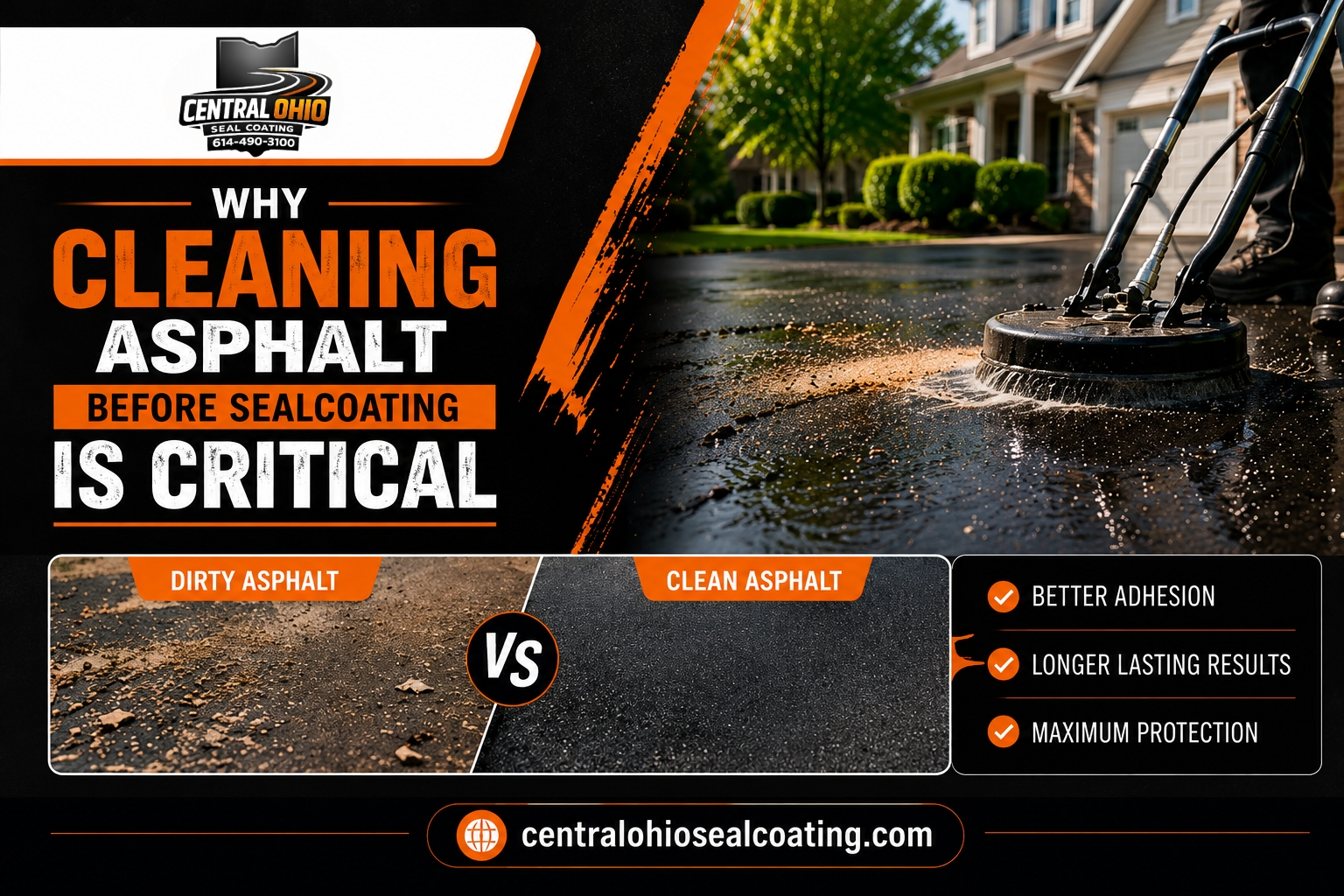
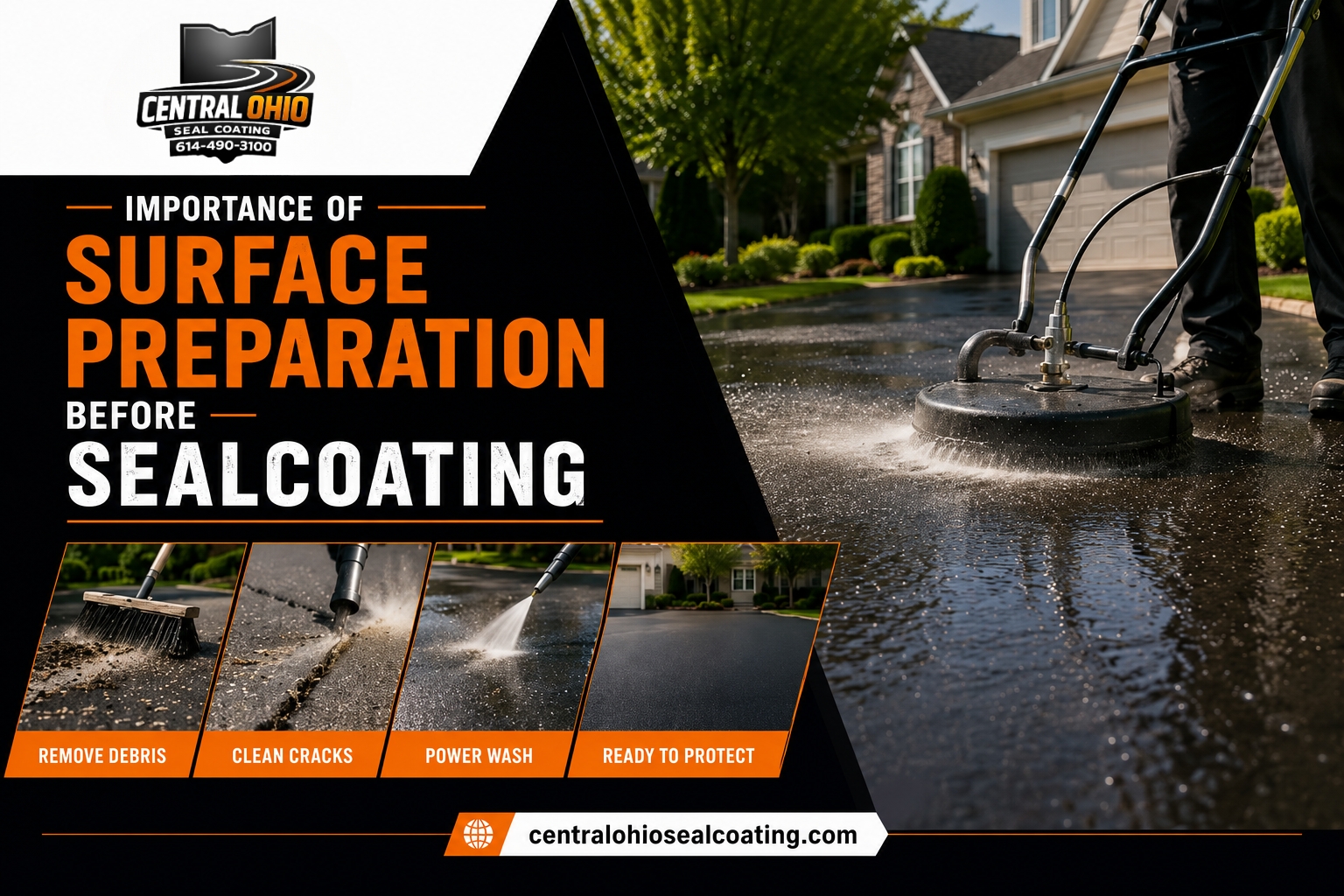
Sealcoating only adheres well when the asphalt is clean and dry. The pavement must be swept, blown off, and cleared of dirt, leaves, loose stones, and other debris before the coating is applied. General sealcoat guidance notes that a clean, dry surface is essential for proper adhesion, and poor preparation can lead to weaker results.
This step is especially important in Ohio because debris and moisture can linger after rain, snowmelt, or seasonal wind. If the surface is not clean, the coating may not bond evenly, and if it is not dry, adhesion can fail. A well-prepared surface helps the finish look smoother and last longer.
3. Repairing cracks and weak areas
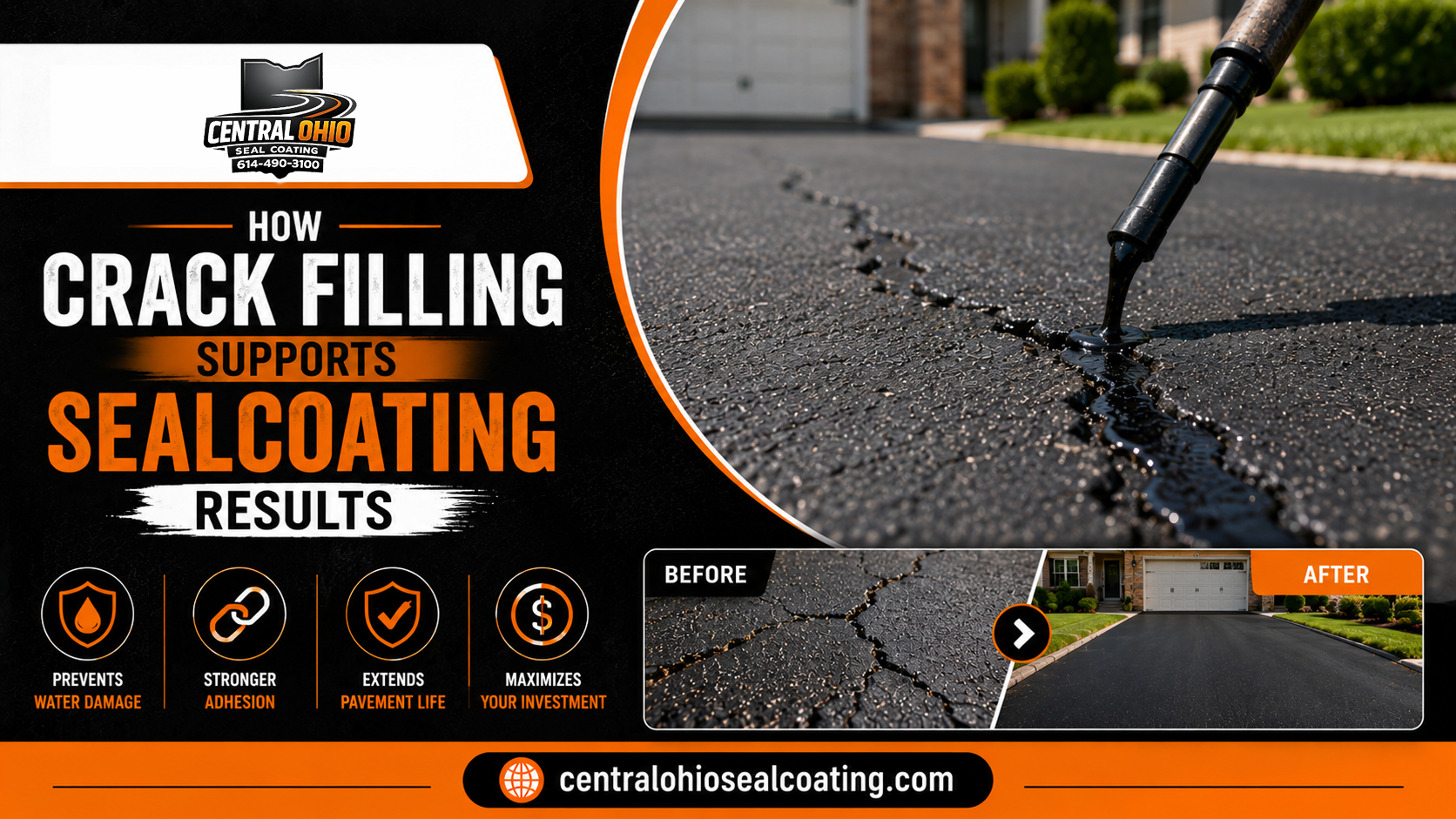
Before sealcoating begins, cracks should be filled and damaged areas should be addressed. Sealcoating is designed to protect the surface, but it cannot bridge deeper structural failures on its own. Central Ohio Seal Coating specifically warns that without proper maintenance, small issues can grow into larger repairs or replacement later.
Filling cracks first is important because open cracks let water into the pavement structure. In Ohio, trapped moisture can freeze and expand during winter, which makes small cracks grow larger and increases the risk of potholes and surface failure. Sealcoat process guidance also emphasizes that the pavement should be properly prepared before the sealer is applied.
4. Protecting adjacent surfaces and planning the work area
Before the coating is applied, the work area is usually laid out so adjacent concrete, landscaping, buildings, and traffic routes are protected. This is part of a clean, professional job because sealcoating is meant to stay on the asphalt only. Good planning also helps the crew work in sections if needed so the property can remain safer and more organized during the project.
For commercial properties, this planning matters even more because parking lot access, striping, and customer movement all need to be considered. Central Ohio Seal Coating serves both residential and commercial properties in Columbus and Central Ohio, so the process has to work for driveways as well as larger paved areas.
5. Mixing and preparing the sealcoat material
Once the surface is ready, the sealcoat material is mixed and kept consistent so it can be applied evenly. Sealcoat guidance notes that the material must stay continuously agitated so the mixture remains uniform during application. That matters because an uneven mix can lead to streaks, thin spots, or a finish that wears poorly.
The quality of the material also affects how the finished pavement looks. Central Ohio Seal Coating explains that sealcoating helps restore a rich black finish and improve curb appeal, which is why even application matters so much. A consistent mix gives the pavement a cleaner, more professional appearance.
6. Applying the first coat
The first coat is applied with spray equipment, a squeegee machine, or hand tools depending on the property and the contractor’s method. Industry guidance on sealcoat application says the sealer may be applied with spray equipment or self-propelled squeegee equipment, and the goal is to lay down a uniform coat across the surface.
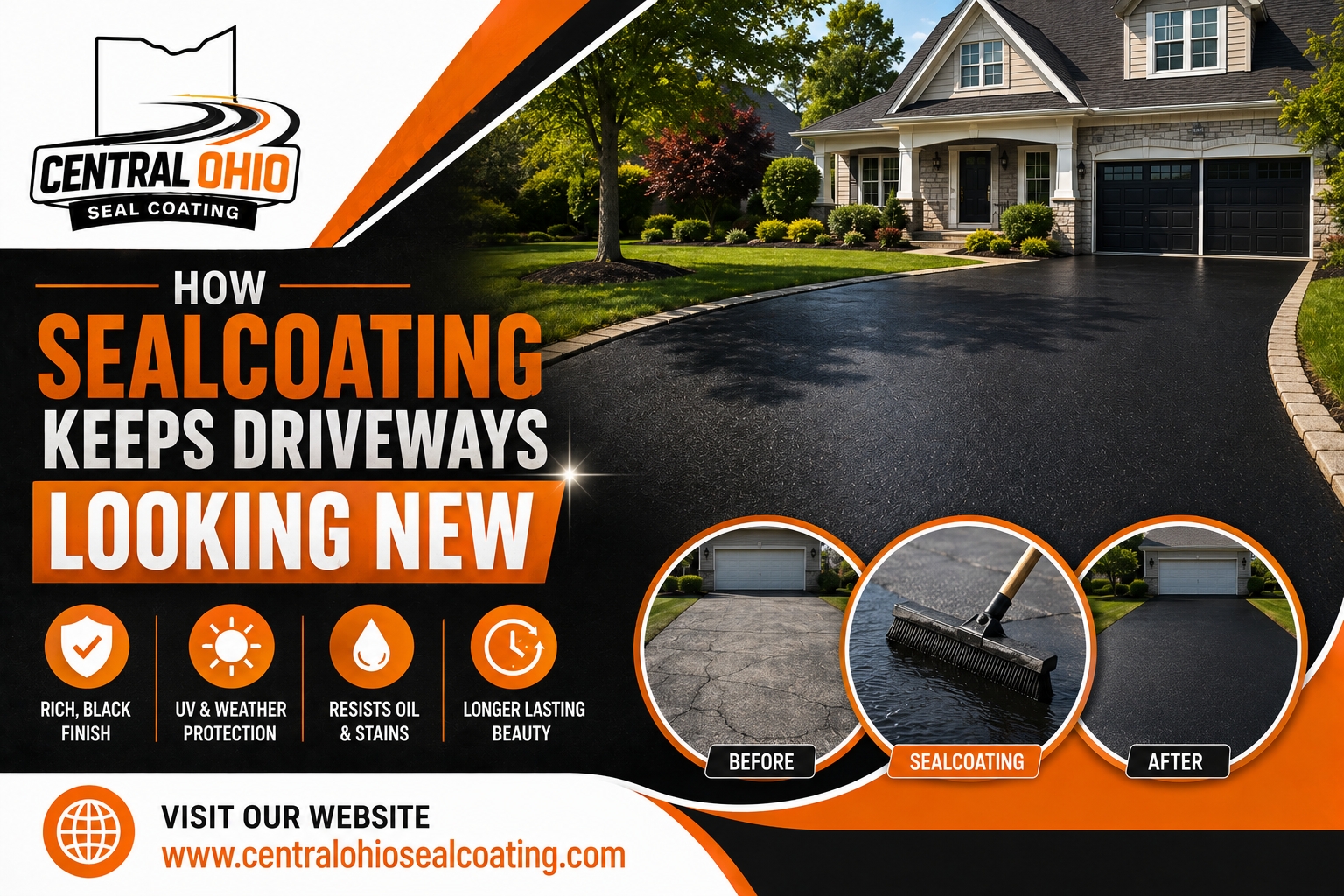
This step is where the visual transformation becomes obvious. A faded gray surface begins to darken again, and the pavement looks cleaner and more uniform. That improvement is one reason homeowners and business owners often ask about sealcoating estimates in Columbus Ohio when they want to improve both appearance and protection.
7. Applying a second coat when needed
Some sealcoat systems use more than one coat. Sealcoating guidance notes that a two-coat application is typical in many situations, which helps create a more consistent protective layer.
A second coat can help improve coverage and uniformity on surfaces that are older, more porous, or exposed to heavy traffic. In Ohio, where weather pressure is constant, that extra layer can help the pavement keep its darker color and resist moisture intrusion longer. Central Ohio Seal Coating says sealcoating helps protect asphalt from UV rays, water, oil, and chemicals while extending its life and appearance.
8. Curing and drying time
After sealcoating is applied, the surface has to cure before it can handle vehicles again. Sealcoat guidance notes that a properly applied coat typically needs 24 to 48 hours of curing before traffic is allowed back on the surface. That waiting period is important because the coating needs time to settle, harden, and bond properly.
Weather plays a role here too. In Ohio, humidity, rain, and temperature swings can affect drying time, so contractors often plan around conditions that allow the coating to cure properly. Central Ohio Seal Coating’s maintenance advice also notes that Ohio weather is one of the main reasons routine asphalt care is so important.
9. Final inspection and reopening
Once the surface is dry enough, the contractor checks the finish for even coverage, missed spots, and clean edges. This final review ensures that the pavement looks good and that the sealcoat is functioning as intended. If the lot or driveway is part of a commercial property, striping may be refreshed after the sealcoat fully cures so the markings remain clear and visible.
A final inspection is important because a sealcoat job is not just about putting material on the pavement. It is about making sure the surface looks uniform, protects the asphalt underneath, and supports safer long-term performance. Central Ohio Seal Coating’s blog emphasizes that sealcoating helps maintain appearance and reduce future damage, which is why the quality of the final result matters.
What a professional process protects against
A proper sealcoating process helps defend asphalt against UV damage, water intrusion, oil, and chemicals. It also slows oxidation, which is one of the main reasons asphalt fades and becomes brittle over time. Sealcoat guidance states that the surface should be clean and dry for good adhesion, and that a two-coat application may be used with curing time before vehicles return.
In Ohio, that protection matters even more because seasonal weather can make asphalt age quickly. Central Ohio Seal Coating notes that asphalt in this region faces harsh weather conditions and that routine maintenance helps extend pavement life and appearance.
Why professional help matters
A sealcoating job looks simple from the outside, but the best results depend on careful prep, the right material, and proper application timing. That is why many property owners prefer a contractor that understands both the visual and protective sides of the process. Central Ohio Seal Coating’s services include residential sealcoating, commercial sealcoating, and asphalt patch & repair, which shows that the company treats sealcoating as part of a larger pavement-care plan.
Our sealcoating services in Columbus
Central Ohio Seal Coating provides asphalt sealcoating services in Columbus, Ohio for residential and commercial properties, along with asphalt patch and repair services. The company says its work helps protect driveways and parking lots while extending the life and appearance of asphalt pavement. It also highlights expert service, premium materials, and a focus on long-lasting results.
Final thoughts
Sealcoating process Ohio works best when each step is done carefully: inspect the pavement, clean it thoroughly, repair cracks, apply the coating evenly, allow proper curing time, and then reopen the surface only when it is ready. That process helps protect asphalt from fading, moisture, and surface wear while improving curb appeal and longevity. For property owners who want to preserve their pavement through Ohio’s harsh seasons, a professional approach makes a real difference.