
How can businesses maintain safe pavement in Ohio? Maintaining safe pavement in Ohio requires regular inspections, timely asphalt repairs, effective drainage, visible parking lot markings, and preventive maintenance suited to local weather and traffic conditions. Commercial pavement must accommodate customers, employees, delivery vehicles, and pedestrians every day. Cracks, potholes, uneven surfaces, standing water, and faded markings can create avoidable hazards while allowing minor pavement problems to become more extensive.
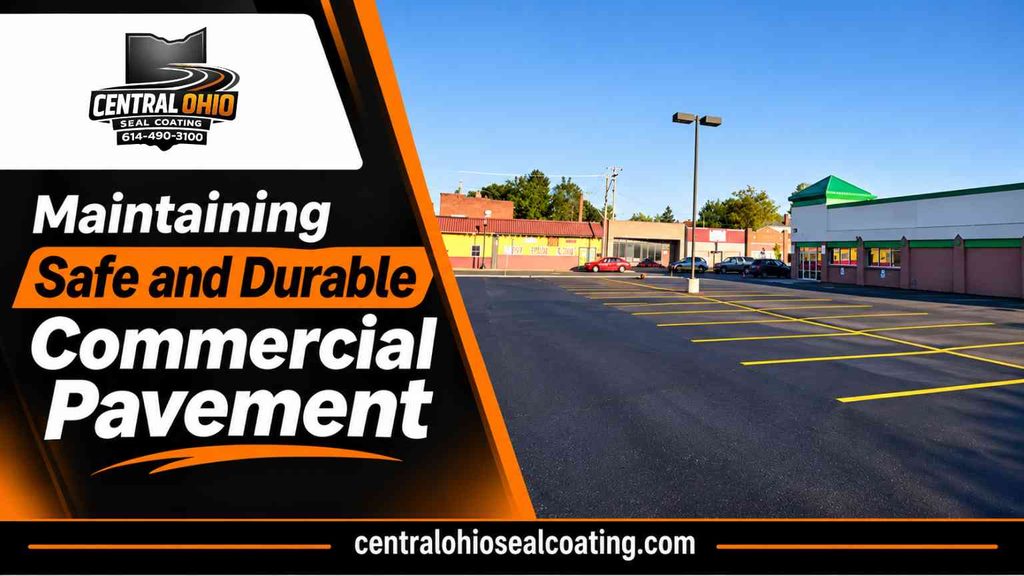
Ohio’s seasonal weather adds another challenge. Rain, summer sunlight, freezing temperatures, snow, and repeated freeze-thaw cycles gradually affect asphalt surfaces. Heavy vehicle traffic can increase wear, particularly around entrances, loading areas, parking spaces, and turning lanes. Without a consistent maintenance plan, even a well-constructed parking lot can become difficult to use safely.
Central Ohio Seal Coating provides commercial pavement maintenance and asphalt services for businesses, property managers, retail centers, office buildings, apartment communities, and other properties throughout Columbus and Central Ohio. Maintaining commercial pavement involves more than keeping it dark and attractive. The surface must remain stable, accessible, and suitable for everyday traffic while receiving the right repairs and protective treatments when needed.
1. Why Commercial Pavement Safety Matters
A commercial parking lot is often the first part of a business property that customers, employees, and visitors encounter. Its condition affects how people enter, leave, park, and move around the property.
Damaged pavement can create hazards for both vehicles and pedestrians. A pothole may cause a driver to make an unexpected maneuver, while an uneven surface or broken edge can create a trip hazard for someone walking between a parking space and a building entrance.
Poor drainage can create standing water, obscure pavement defects, and make walking conditions more difficult during rain. In colder weather, accumulated moisture can contribute to icy areas.
Commercial properties also experience regular vehicle movement. Delivery trucks, employee vehicles, customer traffic, and service vehicles place repeated stress on the pavement. When cracks, settlement, or surface deterioration are ignored, the condition can worsen and require more extensive work.
A consistent maintenance program helps businesses:
- Identify pavement hazards before they become more serious.
- Maintain smoother surfaces for vehicles and pedestrians.
- Reduce water infiltration and premature asphalt deterioration.
- Keep parking spaces and traffic routes clearly organized.
- Improve the appearance and usability of commercial properties.
- Plan repairs before major deterioration disrupts daily operations.
The Ohio Bureau of Workers’ Compensation identifies parking lot conditions as an important part of workplace safety. Its parking lot safety guidance discusses trip-and-fall hazards, vehicle accidents, pedestrian routes, lighting, drainage, and snow and ice management. These considerations make pavement maintenance an important responsibility for commercial property owners.
2. Conduct Regular Pavement Inspections
One of the most effective ways to maintain safe pavement is to inspect it regularly. Waiting until a customer, employee, or delivery driver reports a problem may allow damage to become more extensive.
Commercial properties should be inspected with attention to both pavement condition and how people use the site. A surface that looks acceptable from the entrance may have developing cracks, depressions, or damaged edges in less visible areas.
What should property managers inspect?
Cracks: Look for new, widening, or interconnected cracks. Open cracks can allow water to enter the pavement and contribute to further deterioration.
Potholes: Identify holes, broken asphalt, and loose material that could affect vehicle movement or create hazards for pedestrians.
Uneven areas: Check for depressions, settlement, raised sections, and changes in pavement level, especially around entrances and walkways.
Standing water: Observe the property after rainfall to identify areas where water remains or flows toward buildings and pedestrian routes.
Loose aggregate: Watch for rough surfaces and areas where asphalt material is separating from the pavement.
Faded markings: Check whether parking spaces, directional arrows, pedestrian crossings, and other markings remain easy to see.
Damaged edges: Inspect pavement boundaries, areas near curbs, and transitions between asphalt and sidewalks.
Keep a record of pavement conditions
A simple inspection record can help property managers track developing problems. Record the location of each defect, its visible condition, and whether it has changed since the previous inspection.
Photographs can also help compare the condition of pavement over time. This makes it easier to identify recurring problems and decide which areas need attention first.
Inspections are particularly useful after severe weather, seasonal changes, and periods of unusually heavy traffic.
3. Repair Cracks Before They Develop Into Larger Problems
Cracks are among the earliest visible signs of asphalt deterioration. Although a narrow crack may initially appear minor, water can enter through the opening and affect the supporting pavement layers.
Ohio’s freeze-thaw cycles can make existing cracks more vulnerable. Water entering an opening may freeze and expand during colder conditions, contributing to further deterioration. Repeated vehicle traffic can add stress to the affected area.
Not every crack requires the same treatment. Its width, depth, location, pattern, and surrounding pavement condition should be considered before choosing a repair method.
Common types of asphalt cracking
Longitudinal cracking: These cracks run parallel to the direction of travel. They may be associated with pavement joints, construction conditions, or repeated traffic loading.
Transverse cracking: These cracks extend across the pavement and may develop because of temperature-related movement or other pavement stresses.
Alligator cracking: This pattern consists of interconnected cracks resembling an alligator’s skin. Extensive alligator cracking can indicate structural deterioration rather than a simple surface problem.
Edge cracking: These cracks develop near pavement boundaries. Poor drainage, inadequate edge support, and vehicle movement close to the edge may contribute.
Why timely crack treatment matters
Suitable crack treatment can help reduce water entry and slow further deterioration. However, crack sealing is not a solution for every pavement problem.
Wide interconnected cracking, sinking areas, and damaged supporting layers may require more extensive repairs. Applying sealcoat over significant structural damage will not correct the underlying problem.
A pavement evaluation helps determine whether crack filling, patching, resurfacing, or another treatment is appropriate.
4. Address Potholes and Damaged Asphalt Promptly
Potholes can affect both vehicle movement and pedestrian safety. They may develop when asphalt becomes weakened and pieces of pavement break away under traffic.
Moisture, repeated vehicle loading, pavement aging, and problems with the underlying base can all contribute. Potholes may also form around existing cracks or areas where the asphalt has begun separating from the supporting layers.
Commercial properties should pay particular attention to:
- Potholes near building entrances.
- Damaged areas along frequently used driving lanes.
- Holes near accessible parking spaces and pedestrian routes.
- Repeated failures in delivery and loading areas.
- Deterioration around previous patches.
A localized pothole may be repaired when the surrounding pavement remains stable. However, repeated damage or widespread deterioration may indicate a deeper problem.
Commercial asphalt repair in Columbus Ohio can address cracks, potholes, and damaged pavement sections on commercial properties. Selecting the appropriate repair method helps restore the affected area and maintain dependable access for daily traffic.
Property managers should also consider temporary warnings or access restrictions when a damaged area presents an immediate hazard. Repairs should be planned so that customers, employees, and contractors can move through the property safely.
5. Maintain Smooth and Even Driving and Walking Surfaces
A commercial pavement surface should provide predictable movement for vehicles and pedestrians. Uneven pavement, sudden changes in level, and broken transitions can create unnecessary risks.
Settlement may occur when supporting materials move or lose stability. Poor compaction, moisture exposure, drainage issues, and repeated vehicle loading may contribute.
Other problems include:
- Raised or uneven asphalt patches.
- Depressions that collect rainwater.
- Crumbling pavement edges.
- Uneven transitions between asphalt and concrete.
- Loose material around damaged sections.
- Ruts along frequently used vehicle paths.
These problems should be evaluated based on their severity and cause. A minor surface irregularity may need a localized correction, while extensive settlement may require repairs to the underlying materials.
For larger worn areas where the foundation remains stable, resurfacing may be worth considering.
Asphalt resurfacing in Columbus Ohio can renew suitable commercial pavement without requiring complete reconstruction. The existing surface must be evaluated first to confirm that it can support a new layer and that major structural or drainage problems are not being covered up.
6. Keep Parking Lot Markings Clear and Visible
Safe commercial pavement depends on more than the condition of the asphalt. Drivers and pedestrians also need clear information about where to park, which directions to follow, and where vehicles should stop.
Faded or confusing markings can make a parking lot harder to navigate, particularly during busy periods.
Important markings and designated areas may include:
- Parking space lines.
- Directional arrows.
- Stop lines.
- Pedestrian crossings.
- Accessible parking spaces and access aisles.
- Loading and delivery areas.
- Fire lanes and other restricted areas, where applicable.
Parking lot markings should be reviewed periodically and renewed when they become difficult to see. Their layout should support an organized traffic pattern and provide clearly identifiable pedestrian routes.
Parking lot striping in Columbus Ohio helps businesses define parking spaces, traffic patterns, and pedestrian areas. Clear markings can improve the organization and usability of a commercial property while helping customers and employees navigate the parking lot.
Property managers should also verify that accessible parking spaces, signs, access aisles, and routes meet applicable federal, state, and local requirements. Fresh paint alone does not establish compliance. Changes to parking layouts should be reviewed against the relevant accessibility standards.
7. Protect Pavement With Preventive Sealcoating
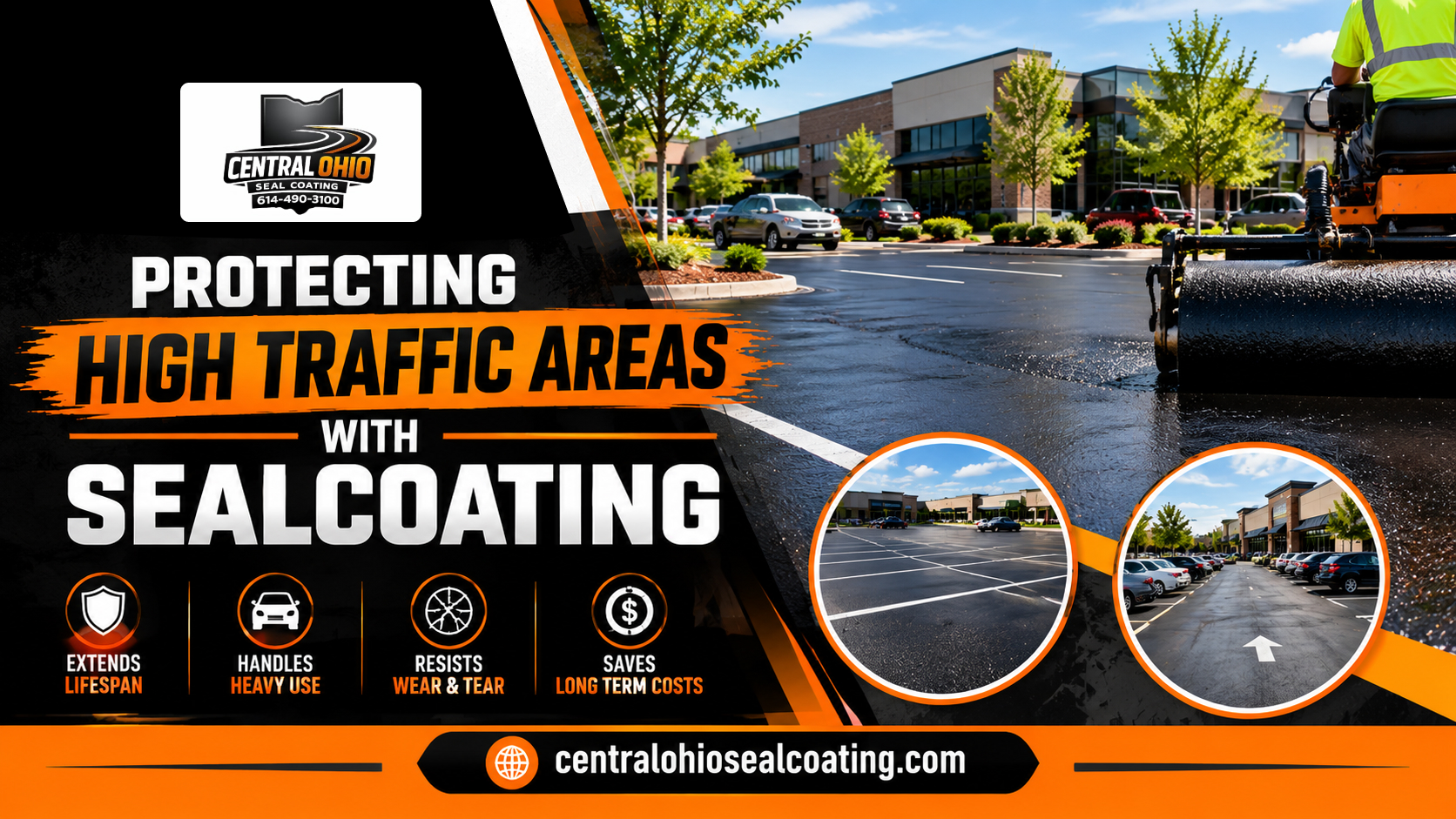
Sealcoating is an important part of maintaining suitable asphalt surfaces. It creates a protective layer over the pavement that helps limit exposure to sunlight, moisture, and everyday wear.
Commercial parking lots face regular traffic from customers, employees, delivery vehicles, and service providers. Over time, sunlight contributes to oxidation, while water and surface contaminants can contribute to deterioration.
For asphalt that remains structurally sound, preventive sealcoating can help maintain its surface condition and appearance.
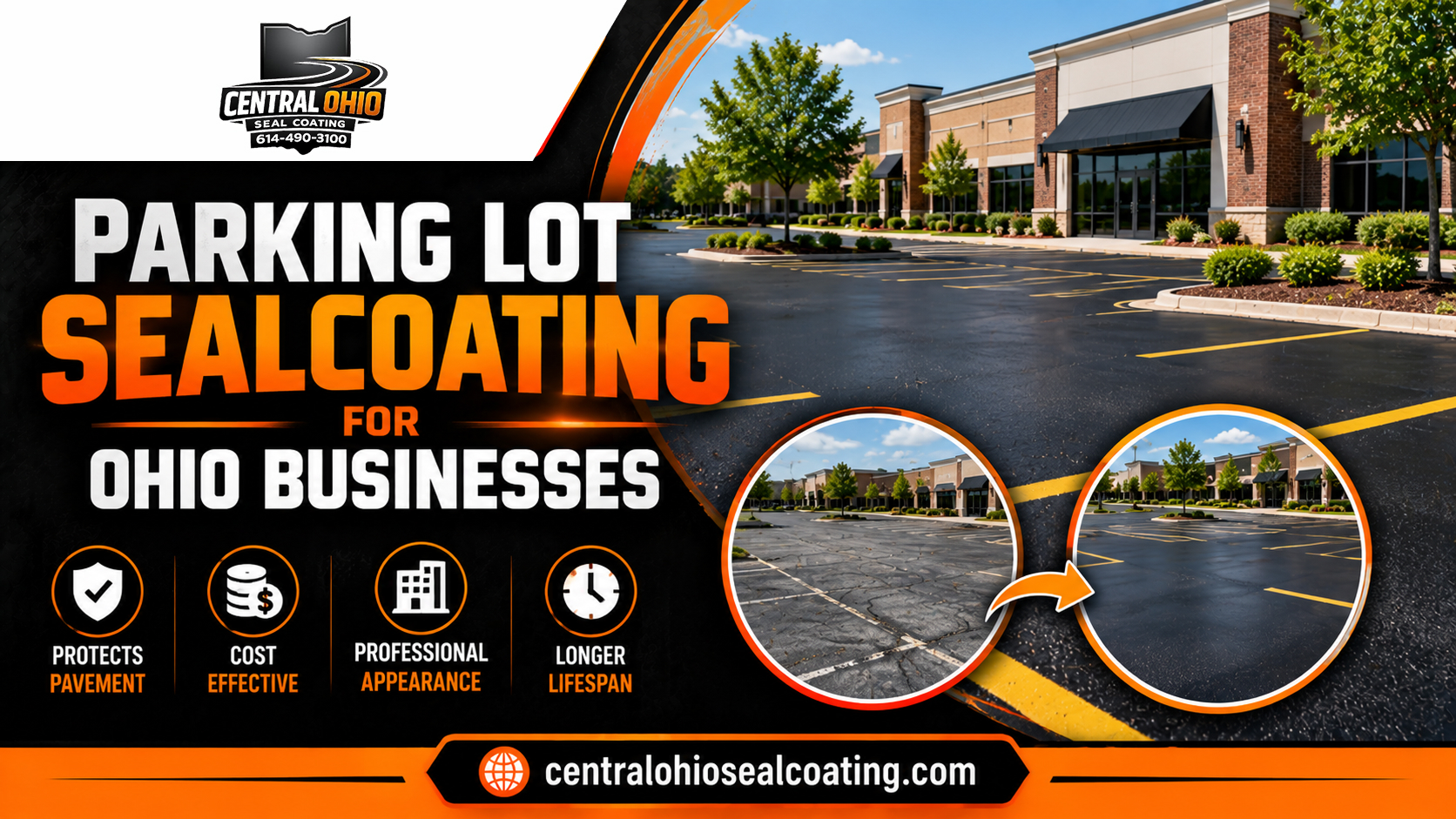
Commercial sealcoating in Columbus Ohio helps protect suitable business parking lots from weather exposure, moisture, UV rays, and everyday traffic wear. It can also restore a more uniform dark appearance, helping commercial properties maintain a clean and professional look.
When is sealcoating appropriate?
Sealcoating is generally suitable when the asphalt remains structurally sound but shows surface aging or wear.
Before application, the pavement should be inspected and prepared. Cleaning, crack treatment, and any necessary localized repairs should be completed as appropriate.
What sealcoating cannot fix
Sealcoating is a protective surface treatment, not a structural repair. It does not correct:
- Deep potholes.
- Widespread interconnected cracking.
- Sinking or unstable pavement.
- Failed supporting base materials.
- Serious drainage or grading problems.
These conditions may require repair, resurfacing, or replacement before a protective coating is considered.
Property owners should also follow the contractor’s guidance on curing time and when vehicles can safely return to the treated area.
8. Improve Drainage to Prevent Standing Water
Effective drainage is essential for safe and durable commercial pavement. Rainwater should move away from the driving and walking surfaces without collecting in depressions or flowing toward building entrances.
Standing water can hide cracks and potholes, inconvenience pedestrians, and contribute to deterioration when moisture enters the pavement.
Drainage problems may result from:
- Incorrect pavement slopes.
- Settled or depressed asphalt.
- Blocked drainage inlets.
- Damaged drainage structures.
- Poorly directed runoff.
- Changes in surrounding landscaping or ground levels.
Property managers should observe the parking lot during and after rainfall. If water repeatedly collects in the same area, the cause should be investigated.
Cleaning accessible drainage grates and keeping surface drainage paths free from debris can help maintain system function. However, persistent ponding may require a closer evaluation of grading, drainage capacity, or pavement settlement.
When planning a parking lot improvement, drainage should be considered alongside the pavement design rather than treated as a separate issue after installation.
9. Prepare Commercial Pavement for Ohio’s Seasonal Weather
Ohio’s weather can create different maintenance challenges throughout the year. Commercial pavement should be inspected and maintained with seasonal conditions in mind.
Spring: Check for winter damage
After winter, inspect for newly formed cracks, potholes, loose asphalt, and drainage problems. Snow and ice may have concealed pavement defects, so a thorough review can identify areas that need attention.
Prioritize damaged sections that affect safe vehicle movement or pedestrian access.
Summer: Plan suitable maintenance work
Warmer and drier weather may provide suitable conditions for sealcoating and other asphalt maintenance, depending on the product and surface requirements.
This is also a useful period to review faded markings and plan maintenance around business operations.
Fall: Address problems before freezing weather
Inspect pavement for open cracks, drainage concerns, and damaged edges before winter arrives. Make sure the property has an appropriate plan for snow removal and ice management.
Winter: Maintain safe access
Snow and ice can make commercial parking lots difficult to use. Businesses should establish clear snow-removal responsibilities and pay attention to areas where water may freeze.
Snow-removal equipment should be operated carefully to avoid unnecessary damage to asphalt, curbs, and surrounding surfaces.
10. Manage Heavy Traffic and High-Use Areas
Commercial pavement must often handle several types of vehicles throughout the day. Customer cars, employee vehicles, delivery trucks, service vehicles, and maintenance equipment place different demands on asphalt.
Some locations experience greater stress than others. These include:
- Delivery entrances.
- Loading and unloading zones.
- Tight turning areas.
- Vehicle queues.
- Main access roads.
- Frequently used parking aisles.
Repeated traffic can contribute to rutting, cracking, and surface deformation, particularly if the pavement structure is unsuitable for the loads it receives.
When planning maintenance or new construction, property owners should consider the types of vehicles using the site and how frequently they travel through each area.
If pavement deterioration repeatedly develops along truck routes or loading zones, a surface-only treatment may not be enough. The condition of the base and overall pavement structure should be assessed before choosing a solution.
11. When Milling or Replacement May Be Necessary
Some commercial pavement problems become too extensive for routine maintenance. Widespread surface wear, repeated repairs, and uneven pavement may require more substantial work.
Milling is one option when the existing pavement has a worn or uneven surface but can be improved through removal of the damaged upper layer. Fresh asphalt can then be installed over a suitable prepared surface.
Asphalt milling in Columbus Ohio can help businesses address worn or uneven asphalt by removing damaged pavement layers before new asphalt installation. The existing pavement and base should be evaluated to determine whether milling and paving are suitable.
When the supporting structure has failed or deterioration extends through multiple layers, more comprehensive reconstruction may be needed. The right approach depends on the extent of the damage and the condition of the underlying materials.
The objective should be to correct the source of deterioration rather than simply install a new surface over unresolved problems.
12. Create a Planned Commercial Pavement Maintenance Schedule
A maintenance schedule helps property managers organize inspections, repairs, and preventive treatments instead of responding only when problems become visible.
A practical schedule should be based on pavement condition, property use, traffic levels, weather exposure, and previous maintenance.
| Maintenance activity | What to review | Main purpose |
|---|---|---|
| Routine inspections | Cracks, potholes, uneven areas, and damaged edges | Identify developing hazards |
| Drainage checks | Standing water, blocked grates, and runoff paths | Reduce water-related problems |
| Crack treatment | Suitable open cracks | Help limit moisture entry |
| Pothole repairs | Localized broken or missing asphalt | Restore affected pavement areas |
| Sealcoating evaluation | Surface oxidation and general asphalt condition | Determine whether protective maintenance is appropriate |
| Marking inspections | Parking lines, arrows, crossings, and accessible spaces | Maintain clear parking and traffic organization |
| Seasonal inspections | Winter damage, summer wear, and drainage changes | Adjust maintenance to local conditions |
| Larger pavement assessment | Extensive cracking, rutting, or settlement | Determine whether milling, resurfacing, or reconstruction is needed |
The schedule should not rely on a single treatment interval for every property. A busy retail parking lot may require more frequent attention than a lightly used private parking area.
A maintenance record also helps property managers track completed work, identify recurring failures, and plan future improvements.
13. Maintain Pedestrian Routes and Accessible Parking Areas
A commercial parking lot should be planned around the needs of everyone using the property, not only drivers.
Pedestrians should have clear and reasonably direct routes between parking spaces, sidewalks, and building entrances. Where vehicles and pedestrians share space, visible markings and suitable traffic organization can help reduce confusion.
Pay particular attention to:
Pedestrian crossings: Crossings should be easy to identify and should connect to appropriate walking routes.
Sidewalk transitions: Changes in level, damaged edges, or uneven connections may create trip hazards.
Accessible parking: Accessible spaces, access aisles, signs, and connecting routes should be maintained according to applicable accessibility requirements.
Speed-control features: Speed bumps or other traffic-calming features should be clearly identified so that they do not become unexpected obstacles.
Lighting: Parking areas and pedestrian routes should receive adequate illumination. Burned-out fixtures and dark areas should be addressed through the property’s lighting maintenance program.
The Ohio Bureau of Workers’ Compensation recommends separating pedestrian routes from vehicle routes where possible, clearly identifying speed bumps, maintaining adequate lighting, and keeping parking areas in good condition. These measures complement pavement repairs and marking maintenance.
14. How Central Ohio Seal Coating Supports Commercial Pavement Maintenance
Maintaining commercial asphalt requires a combination of inspection, suitable repairs, and preventive care. Different properties have different traffic demands, surface conditions, and maintenance needs.
Central Ohio Seal Coating provides commercial pavement services for businesses and property managers throughout Columbus and surrounding Central Ohio communities. Its published commercial services include asphalt repair, milling and paving, parking lot paving, shopping center paving maintenance, resurfacing, and line striping.
For properties with suitable asphalt surfaces, preventive sealcoating can help protect against moisture, sunlight, and everyday wear. When cracks or potholes are present, the affected areas should be assessed and repaired as appropriate before a protective coating is applied.
The company also works with retail centers, office buildings, apartment communities, HOA-managed properties, and other residential and commercial facilities.
A suitable maintenance plan should reflect the property’s condition and operations. For busy commercial sites, work scheduling and curing time are important because vehicles may need to be redirected while pavement maintenance is underway.
Property owners should discuss the work scope, site access, surface preparation, and return-to-use requirements before scheduling a project.
Frequently Asked Questions About Safe and Durable Commercial Pavement in Ohio
What are the most common commercial pavement safety problems?
Common problems include potholes, open cracks, uneven surfaces, standing water, damaged pavement edges, and faded markings. These conditions can affect vehicle movement, pedestrian access, and the overall usability of a parking lot.
How often should commercial pavement be inspected?
Inspection frequency depends on the property’s traffic, pavement condition, and exposure to weather. Regular scheduled inspections, seasonal checks, and reviews after severe weather can help identify developing problems early.
Does sealcoating make commercial pavement safe?
Sealcoating can help protect suitable asphalt surfaces from moisture, UV exposure, and surface wear. However, it does not repair potholes, deep cracks, settlement, or structural damage. Those problems should be addressed separately.
Can potholes create hazards for customers and employees?
Yes. Potholes can affect vehicle movement and create trip hazards for pedestrians. Damaged areas should be assessed and addressed promptly, with temporary warnings or access restrictions considered when necessary.
Why is parking lot striping important?
Clear markings help drivers identify parking spaces, follow traffic routes, and recognize pedestrian crossings and designated areas. Faded or confusing markings can make parking lots harder to navigate.
How does Ohio weather affect commercial asphalt?
Rain can introduce moisture into cracks, while freezing and thawing can contribute to further deterioration. Summer sunlight also contributes to surface oxidation. Seasonal inspections and suitable preventive maintenance help property managers respond to changing conditions.
When should commercial asphalt be resurfaced?
Resurfacing may be appropriate when the pavement surface is worn but the supporting base remains stable. If the foundation has failed or settlement is extensive, more substantial repairs may be needed.
Can sealcoating fix cracks and potholes?
No. Sealcoating is a protective surface treatment. Suitable cracks and potholes need separate repairs before coating, while deeper structural damage may require more extensive work.
How can businesses keep parking lots safer during winter?
Businesses should plan snow and ice removal, maintain drainage paths, monitor areas where water may freeze, and assign clear responsibility for seasonal maintenance. Lighting, pedestrian routes, and pavement condition should also be reviewed.
What types of commercial properties can benefit from pavement maintenance?
Retail centers, office buildings, apartment communities, HOA-managed properties, shopping centers, small commercial facilities, and larger parking areas can all benefit from appropriate inspections and maintenance.
Conclusion: Make Commercial Pavement Safety Part of Routine Property Care
Maintaining safe pavement in Ohio requires more than repairing visible damage. Businesses and property managers should pay attention to the overall condition of asphalt, drainage performance, parking lot markings, pedestrian routes, and seasonal weather risks. Cracks, potholes, uneven surfaces, standing water, and faded markings should be identified and addressed according to their severity.
A planned maintenance approach helps property owners manage developing problems and keep commercial pavement functional for customers, employees, delivery vehicles, and visitors. Suitable repairs, preventive sealcoating, resurfacing, milling, and clear pavement markings each play a role when selected for the right conditions.
Central Ohio Seal Coating provides commercial asphalt maintenance and related pavement services throughout Columbus and Central Ohio. If your parking lot or commercial pavement needs attention, contact Central Ohio Seal Coating at (614) 490-3100 to discuss your property and request an estimate.