
What are the most common sealcoating application mistakes? Even when quality materials are used, common application mistakes can significantly reduce the performance and lifespan of a sealcoat. Poor surface preparation, applying sealcoat in unsuitable weather, uneven coverage, inadequate curing time, or skipping necessary crack repairs can all lead to peeling, premature wear, poor adhesion, and an uneven finish. Understanding these common sealcoating application mistakes helps property owners avoid costly problems and achieve longer-lasting pavement protection.
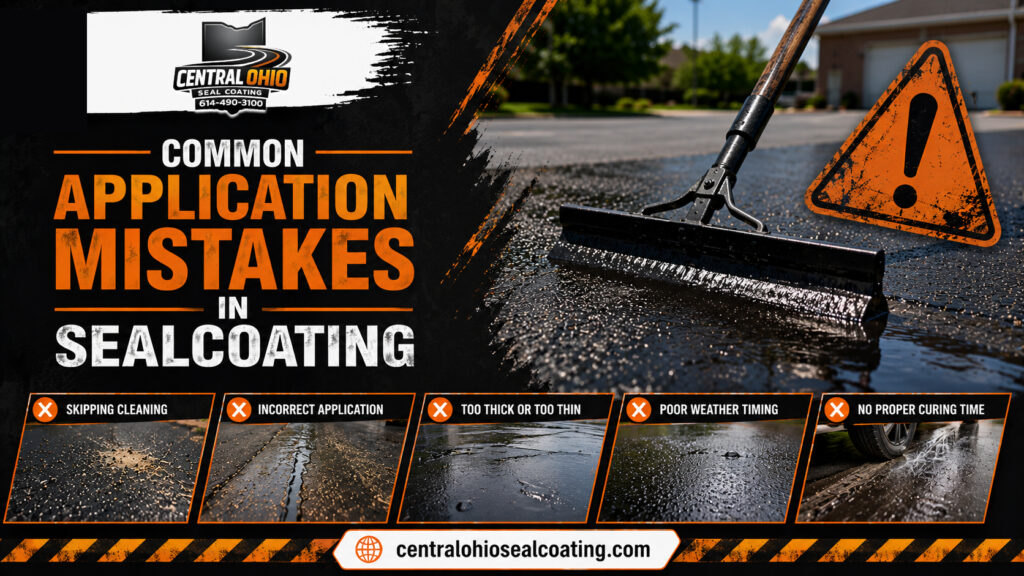
If you’re searching for sealcoating mistakes Ohio, knowing what can go wrong is just as important as understanding the benefits of sealcoating itself. At Central Ohio Seal Coating, every project begins with a detailed inspection, thorough cleaning, crack repair when necessary, and careful application using proven methods. This complete process helps ensure the sealcoat bonds properly and provides reliable protection against Ohio’s changing weather, vehicle traffic, moisture, and oxidation.
Why Proper Sealcoating Application Matters
Sealcoating protects asphalt by creating a protective barrier against environmental damage.
When applied correctly, sealcoating helps:
- Reduce oxidation
- Block moisture penetration
- Protect against UV rays
- Slow surface deterioration
- Improve pavement appearance
- Extend asphalt lifespan
However, these benefits depend entirely on proper preparation and application. Central Ohio Seal Coating notes that sealcoating should always be performed after proper cleaning and crack repair to achieve strong adhesion and long-lasting protection.
Common Sealcoating Application Mistakes
| Mistake | Potential Result |
|---|---|
| Poor Surface Cleaning | Weak adhesion and peeling |
| Skipping Crack Filling | Water continues entering pavement |
| Applying During Poor Weather | Slow curing and coating failure |
| Uneven Application | Inconsistent protection |
| Low-Quality Materials | Shorter sealcoat lifespan |
| Insufficient Drying Time | Tire marks and surface damage |
| Ignoring Oil Stains | Sealcoat fails to bond |
| DIY Application Errors | Unprofessional finish |
1. Poor Surface Preparation
One of the biggest mistakes in sealcoating happens before the application even begins.
Many failures occur because contractors or DIY users do not adequately prepare the pavement.
Professional preparation includes removing:
- Dirt
- Dust
- Sand
- Leaves
- Loose gravel
- Grass
- Mud
- Surface debris
If contaminants remain on the pavement, the sealcoat bonds to the debris instead of the asphalt itself.
Central Ohio Seal Coating identifies thorough surface preparation as one of the most important steps before applying sealcoating because it improves adhesion and long-term durability.
2. Skipping Crack Repairs
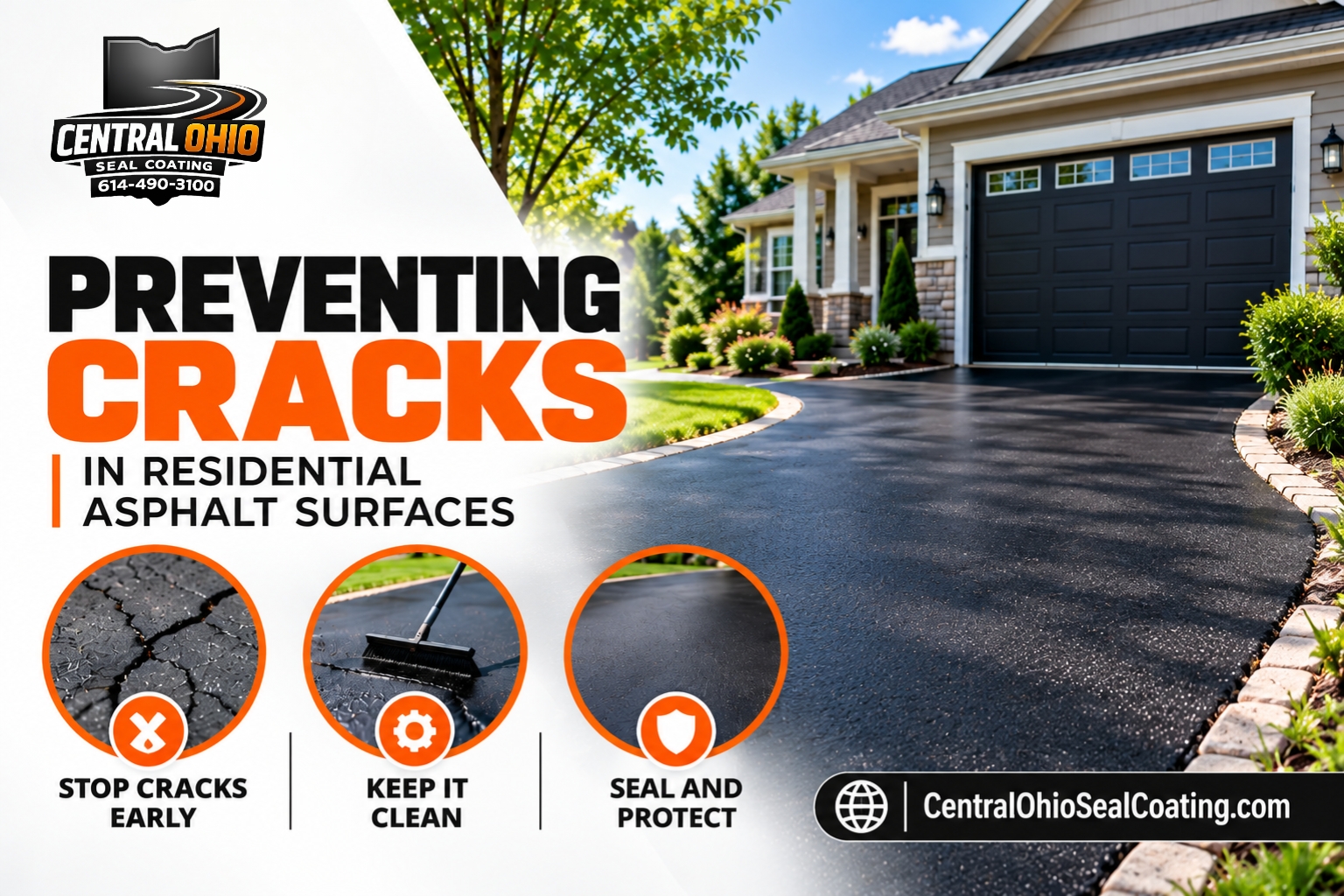
Sealcoating is designed to protect asphalt—not repair structural damage.
Applying sealcoat directly over open cracks is one of the most common mistakes.
Untreated cracks continue allowing:
- Rainwater
- Snow melt
- Dirt
- Chemicals
to penetrate beneath the pavement.
As moisture reaches the base, deterioration continues beneath the newly applied sealcoat.
Professional contractors always inspect the pavement first and repair cracks before applying the protective coating. Central Ohio Seal Coating recommends treating cracks and minor damage before sealcoating for better long-term results.
3. Applying Sealcoating Over Oil Stains
Oil contamination creates one of the weakest bonding surfaces for sealcoating.
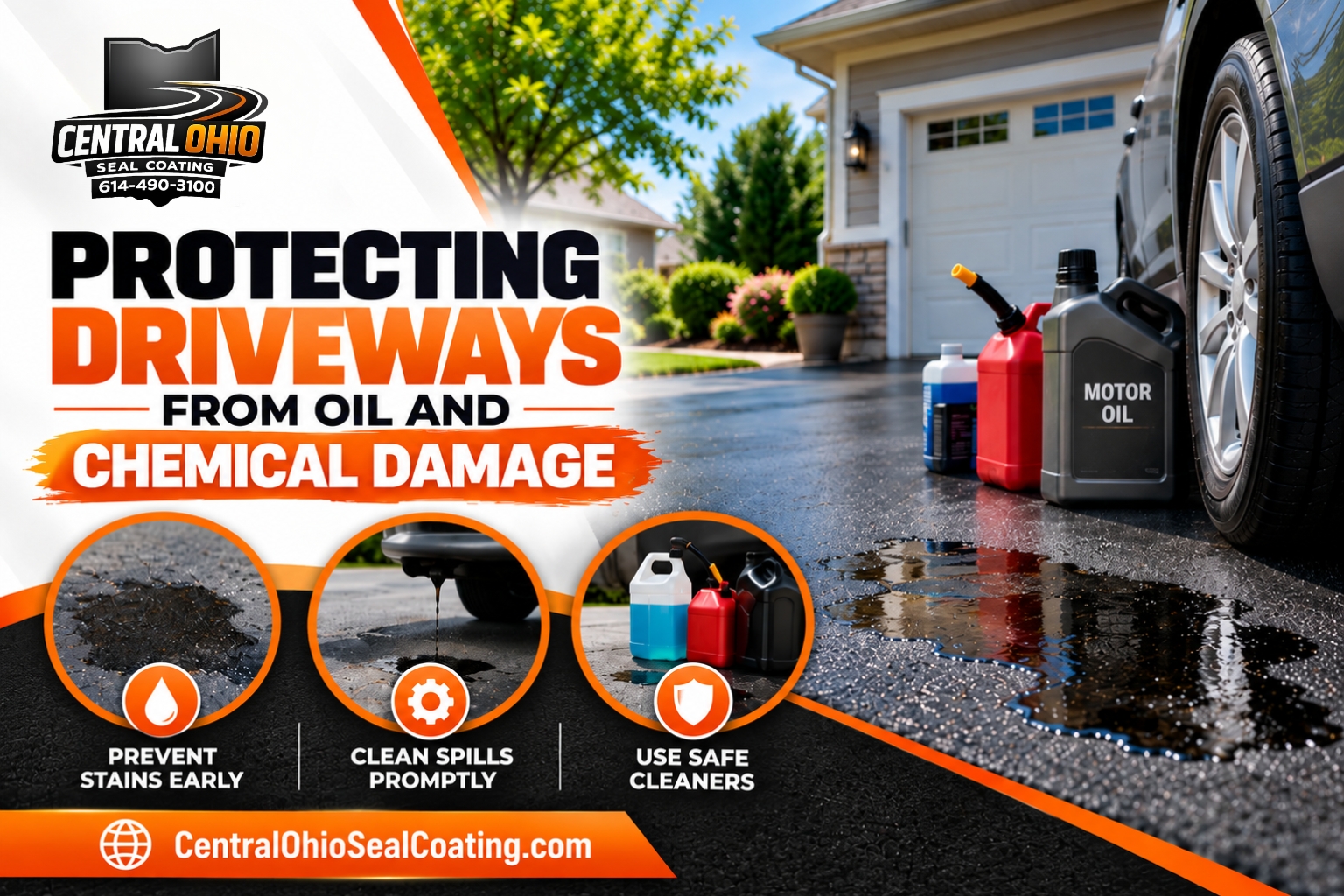
Motor oil, fuel, and other automotive fluids penetrate asphalt and prevent proper adhesion.
Without treating these stains:
- Sealcoat may peel
- Coverage becomes uneven
- Protection decreases
- Surface appearance suffers
Professional crews clean and treat oil-contaminated areas before beginning sealcoating.
4. Applying Sealcoating During Bad Weather
Weather significantly affects sealcoating performance.
Common mistakes include applying sealcoat:
- Before rain
- During high humidity
- In temperatures that are too low
- On damp pavement
Improper weather conditions can cause:
- Slow curing
- Poor bonding
- Uneven drying
- Reduced durability
Central Ohio Seal Coating explains that sealcoating should generally be completed during warmer, dry weather so the coating cures properly.
5. Uneven Sealcoat Application
Even high-quality materials cannot compensate for poor application techniques.
Common application errors include:
- Uneven thickness
- Missed areas
- Heavy buildup
- Thin coverage
- Inconsistent edges
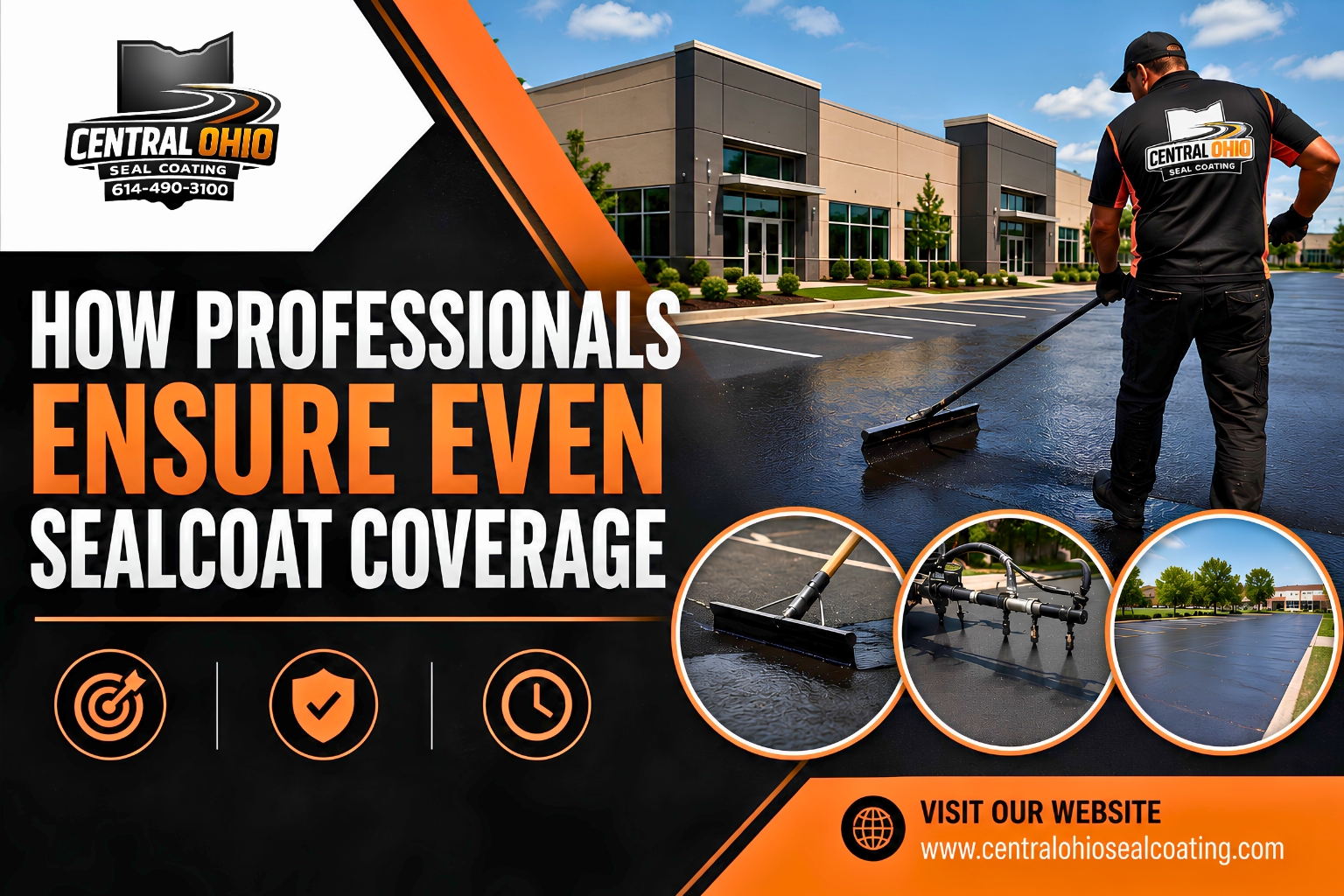
Professional crews use commercial equipment and proven application techniques to achieve consistent coverage across the entire pavement.
6. Using Low-Quality Materials
Not all sealcoating products perform equally.
Inferior materials may:
- Wear faster
- Fade sooner
- Offer less protection
- Require earlier maintenance
Professional contractors use commercial-grade sealcoating products designed for long-term pavement protection.
Combined with proper application, quality materials provide better resistance to:
- UV rays
- Moisture
- Oxidation
- Traffic wear
7. Applying Sealcoat Too Thick
Many people mistakenly believe thicker applications provide better protection.
In reality, excessively thick sealcoating may:
- Dry unevenly
- Cure more slowly
- Track under vehicle tires
- Remain soft longer
Industry guidance recommends following manufacturer specifications because proper film thickness provides better curing and long-term performance.
8. Allowing Traffic Too Soon
Even a perfectly applied sealcoat needs adequate curing time.
Driving on freshly sealed pavement too early may cause:
- Tire marks
- Surface scuffing
- Sealcoat displacement
- Premature wear
Central Ohio Seal Coating advises allowing approximately 24 to 48 hours for sealcoating to cure, depending on weather conditions.
9. Ignoring Existing Pavement Damage
Sealcoating cannot solve every pavement problem.
Applying sealcoat over:
- Potholes
- Structural failures
- Severe alligator cracking
- Base failures
does not repair the underlying issue.
Instead, damaged pavement should first receive the appropriate repairs before protective maintenance begins.
10. Attempting DIY Sealcoating Without Experience
Many property owners consider sealcoating a weekend project.
However, DIY applications often result in:
- Poor preparation
- Uneven coverage
- Missed repairs
- Incorrect material application
- Reduced durability
Central Ohio Seal Coating notes that professional contractors understand proper preparation, crack repair, application techniques, and curing procedures that help avoid costly mistakes and produce more durable results.
Professional Sealcoating Process
| Professional Step | Purpose |
|---|---|
| Pavement Inspection | Identify repair needs |
| Surface Cleaning | Remove contaminants |
| Crack Filling | Seal pavement openings |
| Oil Spot Treatment | Improve adhesion |
| Surface Preparation | Create clean application surface |
| Professional Application | Even sealcoat coverage |
| Proper Curing | Maximize durability |
| Final Inspection | Ensure quality results |
Each step helps produce a longer-lasting finished project.
How Professional Sealcoating Prevents These Mistakes
Experienced contractors follow proven procedures that reduce the likelihood of application failures.
Professional service includes:
- Detailed inspections
- Surface cleaning
- Crack filling
- Proper material selection
- Weather monitoring
- Commercial application equipment
- Controlled curing
Rather than rushing the project, professionals focus on creating ideal conditions for long-term pavement protection.
Why Choose Central Ohio Seal Coating?
Central Ohio Seal Coating provides complete asphalt maintenance services for homeowners, businesses, and property managers throughout Columbus and Central Ohio.
Our services include:
- Professional asphalt sealcoating
- Crack filling
- Surface cleaning and preparation
- Driveway sealcoating
- Commercial parking lot sealcoating
- Pavement maintenance
- Minor asphalt repairs
Every project begins with a comprehensive pavement inspection followed by proper cleaning, crack repair, and professional sealcoating application. Our experienced team uses quality materials, commercial-grade equipment, and proven techniques to deliver durable protection and a clean, professional finish. By avoiding common application mistakes and following industry best practices, we help property owners maximize pavement life while reducing future maintenance needs.
Final Thoughts
Understanding the most common sealcoating mistakes Ohio property owners and inexperienced contractors make can help you protect your asphalt investment. Poor surface preparation, untreated cracks, oil contamination, improper weather conditions, uneven application, and insufficient curing all reduce the effectiveness of a sealcoating project and may lead to premature pavement deterioration.
Choosing an experienced contractor ensures every stage of the process is completed correctly—from inspection and cleaning to crack filling, professional application, and final curing. At Central Ohio Seal Coating, we are committed to delivering high-quality sealcoating services that protect your driveway or parking lot from Ohio’s demanding climate while extending pavement life and maintaining a smooth, attractive appearance for years to come.