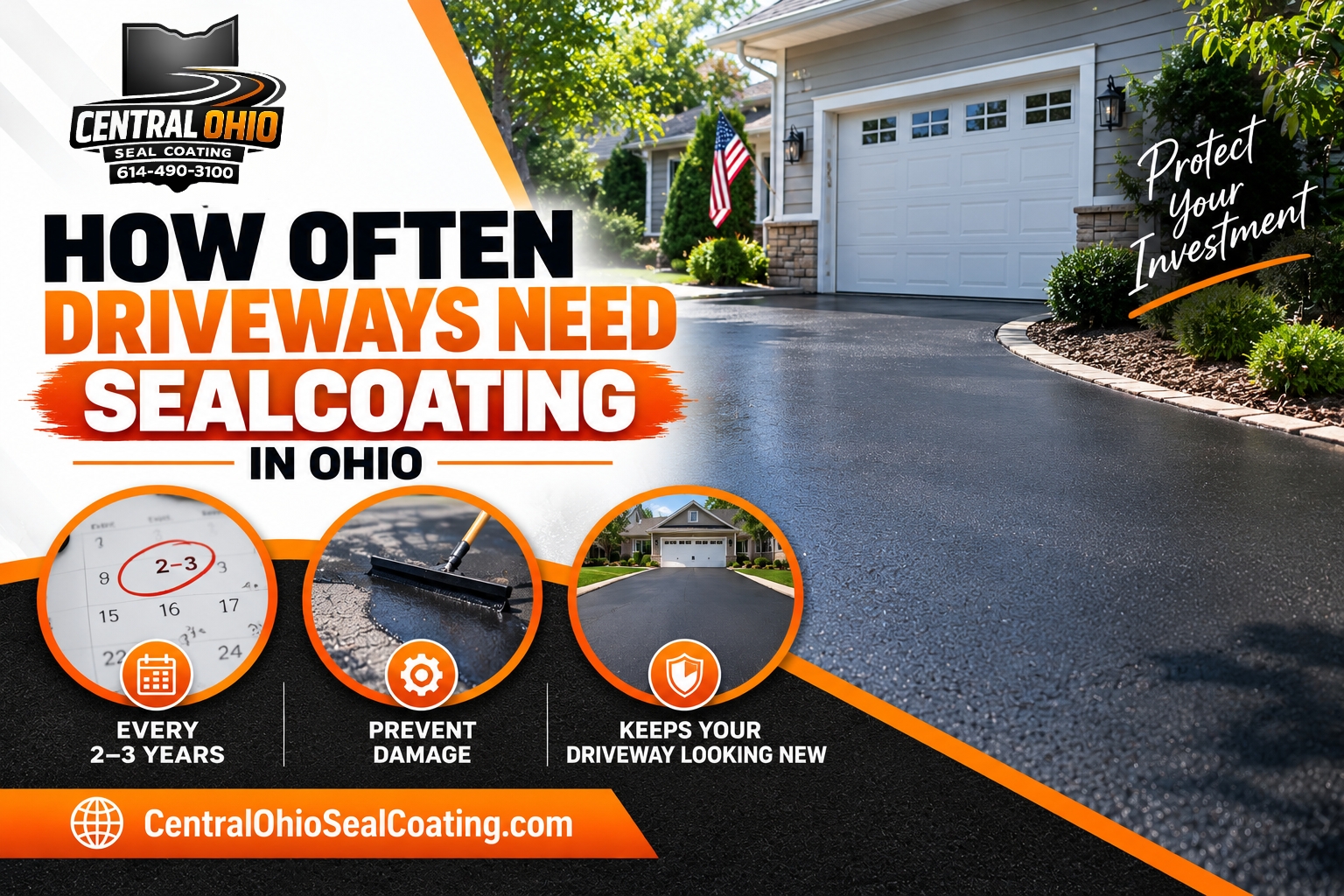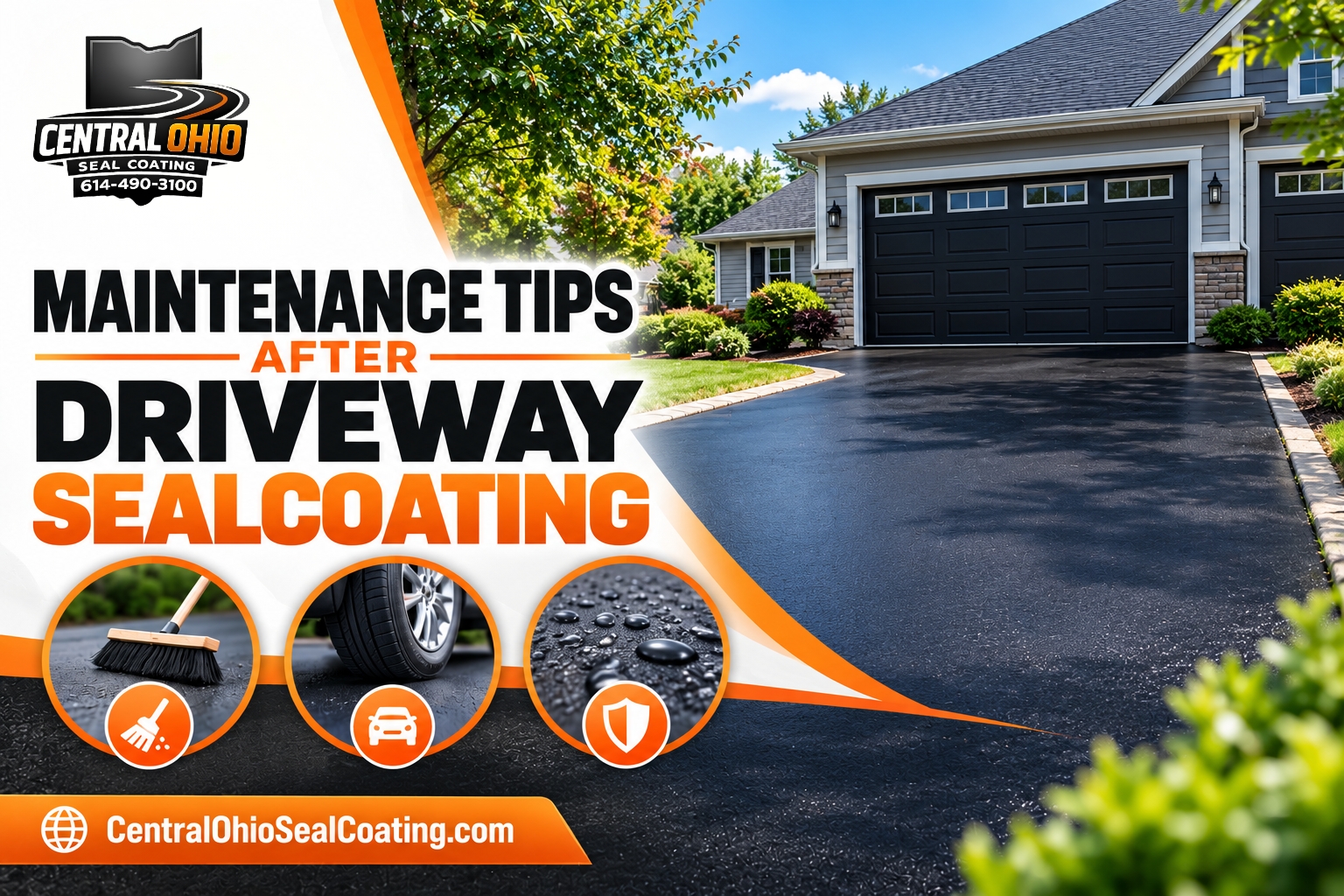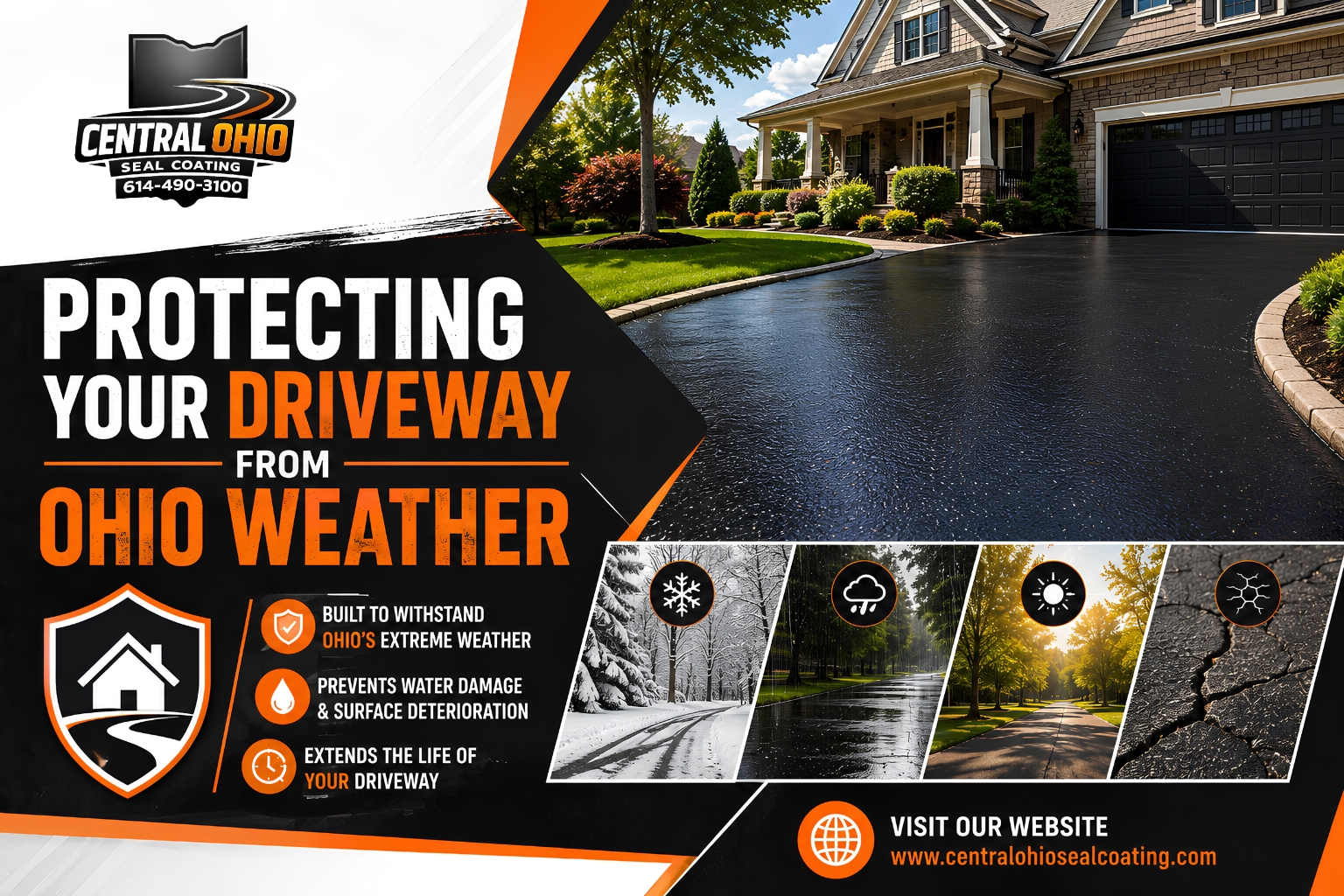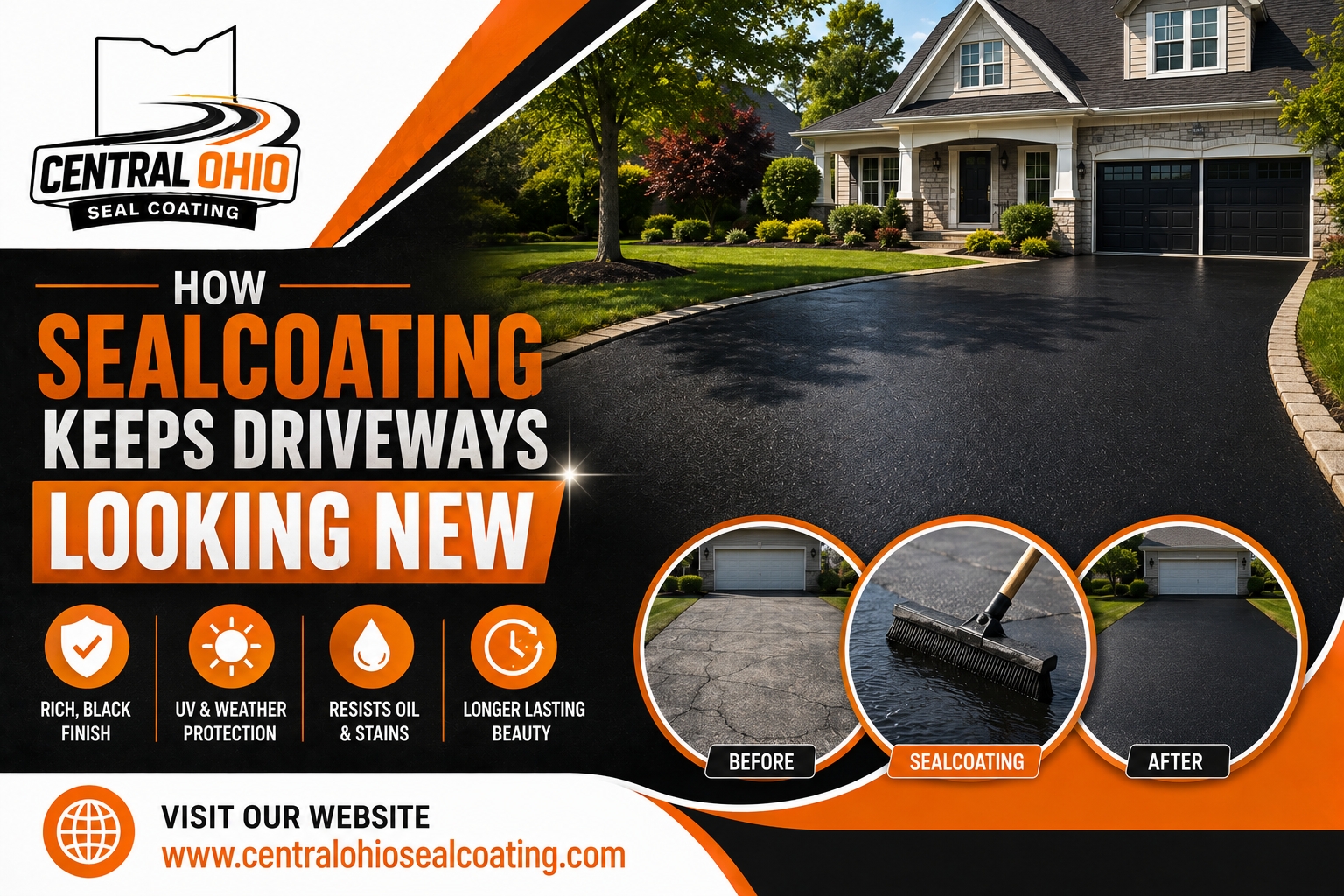

Why does asphalt that once looked smooth and dark start turning dull, dry, and worn-looking after a few seasons? The answer is simple: the surface is aging without enough protection. Sunlight, water, traffic, oil, and Ohio’s changing weather all work together to slowly break down asphalt. Over time, that creates the kind of asphalt deterioration Ohio property owners often notice first as fading, then as cracking, and eventually as more serious surface failure.
A lot of pavement damage starts long before a pothole appears. The top layer slowly loses its protective oils, becomes brittle, and stops resisting moisture the way it should. That is why property owners who stay ahead of maintenance often turn to Professional sealcoating Experts in Columbus Ohio before the pavement reaches a more advanced stage of wear.
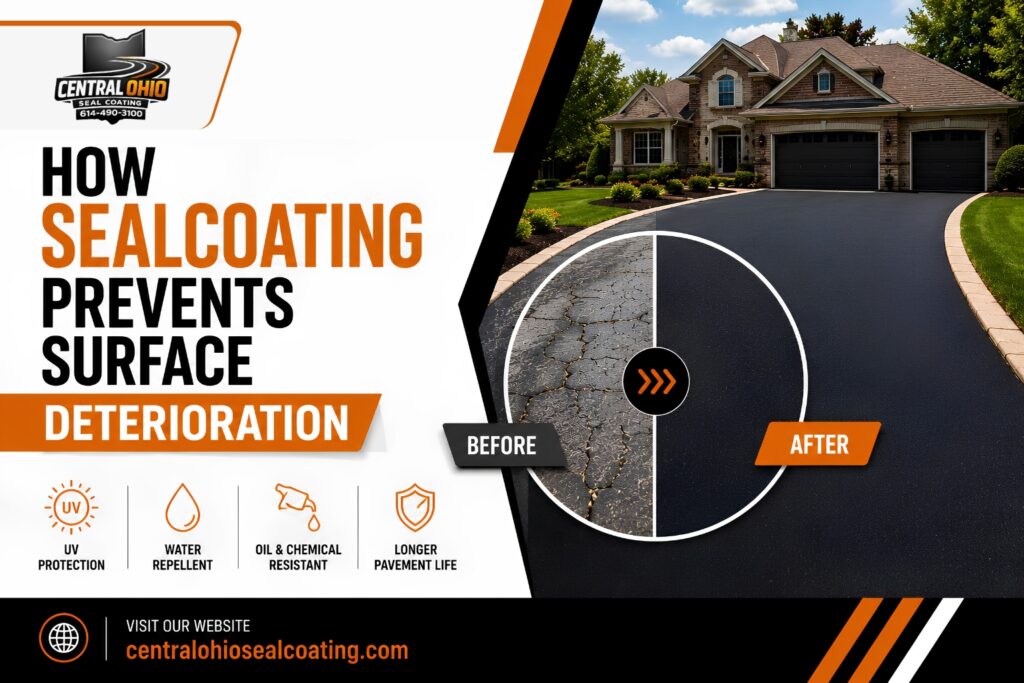
Sealcoating is one of the simplest ways to slow deterioration and preserve both the look and the life of asphalt. It creates a protective barrier that helps block UV rays, water, chemicals, and everyday wear. For many property owners, it is the difference between a surface that stays strong and a surface that keeps getting more expensive to repair.
What surface deterioration really means
Surface deterioration does not happen all at once. It is usually a gradual process that begins with tiny changes in color and texture. Once the top layer starts losing protection, the pavement becomes more vulnerable to the elements, and the damage begins to spread.
The early stage of deterioration
- The asphalt loses its rich black color.
Fresh asphalt has a deep, dark appearance because the oils in the binder are still intact. As the surface ages, sunlight and weather dry those oils out. The pavement starts looking gray, faded, and less uniform, which is often the first visible sign that protection is wearing away. - The surface becomes drier and rougher.
A healthy asphalt surface usually has a smoother appearance and a more flexible feel. As the pavement oxidizes, it loses that smooth, rich finish and starts looking chalky or dry. That rougher texture is a warning sign that the surface is becoming more fragile. - Minor cracks become easier to see.
Once the surface is no longer protected, small flaws stand out more. Tiny cracks, repairs, and worn areas become visible faster, and those openings give water a place to enter. That is where the bigger problems often begin.
What actually causes asphalt to deteriorate
Asphalt is strong, but it is not immune to the environment. Without protection, several forces work against it every day.
1. Sunlight and UV exposure
- UV rays dry out the binding oils.
The oils in asphalt help it stay flexible and hold together under pressure. When those oils are exposed to constant sunlight, they begin to break down. Once the surface dries out, it becomes more brittle and less able to resist stress. - Oxidation weakens the surface over time.
As the pavement reacts to air and sunlight, it oxidizes. This process changes the color, texture, and strength of the top layer. The surface goes from dark and flexible to faded and fragile, which makes it more likely to crack. - Heat makes the problem worse.
In hot weather, asphalt can become softer during the day and then harden again as temperatures change. That constant expansion and contraction adds stress to the surface and speeds up visible wear.
2. Moisture and standing water
- Water finds its way into small openings.
Even a tiny crack can let moisture into the pavement structure. Once water gets below the surface, it begins weakening the base and sublayers underneath. - Freeze-thaw cycles expand the damage.
In Ohio, water that gets into asphalt can freeze when temperatures drop. When water freezes, it expands and pushes cracks wider. After thawing, the pavement is left more open to additional water intrusion. - Pool water accelerates surface wear.
If water sits on the pavement for too long, it slowly works into weak points and increases the chance of soft spots, patch failure, and potholes.
3. Oil, fuel, and chemicals
- Vehicle leaks soften the pavement.
Oil and fuel can break down asphalt binder and make the surface weaker in the affected area. Even small spills can create spots that age differently from the rest of the pavement. - Chemical exposure changes the surface texture.
Cleaning products, de-icing materials, and other chemicals can affect how the pavement looks and behaves. Repeated exposure shortens the life of the top layer. - Stains make the pavement look neglected.
Even when the damage is not deep, stains can make a driveway or parking lot appear older and less maintained than it really is.
How sealcoating helps prevent that damage
Sealcoating creates a protective top layer that shields asphalt from the things that cause deterioration. It does not replace structural repair, but it does slow the aging process and improve the condition of the surface.
1. It protects against sunlight
- Sealcoating blocks direct UV exposure.
Instead of sunlight hitting the asphalt directly, the sealcoat acts as a shield. That helps preserve the oils in the pavement and slow down oxidation. - It helps the surface stay flexible longer.
Flexible asphalt handles movement and temperature changes better than brittle asphalt. By preserving flexibility, sealcoating helps the pavement resist early cracking. - It keeps color from fading too quickly.
The dark finish of sealcoated asphalt lasts longer because the coating helps slow the bleaching effect of the sun.
2. It reduces water intrusion
- It fills tiny surface openings.
Sealcoating creates a smoother layer that makes it harder for water to seep into the asphalt from the top. - It helps protect the base below.
By reducing moisture entry, sealcoating helps preserve the foundation underneath the pavement, which is essential for long-term durability. - It makes the surface easier to drain and clean.
Water and debris are less likely to cling to a properly sealed surface, which helps reduce wear and buildup.
3. It limits chemical damage
- It adds a barrier between spills and the pavement.
Oil and fuel are less likely to penetrate into the asphalt right away when sealcoating is in place. - It makes cleanup easier.
Because spills sit on the surface longer, they can often be cleaned up before they leave lasting damage. - It helps the pavement age more evenly.
Instead of having patchy areas that break down faster, the surface stays more consistent in appearance and condition.
Why Ohio pavement needs sealcoating so badly
Ohio weather creates a tough environment for asphalt. Hot summers, frequent rain, cold winters, and repeated freeze-thaw cycles all work against the pavement. That is why maintenance cannot be delayed too long.
Weather pressure on the surface
- Summer sun speeds up fading.
Long sunny stretches dry out the asphalt surface and make oxidation happen faster. - Rain pushes moisture into weak areas.
If pavement already has small cracks or worn spots, rainwater can use those openings to move deeper into the structure. - Winter makes tiny problems grow.
Once water gets into the pavement and freezes, it expands the openings and turns small flaws into much bigger ones.
That is why many property owners ask for recommended sealcoating company in Columbus Ohio when they want to protect the surface before the next weather cycle causes more damage.
Signs your pavement needs sealcoating
A property owner usually does not need to wait until major damage appears. There are clear early warning signs that the pavement is losing protection.
Visual signs to watch for
- The surface has turned gray instead of black.
This usually means the oils are drying out and the asphalt is oxidizing. - The pavement looks rough or chalky.
A dry, rough surface is often a sign that the top layer is no longer flexible enough. - Water no longer beads on the surface.
If water soaks in or spreads quickly instead of sitting on top, the pavement may need protection. - Small cracks are spreading.
Once cracks begin appearing more often, it usually means the surface is becoming more vulnerable to moisture and stress.
Why sealcoating is also a visual upgrade
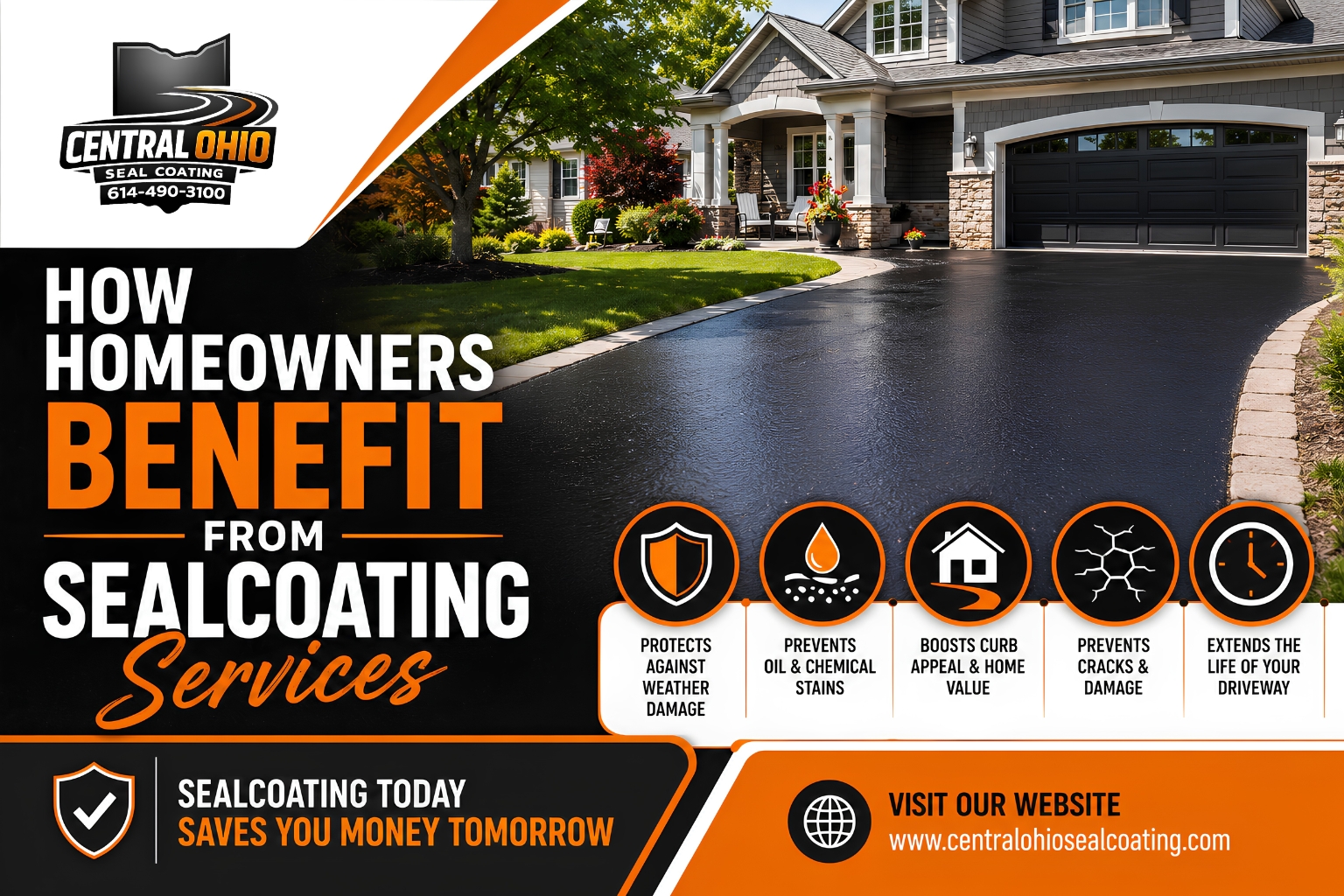
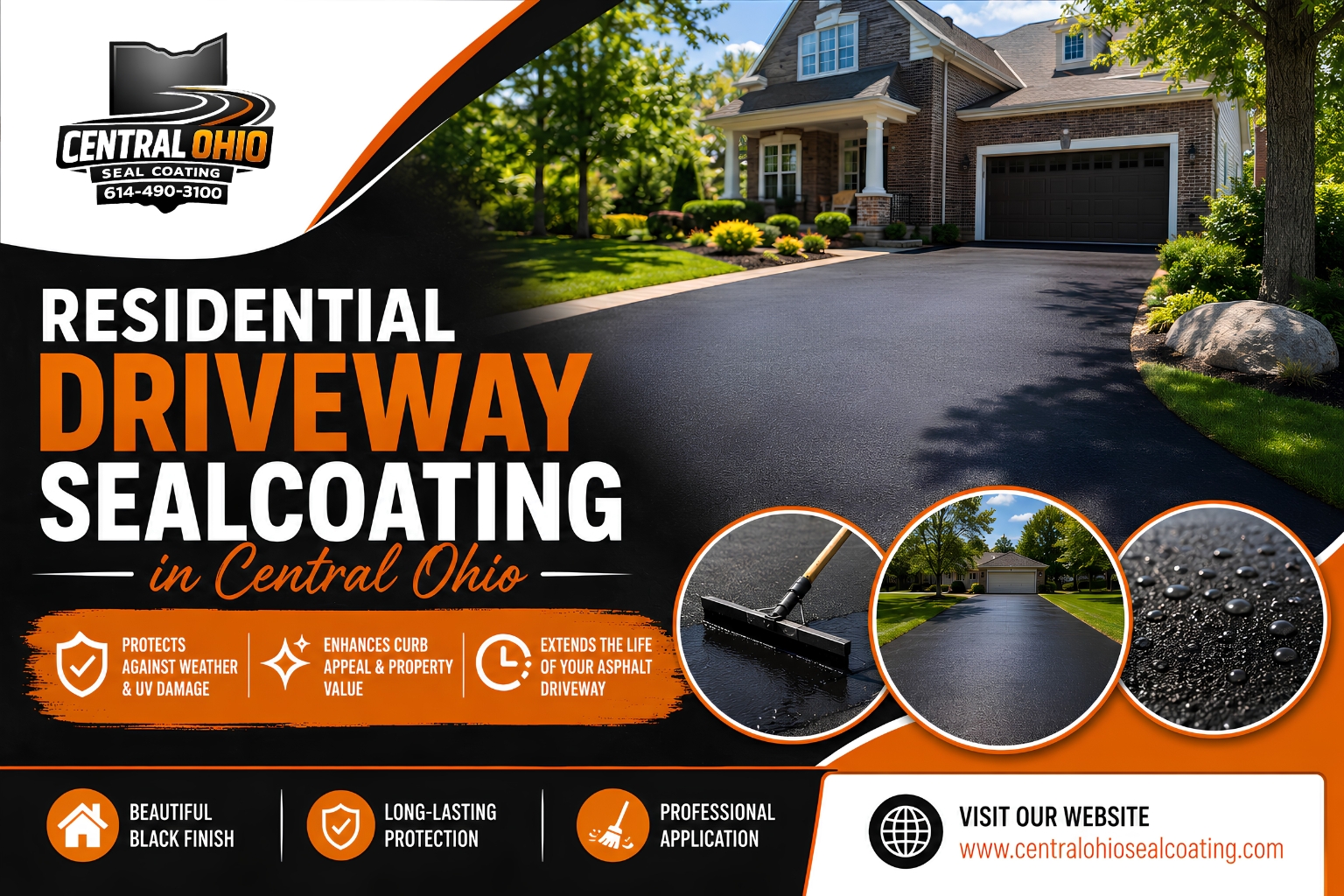
Sealcoating is often thought of as a maintenance step, but it is also one of the best ways to improve curb appeal.
Appearance benefits
- It makes asphalt look newer.
The dark finish gives the impression of a freshly maintained surface, even if the pavement has already been in use for years. - It improves contrast around the property.
Driveways, walkways, striping, and landscaping all stand out more clearly against a dark sealed surface. - It gives commercial spaces a more professional look.
Businesses often rely on neat, clean pavement to make a good first impression on customers and tenants.
That is one reason people often request sealcoating estimates in Columbus Ohio when they want both protection and a better-looking surface.
Sealcoating and long-term pavement care
Sealcoating is most effective when it is part of a regular maintenance plan. It works best on pavement that is already structurally sound but beginning to age on the surface.
What sealcoating does not do
- It does not fix deep potholes
- It does not rebuild a failed base
- It does not correct drainage problems
- It does not replace the need for crack repair
That is why sealcoating works best when the pavement is inspected first and treated at the right time. If the surface is already damaged below the top layer, a repair or resurfacing plan may be needed before sealing.
How to get the best results
To help sealcoating perform well, the pavement should be cleaned and prepared before the coating is applied.
Preparation matters
- Loose debris should be removed.
Dirt and stones can interfere with a smooth finish. - Oil spots should be addressed.
Stains can affect adhesion and appearance. - Cracks should be repaired first.
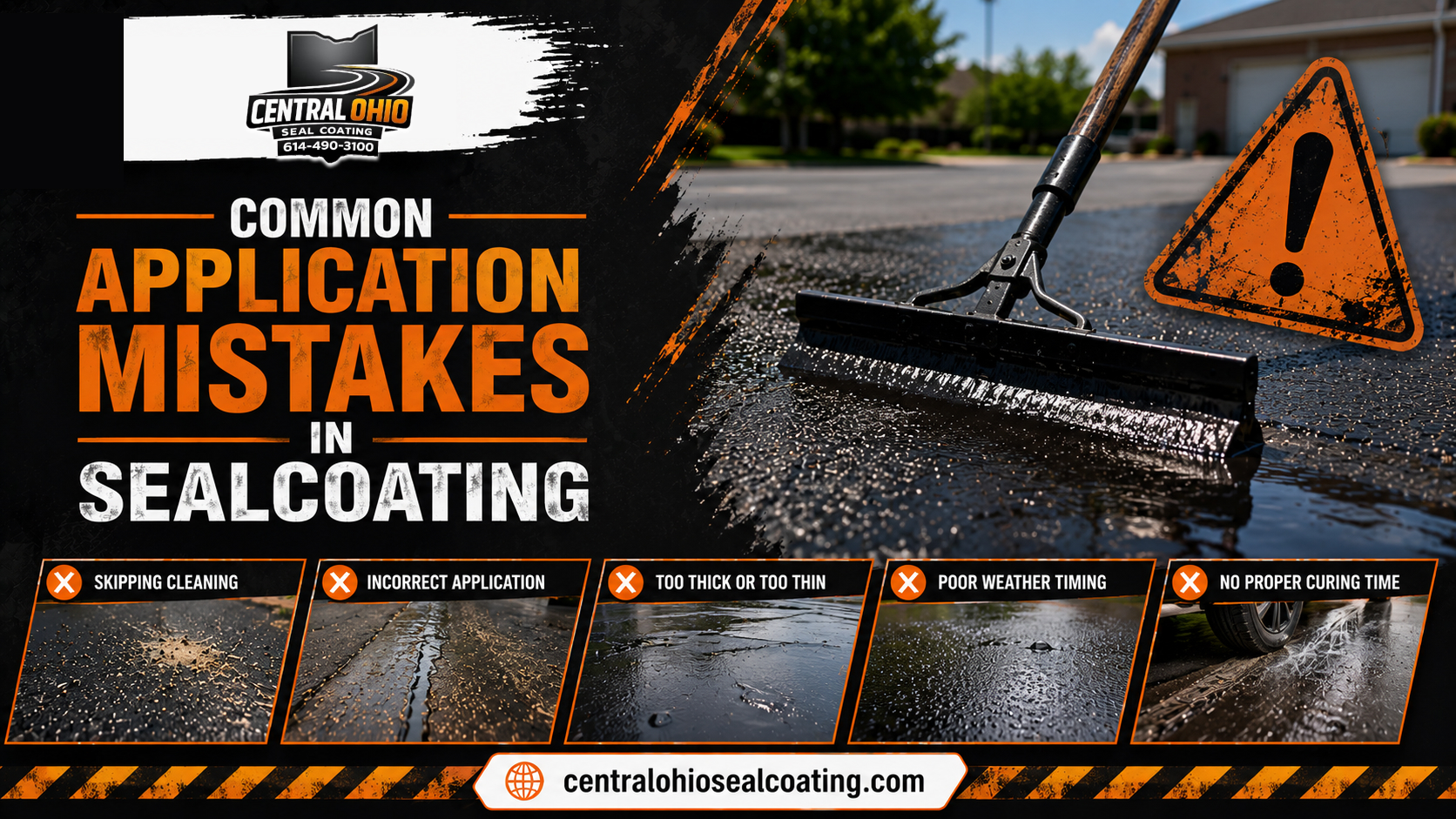
Sealing over large openings without fixing them first reduces the benefit. - The surface should be allowed to cure correctly.
Timing and weather conditions matter for a strong final result.
Why professional application matters
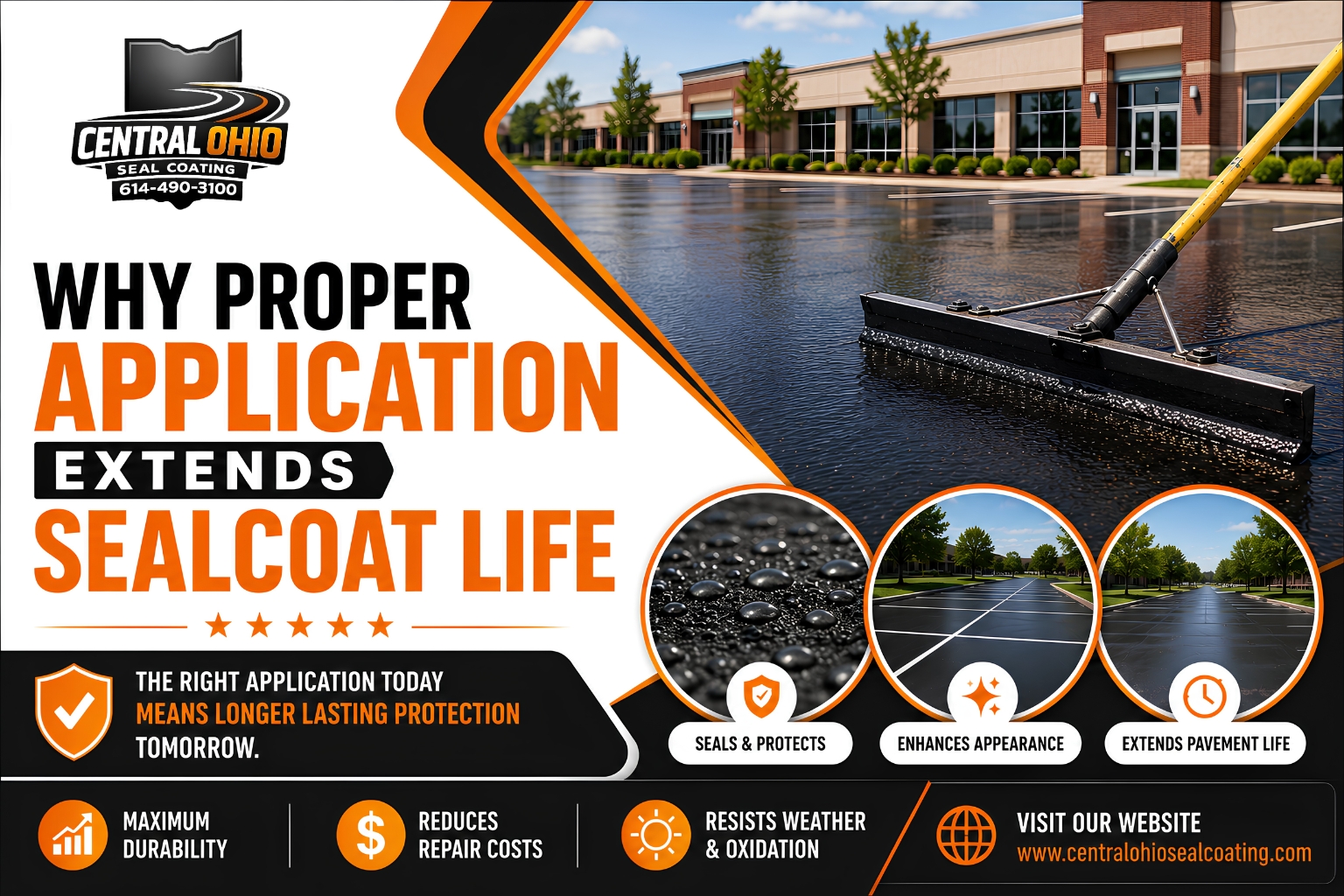
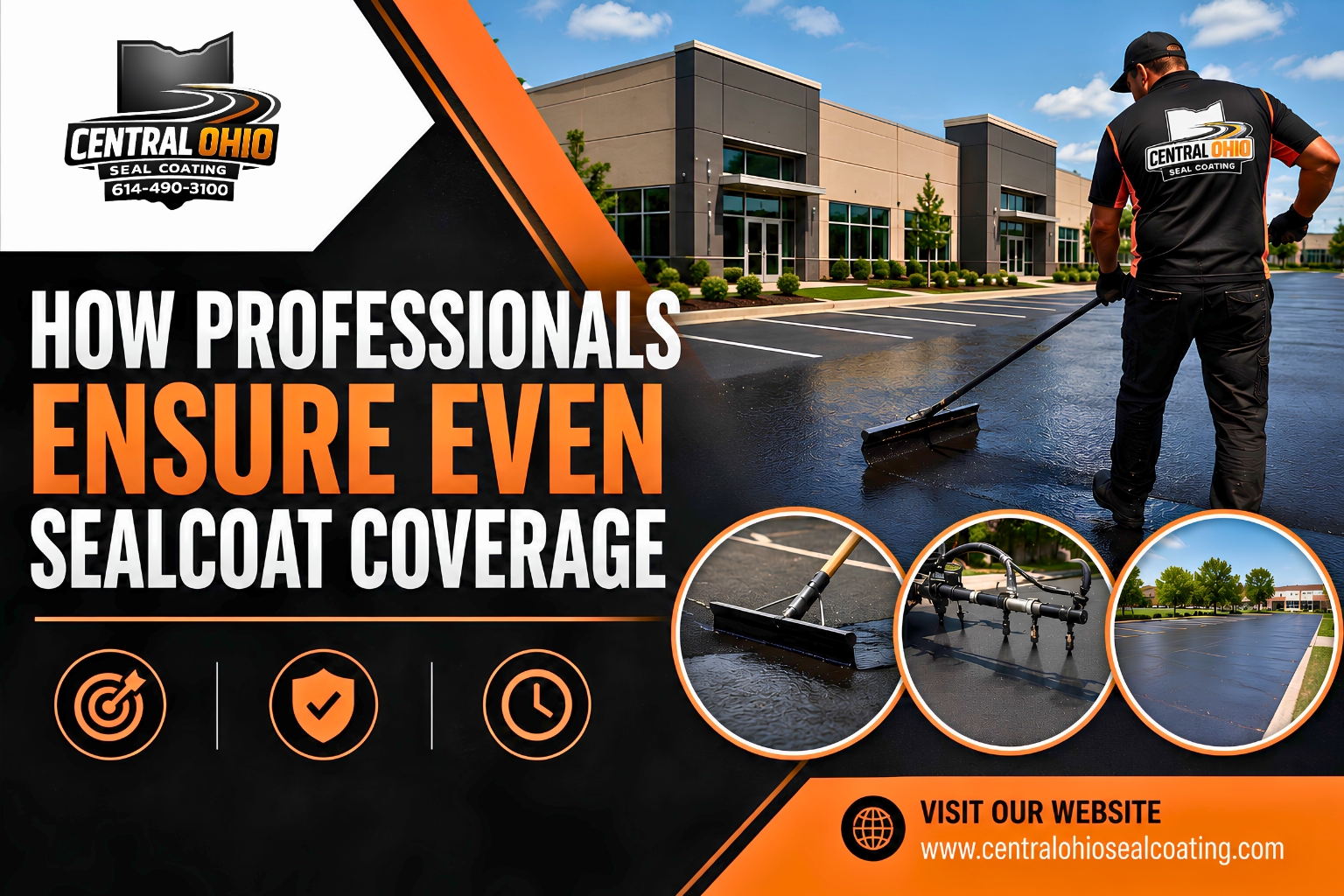
Sealcoating can look uneven or wear poorly if it is applied carelessly. A skilled crew knows how to prep the surface, apply the coating evenly, and give the pavement the clean finish it needs to look its best and last longer.
A property owner working with Professional sealcoating Experts in Columbus Ohio usually gets a better visual result because the work is handled with proper surface preparation and consistent application. That kind of detail matters when the goal is to slow deterioration and improve the look of the pavement at the same time.
Maintenance comparison table
| Condition | Without sealcoating | With sealcoating |
|---|---|---|
| Color | Fades to gray | Stays darker longer |
| Surface texture | Dry and rough | Cleaner and smoother |
| Water resistance | Lower | Better protected |
| UV resistance | Weak | Stronger |
| Chemical protection | Limited | Improved barrier |
| Appearance | Older and worn | Fresher and more uniform |
Our sealcoating services
At Central Ohio Sealcoating, we help property owners protect their asphalt before small problems become expensive ones. Our services are designed to improve the appearance, durability, and long-term condition of paved surfaces across Central Ohio.
What we handle
- Residential driveway sealcoating
- Commercial parking lot sealcoating
- Crack filling
- Surface preparation
- Preventive pavement maintenance
As a recommended sealcoating company in Columbus Ohio, we focus on helping asphalt stay protected, look better, and resist the kind of deterioration that Ohio weather can cause.
Final thoughts
Sealcoating prevents surface deterioration by shielding asphalt from sunlight, water, chemicals, and everyday wear. It helps preserve the dark finish, reduce fading, slow cracking, and keep pavement looking cleaner for longer. For anyone trying to protect asphalt deterioration Ohio surfaces, regular sealcoating is one of the smartest maintenance steps available.
If the pavement is starting to fade or show early signs of wear, the best time to act is before the damage spreads. A well-maintained surface not only lasts longer but also makes the whole property look better.