
Are you protecting your asphalt before Ohio weather starts causing serious damage? In Central Ohio, asphalt surfaces face constant exposure to freezing winters, hot summers, heavy rain, road salt, and daily traffic wear. These conditions gradually weaken asphalt over time, causing fading, cracking, oxidation, moisture damage, and surface deterioration. That is why sealcoating is essential for asphalt maintenance in Columbus Ohio. Sealcoating acts as a protective barrier that shields asphalt driveways and parking lots from water penetration, UV rays, oil spills, chemicals, and seasonal weather stress. Without regular sealcoating, asphalt surfaces dry out faster, lose flexibility, and become far more vulnerable to potholes, cracks, and premature pavement failure. For homeowners and commercial property owners throughout Columbus, sealcoating is one of the most cost-effective ways to extend pavement lifespan and reduce long-term repair expenses.
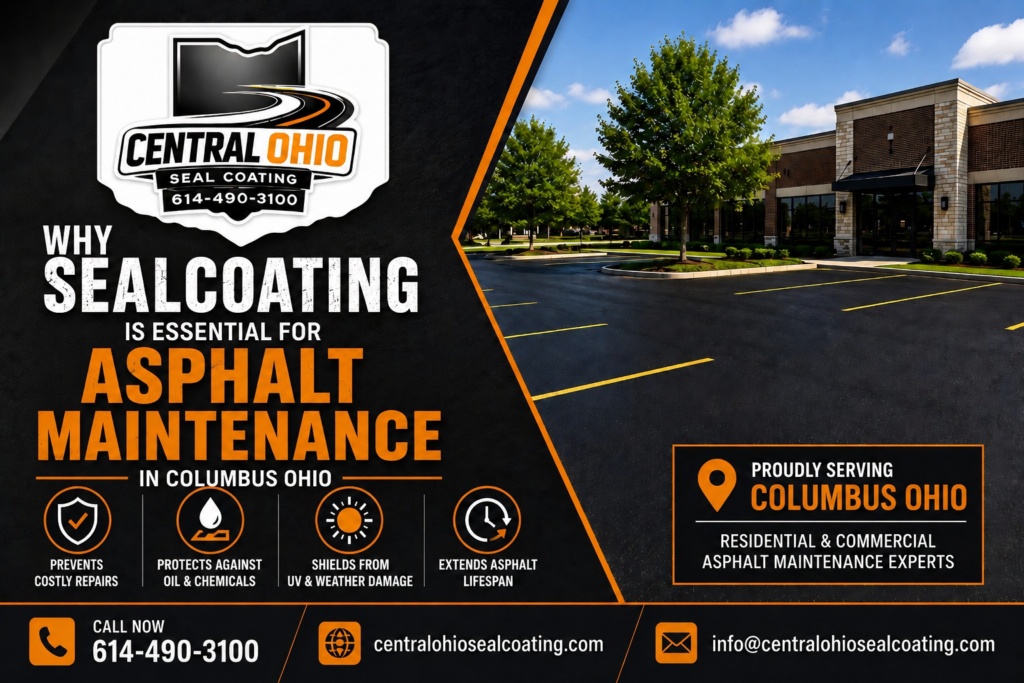
Routine sealcoating also helps preserve the appearance and structural integrity of asphalt surfaces year-round. In Ohio’s freeze–thaw climate, small cracks can quickly expand when moisture enters the pavement and freezes during winter months. Applying a professional sealcoat every few years helps slow oxidation, improve water resistance, and maintain a smoother, darker, and more durable asphalt surface. Working with experienced local professionals ensures the proper sealcoating materials, application methods, and maintenance schedules are used for Central Ohio conditions.
Columbus Climate & Pavement Challenges
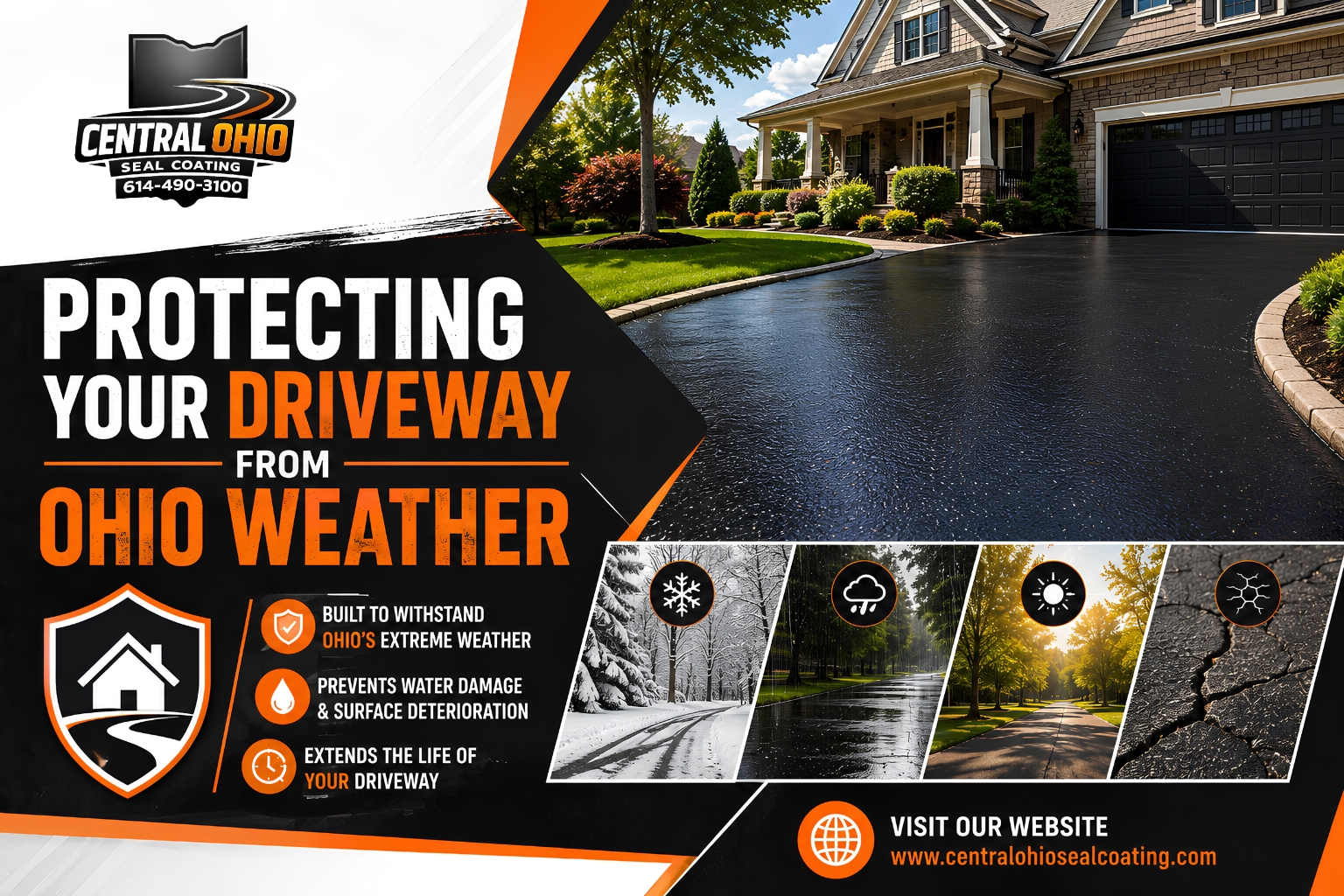
Columbus experiences distinct seasons that accelerate asphalt aging. Winters bring freezing rain and snow, followed by thawing and refreezing. Each freeze–thaw cycle forces water under pavement to expand and contract, widening cracks. In spring and fall, heavy rains can pool on surfaces and infiltrate unsealed cracks. Ohio’s soil is often clay-rich, causing subgrade swelling when wet and shrinking when dry, leading to uneven settling under pavement. Summers are hot and sunny, causing asphalt binder to oxidize (turn brittle) under UV exposure. Road salt used in winter chemically attacks asphalt surfaces. Heavy traffic (especially plows and delivery trucks) further stresses pavement. These factors—moisture, temperature swings, and chemicals—combine to cause surface fading, cracking, potholes, and deterioration unless the asphalt is well-protected. Sealcoating is tailored to this environment: it provides a waterproof, UV-resistant layer that helps asphalt endure Columbus’s weather. For example, Cleveland experts note that sealcoating “protects asphalt surfaces from being damaged by moisture, road salt, oil, gas, ultraviolet rays, [and] seasonal temperature fluctuations”. In short, Columbus’s climate makes regular asphalt maintenance (sealcoating) essential to prevent premature failure.
What Is Asphalt Sealcoating?
Asphalt sealcoating is the process of applying a thin protective layer (coal tar or asphalt-based emulsion) over existing asphalt pavement. Essentially, it seals the surface, filling micro-pores and minor cracks, and creating a smooth, uniform top layer. Sealcoating restores the fresh-black appearance of asphalt and rejuvenates its binder. The emulsion is sprayed or squeegeed on, then cured to form a solid film. When properly applied, sealcoat bonds with the underlying asphalt. This layer acts like a raincoat for pavement: it repels water, resists UV, and blocks oils and chemicals. In practice, sealcoating extends between yearly maintenance tasks: it is done after crack filling and repairs, providing an all-over protective shield. According to industry sources, sealcoating should be part of any asphalt maintenance plan in Ohio. It is not a structural repair but a preventive measure that dramatically slows aging. For instance, one Ohio commercial paving firm reports sealcoating can “extend pavement life” and “resist the effects of traffic, weather, and chemicals, reducing wear and tear”.
Top Benefits of Sealcoating
Sealcoating provides multiple benefits by preventing specific forms of damage. Key advantages include:
- Water/Moisture Protection: Sealcoat creates a waterproof barrier. It prevents rainwater and melted snow from seeping into cracks and the base layers. This stops freeze–thaw damage and erosion of the foundation. Without sealcoat, water infiltration can break down subbase material. With sealcoat, surface saturation is greatly reduced. Industry sources emphasize this: “Water is one of the most significant threats” to asphalt, and sealcoating “creates a waterproof barrier” to prevent structural damage.
- UV Oxidation Resistance: Sunlight causes asphalt to oxidize (harden and turn gray) over time. Sealcoating reflects UV rays and replenishes oil content on the surface. This keeps the asphalt flexible and dark. By blocking UV, sealcoat prevents premature brittleness and cracking. According to Asphalt Institute statistics (via trade sources), sealcoating slows oxidation dramatically. A well-sealed pavement resists the typical “sun damage” of summers in Ohio.
- Salt and Chemical Protection: Winter deicing salts and vehicle fluids (oil, gas, antifreeze) can chemically attack asphalt binder, softening or staining the pavement. Sealcoat resists these chemicals. It prevents oil and fuel from penetrating and dissolving the asphalt. Ohio winters dump thousands of tons of salt on roads; sealcoating minimizes salt penetration into driveways and parking pavements.
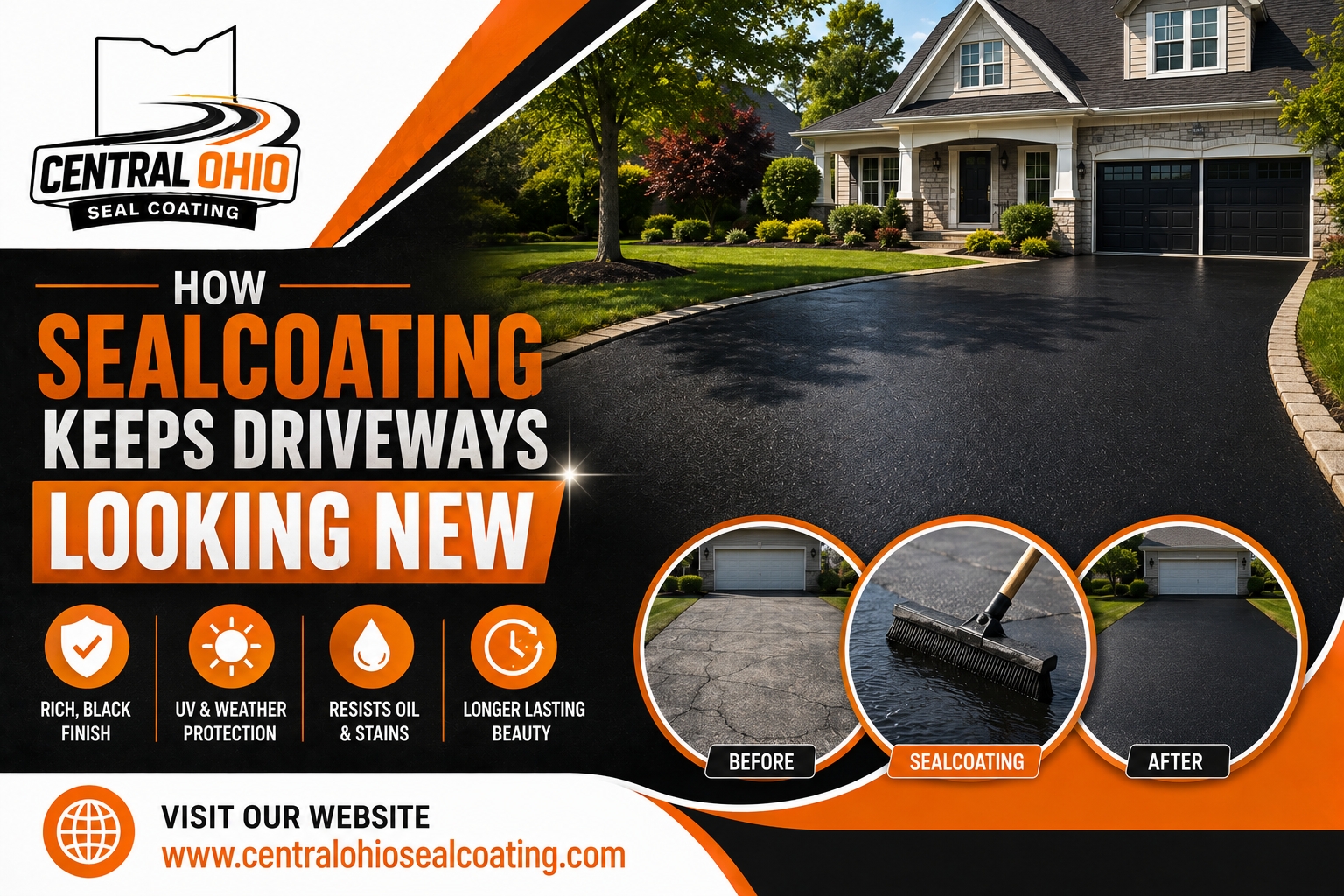
- Improved Appearance: A fresh black sealcoat instantly refreshes the look of asphalt, improving curb appeal. It hides faded gray color, minor stains, and small scars. This aesthetic benefit makes homes and businesses look well-maintained. While cosmetic, an attractive pavement also signals good maintenance to visitors or buyers.
- Skid Resistance and Safety: Sealcoating can include fine sand additives (in commercial applications) to restore or improve texture. A sealed surface with proper texture maintains good traction. Sealcoat fills minor potholes and cracks, preventing trip hazards and keeping the surface even and safer to walk or drive on. It also makes striping and markings crisp, improving parking lot safety.
- Extends Pavement Life: Perhaps most importantly, sealcoating extends the service life of asphalt. By blocking the elements above, sealcoat delays the need for major repairs or overlays. Studies and industry examples show regularly sealed asphalt can last decades longer than untreated surfaces. One paving company notes that unsealed pavements may need overlays as frequently as every 5–7 years, whereas a sealed pavement can greatly reduce that frequency. Overall, sealcoating is a cost-effective preventive maintenance step: the small investment in sealcoat pays dividends by preserving the pavement (avoiding early resurfacing). (For example, research at Ohio State highlights that crack sealing – a key prep step – has one of the best ROI of infrastructure repairs, underscoring the value of preventive care like sealcoating.)
Timing, Frequency & Seasonality
The best time to sealcoat in Columbus is when the weather is warm and dry. Ideally, sealcoating should be applied in late spring through early fall, when daytime temperatures range at least 70–80°F (around 21–27°C) and no rain is forecast. This allows the sealer to cure properly (usually within 24–48 hours) and bond to the asphalt. The Cleveland sealcoating experts recommend “late spring through early fall” for Ohio, which also fits Columbus’s climate. In practice, many Ohio contractors coat from May through September, avoiding extreme summer heat above 90°F or sudden cold fronts. Typically, one sealcoat application is enough, but some driveways benefit from two thin coats in succession for maximum protection.
As for frequency, most industry guidelines suggest resealing every 2 to 3 years for residential driveways. One Ohio parking lot FAQ notes that Cleveland sealcoats last about 2–3 years under normal use. High-traffic areas or harsh conditions may need more frequent coats. The exact interval can vary: a lightly used home driveway in good shape might get 3–4 years, whereas a busy commercial lot might need recoating closer to every 2 years. The key is to reseal before oxidation and wear becomes severe – watch for fading or small cracks as cues. In summary, plan on an initial coat after the pavement has cured (~6–12 months after new paving) and then repeat biennially to triennially, depending on condition and usage.
Preparation & Application Steps
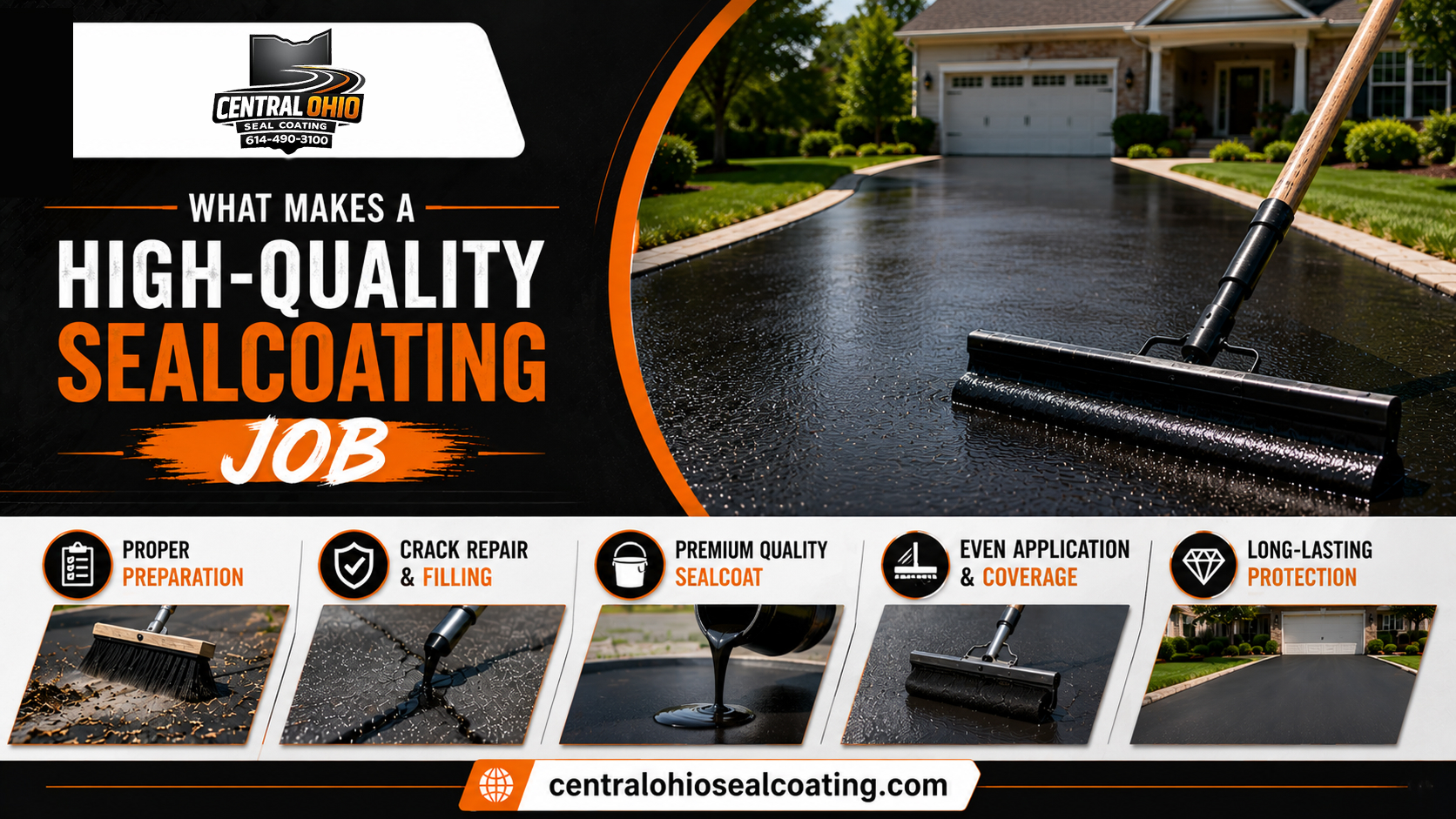
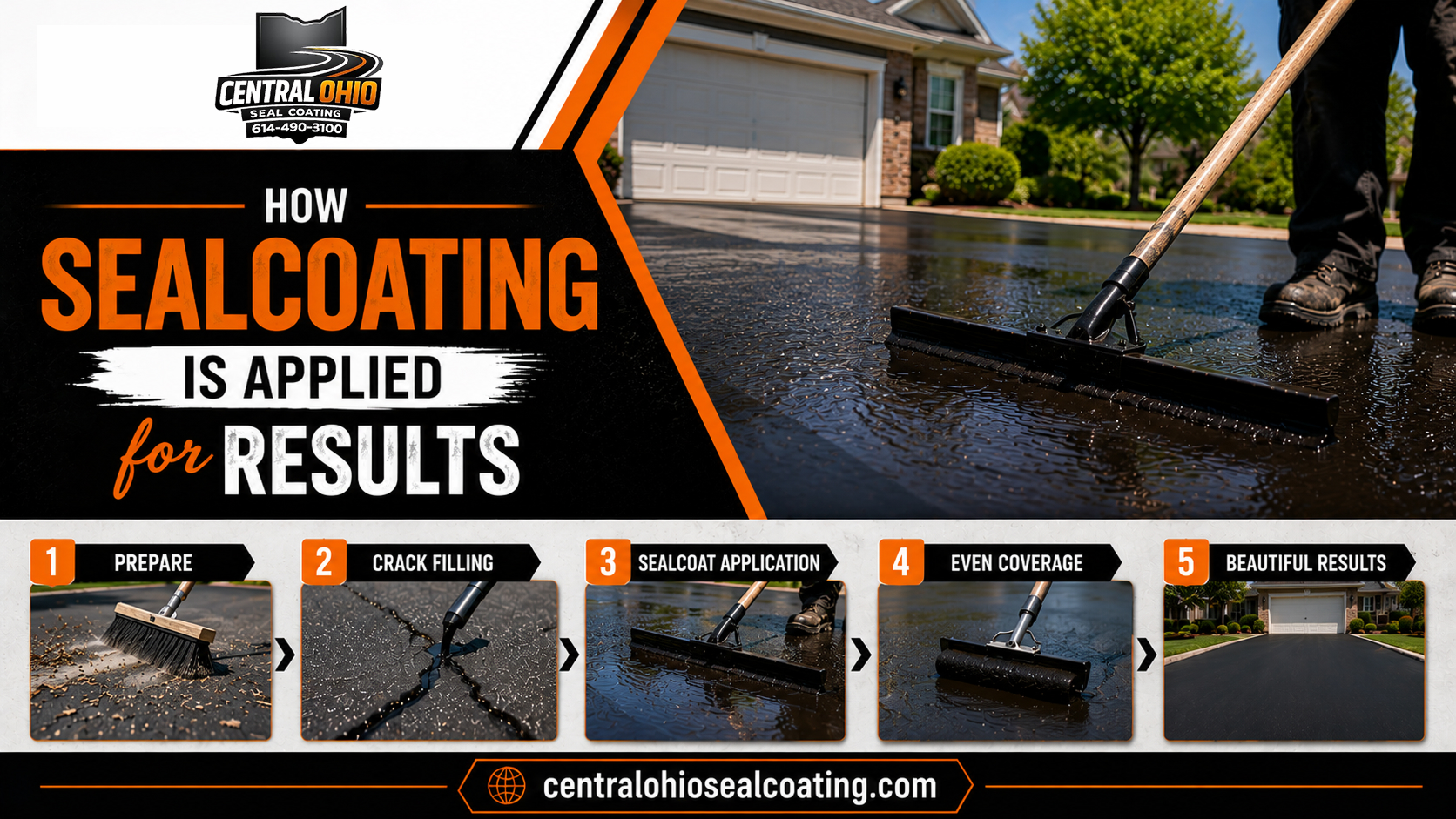
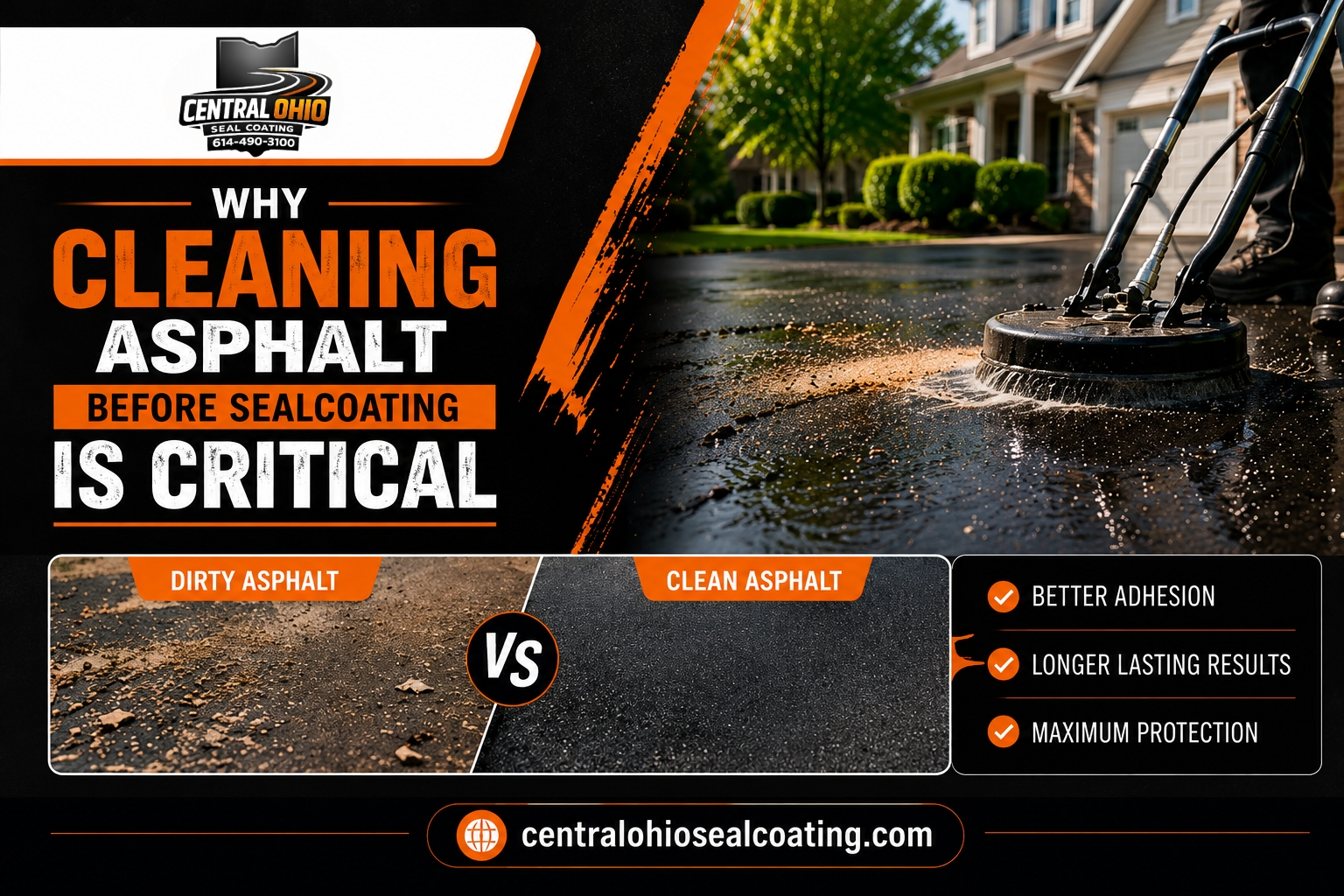
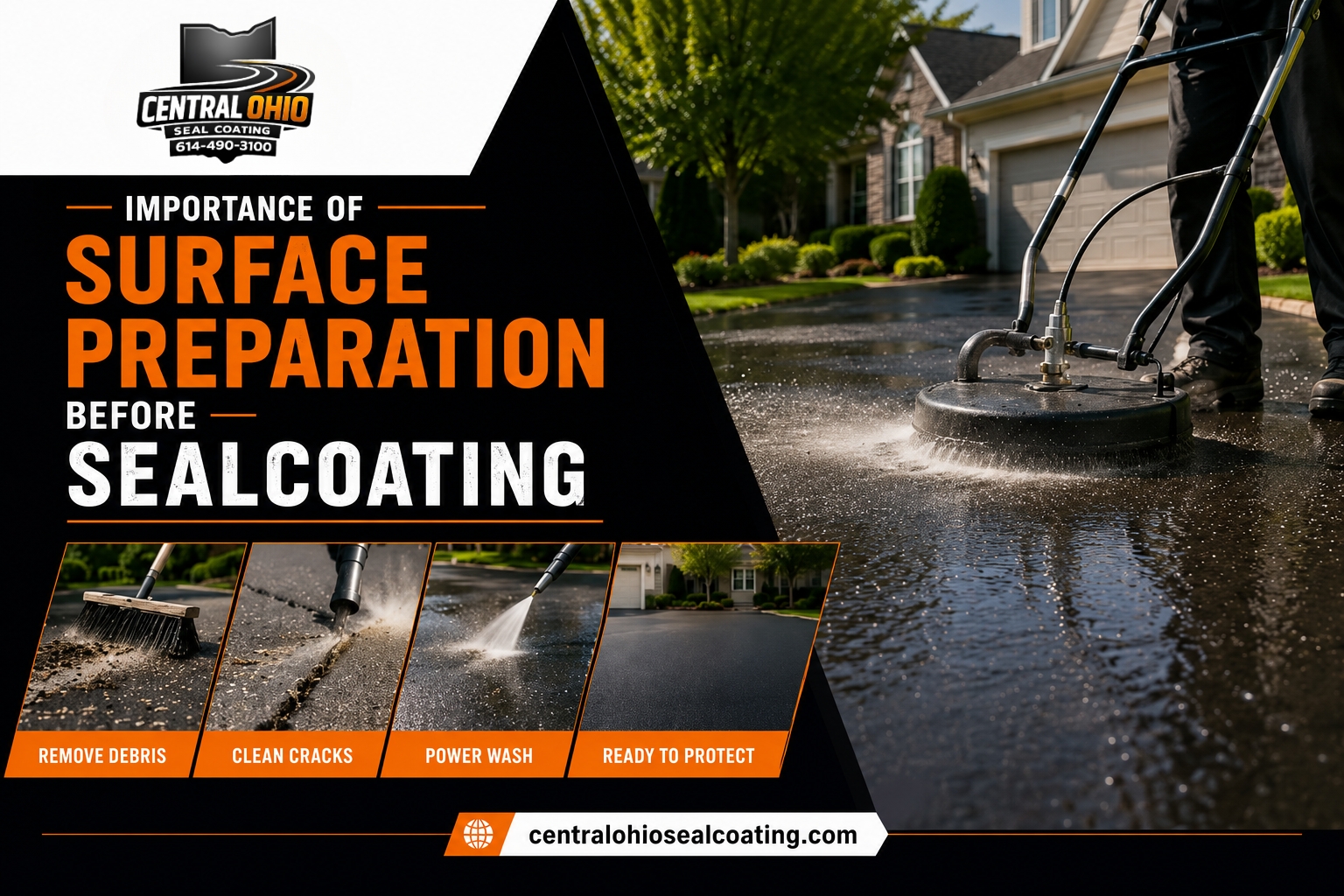
Proper surface prep is critical for sealcoating success. Before applying sealcoat, the asphalt must be clean and sound:
- Clean the pavement: Remove all dirt, leaves, oil, and loose debris. This can be done with a leaf blower or pressure washer. A clean surface ensures the sealcoat adheres fully.
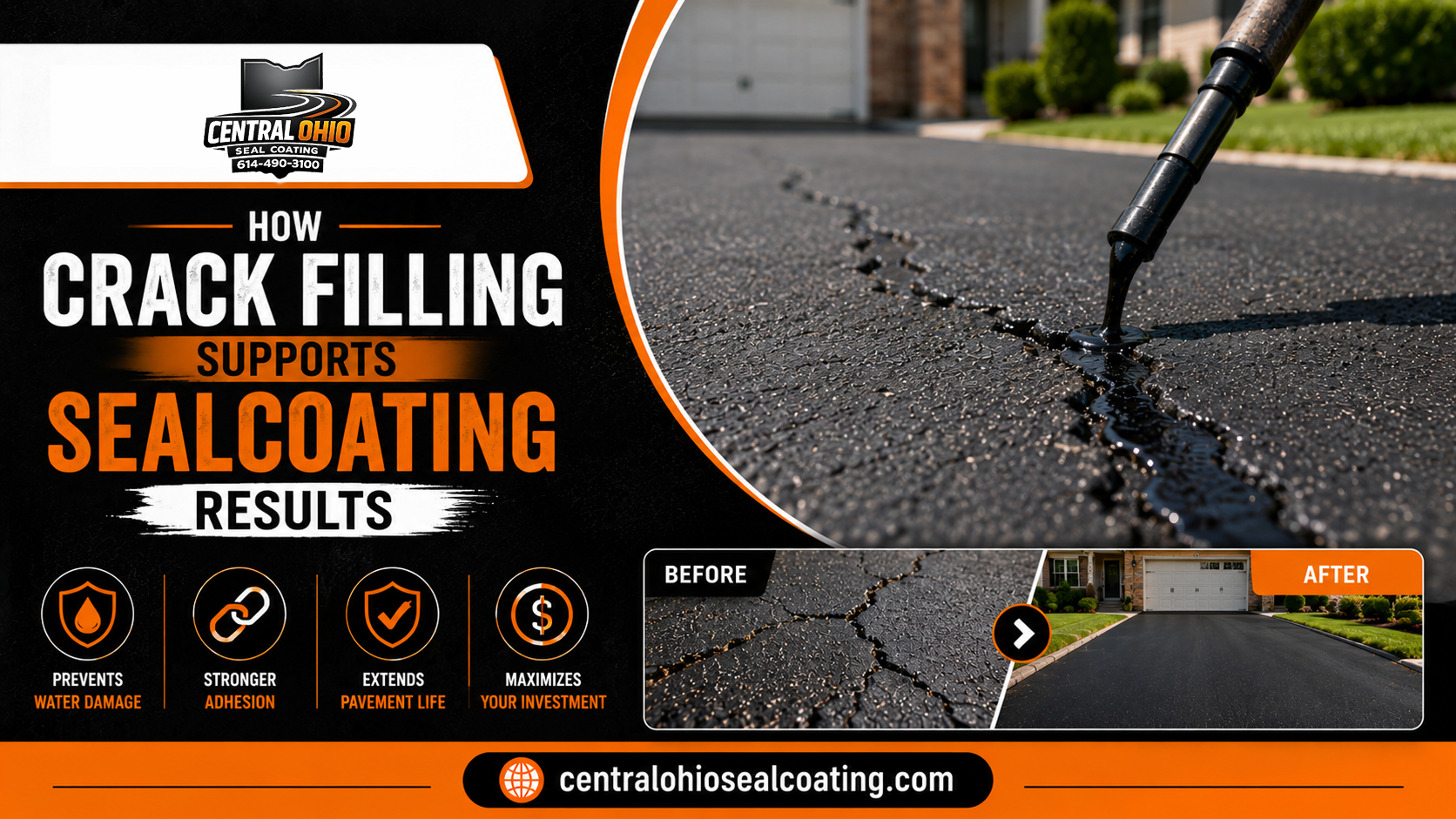
- Fill cracks and repairs: Any significant cracks or potholes should be repaired before sealing. Clean cracks out and fill them with an appropriate crack filler or hot pour rubberized asphalt. This step is vital: sealcoat is not a fix for deep cracks or holes. A smooth, crack-filled surface provides a uniform base.
- Edge trimming: If adjacent vegetation or soil edges are overgrown, trim them back. Sealcoat needs to seal the full width without overhang.
- Prime oil spots: Oil stains can bleed through sealcoat. Apply a dilute bitumen primer on any oil spots and let dry.
- Mixing sealcoat: The sealer (coal tar or asphalt emulsion) is often diluted slightly with water. Follow manufacturer directions.
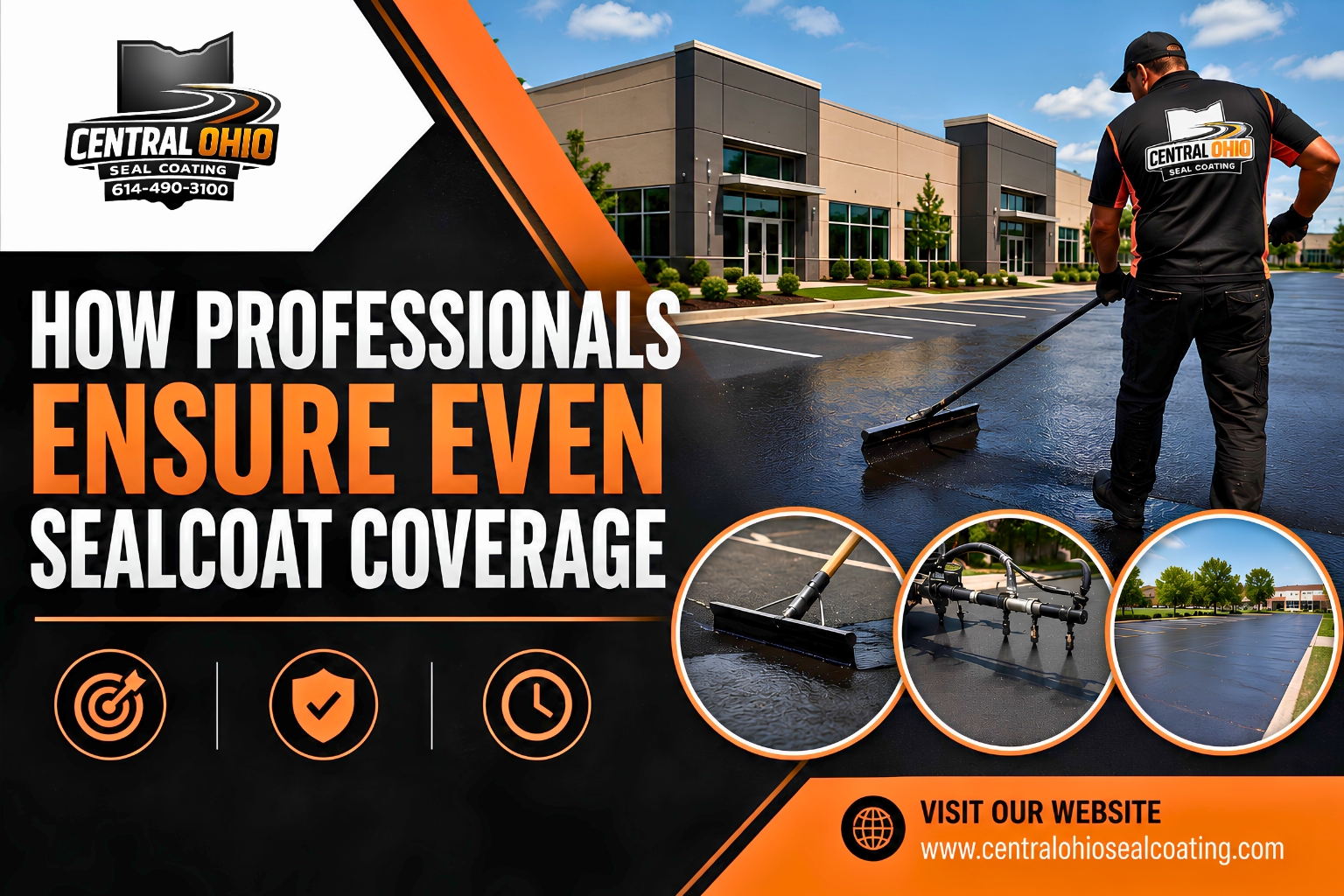
- Application: Sealcoat can be applied by a squeegee or spray. Work in sections, spreading the coat evenly. Most professionals recommend at least one generous coat (sometimes two thinner coats). The goal is full coverage but not a puddled surface. Temperature and humidity will affect drying time.
- Post-application care: After applying, restrict traffic (walking/cars) until fully cured. This can take 24–48 hours in good weather. Keep the pavement dust-free and avoid rain for at least 6–12 hours after application. Once cured, the surface will be dark black, uniform, and slightly textured. With proper prep, the results will last the expected 2–3 years before fading indicates it’s time to recoat.
DIY vs Professional Sealcoating
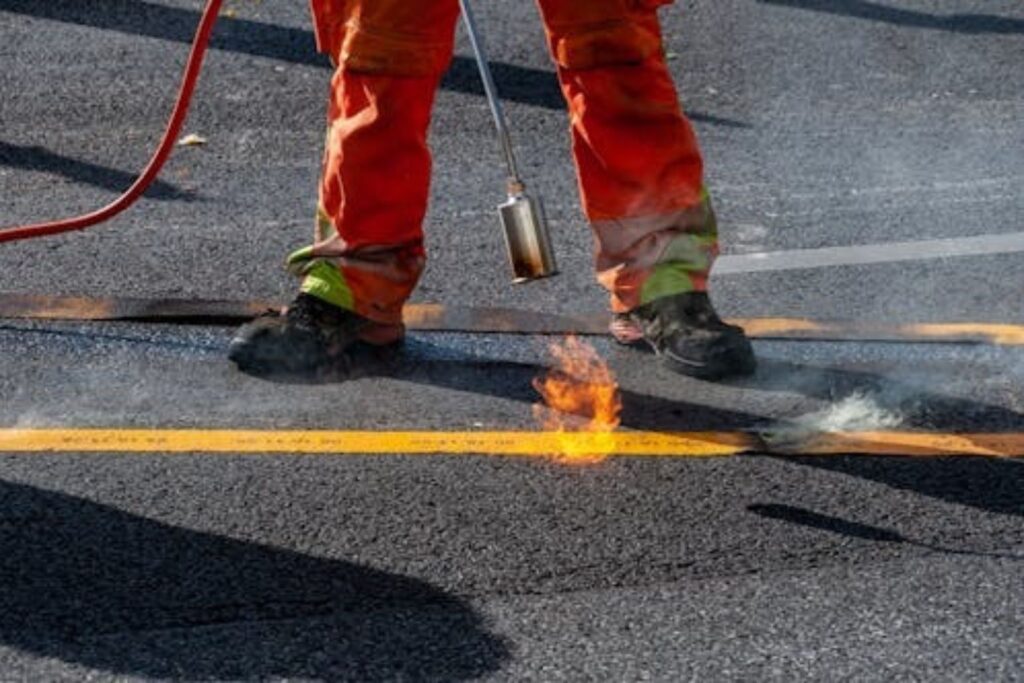
For small, flat driveways, a homeowner can attempt sealcoating as a DIY project if properly equipped. However, there are pitfalls. Professional contractors have specialized equipment (sprayers, large squeegees, and professional-grade sealant) and experience to ensure uniform coverage.
DIY challenges: Without power washing equipment, thorough cleaning is hard. Achieving an even coat and proper thickness is difficult with basic tools. Mistakes like applying too thin a coat, missing spots, or using wrong weather conditions can significantly reduce effectiveness (Central Ohio Seal Coating notes DIY “uneven results” and wasted effort). Also, sloped or awkward driveways and large areas become labor-intensive.
When to hire a pro: If your driveway or lot is large, in poor condition (many cracks), or you want the job done quickly and reliably, it’s wise to call a sealcoating contractor. Professionals can repair cracks, adjust mixtures for local conditions, and finish in a day. For business parking lots, uneven surfaces, or when you need a uniform finish, professional sealcoating is recommended. A pro also guarantees the work and can advise on timing, ensuring the pavement is properly prepared.
That said, minor driveway projects (single-car width, few minor cracks, low budget) can sometimes be handled by an experienced DIYer. If choosing DIY, be sure to rent or buy the right tools, follow all prep steps carefully, and work under optimal weather. In general, professional applications provide peace of mind and better durability, which is why Central Ohio Seal Coating emphasizes that pros use proper preparation and techniques to avoid common mistakes.
Common Misconceptions & Risks of Sealcoating
Even though sealcoating is straightforward in concept, several misconceptions can cause problems:
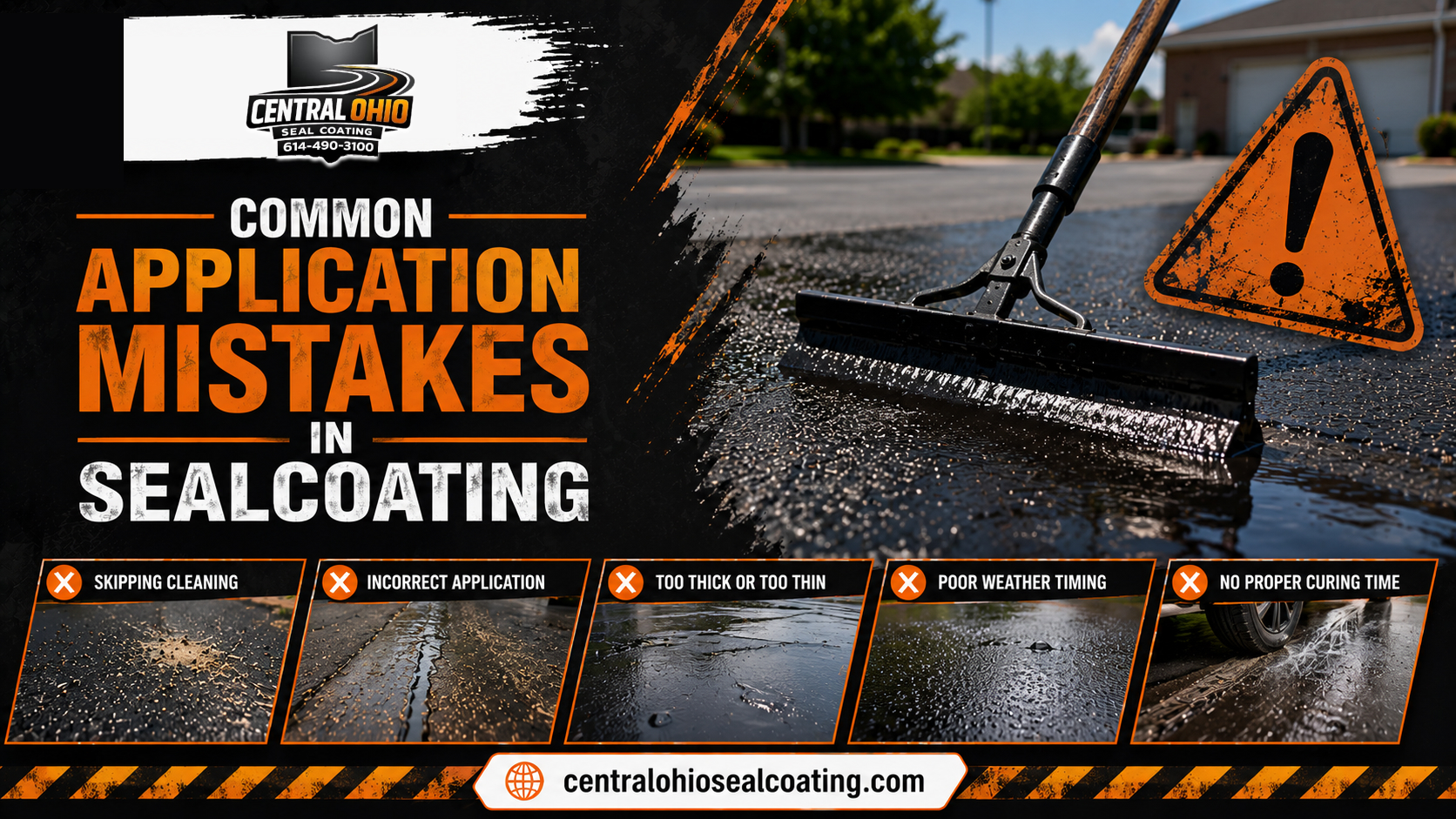
- “Sealcoat fixes deep cracks or base failure.” False. Sealcoating only seals the surface. Any deep cracks or potholes must be fixed first. Sealcoating over a structurally unsound pavement will lead to peeling and early failure.
- “One thin coat is enough.” Thin coats look less black and wear out quickly. It’s better to apply a proper thickness (often two coats) as recommended. A skimpy coat fails to fully protect the binder.
- “You can sealcoat in cold or wet weather.” Sealcoat should only be applied when pavement is at least ~50°F (10°C) and falling (or higher). Rain or freezing temperatures during curing will ruin the application. Similarly, do not sealcoat immediately after rain; asphalt must be fully dry.
- “Branded cheap sealants are the same as contractor-grade.” Quality matters. Some homeowners use subpar products. A thin, watery sealant is inferior. Professional-grade coal tar or polymer-modified sealants last longer.
- “Maintenance isn’t needed if sealcoating is done.” Even sealed pavements must be re-evaluated and recoated as part of an ongoing maintenance schedule. Sealcoating delays repairs but does not eliminate aging.
Understanding these points prevents wasted effort. For example, Surface Engineering notes that if asphalt is already in very poor condition (“deteriorated”), it may need resurfacing instead of just sealcoating. Always assess pavement condition first.
Comparison of Sealcoating Benefits
| Benefit | What It Prevents | When to Expect Results |
|---|---|---|
| Water/Moisture Barrier | Prevents water penetration, freeze–thaw damage to base | Waterproofing effect is immediate after curing; lasting protection until next reseal (2–3 years) |
| UV/Oxidation Protection | Prevents binder hardening/UV cracking | Pavement remains darker and flexible right away; slowdown of future oxidation visible over seasons |
| Salt & Chemical Resistance | Prevents asphalt degradation from road salt, oil spills | As soon as cured, spills bead up and are less absorbed; surface remains durable through winter applications |
| Enhanced Appearance | Prevents faded, gray look | New deep-black look is obvious immediately after application; improves curb appeal at once |
| Improved Skid Resistance | Prevents slippery, uneven surface hazards | Immediately yields a uniform texture; safety & traction preserved in next rain/snow season |
| Extended Pavement Life | Prevents premature resurfacing needs | Long-term benefit: see noticeably fewer cracks & repairs needed over years |
Final Thoughts
Asphalt maintenance is not only about fixing visible damage after it appears—it is about preventing deterioration before it becomes expensive to repair. Ohio’s changing seasons place continuous stress on driveways, parking lots, and paved surfaces, making preventative maintenance one of the most important investments property owners can make. Understanding why sealcoating is essential for asphalt maintenance in Columbus Ohio helps property owners protect pavement against weather damage, traffic wear, moisture intrusion, and oxidation long before structural problems develop.
For residential properties, regular sealcoating helps maintain curb appeal, improve driveway durability, and prevent early cracking or fading. For commercial properties, it helps create safer, cleaner, and more professional-looking parking areas while reducing long-term pavement repair costs. Preventative services such as crack sealing, sealcoating, and routine inspections can significantly extend asphalt lifespan when performed consistently.
If your asphalt surface is beginning to fade, crack, or show signs of wear, Central Ohio Sealcoating can help evaluate your pavement condition and provide professional sealcoating and asphalt maintenance solutions designed specifically for Columbus and Central Ohio weather conditions.