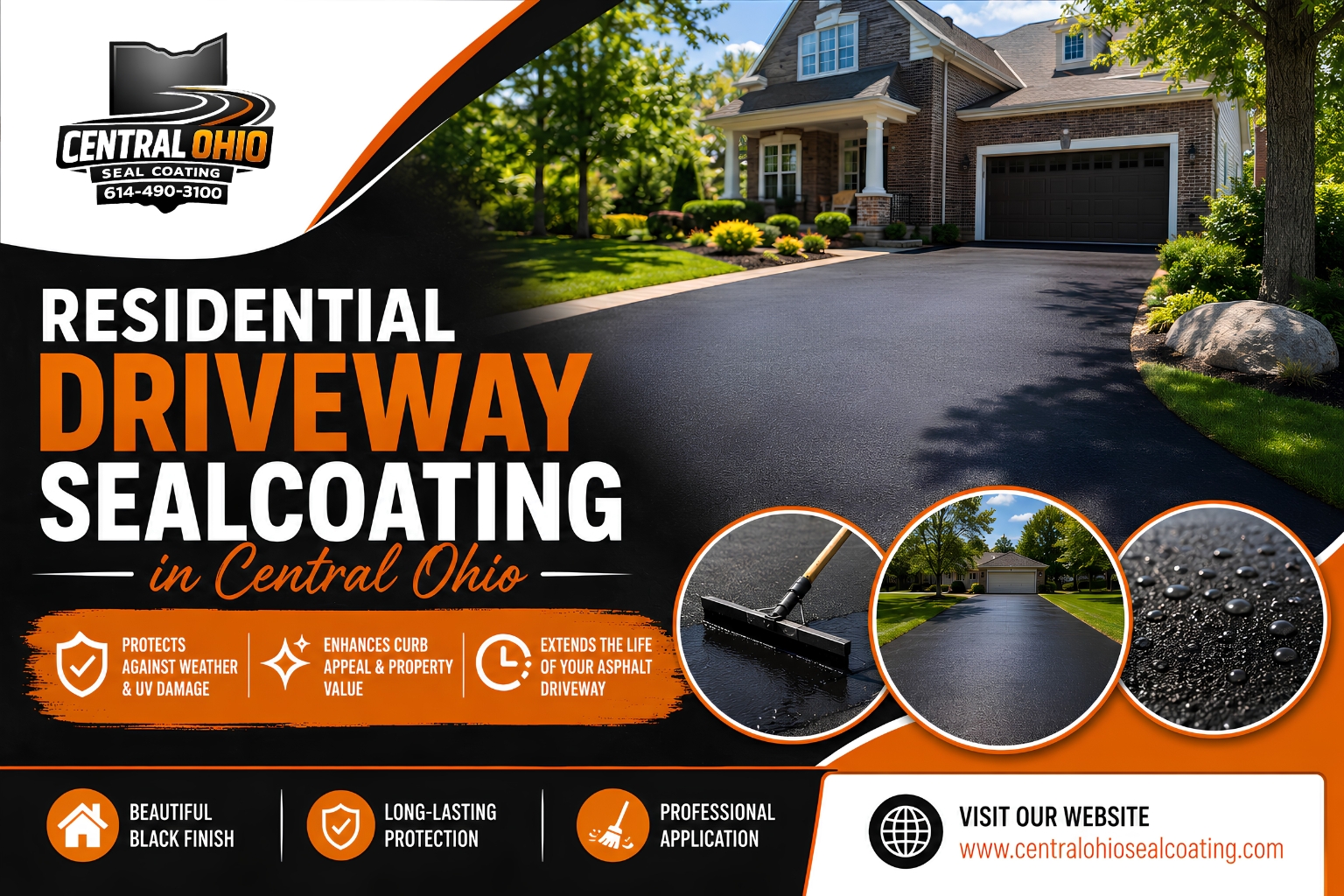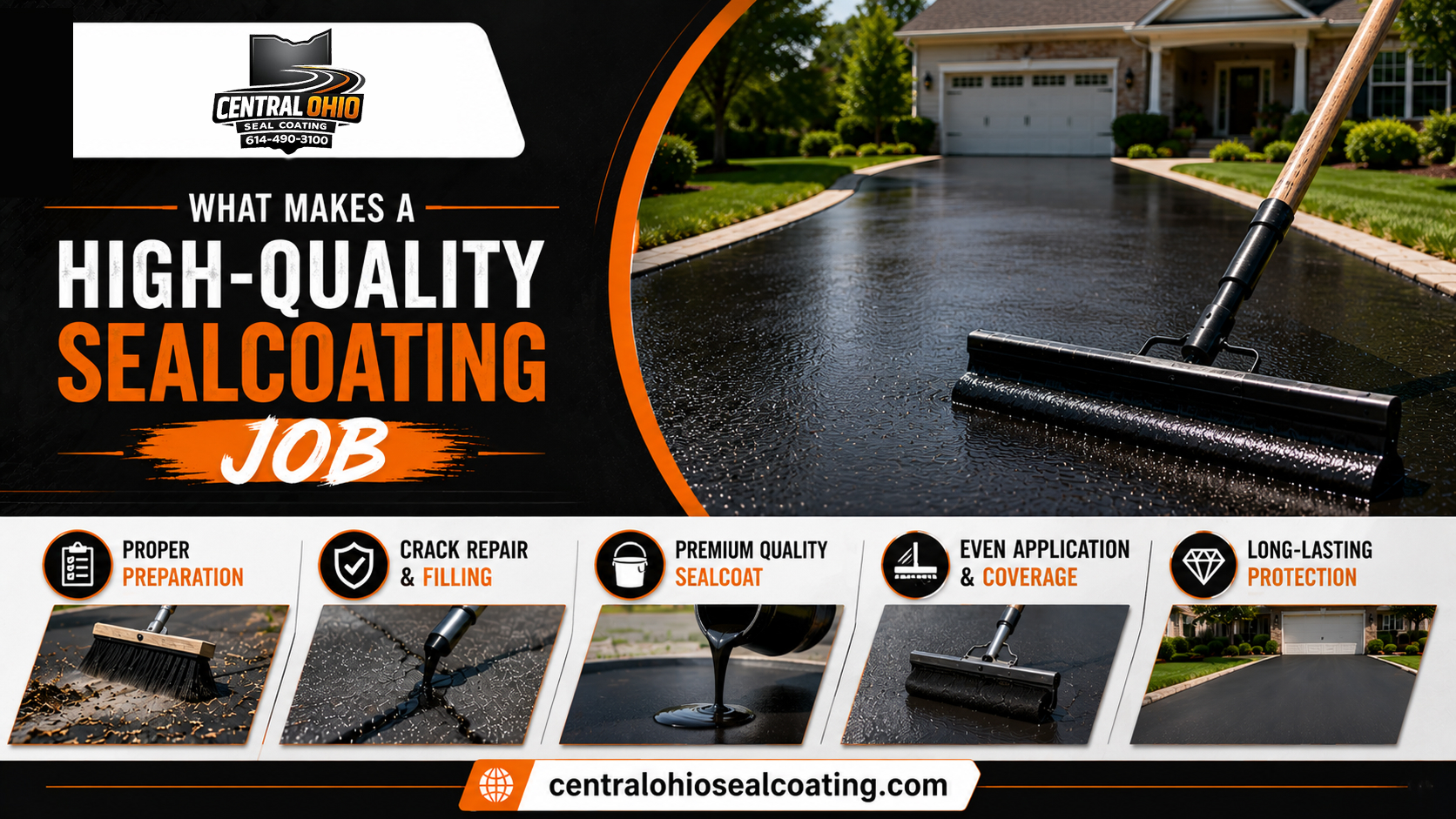

Do you want to know about How Sealcoating Protects Asphalt in Central Ohio? If you want to protect your pavement and avoid premature surface damage, investing in professional asphalt sealcoating Columbus Ohio services is an essential step. Sealcoating helps preserve the strength, appearance, and lifespan of asphalt surfaces by creating a protective layer against moisture, UV exposure, oil stains, road salt, and everyday traffic wear. In Central Ohio, where freeze-thaw cycles and seasonal weather changes can quickly weaken pavement, routine sealcoating plays a major role in preventing cracks, fading, and surface deterioration. Properly maintained asphalt not only looks cleaner and more professional but also performs better over time. Property owners who partner with Central Ohio Sealcoating can benefit from customized pavement maintenance solutions, expert application techniques, and long-term protection designed specifically for Ohio’s challenging climate conditions.
Asphalt sealcoating is a cost-effective way to shield driveways and parking lots from Central Ohio’s harsh weather. It’s a thin protective layer (typically coal-tar or asphalt emulsion-based) applied to asphalt pavement. Sealcoating blocks moisture, oils, UV rays, and chemicals, slowing the oxidation and wear that make asphalt fade, crack and crumble. In Ohio’s cycle of freezing winters and hot summers, regular sealcoating (about every 2–3 years) can extend pavement life and maintain appearance. Homeowners should understand the different sealcoat materials (coal-tar, asphalt-based, or polymer/acrylic), the ideal timing, costs, and how to hire a pro. Below we explain the science of sealcoating, application best practices, expected benefits and limitations (with citations), plus cost factors and contractor-selection tips for Columbus, Ohio. A comparison table and simple mermaid flowchart summarize key points.
What Is Asphalt Sealcoating and Why Use It?
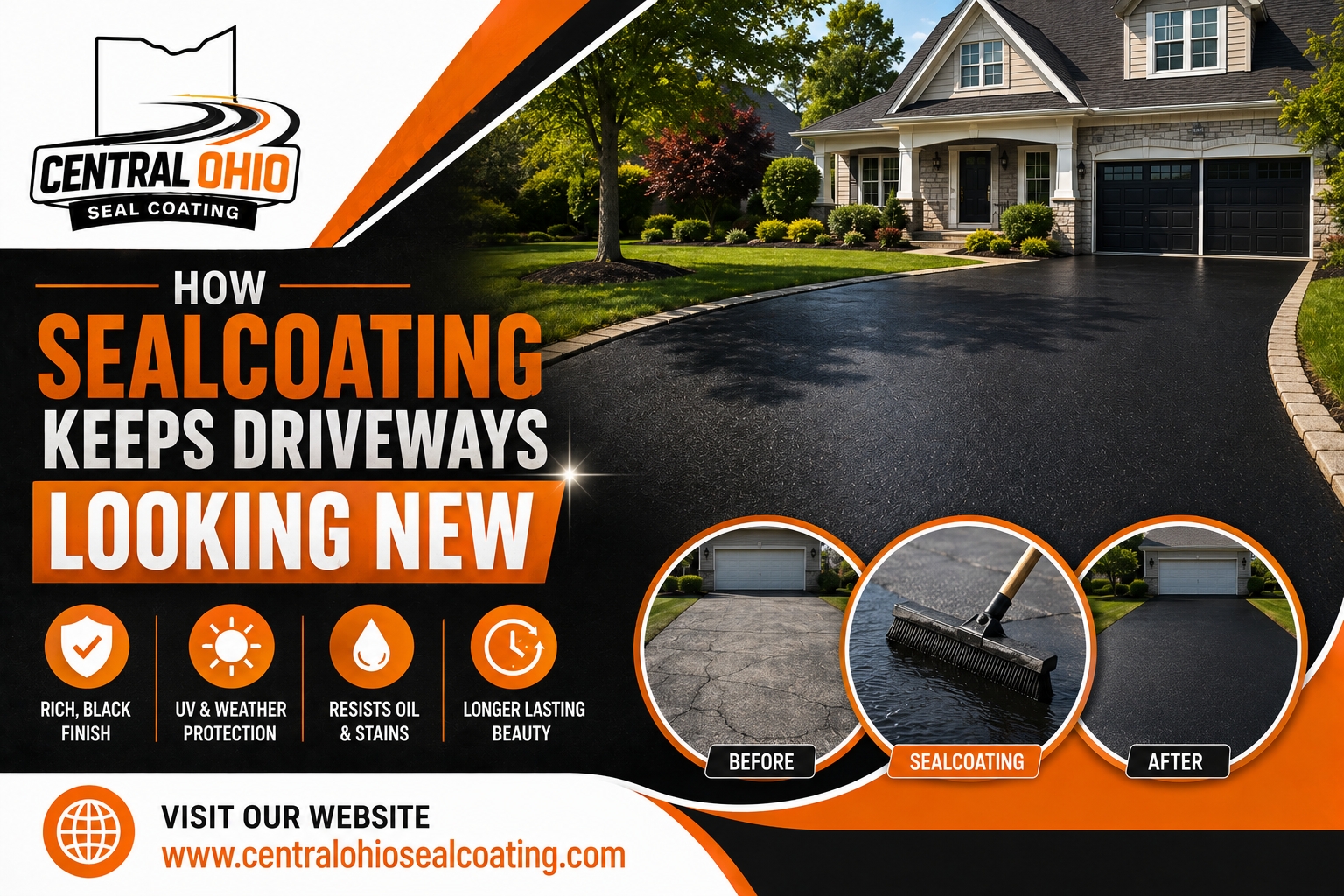
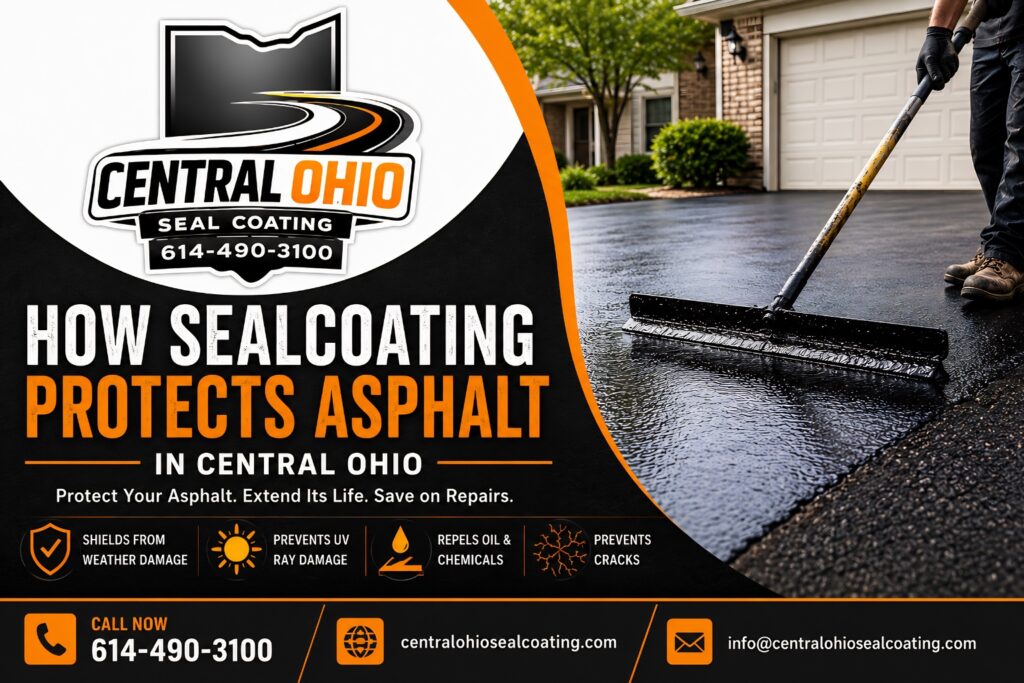
Asphalt sealcoating is essentially a protective coating for asphalt surfaces. It’s formulated as an emulsion (often coal-tar or asphalt-based with additives) that is applied by spray or squeegee over cleaned pavement. This top layer acts as a barrier: it “shields asphalt from damage” by sealing out water, oil, UV light and road salts. Over time, sun and weather oxidise asphalt’s natural oils, causing surfaces to fade and become brittle. Sealcoating slows that oxidation. For example, Asphalt Help Ohio explains that sealcoating “protects pavement from moisture intrusion, UV damage, oxidation, and oil spills,” which reduces surface deterioration and extends service life. Without sealcoating, small cracks allow water in, leading to costly potholes or repaving; sealcoating helps prevent such damage.
In Columbus-area conditions, this protection is crucial. Central Ohio’s freeze–thaw cycles and strong sun put asphalt through constant stress. Sealcoating keeps the pavement flexible and durable year-round, guarding against both winter freezing (which expands water in cracks) and summer UV (which dries out binders). In plain terms, it’s like sunscreen and raincoat in one for your driveway. As one local provider puts it, “sealing allows water to be kept out and asphalt flexibility preserved” in both cold and hot seasons. For best results, hire Professional Sealcoating Experts in Columbus Ohio who know how to prepare the surface and apply evenly – the quality of prep and materials makes all the difference.
Sealcoating Materials and Types (Coal-Tar, Asphalt, Polymer)
Several sealant chemistries exist, each with pros and cons in Ohio. The main types are coal-tar emulsion, asphalt emulsion, and polymer/acrylic (fast-dry) sealers. Each starts as a liquid emulsion that cures to a solid barrier. A recommended sealcoating company in Columbus Ohio will choose based on site needs.
- Coal-Tar Sealcoats: A traditional choice made from coal-processing byproducts. It cures to an extremely hard, oil-resistant surface. Advantages include deep black color, excellent resistance to gasoline/oil stains, and long life (often 3–5 years). Downsides: it contains PAH chemicals (toxic, and banned in some areas) and eventually becomes brittle, leading to cracking over time. Coal-tar sealers also have a strong odor during application and pose health/environmental concerns.
- Asphalt Emulsion (Oil-Based) Sealcoats: These use refined asphalt (similar to paving mix) plus water and additives. Pros: they are safer and more environmentally friendly (low in PAHs), dry relatively fast, and produce a clean black finish. They flex better with temperature changes, reducing crack formation. Cons: they offer less chemical resistance (weaker vs oil spills), and generally need recoating sooner – roughly 1–3 years under Ohio conditions. They are often slightly more expensive upfront than coal-tar. Asphalt-based sealers are a good balanced choice for residential driveways.
- Polymer (Acrylic) Sealers / Fast-Dry: Polymer or acrylic sealcoats (sometimes called fast-dry or premium sealers) are newer, high-performance formulas. Advantages: They provide excellent UV, chemical and weather resistance, and can be tinted (not just black) for decorative options. They are VOC-friendly and very durable. Disadvantages: They are more expensive than other sealers and typically require professional application for best results. They usually target niche uses (e.g. commercial lots or decorative projects). The typical lifespan can be similar to coal-tar (~4–6 years) but data for Central Ohio specifically is limited; in general, polymer sealers are prized for longevity and color retention.
The table below summarises these types:
| Sealer Type | Pros | Cons | Lifespan | Cost | Best Use |
|---|---|---|---|---|---|
| Coal-Tar Emulsion | Deep black, very durable, oil/gas resistant | Contains PAHs (toxic), strong odor, can become brittle | ~3–5 years (traditional) | Lower material cost | Commercial lots, garages (high spills) |
| Asphalt Emulsion | Made from asphalt (compatible with pavement), eco-friendlier, flexible | Less resistant to oil/chemicals, shorter life, needs reapplication | ~1–3 years (typical) | Moderate | Residential driveways, light-traffic areas |
| Acrylic/Polymer | Premium UV & chemical protection, color options, durable | Highest cost, requires pro application, may be overkill for driveways | ~4–6 years (est.) | Highest | High-end or decorative pavement; plazas |
Each property owner should discuss these with their contractor. For many Central Ohio homeowners, asphalt-emulsion sealers (sometimes called “oil-based”) are often recommended for driveways: they’re safer and easier to handle than coal-tar, and last a reasonable time. Commercial lots might still use coal-tar for its chemical resistance despite the environmental concerns. Polymer sealers are usually chosen for premium applications where appearance or very long life justifies the cost.
Central Ohio Climate & Sealcoating Timing
Columbus, Ohio’s climate drives the sealcoating schedule. Freeze–thaw cycles and precipitation are the biggest threats. Homeowners are advised to wait until asphalt is cured (6–12 months after paving) before sealing. After that, sealcoat every ~2–3 years for most driveways, as weather allows. For example, the Central Ohio Sealcoating blog recommends a 2–3 year interval for older driveways, reapplying sooner if heavy traffic or wear is present.
Seasonally, the best times to sealcoat Columbus asphalt are spring and early fall, when temperatures are mild (ideally 50–85 °F / 10–30 °C) and rain is unlikely. Avoid sealcoating during freezing weather or extreme heat. Central Ohio’s winter freeze–thaw cycles are particularly damaging: water seeps into small cracks and expands when frozen, causing larger cracks. Sealcoating before winter helps block moisture entry. Likewise, hot summers (sunny days above 25 °C/80 °F) can be good for curing but apply before peak heat to avoid immediate oxidation. Contractors often advise scheduling sealcoating in late spring or early autumn to minimize weather risk.
Watch for these signs that your surface is due for sealcoat: the asphalt looks faded gray (instead of rich black), small cracks or rough texture appear, water no longer beads on the surface, or oil stains penetrate the pavement. If any of these occur, arranging sealcoating now can prevent more costly repairs later. Property owners should get quotes for “sealcoating estimates in Columbus Ohio” from reputable contractors and plan the work during the recommended window.
Application Best Practices and Quality Indicators
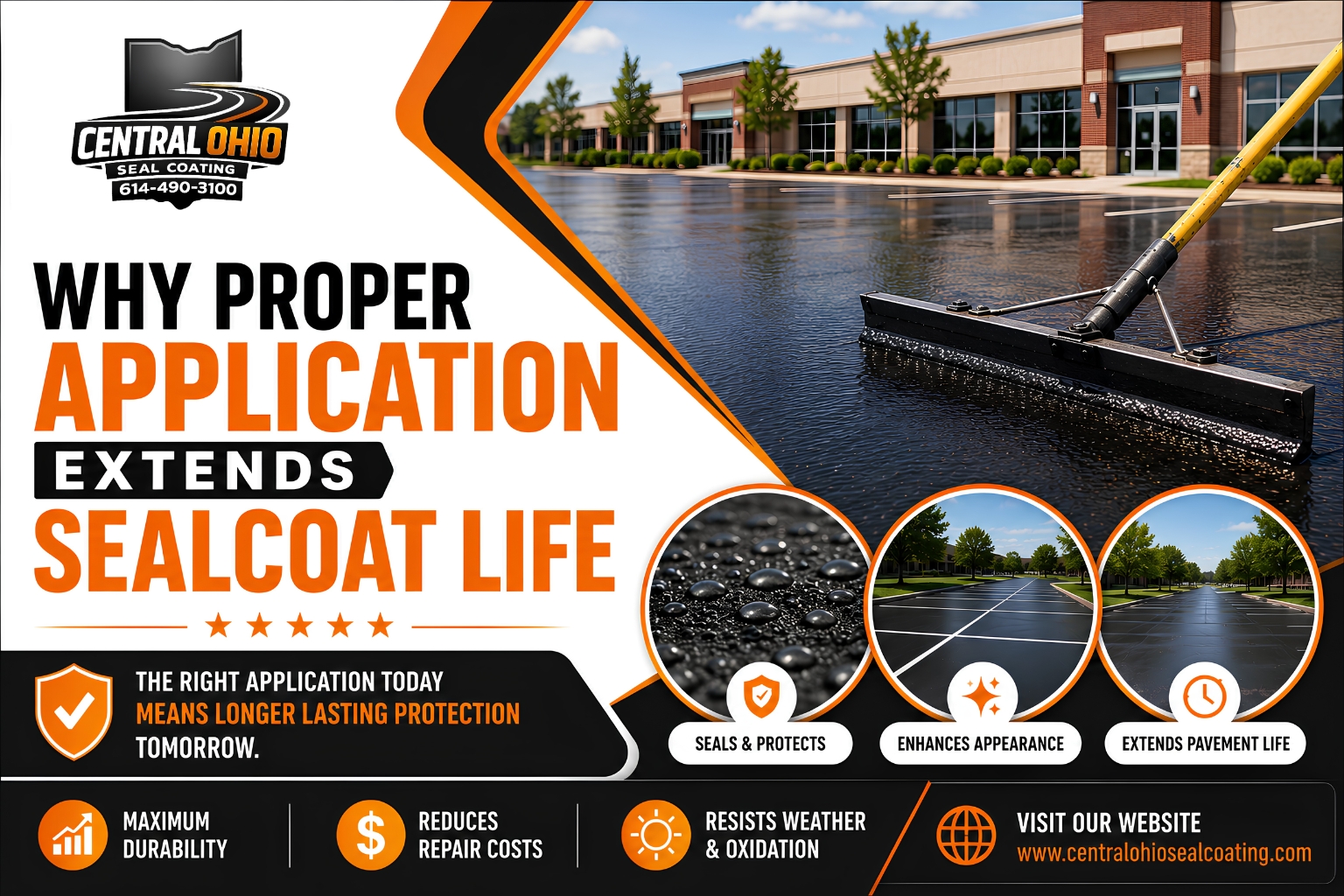
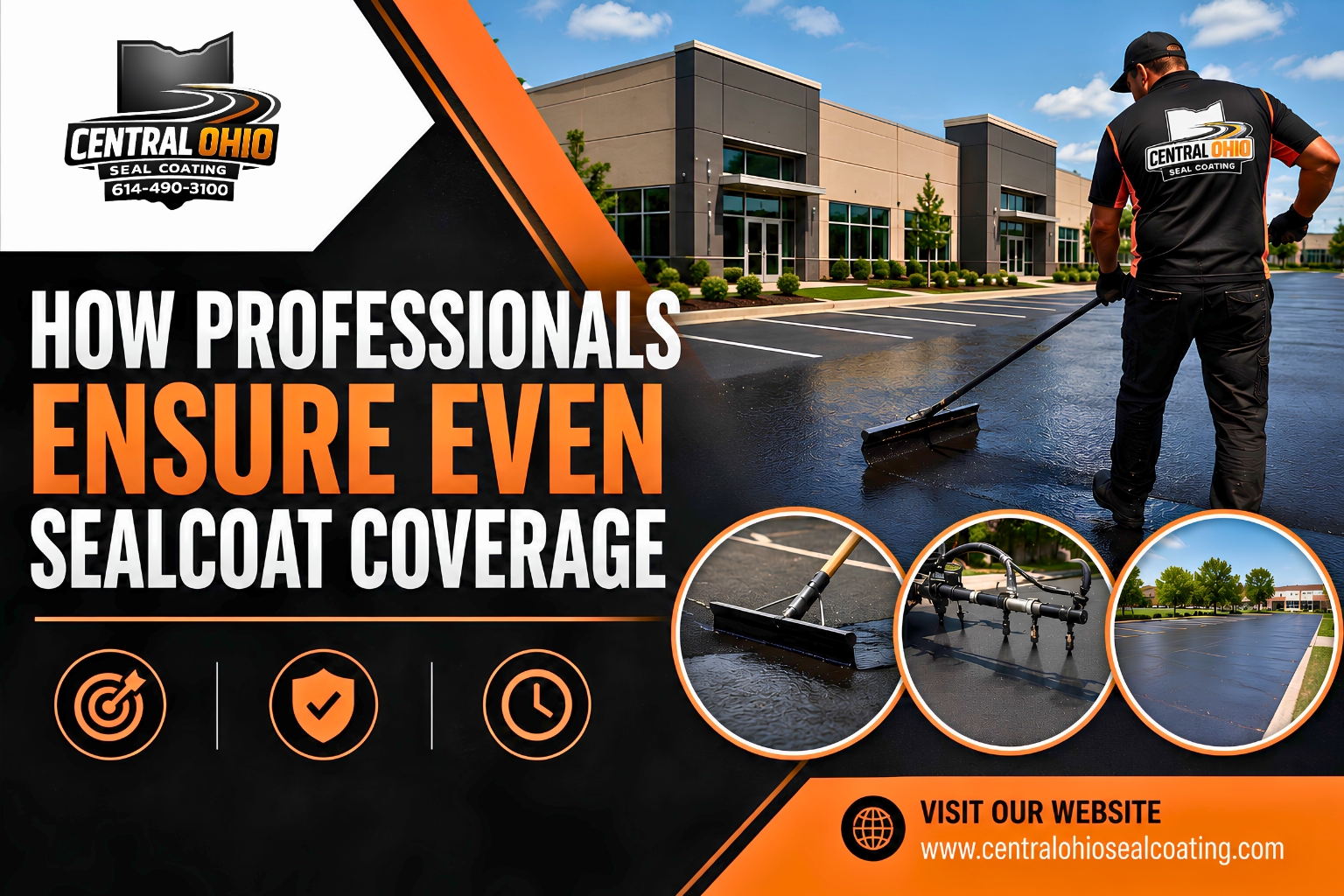
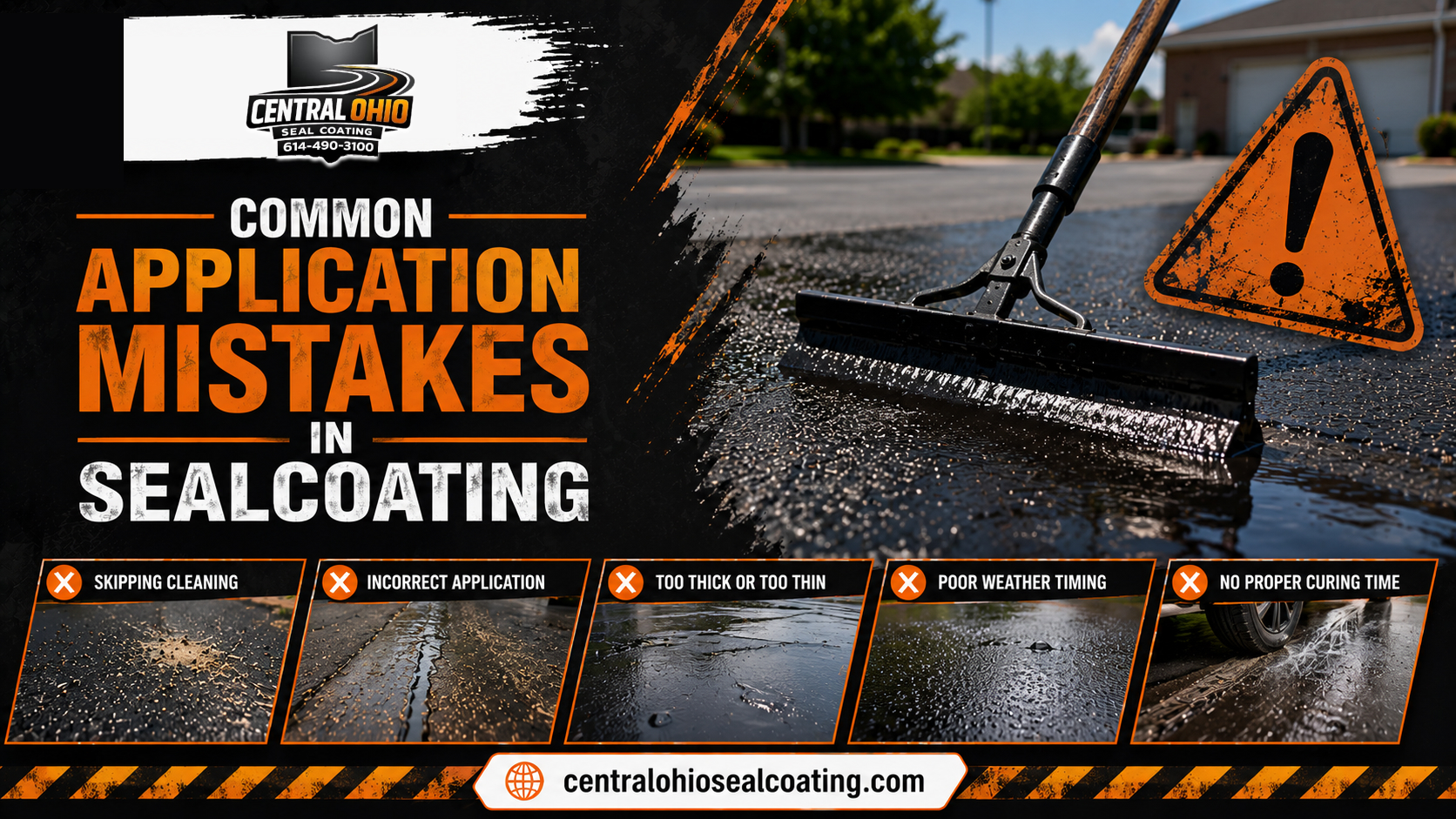
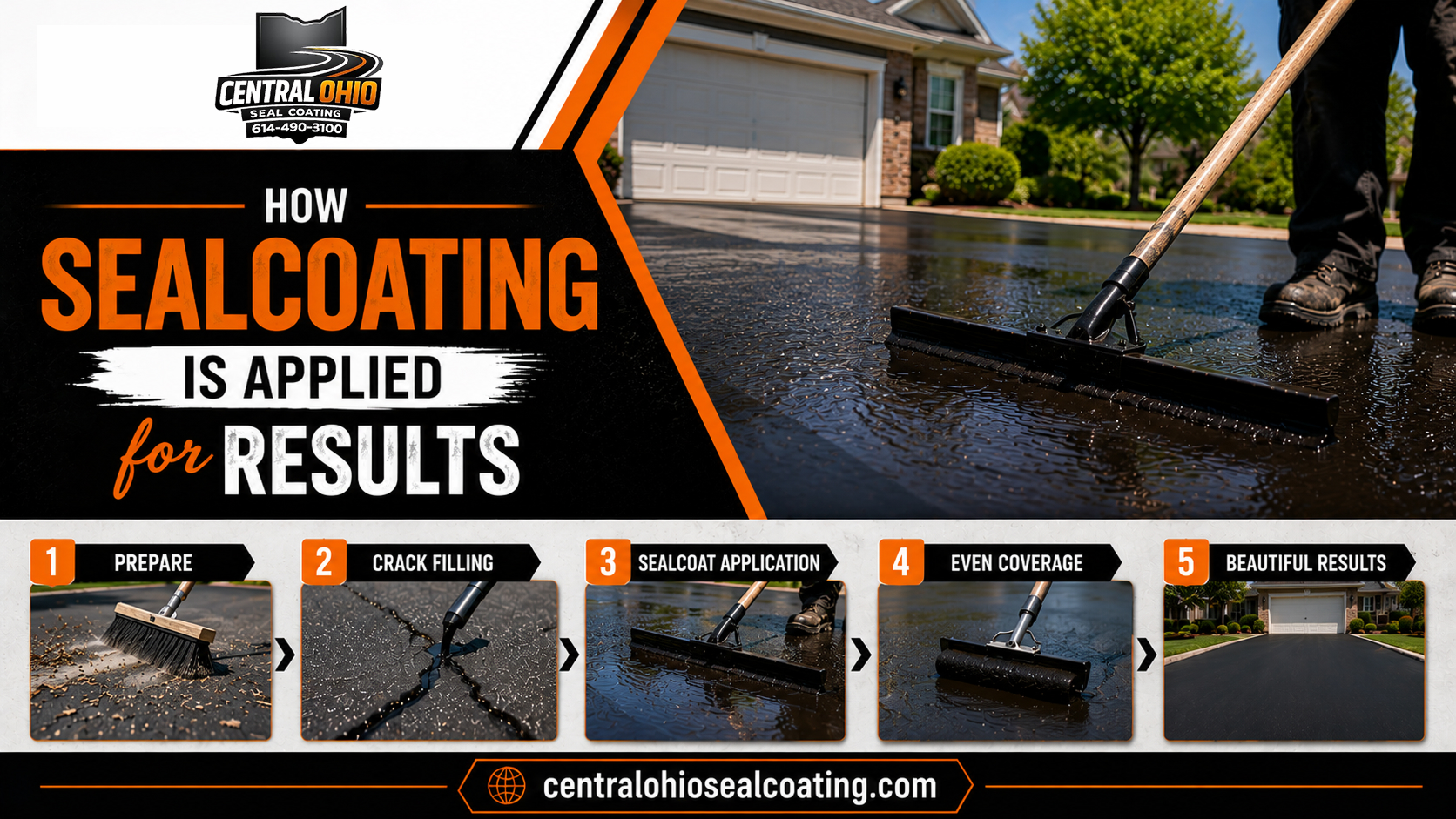
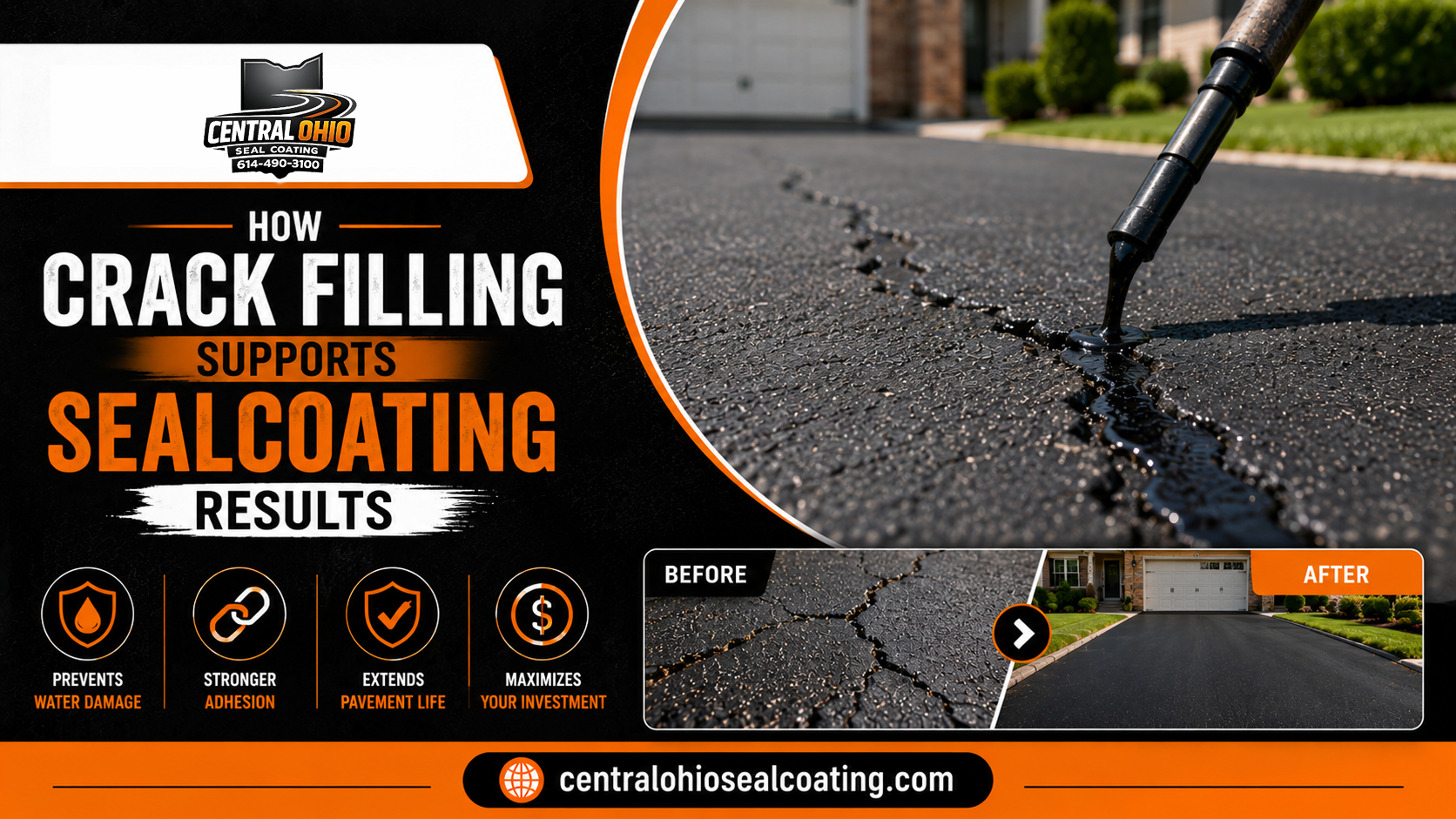
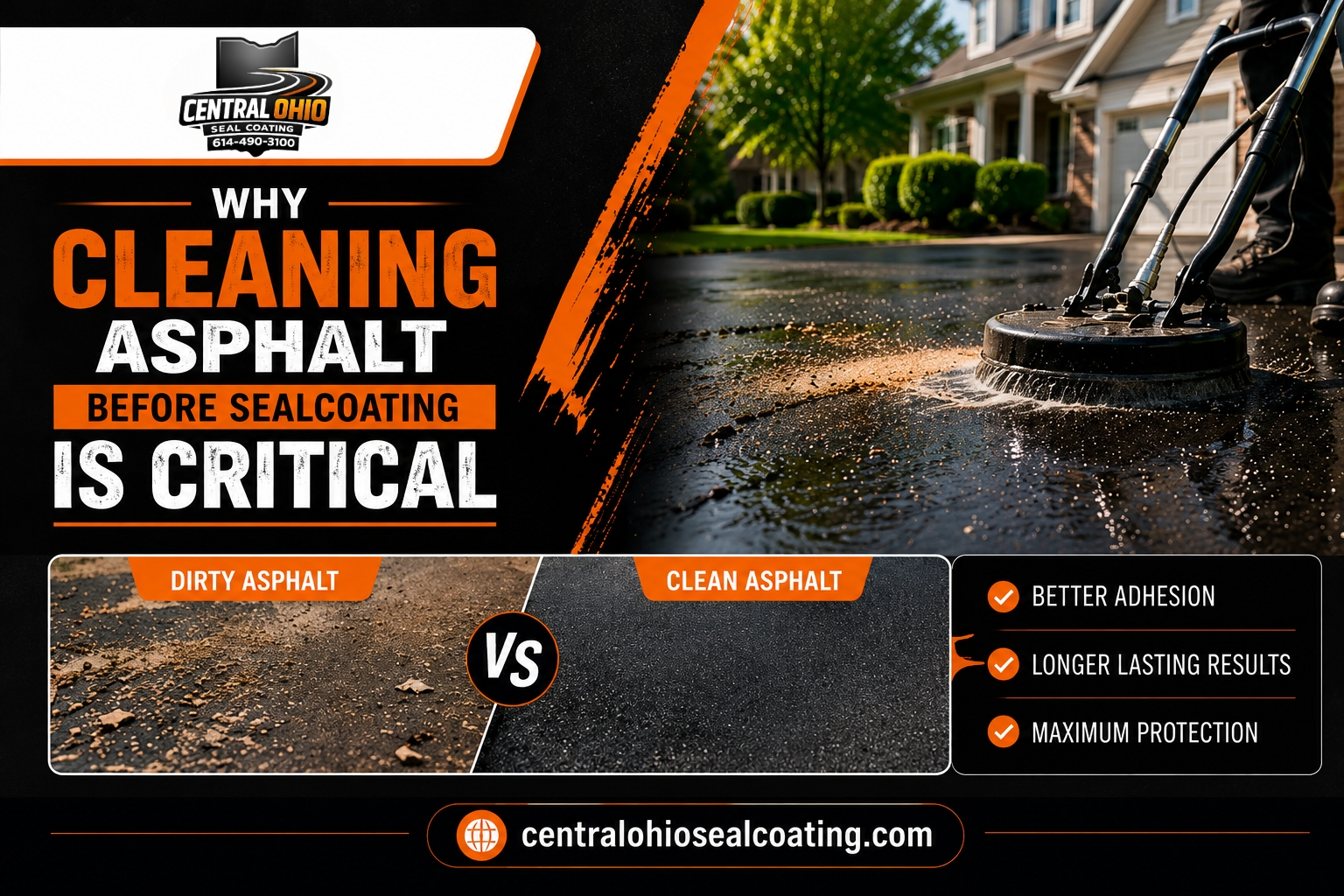
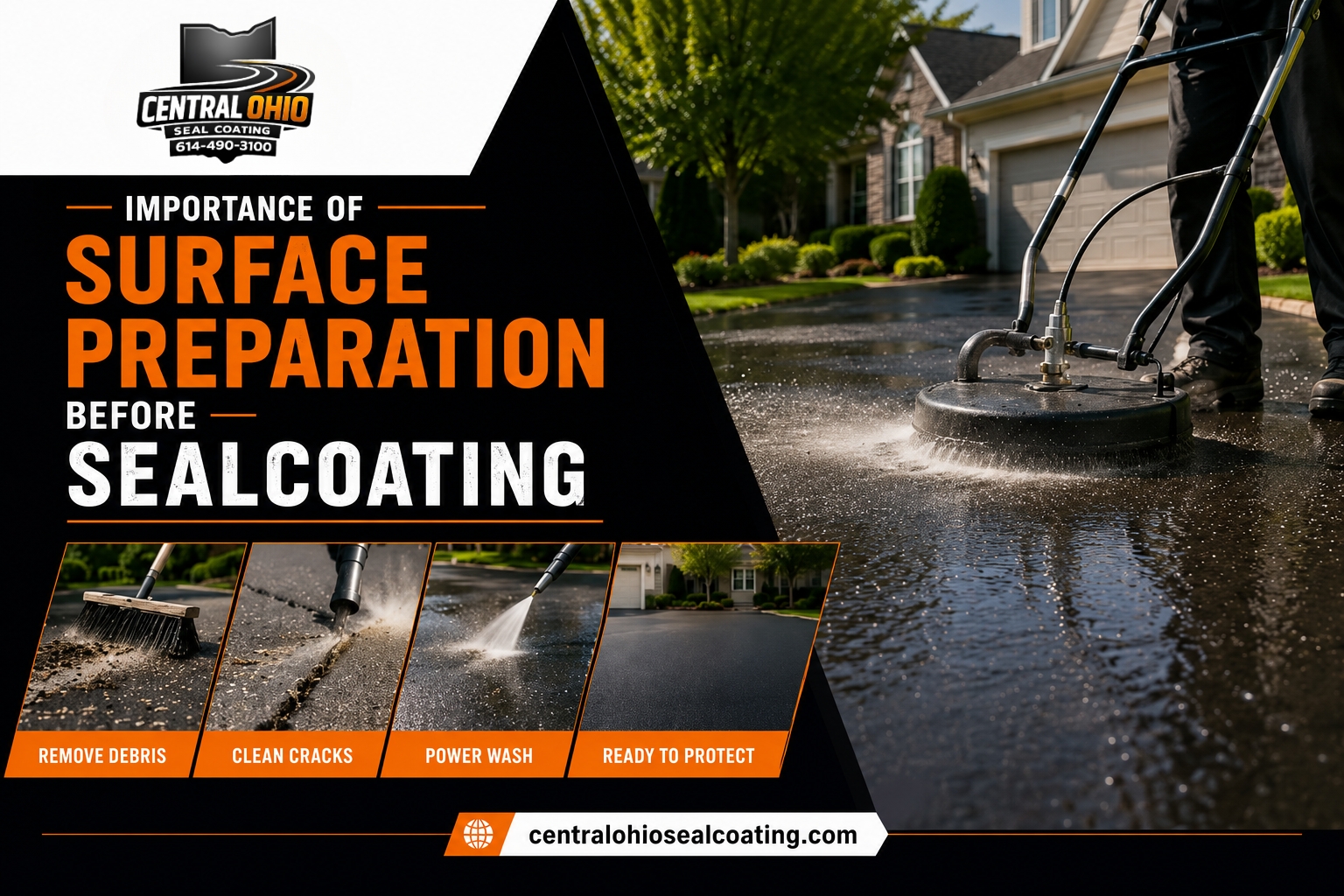
Proper application is as important as the sealcoat itself. Good practice includes: thorough cleaning (removing dirt, vegetation, and oil), filling cracks and potholes first, and then applying the sealant evenly (often with a squeegee or commercial sprayer). Central Ohio Seal Coating emphasizes professional application, noting that DIY kits exist but often fail without proper prep. A smoothly graded surface should be visible under the sealer, and edges should be carefully coated.
Quality indicators include even coverage (no bare spots), correct sealer thickness, and minimal pooling. A professional applicator will also observe traffic timing – for example, keeping cars off for at least 24–48 hours to let the sealer cure. It’s wise to seek estimates from established companies; they will advise if any base repairs (crack sealing, patching) are needed before sealing, as Central Ohio Sealcoating recommends. When comparing contractors, ensure they use commercial-grade sealcoats (often 3.5–5 gallons per 100 ft²) rather than over-diluted consumer mixes. You might see companies advertising as a recommended sealcoating company in Columbus Ohio on local directories or review sites. Check that they are insured and use branded sealcoating products, not generic tars.
Expected Benefits and Limitations
Sealcoating extends pavement life but doesn’t make asphalt indestructible. Exact life extension varies: one analysis noted high-quality sealcoating can prolong surface life by several years, but we lack specific figures for Ohio. Industry consensus is that routine sealing (every few years) can delay major rehabilitation (resurfacing) for a decade or more under moderate use. For context, chip sealing (a related surface treatment) can postpone overlay by 5–7 years on roads. Homeowners should regard sealcoating as a preventive maintenance tool: it slows oxidation and moisture damage, but once cracks or base failures are present, more extensive repair may be needed.
Limitations include the fact that sealcoating cannot stop thermal cracking if the subgrade is poor, nor will it bridge large existing cracks. It may not adhere well to overly weathered or oil-saturated surfaces. Thus, its life span depends on the initial pavement quality and post-seal maintenance. Expect residential-grade sealcoat to look “like new” for a couple of years; thereafter, gradual fading and surface wear will occur.
Quotes and Choosing a Contractor
Sealcoating costs vary with pavement size and material. Quotes often range from a few hundred for a small driveway to a couple thousand for a large lot. It’s best practice to gather sealcoating estimates in Columbus Ohio from at least 2–3 providers. When evaluating quotes, ensure each includes surface prep, crack filling, a specific product name, and coverage rate (gallons per area). Compare the “apples-to-apples”: a very low bid may use thin material or skip prep.
Important cost factors: quality of sealant and whether crack repair is included. Central Ohio contractors may bundle crack sealing and sealing. Ask if the sealer brand is water-based or solvent-based (Ohio pros often favor waterborne for safety) and whether additives (e.g., polymers) are used. Beware of unscrupulous shortcuts (diluting with too much water). Professional contractors will explain that paying a bit more for a thicker, lasting coat saves money over time by avoiding frequent reapplications.
Choose a contractor, check online reviews and ask for references. A recommended sealcoating company in Columbus Ohio, like Central Ohio’s Sealcoating, will typically be able to show examples of work and will communicate the benefits clearly.
Homeowner Checklist: Sealcoating Your Asphalt
- Clean and Inspect: Clear debris and treat any oil stains. Get cracks/potholes professionally filled before sealing.
- Ask Questions: In your sealcoating estimates in Columbus Ohio, verify what prep is included and what sealer type will be used.
- Timing: Schedule sealcoating when the weather is dry and 50–85°F (10–30°C), typically late spring or early fall in Central Ohio.
- Get Multiple Quotes: Compare at least 2–3 contractors. Look for sealed reviews or endorsements.
- Watch Curing: After application, keep vehicles off until fully cured (often 24–48 hours). Ensure there’s ventilation if indoors.
- Maintain: Clean spills and re-seal approximately every 2–3 years. Mark the date to stay on schedule. Regular sweeping helps prevent dirt from binding into the sealcoat.
- Safety: Use contractors who follow safety protocols. Ensure good ventilation.
Sealcoating acts as a protective barrier that shields asphalt from oxidation, rain penetration, road salt, oil leaks, and harsh seasonal temperature shifts. In areas like Columbus and surrounding communities, freeze-thaw cycles can weaken pavement structure faster than many people expect. A professionally applied sealcoat helps slow down that damage while preserving the appearance and strength of the asphalt.
Many commercial property owners rely on Professional sealcoating Experts in Columbus Ohio to maintain parking lots, driveways, and private roadways before visible damage becomes severe. Experienced professionals understand how Ohio’s climate affects pavement and use proper application techniques to create an even protective layer that improves long-term performance.
Final Thoughts
Major benefit of sealcoating is water resistance. Water penetration is one of the leading causes of asphalt sealcoating Columbus Ohio. Once moisture enters small cracks, freezing temperatures can expand the damage and eventually create potholes or surface failures. Regular sealcoating helps reduce water infiltration and keeps the pavement surface more stable during seasonal weather changes.
For homeowners, that means scheduling sealcoating before asphalt begins to fade, dry out, or crack extensively. For commercial property owners, it means maintaining a safer, cleaner, and more professional-looking surface while reducing long-term repair costs. Investing in regular sealcoating early can help prevent premature pavement failure, water intrusion, and expensive resurfacing projects later.
If you are looking for reliable sealcoating estimates in Columbus Ohio, Central Ohio Sealcoating can help you evaluate your pavement condition, recommend the right maintenance plan, and provide professional sealcoating solutions designed for Central Ohio weather conditions.