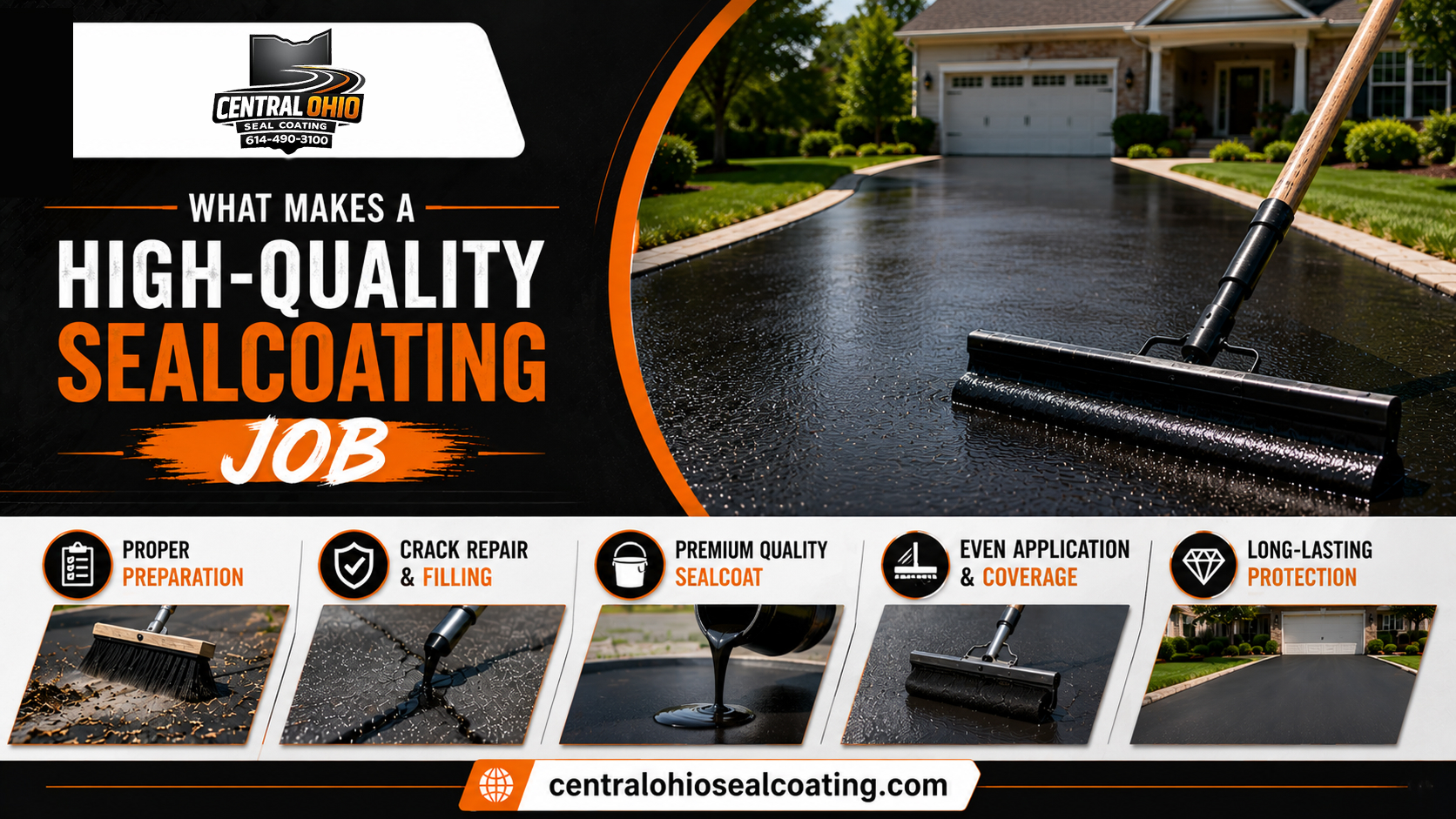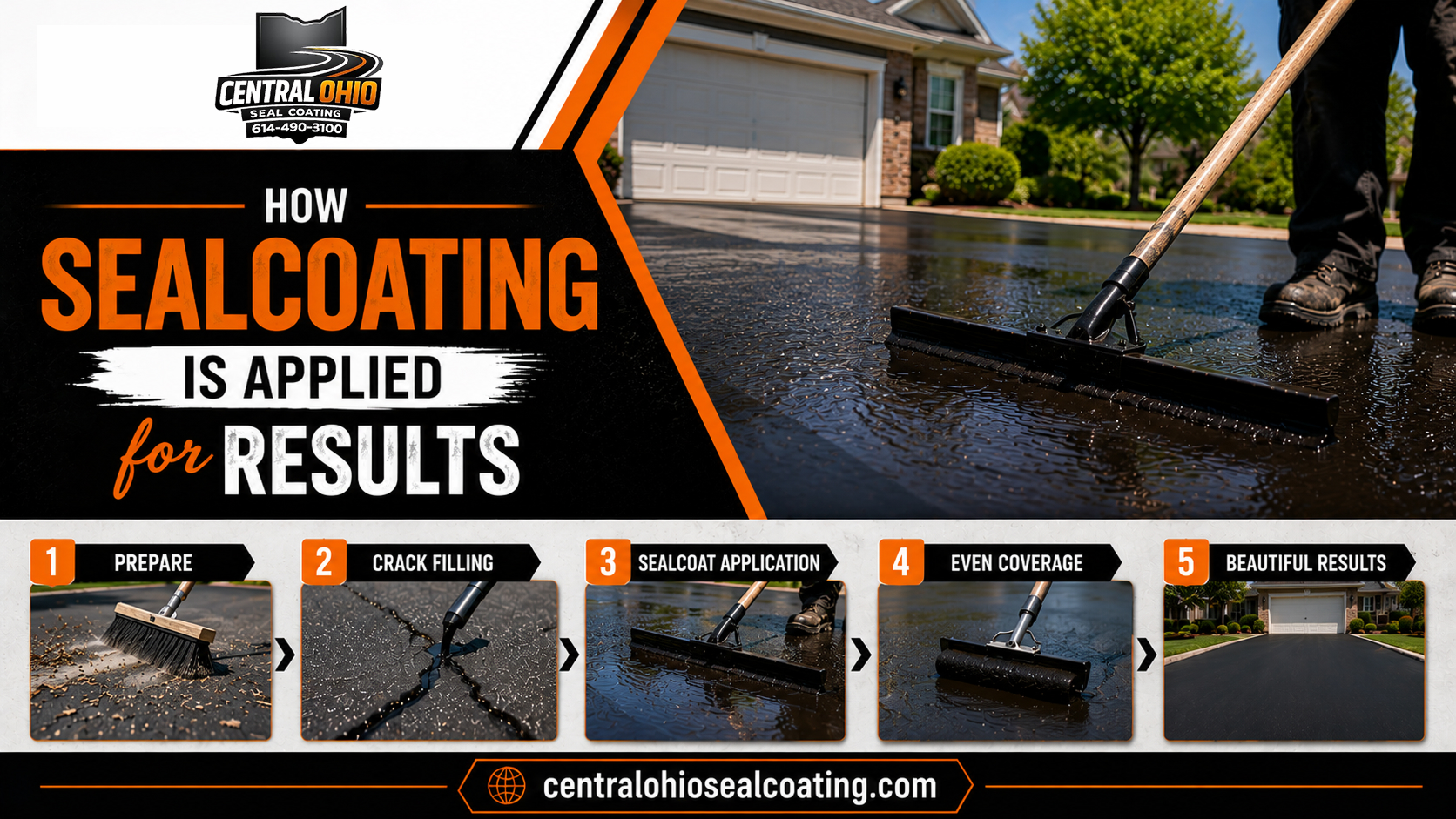

What actually happens when you hire a professional sealcoating company, and why does the process matter so much? Many property owners know sealcoating helps asphalt look darker and cleaner, but fewer understand the full process behind it. In reality, professional sealcoating is much more than spreading a black coating over pavement. It is a step-by-step maintenance process designed to protect asphalt from water, UV rays, oxidation, oil spills, and Ohio’s harsh seasonal weather.
For homeowners and commercial property owners searching for sealcoating service Ohio, understanding the process can help you see why professional work makes such a difference. A proper sealcoating job not only improves appearance but also extends the life of your pavement and helps reduce future repairs.
At Central Ohio Sealcoating, the goal is not simply to make asphalt look better for a short time. The goal is to strengthen the surface against long-term wear while improving curb appeal and preserving pavement value.
Why sealcoating matters before understanding the process
Before looking at the actual steps, it helps to understand why sealcoating is such an important part of asphalt care.
Asphalt naturally contains oils that keep it flexible. Over time, sunlight, oxygen, rain, oil leaks, and chemical spills break down those oils. When that happens, the surface begins to fade, dry out, and lose flexibility. Once flexibility is lost, cracks begin forming more easily.
In Ohio, this process often happens faster because weather conditions are constantly changing.
Common threats to asphalt in Ohio:
- Freeze-thaw cycles
Water enters small cracks, freezes, expands, and makes those cracks larger. - Heavy rainfall
Constant moisture weakens the pavement surface and foundation. - UV exposure
Sunlight causes oxidation, which dries out asphalt. - Vehicle traffic
Daily use creates surface wear and pressure over time.
Sealcoating helps slow all of this.
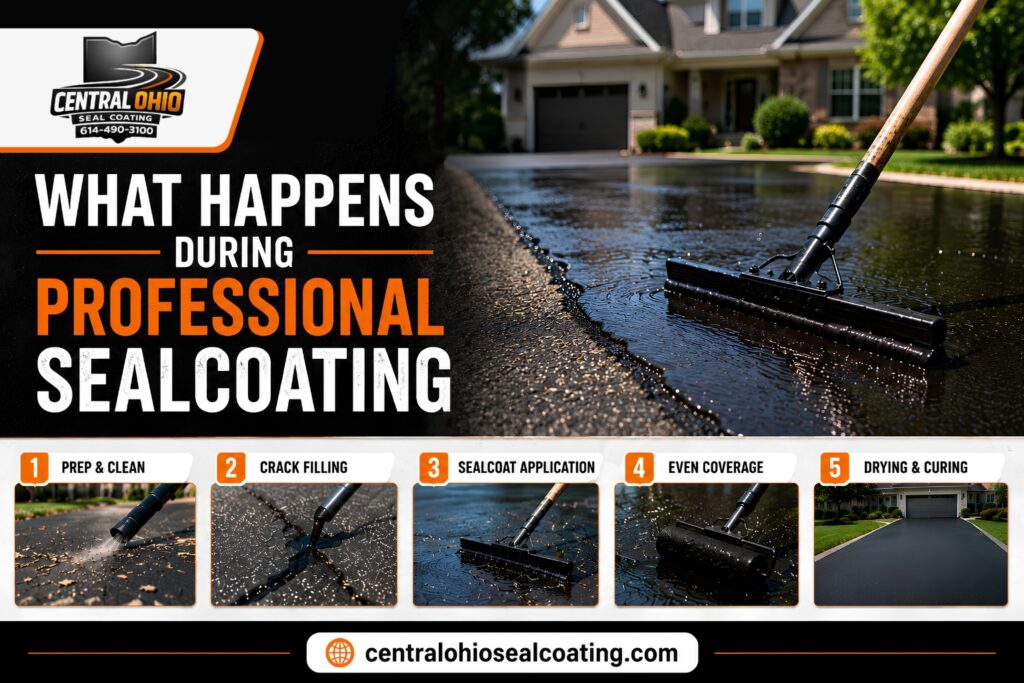
Step 1: Initial pavement inspection
Every professional sealcoating job begins with a full inspection of the asphalt.
This step is important because not all pavement is immediately ready for sealcoating. Contractors first need to evaluate the current condition of the surface.
During inspection, professionals look for:
- Surface cracks
- Oil stains
- Drainage problems
- Surface fading
- Rough texture
- Potholes
- Weak spots
This helps determine whether repairs are needed before sealcoating begins.
Why this step matters
Sealcoating does not fix structural damage. It protects surfaces that are still in workable condition. If the asphalt has deep cracks or serious foundation issues, sealing over them would only hide the problem temporarily.
Professional inspections help identify these issues early.
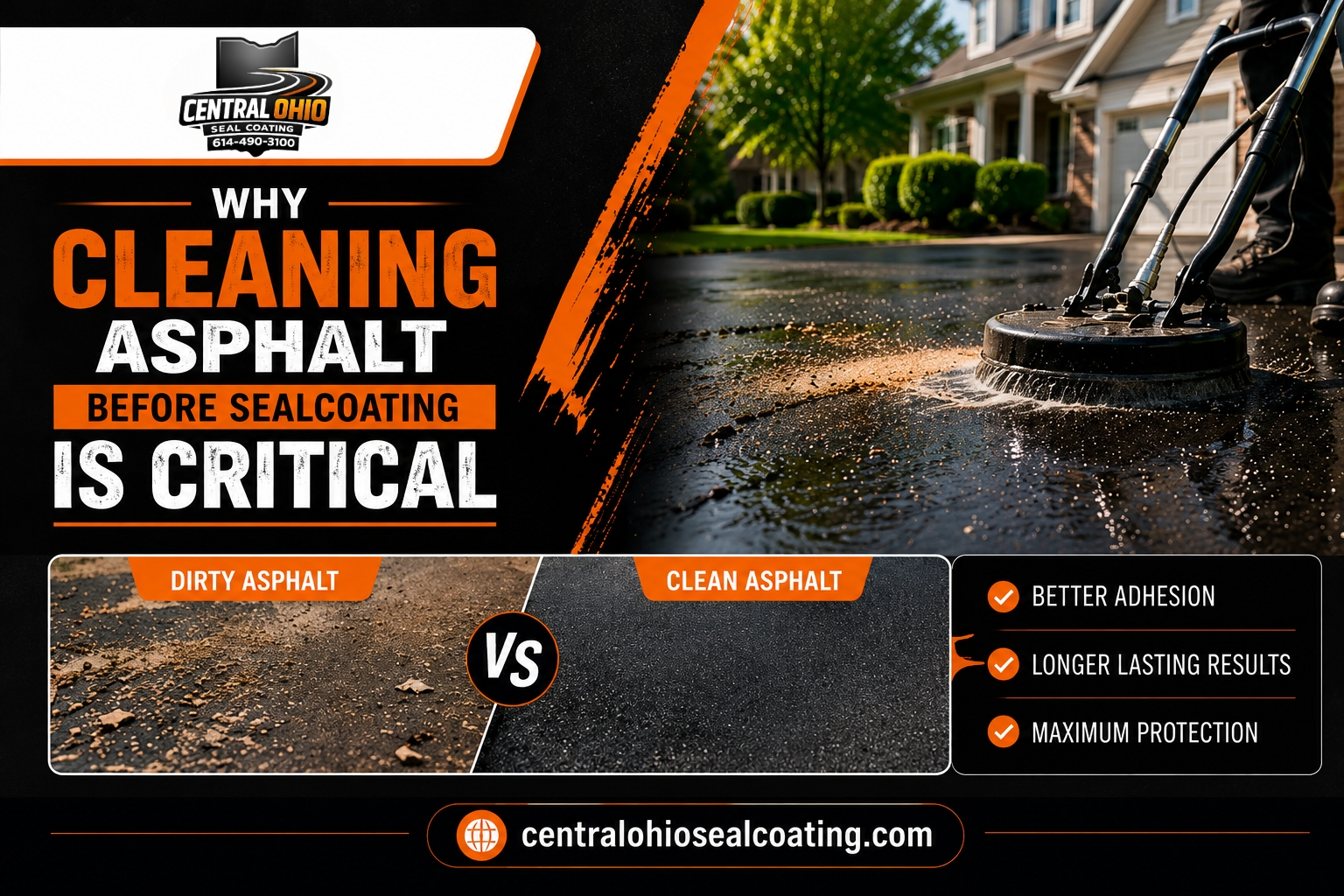
Step 2: Cleaning the pavement completely
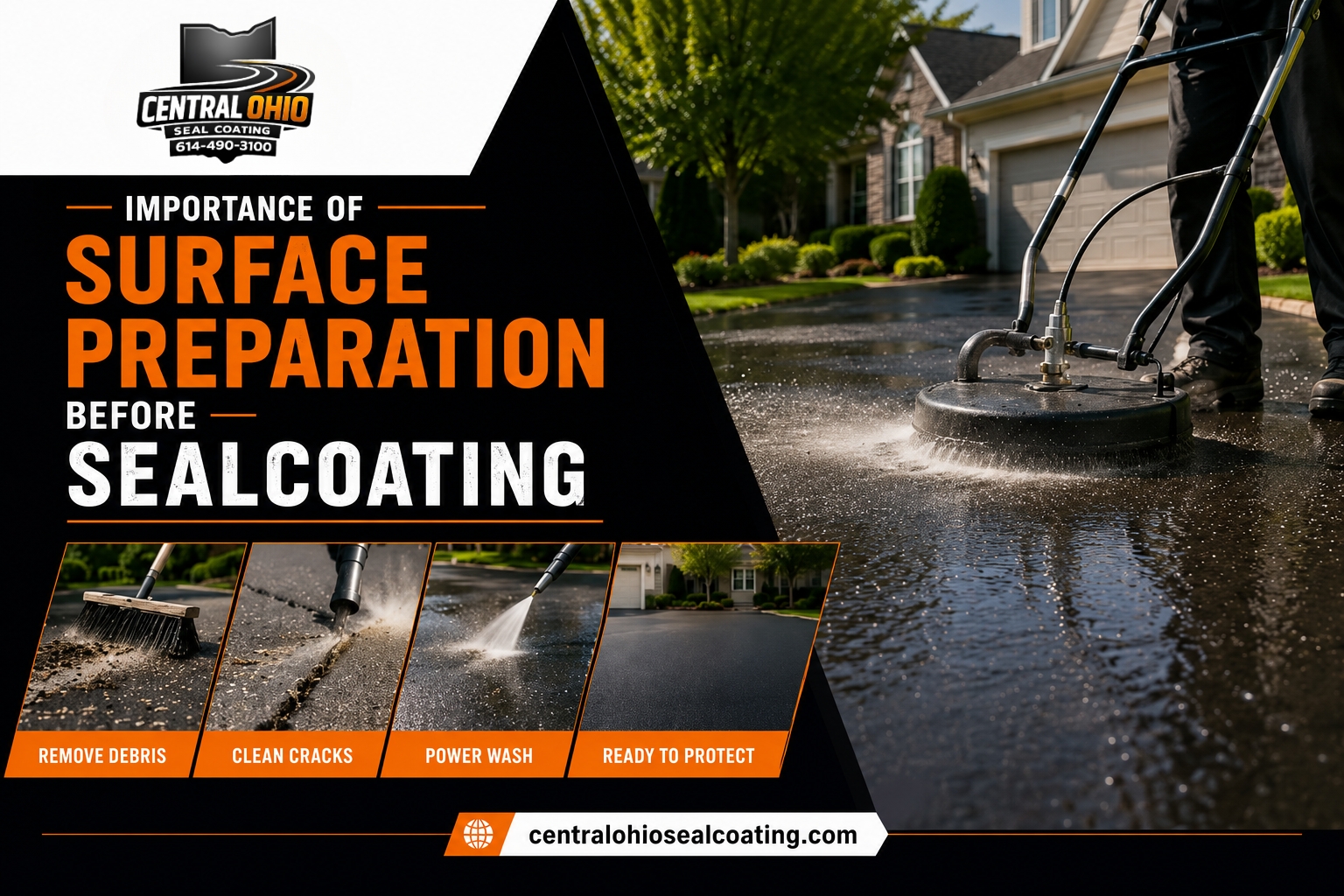
One of the most important parts of the sealcoating process is surface cleaning.
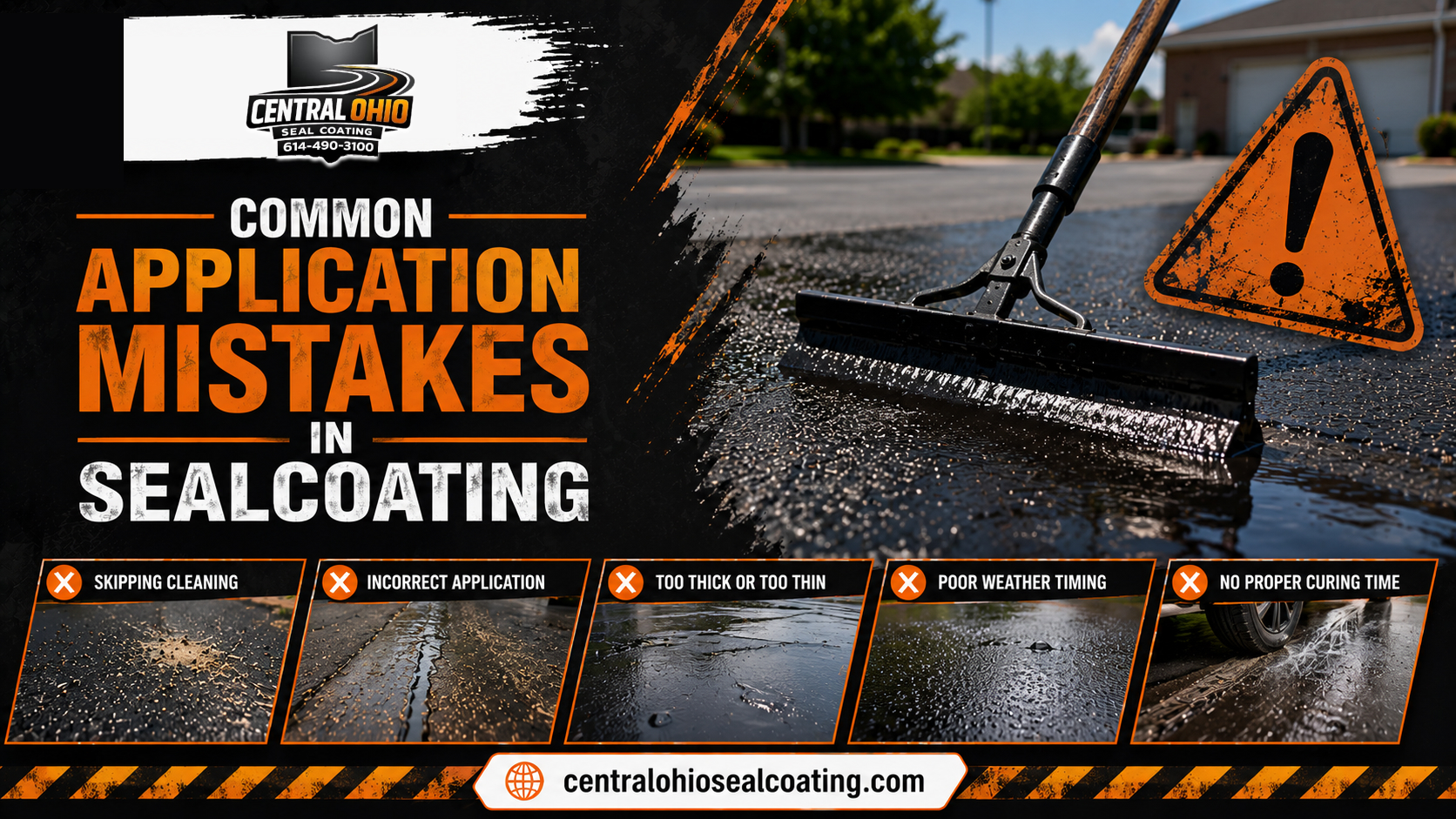
Sealcoat material needs direct contact with the asphalt to bond properly. Dirt, dust, loose gravel, leaves, and oil can prevent proper adhesion.
Cleaning usually includes:
- Power blowing
- Sweeping
- Pressure washing
- Removing weeds from cracks
- Cleaning oil spots
This step may seem simple, but it directly affects how long the sealcoating lasts.
Why clean surfaces matter
If debris remains on the pavement, the coating may peel, bubble, or wear unevenly. Proper cleaning helps create a smoother and stronger protective layer.
In Ohio, seasonal debris like leaves, dirt, and winter residue often build up heavily, making this step even more important.
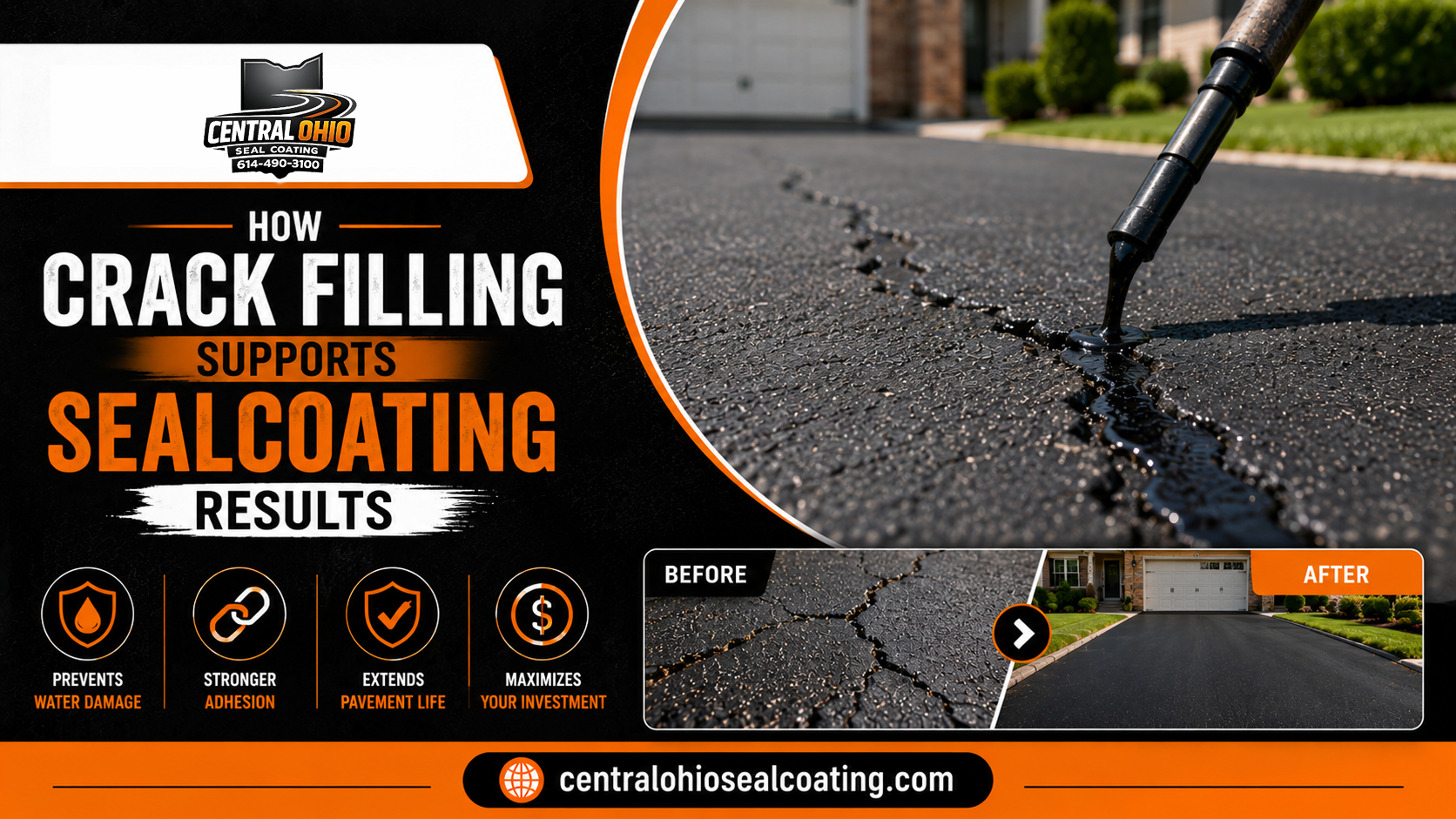
Step 3: Crack filling and minor repairs
Before the sealcoat is applied, visible cracks are filled.
This step is essential because open cracks allow water to penetrate below the surface.
Crack repair helps by:
- Blocking moisture intrusion
- Preventing crack expansion
- Stabilizing weak areas
- Improving final appearance
Small cracks may not seem urgent, but in Ohio weather they can grow quickly.
Why this matters in Ohio
Freeze-thaw cycles are especially damaging. Water enters a crack, freezes overnight, expands, and makes the crack wider. Repeating this cycle over winter can turn a small crack into major damage.
That is why professional crews repair these weak points before sealing.
Step 4: Protecting surrounding areas
Before sealcoating starts, professionals protect surrounding surfaces.
This includes:
- Sidewalks
- Garage floors
- Curbs
- Landscaping edges
- Drain covers
- Concrete walkways
This step keeps the project neat and prevents accidental coating on non-asphalt areas.
Why this step matters
Sealcoating can stain concrete and landscaping if not carefully managed. Professional crews use tape, barriers, and careful edging to keep the work clean.
This attention to detail creates a much better final result.
Step 5: Mixing the sealcoat material
Sealcoating material must be mixed properly before application.
A professional mixture needs consistency so the coating spreads evenly across the entire pavement.
The material often includes:
- Asphalt emulsion
- Water
- Sand additives
- Specialty polymers (depending on project)
Proper mixing ensures:
- Better durability
- Better adhesion
- More even texture
- Longer protection
Poorly mixed sealcoat often creates thin spots and uneven color.
Step 6: Applying the sealcoat
This is the stage most property owners notice.
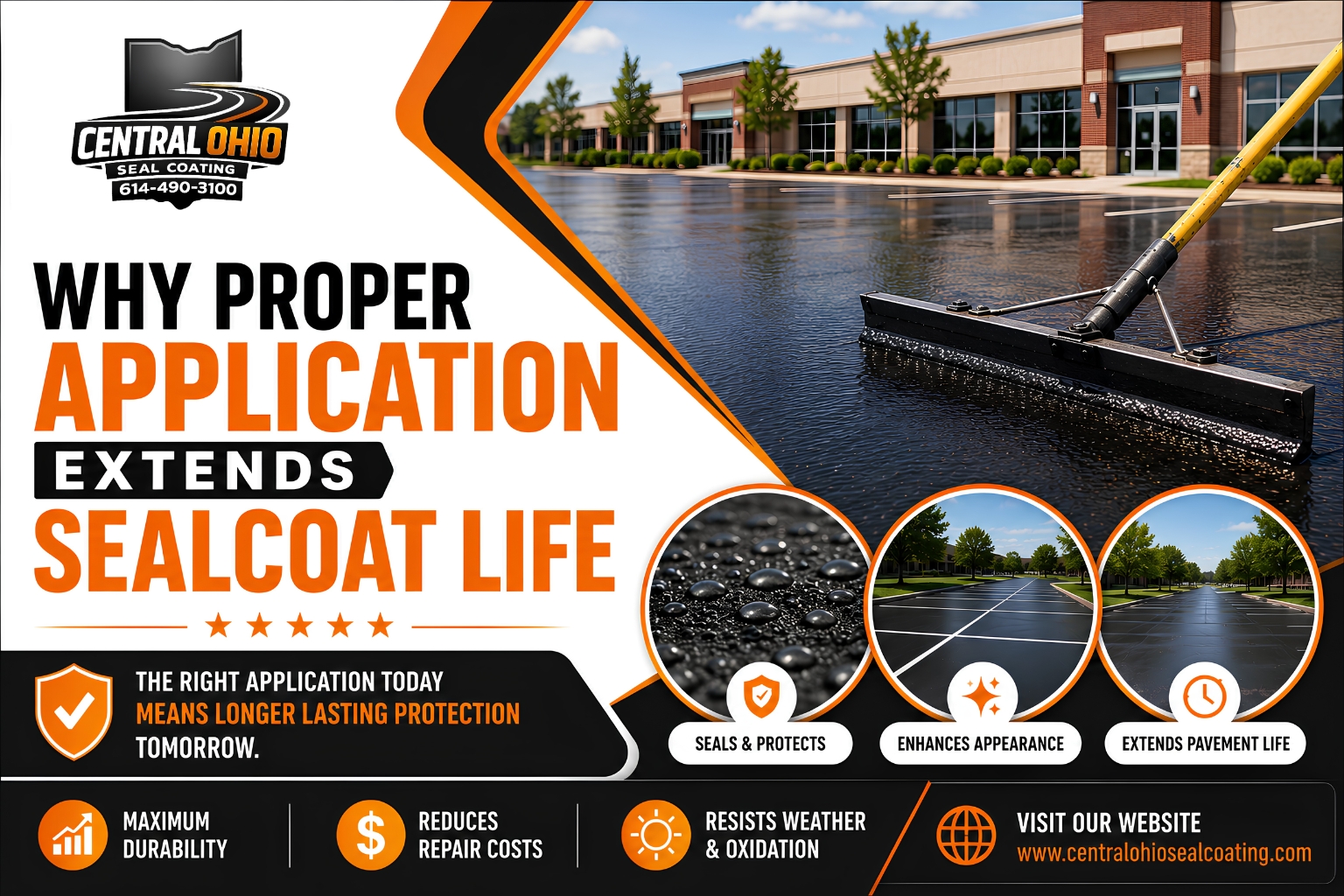
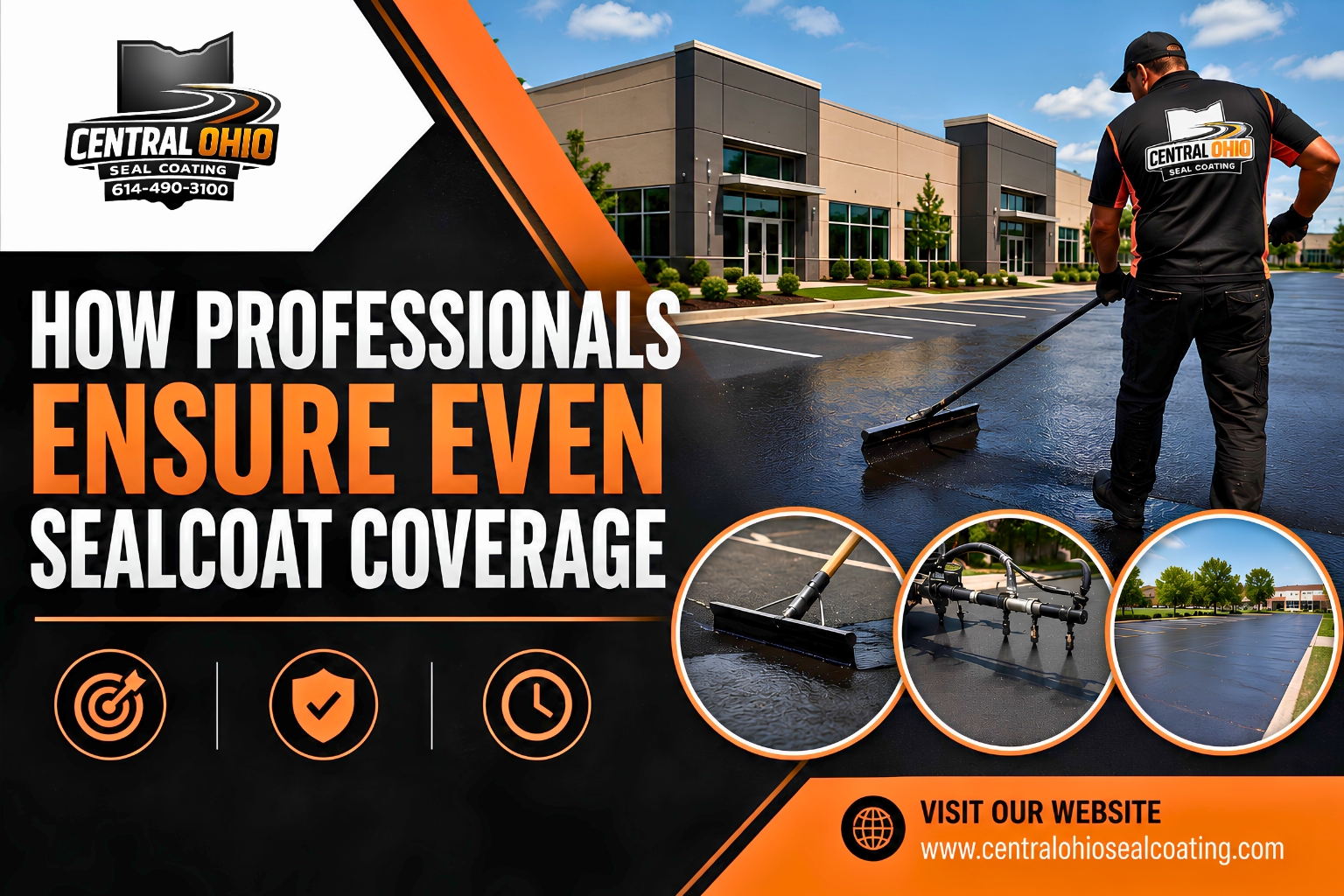
The sealcoat is applied evenly across the asphalt using specialized tools.
Application methods include:
Spray application
Best for large commercial lots because it covers wide areas quickly and evenly.
Squeegee application
Often used for residential driveways and smaller surfaces for better control.
Combination method
Some projects use both methods for maximum coverage.
What happens during application?
The crew works carefully to:
- Cover the entire surface evenly
- Avoid thin areas
- Prevent pooling
- Create smooth edges
- Maintain uniform appearance
This step is where faded gray asphalt starts looking fresh and dark again.
For many property owners using sealcoating service Ohio, this visual improvement is one of the most satisfying parts of the process.
Step 7: Second coat if needed
Not every project needs a second coat, but some do.
Older pavement often benefits from extra protection.
A second coat helps:
- Improve durability
- Strengthen water resistance
- Increase UV protection
- Create deeper color consistency
Commercial lots with higher traffic often use multiple coats for better long-term performance.
Step 8: Drying and curing
Once the coating is applied, the pavement needs time to cure.
This step is critical.
Typical curing depends on:
| Factor | Impact on curing |
|---|---|
| Temperature | Warmer weather speeds drying |
| Humidity | High humidity slows curing |
| Shade | Shaded areas dry slower |
| Airflow | Good airflow speeds curing |
In Ohio, weather conditions can change quickly, so professional crews plan around ideal drying conditions.
Why curing matters
Driving on fresh sealcoat too early can:
- Leave tire marks
- Damage the coating
- Cause peeling
- Create uneven wear
That is why professional crews provide clear instructions about when the surface can be used again.
Step 9: Final inspection
Once everything is dry, the final inspection happens.
Professionals check for:
- Full coverage
- Even texture
- Missed spots
- Clean edges
- Proper curing
- Surface consistency
This final step ensures the project meets quality standards.
It also confirms the pavement is ready for normal use.
What professional sealcoating protects against
A completed sealcoating job creates a protective barrier against many forms of damage.
Main protections include:
UV damage
Sealcoating slows oxidation caused by sunlight.
Water damage
It reduces moisture penetration into small surface openings.
Chemical spills
Oil, gasoline, and chemicals are less likely to penetrate quickly.
Surface wear
Traffic friction affects the sealcoat first before reaching the asphalt itself.
Benefits of professional sealcoating
A properly done sealcoating job offers multiple benefits.
Longer pavement life
Regular maintenance helps delay major repairs.
Better curb appeal
Fresh black asphalt looks newer and cleaner.
Easier maintenance
Smooth sealed surfaces are easier to clean.
Reduced cracking
The protective layer slows moisture and oxidation damage.
Better property value
A maintained driveway or parking lot adds to overall appearance.
Why professional sealcoating is better than DIY
Some property owners consider sealcoating themselves, but professional work usually lasts longer and looks better.
Professionals provide:
- Better equipment
- Better materials
- Proper surface prep
- Even application
- Crack repair knowledge
- Weather timing experience
DIY jobs often fail because of rushed prep or uneven application.
Sealcoating is one of those services where technique matters just as much as the product.
Our sealcoating services
At Central Ohio Sealcoating, we provide complete sealcoating solutions for residential and commercial asphalt surfaces throughout Central Ohio.
Our services include:
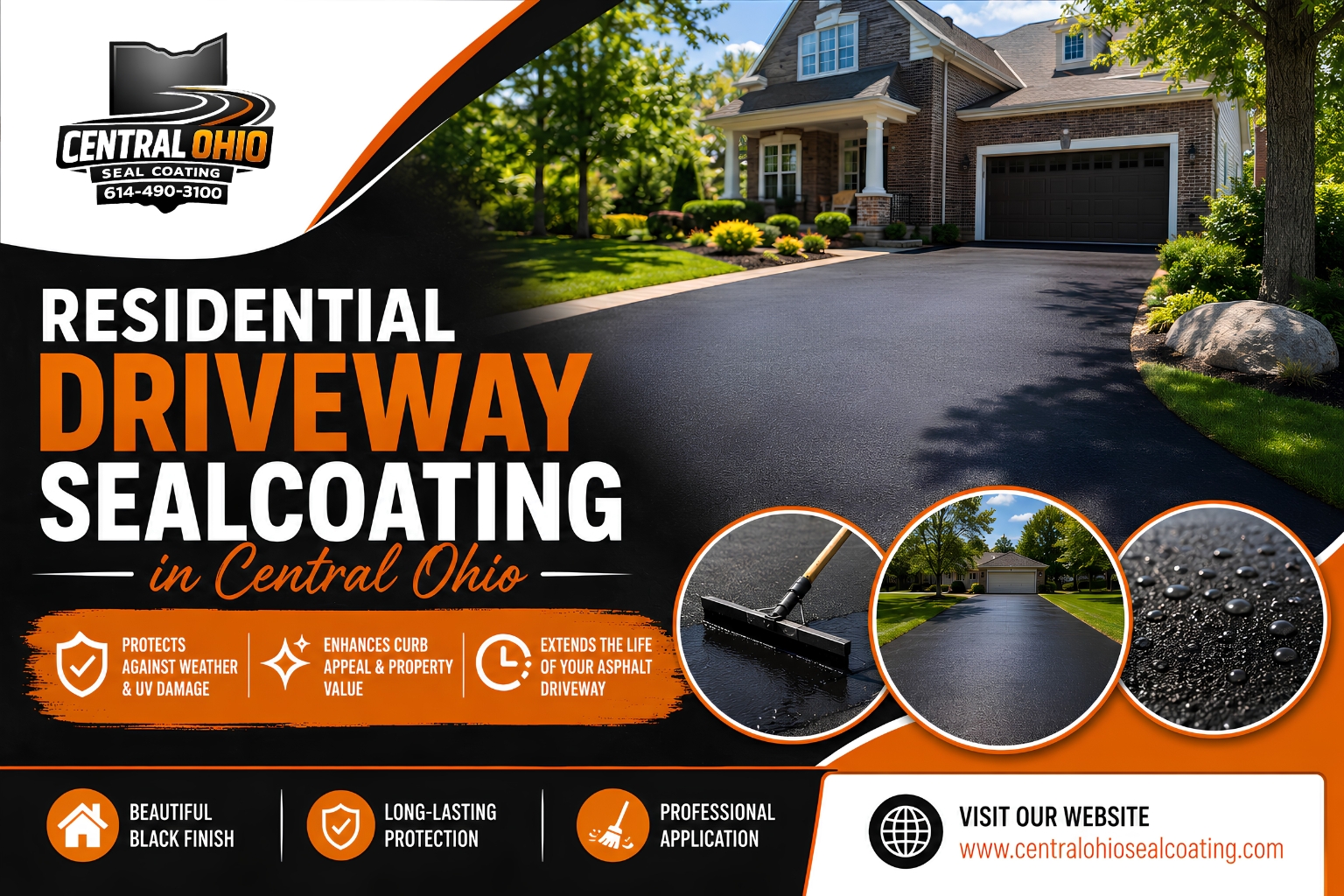
- Driveway sealcoating
- Parking lot sealcoating
- Crack filling
- Surface prep
- Asphalt patching
- Preventive maintenance
Our experienced team focuses on protecting your pavement from Ohio weather while improving appearance and extending surface life.
Whether your driveway is fading or your parking lot needs full maintenance, our professionals can help keep your asphalt strong, smooth, and protected.
Final thoughts
Professional sealcoating is much more than a simple surface treatment. It is a full maintenance process designed to protect asphalt from weather, moisture, oxidation, and daily wear.
From inspection and cleaning to crack repair, application, and curing, every step matters.
For property owners investing in sealcoating service Ohio, understanding this process helps explain why professional work delivers stronger, cleaner, and longer-lasting results.
When done at the right time and with the right preparation, sealcoating can dramatically improve both the appearance and lifespan of asphalt.