
What makes a freshly paved surface slowly turn dull, gray, and worn-looking? In most cases, it is not one dramatic failure—it is gradual exposure to sunlight, moisture, traffic, and everyday wear. For property owners focused on asphalt fading Ohio, the main issue is that asphalt loses its protective oils over time, and once that happens, the surface starts to dry out, fade, and weaken. Central Ohio Seal Coating explains that UV rays, water, oil leaks, and chemicals all dry out those oils, which is why regular sealcoating matters for both appearance and performance.
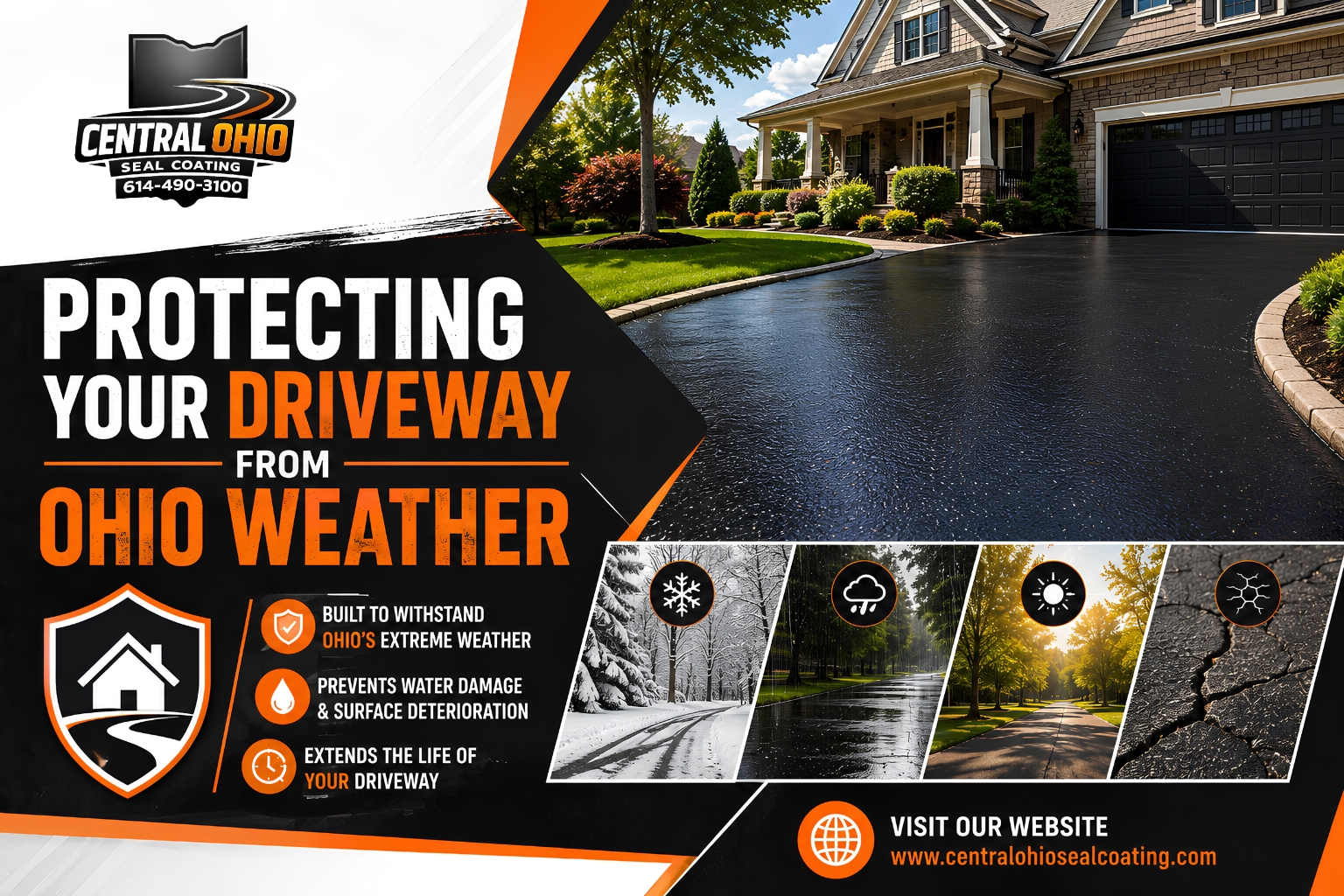
When people search for Professional sealcoating Experts in Columbus Ohio, they are usually trying to stop that fading before it turns into bigger surface problems. The company’s blog also emphasizes that Ohio weather is tough on asphalt because freeze-thaw cycles, heavy rain, and hot summer sun all contribute to cracking, fading, and surface breakdown. Regular sealcoating helps preserve flexibility, block moisture, and keep the pavement looking darker and cleaner for longer.
Why asphalt loses color over time
Asphalt does not stay dark forever because its surface is constantly aging. Sunlight causes oxidation, which makes the binder stiffer and less resilient. At the same time, traffic wears down the top layer, and water can work its way into tiny openings and speed up surface deterioration. That combination is what causes the familiar shift from deep black to faded gray. In Ohio, that process is often accelerated by weather swings, so a surface that is not maintained can look older much faster than expected.
The main reasons fading happens
- UV exposure breaks down the surface oils.
Asphalt contains natural oils that help it stay flexible. Over time, sunlight dries those oils out, which is why unprotected pavement begins to look chalky, dry, and faded. Once that protective richness is gone, the surface becomes more vulnerable to cracking and visible wear. - Moisture speeds up surface aging.
Rain and standing water do not just sit on top of asphalt. They can find small openings, move downward, and weaken the pavement system over time. In freeze-thaw weather, trapped water expands and contracts, which makes the surface age faster and look rougher sooner. - Oil and chemical stains make fading look worse.
Spills and leaks do not just stain the pavement visually. They also break down the surface and create patchy, uneven-looking areas. That makes even a structurally sound driveway or parking lot look neglected if it is not cleaned and protected regularly.
How sealcoating protects appearance and slows fading
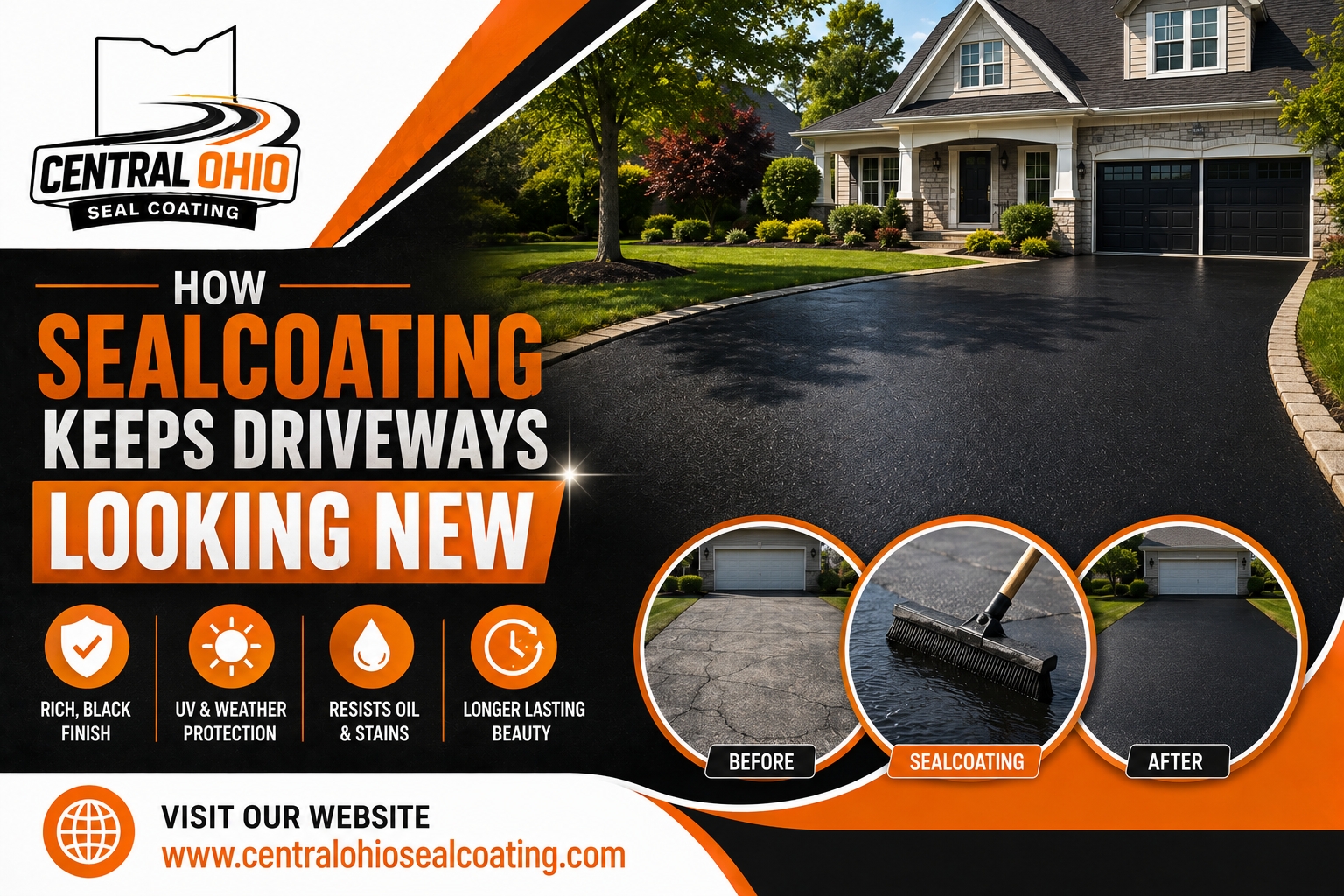
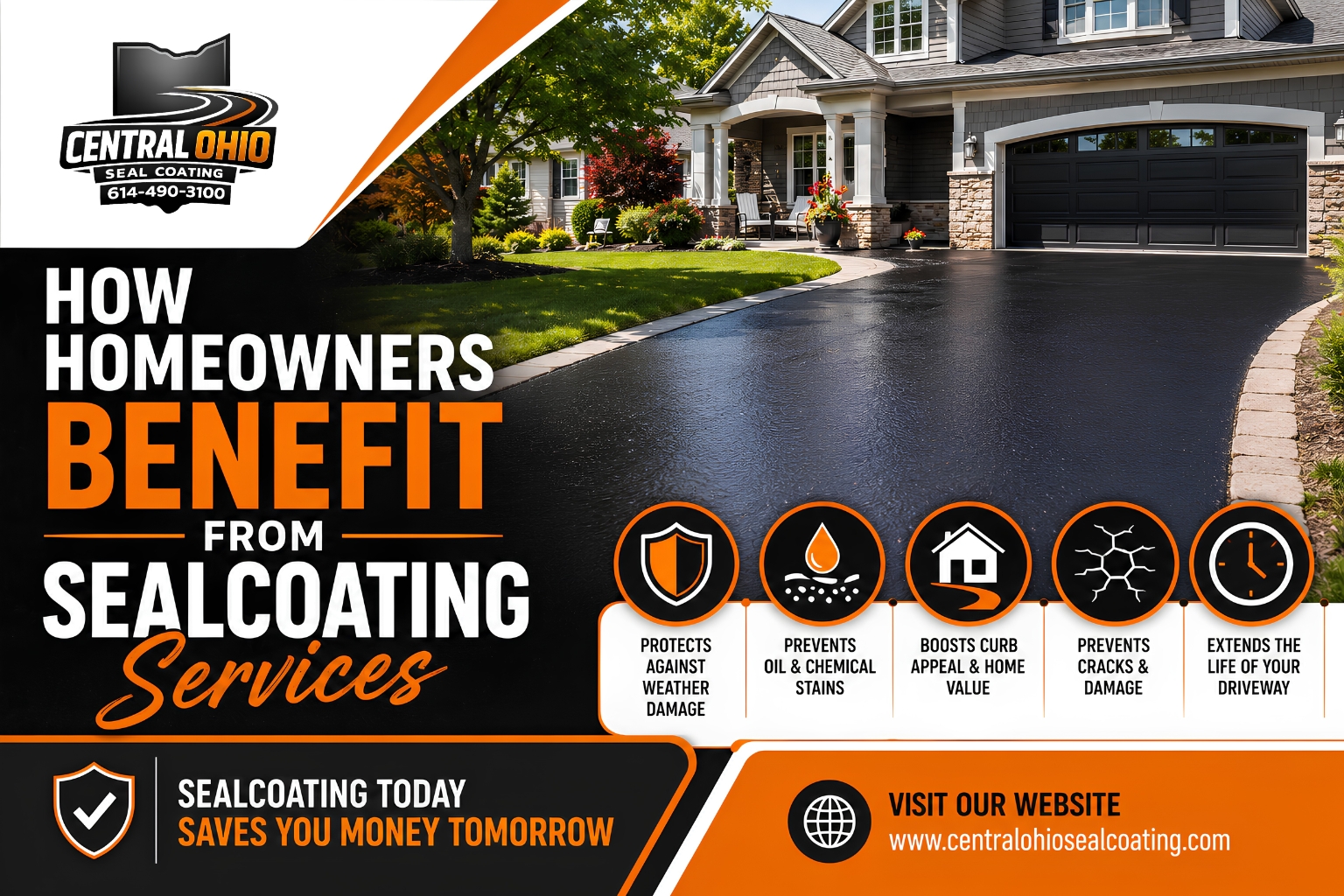
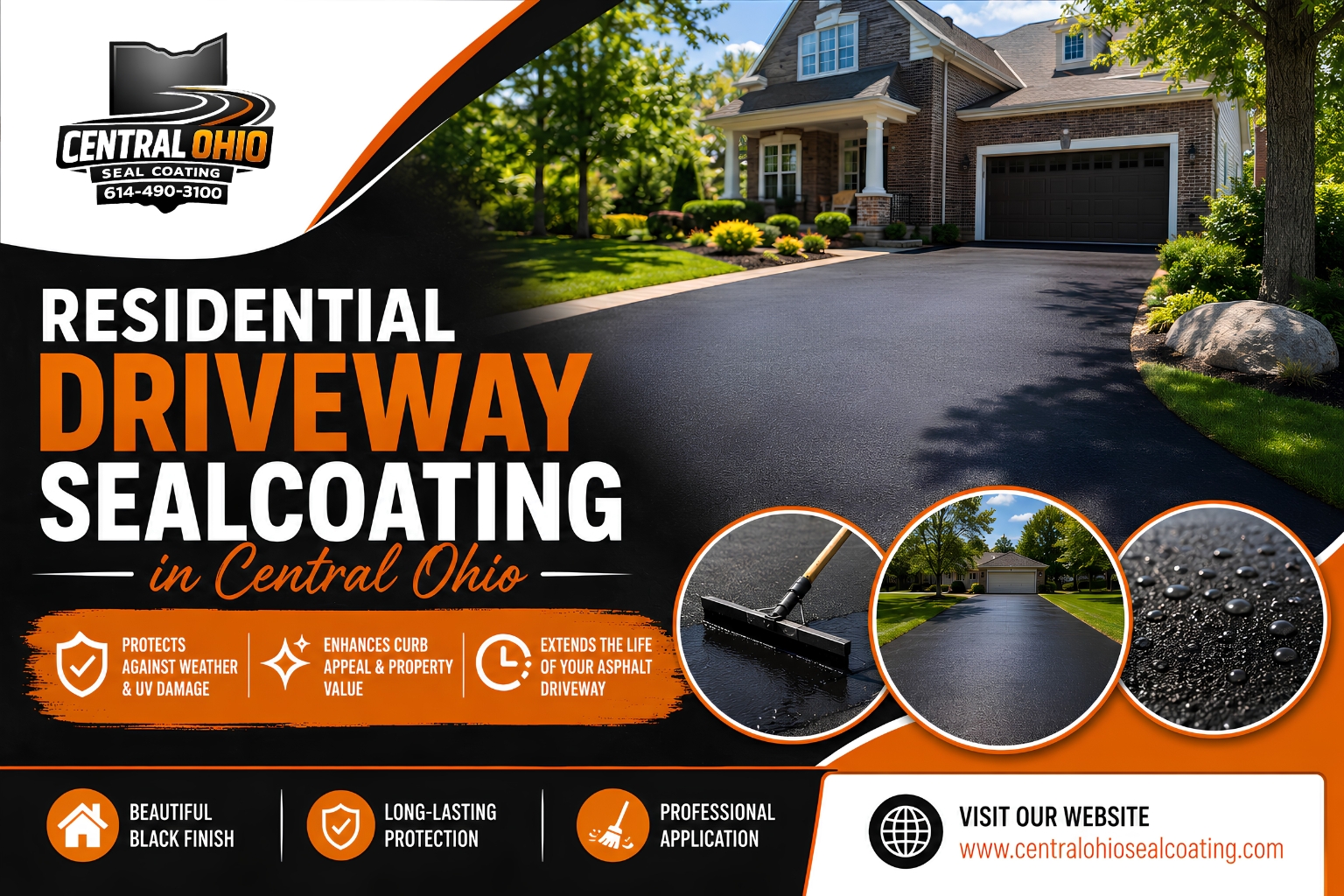
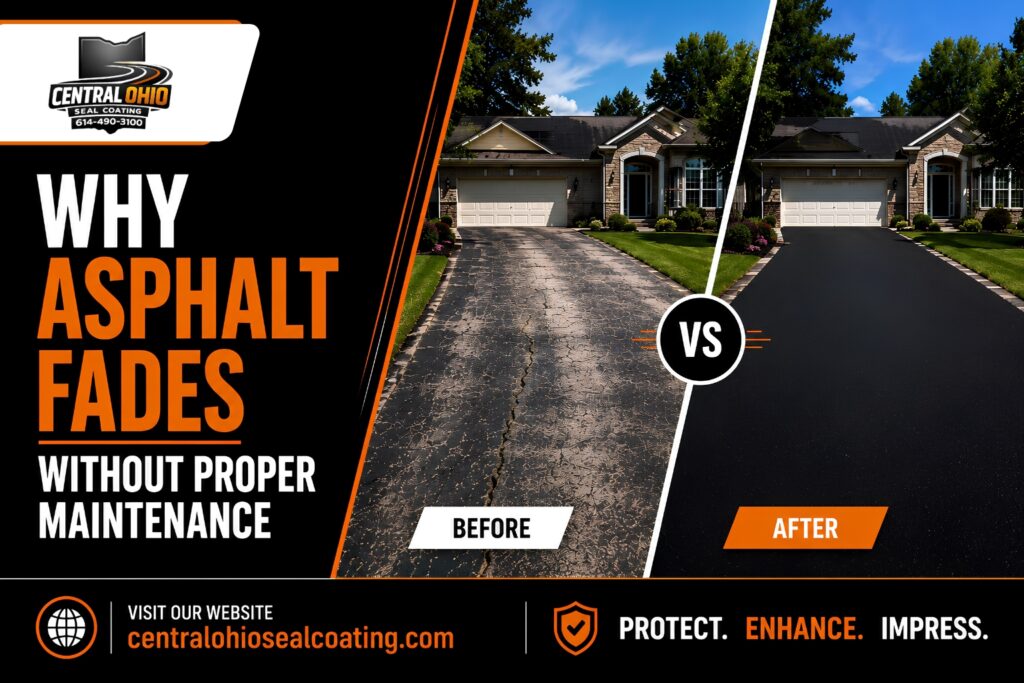
Sealcoating adds a protective top layer that helps block the things that make asphalt fade. Central Ohio Seal Coating says sealcoating protects asphalt from UV rays, water, oil, and chemicals while also improving curb appeal with a rich black finish. That matters because a darker, smoother surface instantly looks newer and better maintained.
The visual benefit is only part of the story. Sealcoating also helps the pavement keep the flexibility it needs to stand up to Ohio weather. When the surface stays protected, it is less likely to dry out, oxidize, and become brittle. That means the pavement can keep its appearance longer while also resisting the kind of wear that leads to larger repairs later.
What sealcoating changes visually
- Restores the darker look of new asphalt.
Fresh asphalt has a deep black appearance that makes a property look clean and updated. Sealcoating brings back much of that color so older pavement looks refreshed rather than worn out. - Makes the surface look more uniform.
Faded spots, light patches, and older repair areas become less noticeable once a new sealcoat is applied. That creates a more balanced appearance across the whole surface. - Improves the look of parking lot striping.
Darker pavement makes painted lines and markings stand out more clearly, which helps a lot visually in commercial spaces. A freshly sealed lot looks sharper, cleaner, and more organized.
Why maintenance matters for long-term appearance
Asphalt fading is not only about color. It is also a sign that the pavement is losing protection. Once the top layer dries out, the surface becomes rougher, and small flaws become easier to see. That is why maintenance is as much about appearance as it is about preservation. If the surface is kept sealed and cared for, it tends to hold its color, texture, and overall look much better.
A property owner looking for a recommended sealcoating company in Columbus Ohio is usually trying to avoid that cycle of fading, drying, and cracking before it becomes expensive. Central Ohio Seal Coating notes that regular sealcoating can help extend lifespan, prevent cracks and water damage, improve curb appeal, and create a smoother, safer surface.
Signs the surface needs attention
- The color has turned light gray.
This usually means the top oils have dried out and oxidation is underway. It is one of the clearest visual signs that the pavement is aging and losing protection. - The texture looks dry or rough.
Dry-looking asphalt often means the surface is losing flexibility. Once that happens, cracks and visible wear become more likely. - Water no longer beads on the surface.
When asphalt is protected, water tends to sit on top more cleanly. If water starts soaking in or spreading quickly, that can be a sign the surface is no longer protected enough.
How often maintenance should happen
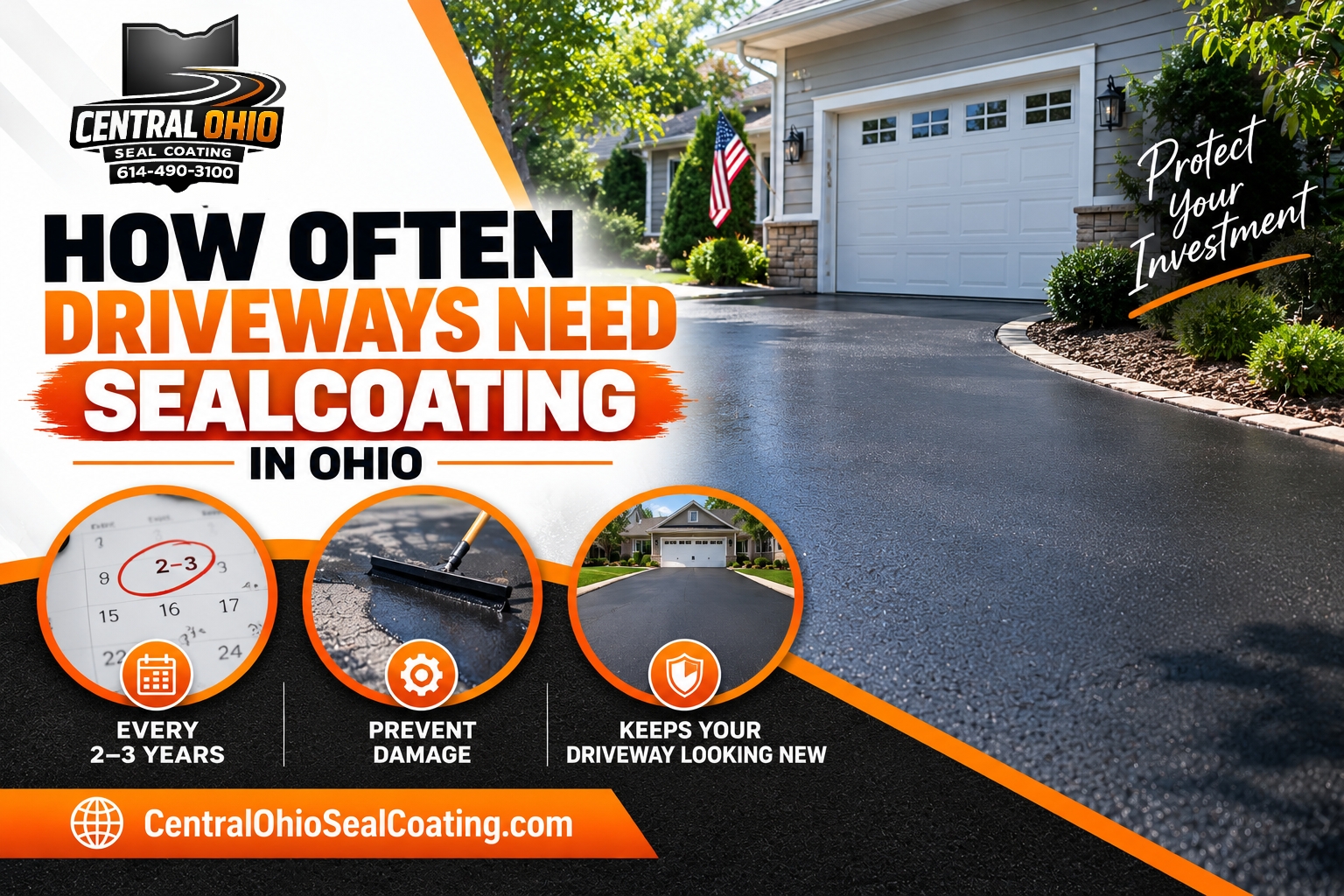
The timing depends on the age of the pavement, the amount of traffic it sees, and how exposed it is to sun and weather. Central Ohio Seal Coating says new asphalt should cure for 6–12 months before the first sealcoat and that many driveways do well with sealcoating every 2 to 3 years, depending on conditions. That kind of schedule helps keep the surface dark, protected, and visually consistent.
Ohio weather makes timing important because the combination of freeze-thaw cycles and summer sun can wear down unprotected asphalt faster than many people expect. If a surface goes too long without protection, the fading becomes more obvious and the pavement is more likely to need repairs instead of routine maintenance.
Why professional application makes a difference
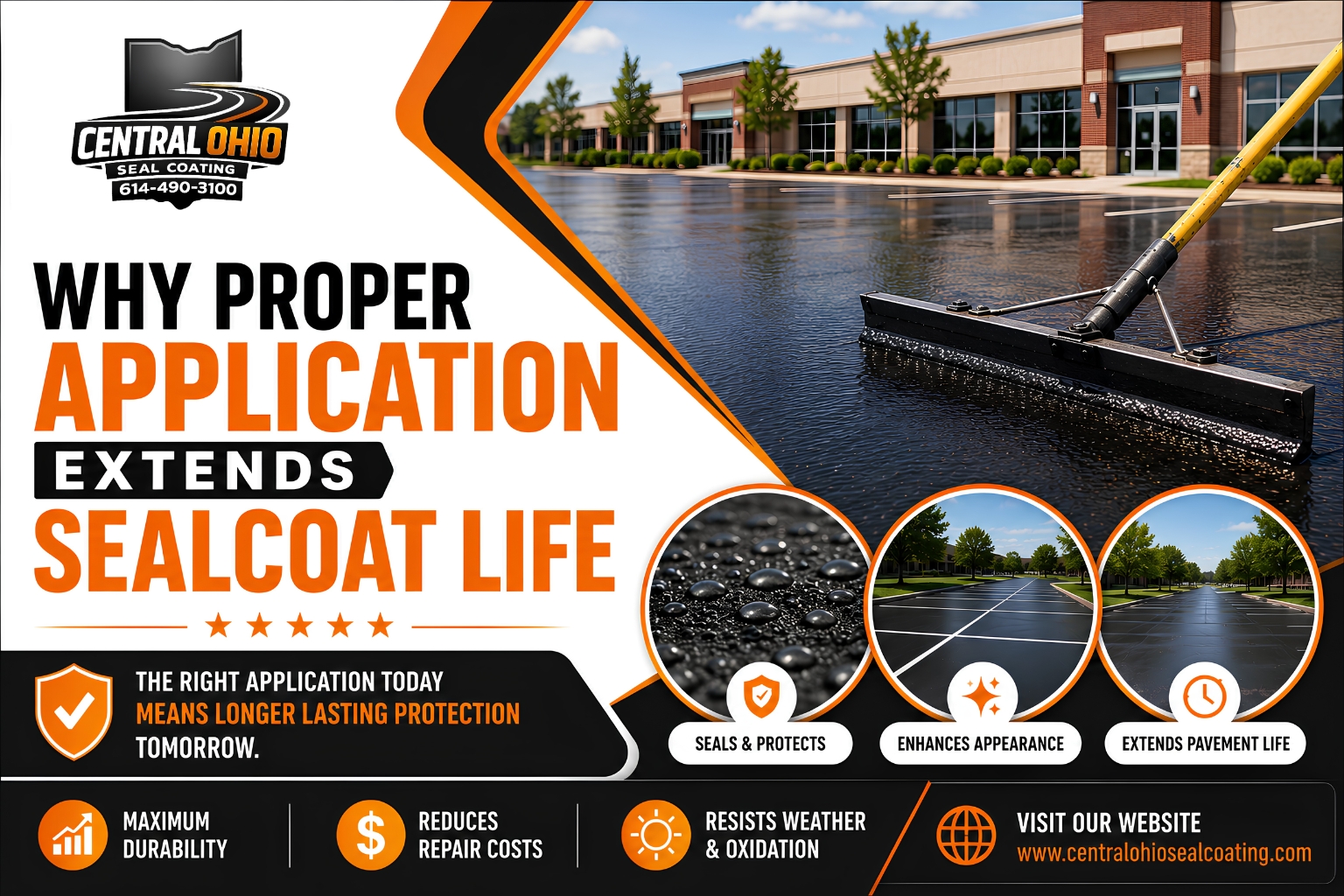
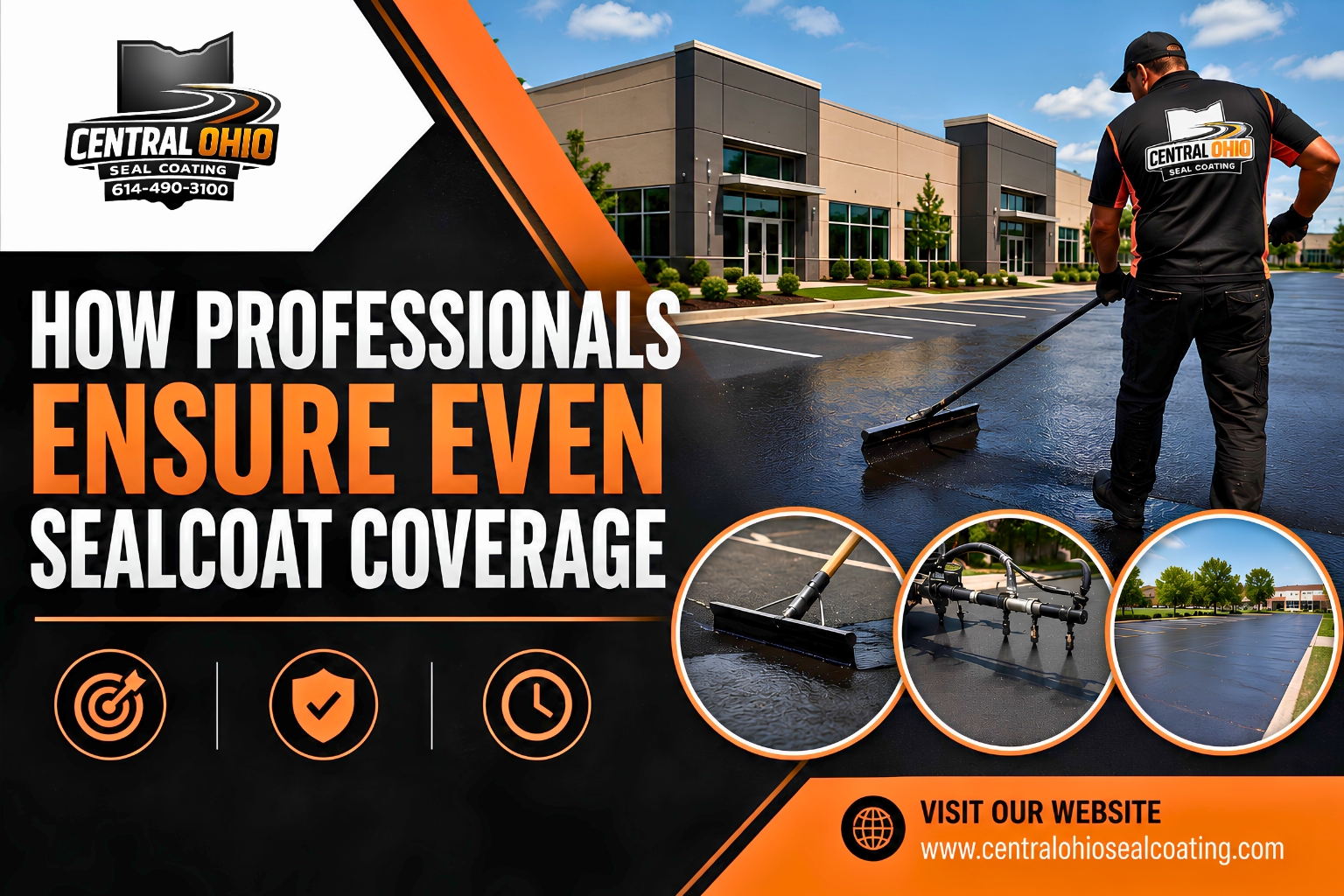
A sealcoat only looks good when the surface is prepared correctly and the coating is applied evenly. Central Ohio Seal Coating says professional application matters because it includes proper surface preparation, crack filling, and even coverage using commercial-grade materials. That is important because a poor application can leave streaks, thin areas, or a finish that wears unevenly.
For property owners who care about appearance, hiring experienced help is often the difference between a surface that looks refreshed and a surface that still looks patchy. A professional crew knows how to clean the pavement, handle minor flaws, and apply the coating in a way that creates a smooth visual result.
Why the local company matters
Ohio pavement needs local experience because the weather is not gentle. A company that works regularly in Central Ohio is better positioned to understand how freeze-thaw cycles, hot summers, and everyday traffic affect asphalt over time. Central Ohio Seal Coating provides asphalt sealcoating services in Columbus for residential and commercial properties, and its service area and blog content reflect a strong focus on local pavement care.
Final thoughts
Asphalt fades because the surface loses its oils, takes on damage from sunlight and weather, and slowly becomes more brittle without protection. Sealcoating helps slow that process by restoring the dark finish, shielding the pavement from the elements, and keeping the surface looking cleaner for longer. For anyone trying to protect asphalt fading Ohio, regular maintenance is one of the simplest ways to preserve both appearance and pavement health.
If you want a surface that looks sharp and stays protected longer, working with a recommended sealcoating company in Columbus Ohio is a practical next step. Central Ohio Seal Coating’s blog makes the point clearly: regular sealcoating helps protect asphalt from UV rays, water, oil, and chemicals while improving curb appeal and reducing future repair needs.